28 Results for "

Structural modification

" in MedChemExpress (MCE) Product Catalog:
Products (28)

28 Results for "Structural modification" in MCE Product Catalog:

4
4 Cited Publications
Cat. No.: HY-113137
CAS No.: 2140-67-2
Pureté:  99.40%
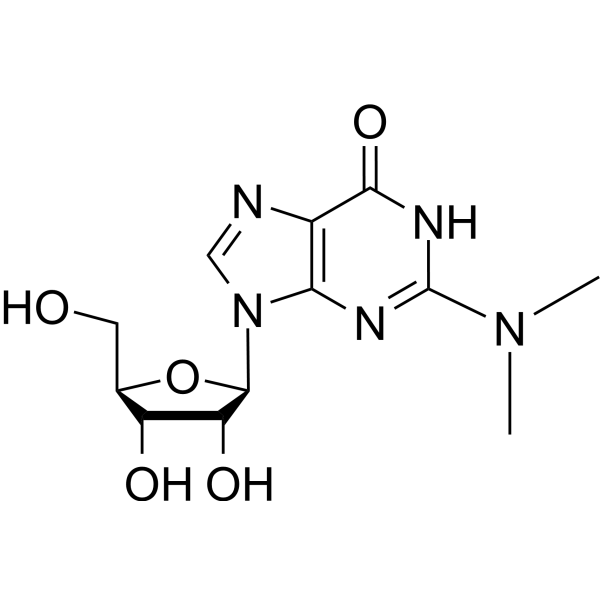
N2,N2-Dimethylguanosine is a methylated modified nucleoside present in RNA and serves as a structural modification component of tRNA. N2,N2-Dimethylguanosine inhibits reverse transcriptase-mediated cDNA synthesis and is one of the key modifications affecting sequencing efficiency in high-throughput RNA sequencing. N2,N2-Dimethylguanosine can be selectively demethylated at one methyl group by AlkB mutant enzymes (such as D135S/L118V) and converted to N2-methylguanosine, thereby reducing the inhibition of reverse transcription .
loading...
    loading...
Cat. No.: HY-116152
CAS No.: 1637741-58-2
Pureté:  99.82%
Synonyms: Ciprofol; HSK3486
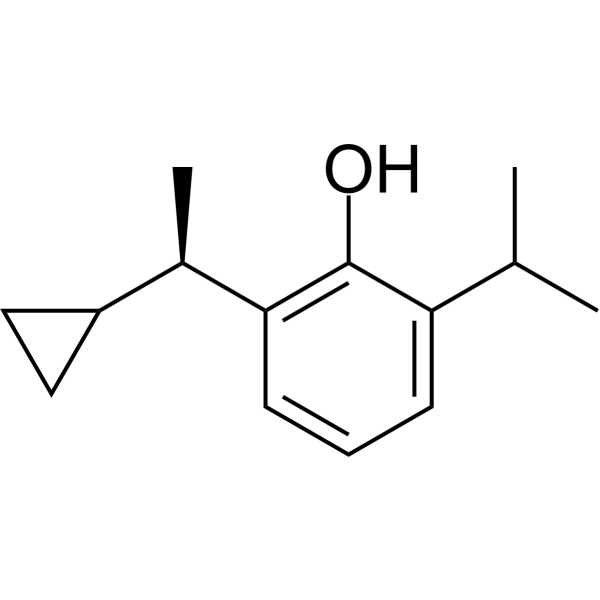
Cipepofol (Ciprofol), a novel 2,6-disubstituted phenol derivative, is a positive allosteric modulator and direct agonist of the GABAA receptor. Cipepofol can cause the central nerve inhibition and promote sleep based on the structural modification of Propofol (HY-B0649). Cipepofol can activate the sirtuin1 (Sirt1)/Nrf2 pathway. Cipepofol protects the heart against Isoproterenol (ISO; HY-B0468)-induced myocardial infarction by reducing cardiac oxidative stress, inflammatory response and cardiomyocyte apoptosis .
loading...
    loading...
Cat. No.: HY-157980
Target:  

CDK

Domaines de recherche:  

Cancer

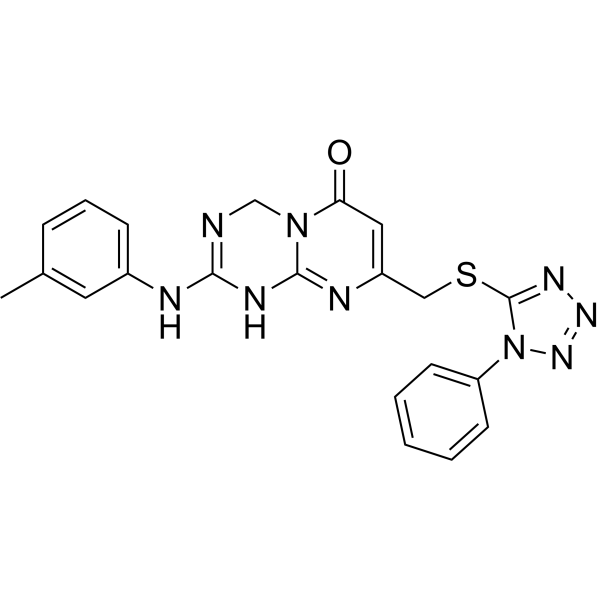
CDK9-IN-32 (compound 006-3) is a CDK9 inhibitor .
loading...
    loading...
Cat. No.: HY-178099
Domaines de recherche:  

Cancer

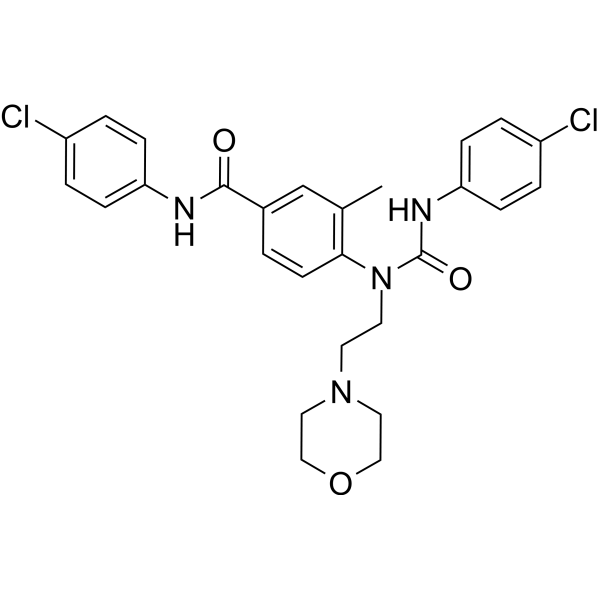
Apoptosis inducer 45 is an apoptosis inducer. Apoptosis inducer 45 is cytotoxically active against the MCF-7 cell line. Apoptosis inducer 45 elicits MCF-7 cell apoptosis via the mitochondrial pathway (increases the Bax/Bcl-2 ratio) by activating cleavage of caspase-9, thereby inducing the fragmentation of DNA repair protein PARP. Apoptosis inducer 45 also can induce caspase-8 cleavage, subsequently initiating cleavage of caspase-3 and its downstream protein PARP to culminate in the extrinsic apoptosis. Apoptosis inducer 45 can be used in the research of breast cancer .
loading...
    loading...
Cat. No.: HY-147732
CAS No.: 2851838-08-7
Target:  

Epoxide Hydrolase

Domaines de recherche:  

Inflammation/Immunology

Intensive structural modification resulted in the identification of compound B15 as an effective sEH inhibitor with a value of 0.03 ± 0.01 nm, and the presence of soluble epoxide hydrolase (SEH) can reduce inflammation and pain.
loading...
    loading...
Cat. No.: HY-18408
CAS No.: 1415238-77-5
Synonyms: FAI
Domaines de recherche:  

Others

5S rRNA modificator is a suitable electrophile for 2’-hydroxyl acylation on structured RNA molecules, yielding accurate structural information comparable to that obtained with existing probes; 5S rRNA RNA modification.
loading...
    loading...
Cat. No.: HY-118990
CAS No.: 246244-19-9
Domaines de recherche:  

Neurological Disease

Lobelane hydrochloride is a biologically active compound that has the activity of inhibiting vesicular monoamine transporter-2 (VMAT2). Lobelane hydrochloride has a low affinity for nicotinic acetylcholine receptors (nAChR), thereby enhancing its selectivity for VMAT2. Synthetic structural changes of lobelane hydrochloride have led to some related analogs that show mild changes in affinity for VMAT2. The most potent synthetic lobelane hydrochloride obtained after structural modification has a K(i) value of 630 nM, showing significant VMAT2 selectivity. The biological activity of lobelane hydrochloride suggests that it has the potential to be used in the development of compounds to inhibit methamphetamine abuse .
loading...
    loading...
Cat. No.: HY-W114420
CAS No.: 17028-03-4
Target:  

PKC Drug Derivative

Domaines de recherche:  

Cancer

3-Methyl-L-tyrosine is a derivative of L-Tyrosine (HY-N0473). Structurally, 3-Methyl-L-tyrosine features a methyl modification at the third position of the aromatic ring of L-Tyrosine. As a substrate for the protein tyrosine kinase Csk, 3-Methyl-L-tyrosine's relative catalytic efficiency (kcat/Km) is 38% of L-Tyrosine, indicating that the methyl modification impacts the processing efficiency of Gsk significantly. 3-Methyl-L-tyrosine helps to deepen the understanding of Gsk's molecular recognition mechanisms of its substrates, which is crucial for developing specific inhibitors targeting Gsk .
loading...
    loading...
Cat. No.: HY-124209
CAS No.: 156406-33-6
Domaines de recherche:  

Endocrinology

9-keto Fluprostenol is an analog of prostaglandin E2 (PGE2) with structural modifications intended to give it a prolonged half-life and greater potency. Fluprostenol is a well-studied, potent analog of PGF2α and acts primarily through the FP receptor. Oxidation at C-9 of fluprostenol yields 9-keto fluprostenol. It is anticipated that this analog will have strong affinity for EP receptors and act as a PGE2 agonist.
loading...
    loading...
Cat. No.: HY-123558
CAS No.: 74141-69-8
Synonyms: Y 14556
Target:  

Antibiotic

Domaines de recherche:  

Cancer

Bactobolin C is an antibiotic produced by Pseudomonas sp. BMG13A7, which has strong antimicrobial and antitumor activities, can also inhibit antibody production and treat autoimmune encephalomyelitis. However, its undesirable toxicity limits its medicinal application. The unique chemical structure and promising biological activities of Bactobolin C have attracted people's interest in its total synthesis and new active analogs. So far, the structural modification of Bactobolin C has mainly focused on the hydroxyl groups on the amino acid side chains and backbone.
loading...
    loading...
Cat. No.: HY-126911
CAS No.: 62145-07-7
Synonyms: Fluprostenol Prostaglandin D2
Domaines de recherche:  

Endocrinology

11-keto Fluprostenol is an analog of prostaglandin D2 (PGD2) with structural modifications intended to give it a prolonged half-life and greater potency. Fluprostenol is a well-studied, potent analog of PGF2α and acts primarily through the FP receptor. Oxidation at C-11 of fluprostenol yields 11-keto fluprostenol. 11-keto Fluprostenol exhibits moderate binding to the CRTH2/DP2 receptor compared to PGD2 and essentially no activity at the DP1 receptor.
loading...
    loading...
Cat. No.: HY-117063
CAS No.: 145204-80-4
Target:  

5-HT Receptor

Domaines de recherche:  

Endocrinology

LEK 8841 methanesulfonate is a gastrointestinal calming agent with strong selective 5-HT2 receptor antagonist activity. The antipsychotic potential of LEK 8841 has made it the focus of research into alternative medicines. LEK 8841 behaves as a pure competitive antagonist in response to 5-HT and norepinephrine, with pA2 values of 7.93 and 6.45, respectively. The selectivity of LEK 8841 is better than that of the comparative drug ketanserin, making it an important reference value in corresponding receptor research. Studies related to structural modifications have shown that LEK 8841 exhibits high affinity for 5-HT2 receptors and low alpha-adrenergic receptor activity .
loading...
    loading...
Cat. No.: HY-180192
CAS No.: 3106089-54-4
Target:  

PI3K Akt Apoptosis

Domaines de recherche:  

Cancer

Dehydroxy-oridonin-vinyl ester (Compound 6k) is an anti-cancer agent. Dehydroxy-oridonin-vinyl ester exhibits extremely strong anti-proliferative activity against SU-DHL-6 cells, with its IC₅₀ value being 0.12 μM. Dehydroxy-oridonin-vinyl ester induces cell apoptosis by inhibiting the activation of the PI3K/Akt signaling pathway, without affecting the cell cycle progression. Dehydroxy-oridonin-vinyl can be used for the study of lymphoma .
loading...
    loading...
Cat. No.: HY-128230
CAS No.: 485362-61-6
Synonyms: MLS-0073383
Target:  

Bcl-2 Family

Domaines de recherche:  

Others

WAY-605337 (MLS-0073383) is a Bcl-B inhibitor, which can be used for structural modification and optimization of scaffolds .
loading...
    loading...
Cat. No.: HY-184613
Polydopamine nanoparticles (PDA NPs) are nanoscale materials formed by the self-polymerization of dopamine monomers under specific conditions. Their structural characteristics include a polyphenolic structure and a surface rich in functional groups such as amino and phenolic hydroxyl groups, which provide abundant chemical modification sites.
loading...
    loading...
Cat. No.: HY-L909
8,566 compounds

Covalent inhibitors are small molecules that can bind specifically to target proteins through covalent bonds and inhibit their biological functions. Although for a long time, covalent targeting has been playing a subordinate role in drug discovery, with an increasing number of reports on successful clinical applications of such drugs, the potential of these agents is now being acknowledged.

Covalent ligands rely on reactive groups (“warheads”), and new warheads are key to expanding the scope of covalent modalities. Through careful selection, we constructed a structural filter containing over 110 electrophilic groups. By analyzing the electrophilic fragments selected by the structural filter, we removed any molecules with trivial or undesirable structural features. Ultimately, we obtained 8,900 fragment molecules with covalent modification potential, which can target various reactive amino acid residues and can be used for fragment-based covalent drug discovery.

Cat. No.: HY-L915
421 compounds

Lysine is the second most common target residue used in the design of TCIs and related covalent ligands. Its appeal lies in its abundance in human proteins, which is approximately three times higher than that of cysteine (5.8% vs. 1.9%). This significantly increases the number of proteins suitable for covalent targeting, especially given that many human proteins lack ligandable cysteine residues. Moreover, it has been suggested that functional lysines have a lower probability of being replaced by mutation, as they often play a crucial role in catalysis by acting as bases or nucleophiles. Additionally, lysines are essential for maintaining the structural integrity of proteins and for regulating post-translational modifications (PTMs). Consequently, targeting lysine has garnered significant interest in recent years.

Through careful selection, we constructed a structural filter containing over 110 electrophilic groups. By analyzing the electrophilic fragments selected by the structural filter, we removed any molecules with trivial or undesirable structural features. Ultimately, we obtained 445 fragment molecules which can target lysine residue and can be used for fragment-based covalent drug discovery.

Cat. No.: HY-P11802
CAS No.: 126144-46-5
Target:  

HIV

Domaines de recherche:  

Infection

CD4 (81-92) (human) is a fragment of hCD4. CD4 (81-92) (human) can undergo structural modifications including derivatization and cyclization to enhance antiviral potency and stability, with sequence alterations affecting its activity. CD4 (81-92) (human) is applicable to studies related to HIV-1 infection .
loading...
    loading...
Cat. No.: HY-184608
CuS nanoparticles are nanomaterials with unique properties. Their structural characteristics endow them with excellent near-infrared light response, facilitating functional applications through surface modification. This material shows potential in the biomedical field, enabling synergistic photothermal and photodynamic therapies in tumor treatment, as well as precise drug delivery. In the energy sector, it is suitable for the development of novel energy storage devices; in the environmental field, it can participate in photocatalytic degradation processes.
loading...
    loading...
Cat. No.: HY-L939
10855 compounds

The rising prevalence of multidrug-resistant and extensively drug-resistant bacteria, combined with emerging resistance mechanisms and the limitations of existing antibacterial drugs, creates an urgent need for novel antibacterial agents. Antibacterial compound libraries serve as key tools to support antibacterial drug screening and development.

This library features structurally diverse compounds, including small-molecule scaffolds and natural product derivatives, and exhibits diverse antibacterial mechanisms of action. For example, these compounds exert antibacterial effects by disrupting bacterial cell structures, interfering with bacterial metabolic processes, and inhibiting nucleic acid synthesis. The derivation of scaffold structures enhances their activity against drug-resistant bacteria and their selectivity against different types of bacteria. This library can be used for the high-throughput screening of novel antibacterial drug candidates and the identification of potent compounds against drug-resistant and multidrug-resistant bacteria. Additionally, it provides a reference for compound structural modification, enabling further in-depth research on the structure-activity relationships(SARs) of antibacterial drugs. It can also be applied to the exploration of bacterial resistance mechanisms and reversal strategies, as well as the discovery of antibacterial molecules that inhibit efflux pumps and restore drug susceptibility.

The library contains 10855 structurally diverse drug-like compounds. Its core compound sources include analogs of known antifungal active moleculeswith a similarity score of ≥ 0.6. MCE has collected more than 1900 antibacterial molecules. All screened compounds conform to lead-like physicochemical properties, providing valuable support for the research and development of novel antibacterial drugs.

