



Apafant
Based on 3 publication(s) in Google Scholar
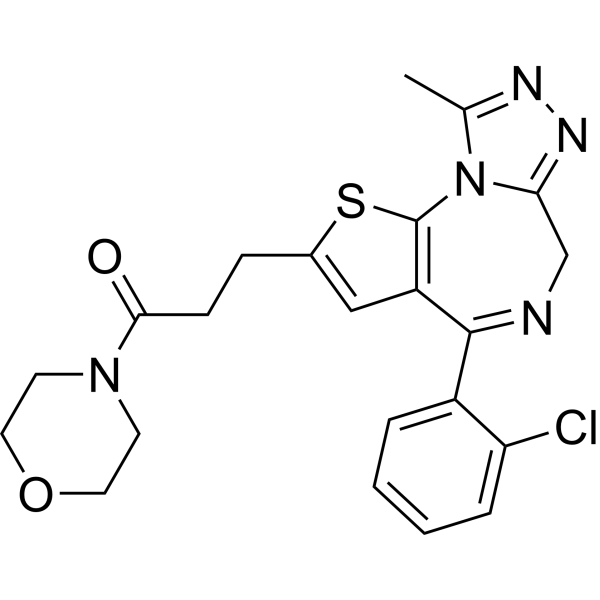
Apafant (WEB 2086), a chemical probe, is a potent platelet-activating factor (PAF) antagonist, inhibits PAF binding to human PAF receptors with a Ki of 9.9 nM. Apafant increases the gene expression of PAF-r, α-globin, β-globin, decreases the c-myb gene expression. Apafant shows a protective effect on alkyl-PAF-mediated lethalit.
For research use only. We do not sell to patients.
The Apafant was designed by Boehringer Ingelheim and could be obtained free of charge through the Boehringer Ingelheim open innovation portal opnMe.com, associated with its negative control.
- Purity : 99.93%
- CAS No.: 105219-56-5
- Formula: C22H22ClN5O2S
- Molecular Weight:455.96
-
Storage:Powder -20°C, 3 years , 4°C, 2 years ; In solvent -80°C, 6 months , -20°C, 1 month

To place orders, for customer services and technical support, please contact: MedChemExpress USA
Tel: 609-228-6898 E-mail: [email protected] [email protected]


-
 Biological Activity
-
Chemical Information
-
Solvent & Solubility
- Protocols
- Purity & Documentation
- References
-
 Help & FAQs


-
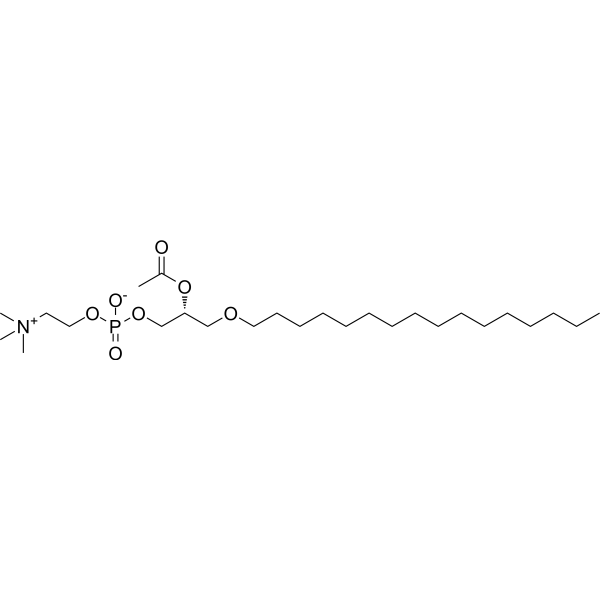
HY-108635
C16-PAFPAFR Activator -
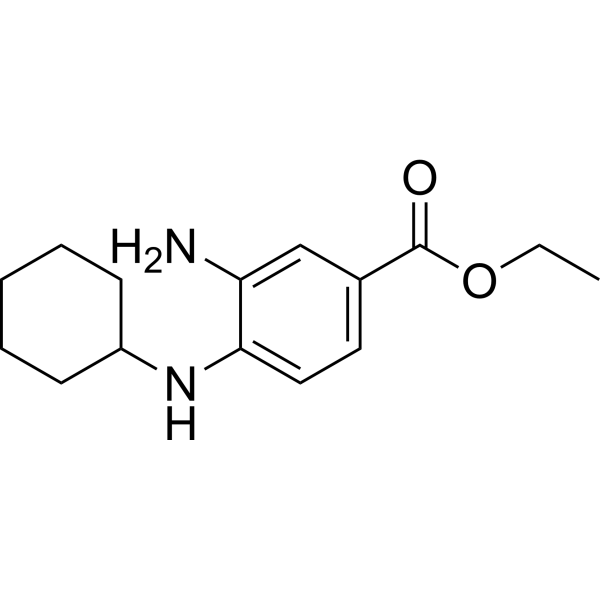
HY-100579
Ferrostatin-1Ferroptosis Inhibitor -
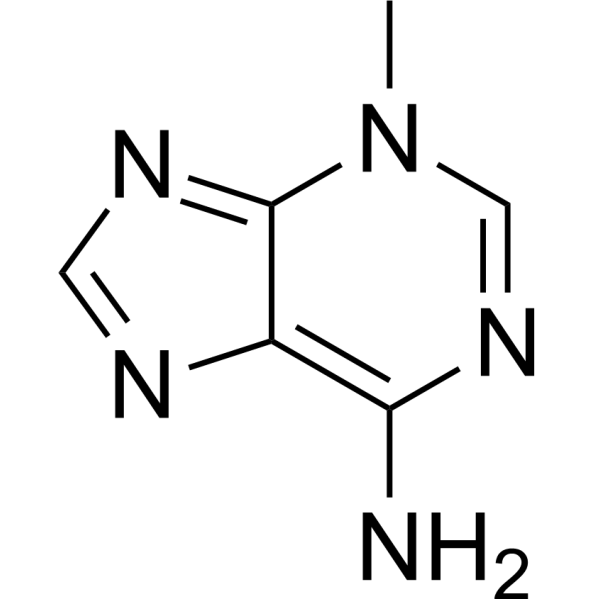
HY-19312
3-MethyladenineAutophagy/PI3K Inhibitor -

HY-Y1891
Tween 80 -
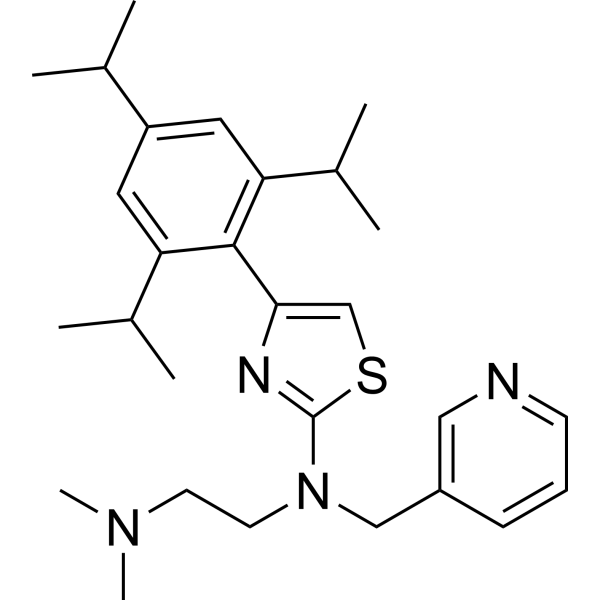
HY-128694
ForopafantPAF Receptor Antagonist -

HY-112825
TSI-01LPCAT2 Inhibitor -

HY-108634R
Apafant (Standard)Reference Standard -
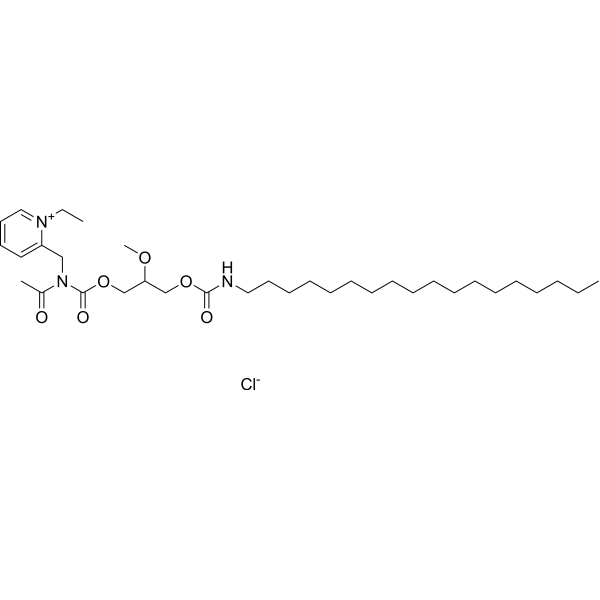
HY-109897
CV-6209PAF Antagonist -
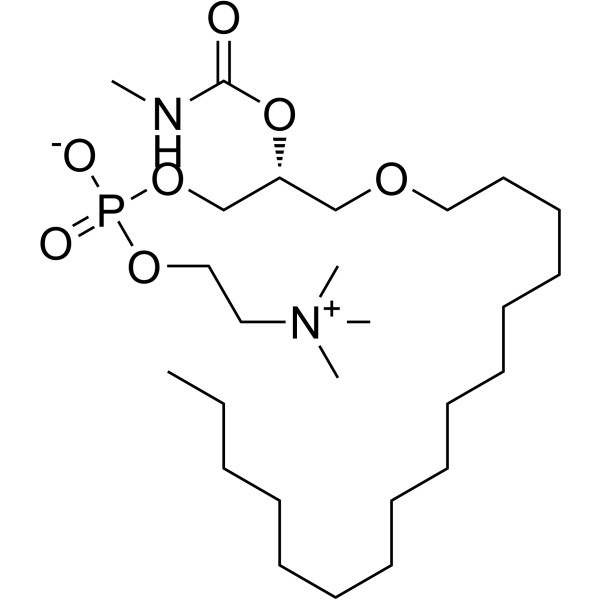
HY-137257
Carbamyl-PAFPAF receptor Agonist -

HY-108635R
C16-PAF (Standard)PAFR Activator -

HY-101004
PCA 4248 -
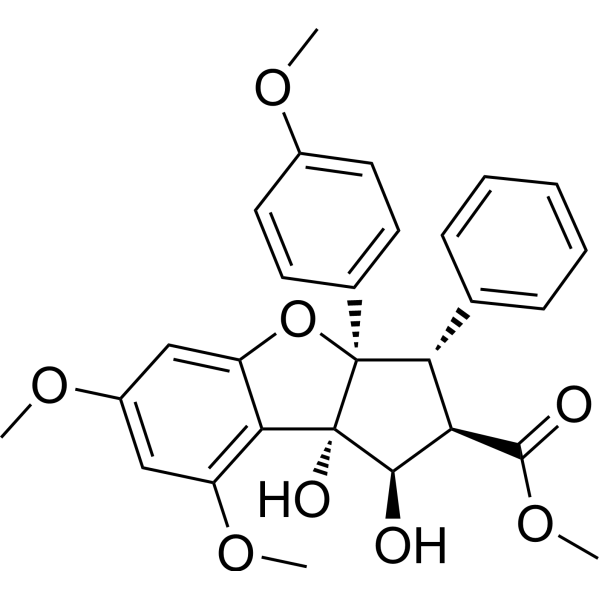
HY-19354
AglafolinePlatelet Aggregation Inhibitor
Publications Citing Use of MedChemExpress (MCE) Apafant
More

Biological Activity
Description
IC50 & Target
Ki: 9.9 nM (Platelet-activating factor)[1]
In Vitro
Apafant (1 mM; 5 days) increases the gene expression of PAF-r, α-globin, β-globin, and decreases the c-myb gene expression in murine erythroleukemia cells (MELCs)[2].
MedChemExpress (MCE) has not independently confirmed the accuracy of these methods. They are for reference only.
-
Cell Line:Murine erythroleukemia cells (MELCs)
-
Concentration:1 mM
-
Incubation Time:5 days
-
Result:Iecreased the gene expression of PAF-r, α-globin, β-globin, decreased the c-myb gene expression.
In Vivo
MedChemExpress (MCE) has not independently confirmed the accuracy of these methods. They are for reference only.
-
Animal Model:20-25 g, Swiss albino mice[3]
-
Dosage:1, 5, 10, 20, 30 mg/kg (3 h later, challenged with a lethal dose of alkyl-PAF (250 μg/kg); ip)
-
Administration:IP; once
-
Result:Increased mouse survival with none of the mice died when they were pretreated with WEB-2086 and then challenged with a lethal dose of alkyl-PAF 5 h later, Only 17% died when challenged 10 h after the WEB-2086 pretreatment. Even in the groups that received the alkyl-PAF injection 30 or 45 h after the WEB-2086 pretreatment, 33% of the mice still survived.


Chemical Information
-
CAS No. 105219-56-5
-
Appearance Solid
-
Molecular Weight 455.96
-
Formula C22H22ClN5O2S
-
Color White to yellow
-
SMILES
O=C(N1CCOCC1)CCC(S2)=CC3=C2N4C(CN=C3C5=CC=CC=C5Cl)=NN=C4C
-
Synonyms
WEB 2086
-
Shipping
Room temperature in continental US; may vary elsewhere.
-
Storage
Powder -20°C 3 years 4°C 2 years In solvent -80°C 6 months -20°C 1 month


Publications (3)
-
Journal Impact Factor
-
Most Recent
-
ACS Environ Au
Machine Learning-Assisted Recognition of Environmental Sulfur-Containing Chemicals in Nontargeted Mass Spectrometry Analysis of Inadequate Mass Resolution. [Abstract]2025 Aug 5;5(6):573-582. PMID: 41277996 -
Neurobiol Dis
Nuclear localization of platelet activating factor receptor accounts for microglial phagocytosis in ischemic stroke. [Abstract]2025 Sep:213:107020. PMID: 40623479 -


Solvent & Solubility
In Vitro:
DMSO : 40 mg/mL (87.73 mM; Need ultrasonic and warming; Hygroscopic DMSO has a significant impact on the solubility of product, please use newly opened DMSO)
Please refer to the solubility information to select the appropriate solvent. Once prepared, please aliquot and store the solution to prevent product inactivation from repeated freeze-thaw cycles.
Storage method and period of stock solution: -80°C, 6 months; -20°C, 1 month. When stored at -80°C, please use it within 6 months. When stored at -20°C, please use it within 1 month.
Please refer to the solubility information to select the appropriate solvent. Once prepared, please aliquot and store the solution to prevent product inactivation from repeated freeze-thaw cycles.
Storage method and period of stock solution: -80°C, 6 months; -20°C, 1 month. When stored at -80°C, please use it within 6 months. When stored at -20°C, please use it within 1 month.
Concentration (start) × Volume (start) = Concentration (final) × Volume (final)
In Vivo:
Select the appropriate dissolution method based on your experimental animal and administration route.
- For the following dissolution methods, please ensure to first prepare a clear stock solution using an In Vitro approach and then sequentially add co-solvents:
- To ensure reliable experimental results, the clarified stock solution can be appropriately stored based on storage conditions. As for the working solution for In Vivo experiments, it is recommended to prepare freshly and use it on the same day.
- The percentages shown for the solvents indicate their volumetric ratio in the final prepared solution. If precipitation or phase separation occurs during preparation, heat and/or sonication can be used to aid dissolution.
Add each solvent one by one: 10% DMSO 40% PEG300 5% Tween-80 45% Saline
Solubility: ≥ 5 mg/mL (10.97 mM); Clear solution
This protocol yields a clear solution of ≥ 5 mg/mL (saturation unknown).
Taking 1 mL working solution as an example, add 100 μL DMSO stock solution (50.0 mg/mL) to 400 μL PEG300, and mix evenly; then add 50 μL Tween-80 and mix evenly; then add 450 μL Saline to adjust the volume to 1 mL.
Preparation of Saline: Dissolve 0.9 g sodium chloride in ddH₂O and dilute to 100 mL to obtain a clear Saline solution.
Add each solvent one by one: 10% DMSO 90% (20% SBE-β-CD in Saline)
Solubility: ≥ 5 mg/mL (10.97 mM); Clear solution
This protocol yields a clear solution of ≥ 5 mg/mL (saturation unknown).
Taking 1 mL working solution as an example, add 100 μL DMSO stock solution (50.0 mg/mL) to 900 μL 20% SBE-β-CD in Saline, and mix evenly.
Preparation of 20% SBE-β-CD in Saline (4°C, storage for one week): 2 g SBE-β-CD powder is dissolved in 10 mL Saline, completely dissolve until clear.
In Vivo Dissolution Calculator
Please enter the basic information of animal experiments:
-
-
-
-
Recommended: Prepare an additional quantity of animals to account for potential losses during experiments.
Please enter your animal formula composition:
-
%DMSO +
Recommended: Keep the proportion of DMSO in working solution below 2% if your animal is weak.
-
%+
-
+%Tween-80 + +
-
%Saline +
The co-solvents required include: DMSO, . All of co-solvents are available by MedChemExpress (MCE). , Tween 80. All of co-solvents are available by MedChemExpress (MCE).
Working solution concentration: 0.22 mg/mL
Method for preparing stock solution: mg drug dissolved in μL DMSO. Stock solution concentration: mg/mL.
1. Take μL DMSO stock solution;
2. Add μL .
μL , mix evenly;
3. Then add μL Tween 80, mix evenly;
4. Then add μL
Please ensure that the stock solution in the first step is dissolved to a clear state, and add co-solvents in sequence. You can use ultrasonic heating (ultrasonic cleaner, recommended frequency 20-40 kHz), vortexing, etc. to assist dissolution.


Purity & Documentation
-
Data Sheet (282 KB)
-
SDS (419 KB)
- English - EN (419 KB)
- Français - FR (419 KB)
- Deutsch - DE (419 KB)
- Norwegian - NO (419 KB)
- Español - ES (419 KB)
- Swedish - SV (419 KB)
- Italian - IT (419 KB)
- Korean - KR (419 KB)
- Portuguese - PT (419 KB)
-
Handling Instructions (2659 KB)
References
[1]. Kato M, et al. Apafant, a potent platelet-activating factor antagonist, blocks eosinophil activation and is effective in the chronic phase of experimental allergic conjunctivitis in guinea pigs. J Pharmacol Sci. 2004 Aug;95(4):435-42. [Content Brief]
[2]. Cellai C, Laurenzana A, Vannucchi AM, Della Malva N, Bianchi L, Paoletti F. Specific PAF antagonist WEB-2086 induces terminal differentiation of murine and human leukemia cells. FASEB J. 2002 May;16(7):733-5. [Content Brief]
[3]. Chaithra VH, et al. Modulation of inflammatory platelet-activating factor (PAF) receptor by the acyl analogue of PAF. J Lipid Res. 2018 Nov;59(11):2063-2074. [Content Brief]


Complete Stock Solution Preparation Table
Please refer to the solubility information to select the appropriate solvent. Once prepared, please aliquot and store the solution to prevent product inactivation from repeated freeze-thaw cycles.
Storage method and period of stock solution: -80°C, 6 months; -20°C, 1 month. When stored at -80°C, please use it within 6 months. When stored at -20°C, please use it within 1 month.
| Optional Solvent | Concentration Solvent Mass | 1 mg | 5 mg | 10 mg | 25 mg |
|---|---|---|---|---|---|
| DMSO | 1 mM | 2.1932 mL | 10.9659 mL | 21.9317 mL | 54.8294 mL |
| 5 mM | 0.4386 mL | 2.1932 mL | 4.3863 mL | 10.9659 mL | |
| 10 mM | 0.2193 mL | 1.0966 mL | 2.1932 mL | 5.4829 mL | |
| 15 mM | 0.1462 mL | 0.7311 mL | 1.4621 mL | 3.6553 mL | |
| 20 mM | 0.1097 mL | 0.5483 mL | 1.0966 mL | 2.7415 mL | |
| 25 mM | 0.0877 mL | 0.4386 mL | 0.8773 mL | 2.1932 mL | |
| 30 mM | 0.0731 mL | 0.3655 mL | 0.7311 mL | 1.8276 mL | |
| 40 mM | 0.0548 mL | 0.2741 mL | 0.5483 mL | 1.3707 mL | |
| 50 mM | 0.0439 mL | 0.2193 mL | 0.4386 mL | 1.0966 mL | |
| 60 mM | 0.0366 mL | 0.1828 mL | 0.3655 mL | 0.9138 mL | |
| 80 mM | 0.0274 mL | 0.1371 mL | 0.2741 mL | 0.6854 mL |


Apafant Related Classifications
HY-108634 Related Classifications
 Powered by Bioz