



Chromium chloride

Based on 1 Customer Validation
Chromium chloride is a trivalent chromium compound and an essential trace mineral. Chromium chloride enhances insulin-stimulated GLUT4 translocation and glucose uptake in skeletal muscle. Chromium chloride regulates glucose and lipid metabolism, inhibits TNF-α secretion and oxidative stress in monocytes treated with high glucose or H2O2, and reverses hydrogen peroxide-induced cell growth inhibition. Chromium chloride reduces coronary and aortic lipid deposition and serum cholesterol levels in hypercholesterolemic rabbits. Chromium chloride can be used in research related to diabetes and cardiac atherosclerosis.
Nur für Forschungszwecke. Wir verkaufen nicht an Patienten.
- Reinheit : 99.9%
- CAS. Nr.: 10025-73-7
- Formel: CrCl3
- Molecular Weight:158.36
-
Speicherung:
4°C, protect from light, stored under nitrogen
* In solvent : -80°C, 6 months; -20°C, 1 month (protect from light, stored under nitrogen)


To place orders, for customer services and technical support, please contact: MedChemExpress USA
Tel: 609-228-6898 E-mail: [email protected] [email protected]


-
 Biologische Aktivität
-
Chemical Information
- Protokoll
- Reinheit & Dokumentation
- Verweise
-
 Help & FAQs


-

HY-Y0998
Potassium hexacyanoferrate(III), 99.5%Chelating Agent -

HY-W094464
Lithium sulfateInorganic Compound -
HY-W094581
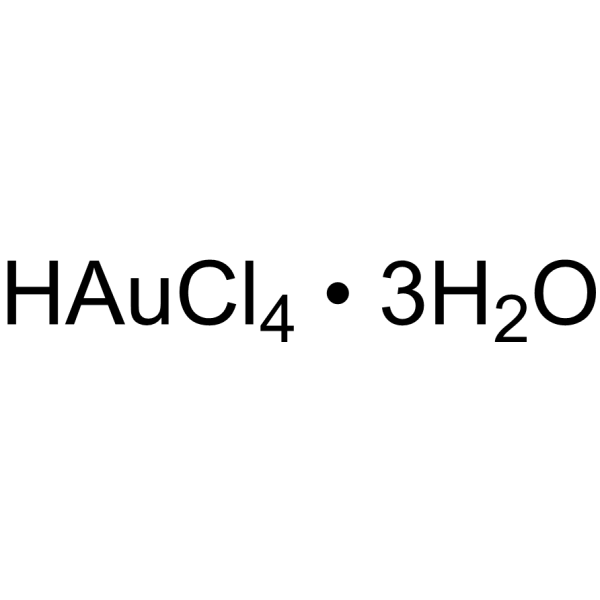
Gold(III) chloride trihydrateReducing Agent -

HY-W019894
Manganese chlorideContrast Agent -

HY-N3025
Zinc sulfate heptahydrateDietary Supplement -

HY-Y0406E
Calcium chloride anhydrous, for cell cultureCalcium Chloride


Biologische Aktivität
Beschreibung
In Vitro
Chromium chloride (1-1000 μM; 24 h) concentration-dependently inhibits elevated TNF-α secretion in high glucose-treated, PMA/lipopolysaccharide-activated U937 cells, with significant inhibitory effects observed across the concentration range after 24 h[2].
Chromium chloride (1-1000 μM; 24 h) inhibits elevated TNF-α secretion in H2O2-treated, PMA/lipopolysaccharide-activated U937 cells, with significant inhibitory effects observed across the concentration range after 24 h[2].
Chromium chloride (10-1000 μM; 24 h) prevents H2O2-induced growth inhibition in U937 cells, with significant protective effects observed across the concentration range after 24 h[2].
Chromium chloride (100 μM; 24 h) inhibits elevated lipid peroxidation levels in both high glucose-treated and H2O2-treated U937 cells after 24 h[2].
Chromium chloride (100 μM; 24 h) inhibits elevated protein oxidation levels in both high glucose-treated and H2O2-treated U937 cells after 24 h[2].
MedChemExpress (MCE) has not independently confirmed the accuracy of these methods. They are for reference only. Further protocols information, click here.
-
Cell Line:human promonocytic U937 cells (PMA/lipopolysaccharide-activated, high glucose-treated)
-
Concentration:1, 10, 100, 1000 μM
-
Incubation Time:24 h
-
Result:Inhibited elevated TNF-α secretion in a concentration-dependent manner, with statistically significant reductions (P < 0.02) observed at all tested concentrations compared to the high glucose-only control.
-
Cell Line:human promonocytic U937 cells (PMA/lipopolysaccharide-activated, hydrogen peroxide-treated)
-
Concentration:1, 10, 100, 1000 μM
-
Incubation Time:24 h
-
Result:Inhibited elevated TNF-α secretion at all tested concentrations, with statistically significant reductions (P < 0.02) observed compared to the H2O2-only control.
-
Cell Line:human promonocytic U937 cells (hydrogen peroxide-treated)
-
Concentration:10, 100, 1000 μM
-
Incubation Time:24 h
-
Result:Prevented H2O2-induced growth inhibition at concentrations of 10, 100, and 1000 μM, with statistically significant differences (P < 0.01) observed compared to the H2O2-only control.
In Vivo
MedChemExpress (MCE) has not independently confirmed the accuracy of these methods. They are for reference only.
-
Animal Model:New Zealand white rabbits (male adult, aged 15 weeks, initial weight 2683.6 g; hypercholesterolemic induced by 2% cholesterol diet for 30 days)[3]
-
Dosage:1 mg chromium chloride (0.33 mg chromium/kg body weight)
-
Administration:i.m.; 6 days per week; 6 weeks
-
Result:Reduced mean log10(ORO+1) value (coronary lipid deposit area) to 1.5253, which was significantly lower than untreated hypercholesterolemic rabbits.
Reduced mean area of ascending aortic lipid deposits to 255.552, which was significantly lower than untreated hypercholesterolemic rabbits.
Reduced terminal mean serum cholesterol concentration to 175.180 mg/dL, which was significantly lower than untreated hypercholesterolemic rabbits.
Increased terminal mean serum chromium concentration to 3746.4 μg/L, compared to 4.3 μg/L in untreated rabbits.
Reduced serum albumin level to mean 48.63 g/L, alkaline phosphatase to mean 35.50 U/L, triglyceride to mean 1.07 mmol/L, and HDL-C to mean 0.66 mmol/L relative to untreated hypercholesterolemic rabbits.
Showed no significant histopathological differences in liver or kidney between chromium chloride-treated and untreated hypercholesterolemic rabbits.
Clinical Trial
| NCT Number | Sponsor | Condition | Start Date |
Phase

|
|---|---|---|---|---|
| NCT01329991 | Plexxikon| | 2011-05 | PHASE1 |


Chemical Information
-
CAS. Nr. 10025-73-7
-
Appearance Solid
-
Molecular Weight 158.36
-
Formel CrCl3
-
Color Pale purple to purple
-
SMILES
Cl[Cr](Cl)Cl
-
Versand
Room temperature in continental US; may vary elsewhere.
-
Speicherung
4°C, protect from light, stored under nitrogen
* In solvent : -80°C, 6 months; -20°C, 1 month (protect from light, stored under nitrogen)

Protokoll
-
ROS/oxidative-stress fluorescent staining
ROS/oxidative-stress fluorescent staining uses cell-permeant fluorogenic probes that become fluorescent after oxidation inside cells or tissues; commonly used examples include DCFH-DA/DCFDA for broad cellular oxidant detection, DHE for superoxide-related signal detection, MitoSOX for mitochondrial superoxide-related signal detection, and CellROX probes for oxidative-stress-associated fluorescence readouts. The assay detects probe oxidation rather than a single ROS species unless the probe and analysis method have been chemically validated for that species. DCFH-DA enters cells, is deacetylated by intracellular esterases to DCFH, and produces fluorescent DCF after oxidation, so the readout is used as an operational measure of total cellular oxidative stress rather than a species-specific ROS measurement. DHE and MitoSOX can report superoxide-related oxidation, but red fluorescence alone can include non-specific ethidium-like oxidation products; HPLC or optimized spectral approaches are
-
Protocol for Cell Counting and Cell Density Analysis
Cell counting and cell-density analysis estimate the number of cells in a known volume or field area. Manual hemocytometer counting uses a chamber of defined geometry to convert counted cells into cells/mL, while automated counters and image-analysis workflows detect cell objects from optical, brightfield, fluorescence, impedance, or digital-image features. Trypan blue viability counting is based on dye exclusion: viable cells with intact membranes exclude dye, while non-viable cells with compromised membranes stain blue. The readout is total cell density, viable-cell density, dead-cell density, and percent viability. Cell density can also be estimated from microscopy images by counting objects per image area, from flow cytometry using calibrated volume or reference particles, or from in situ microscopy in bioreactors after calibration against reference methods such as hemocytometer or flow cytometry.
-
Research Protocol for Endocrine Diseases
Endocrine diseases often arise from disrupted hormone production, hormone signaling, or target-tissue responsiveness; for diabetes-focused endocrine disease models, insulin signaling regulates glucose uptake, hepatic glucose output, lipid metabolism, and β-cell compensation. Type 2 diabetes develops through interacting defects in insulin resistance, β-cell dysfunction, adipose inflammation, hepatic glucose overproduction, altered incretin signaling, and ectopic lipid metabolism. A major unresolved question is whether endocrine dysfunction is driven primarily by target-tissue insulin resistance, intrinsic β-cell failure, immune/inflammatory stress, or combined multi-organ failure that differs by disease stage.
-
Somatic Cell Culture
A method of simulating the in vivo environment in vitro to maintain the cell growth, differentation and main functions.
-
CCK-8/WST-8 Cell Proliferation Assay
The CCK-8/WST-8 assay is based on the reduction of the water-soluble tetrazolium salt WST-8 to a water-soluble formazan product by cellular dehydrogenases in metabolically active cells, where the generated formazan amount is proportional to the number of living cells and is quantified by measuring absorbance in the visible range, providing a colorimetric readout for cell viability and proliferation assessment. This class of tetrazolium-based assays improves upon earlier MTT-based systems by producing a water-soluble formazan, eliminating the need for organic solubilization steps and enabling direct spectrophotometric measurement in culture medium.
-
Research Protocol for Cardiovascular Diseases
Cardiovascular disease can be modeled as maladaptive cardiac remodeling, where ischemic injury or pressure overload activates inflammatory signaling, fibroblast activation, extracellular-matrix deposition, cardiomyocyte hypertrophy, vascular remodeling, and progressive ventricular dysfunction. The TGF-β/SMAD axis is a central profibrotic pathway after myocardial injury and pressure overload, while innate immune and cytokine pathways regulate leukocyte recruitment, scar formation, and adverse remodeling. Key unresolved questions include which inflammatory signals are reparative versus harmful, when fibrosis is protective versus maladaptive, and whether pathway inhibition improves function without weakening necessary infarct healing or compensatory remodeling.
-
Cell Counting-Based Growth Curve Assay
Cell counting-based growth curve assays quantify cell proliferation by directly measuring changes in viable cell number over time using manual or automated counting methods such as hemocytometer-based counting or instrument-assisted cell enumeration, enabling construction of growth curves that reflect population expansion dynamics in response to culture conditions. A widely used approach is trypan blue exclusion with hemocytometer counting, where membrane-compromised (non-viable) cells take up the dye, allowing discrimination between viable and non-viable cells while simultaneously enabling total cell number quantification. Repeated sampling across time points allows estimation of proliferation rate, growth phases, and comparative growth kinetics between experimental conditions.
-
MTT Cell Proliferation Assay
The MTT assay is a colorimetric endpoint assay for estimating viable cell number, cell growth, cytotoxicity, or cell activation in cultured mammalian cells. Living cells reduce the yellow tetrazolium salt MTT into purple/blue formazan, while dead cells do not generate the same signal; the resulting color can be quantified with a multiwell spectrophotometer. MTT reduction is commonly interpreted as a readout of metabolic activity that often correlates with viable cell number, but it should not be treated as a direct cell-counting method unless the assay is optimized for the cell type and experimental condition. Studies show that MTT reduction can involve mitochondrial and non-mitochondrial reducing systems, and formazan may accumulate in intracellular lipid droplets rather than simply marking mitochondria.
-
Research Protocol for Metabolic Diseases
AMP-activated protein kinase, AMPK, is a conserved cellular energy sensor that responds to reduced cellular energy status and coordinates metabolism by increasing ATP-generating catabolic pathways while suppressing ATP-consuming anabolic processes. In metabolic disease research, the AMPK pathway is experimentally relevant because it regulates hepatic lipid synthesis, fatty acid oxidation, glucose production, skeletal-muscle glucose disposal, mTORC1-linked biosynthesis, autophagy, mitochondrial homeostasis, and whole-body energy balance. The central pathway logic is that energy stress, metformin, exercise-like stimulation, or direct AMPK activators increase AMPKα Thr172 phosphorylation and downstream substrate phosphorylation, including ACC and RAPTOR. Phosphorylation of ACC suppresses lipogenesis and supports fatty acid oxidation, whereas phosphorylation of RAPTOR suppresses mTORC1 signaling and links cellular energy status to growth and protein synthesis control. The pathway is linked
-
Cell Viability Determination by MTT Colorimetric Assay
The following protocol uses the MTT colorimetric assay as a classic literature-established method for assessing cell viability/metabolic activity in cultured mammalian cells. MTT[3-(4,5-dimethylthiazol-2-yl)-2,5-diphenyltetrazolium bromide] is reduced by metabolically active cells to a colored formazan product; the amount of formazan is quantified spectrophotometrically and provides an indirect measure of metabolically active viable cells. Importantly, MTT reduction reflects cellular oxidoreductase/metabolic activity rather than an absolute direct count of living cells, so changes in cellular metabolism can alter the signal independently of cell number.


Reinheit & Dokumentation
-
Data Sheet (281 KB)
-
SDS (759 KB)
- English - EN (759 KB)
- Français - FR (759 KB)
- Deutsch - DE (759 KB)
- Norwegian - NO (759 KB)
- Español - ES (759 KB)
- Swedish - SV (759 KB)
- Italian - IT (759 KB)
- Korean - KR (759 KB)
- Portuguese - PT (759 KB)
-
Handling Instructions (2659 KB)
Verweise
[1]. Doerner PG 3rd, et al. Chromium chloride increases insulin-stimulated glucose uptake in the perfused rat hindlimb. Acta Physiol (Oxf). 2014;212(3):205-213. [Content Brief]
[2]. Jain SK, et al. Chromium chloride inhibits oxidative stress and TNF-alpha secretion caused by exposure to high glucose in cultured U937 monocytes. Biochem Biophys Res Commun. 2001;289(3):687-691. [Content Brief]
[3]. Price Evans DA, et al. Chromium chloride administration causes a substantial reduction of coronary lipid deposits, aortic lipid deposits, and serum cholesterol concentration in rabbits. Biol Trace Elem Res. 2009;130(3):262-272. [Content Brief]

Calculators
Konzentration (Stammlösung) × Volumen (Stammlösung) = Konzentration (Ziellösung) × Volumen (Ziellösung)


Chromium chloride Related Classifications
HY-B1608 Related Classifications
 Powered by Bioz