



Hyperphosphatemia
-
Hyperphosphatemia (7)

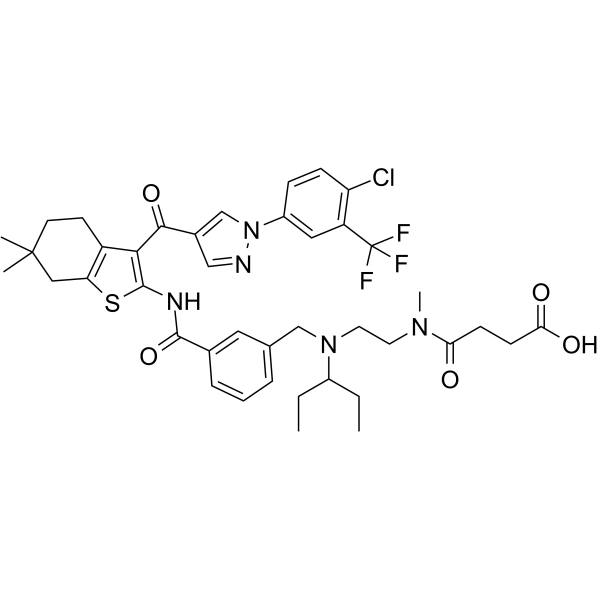
- Formula: C41H47ClF3N5O5S
- Molecular Weight: 814.36
NaPi2b-IN-2 is a potent inhibitor of sodium-dependent phosphate transporter 2b (SLC34A2, NaPi2b), with an IC50 value of 38 nM against human NaPi2b. NaPi2b-IN-2 reduces intracellular phosphate levels and enhances innate immune gene expression. NaPi2b-IN-2 can be used in research related to hyperphosphatemia.
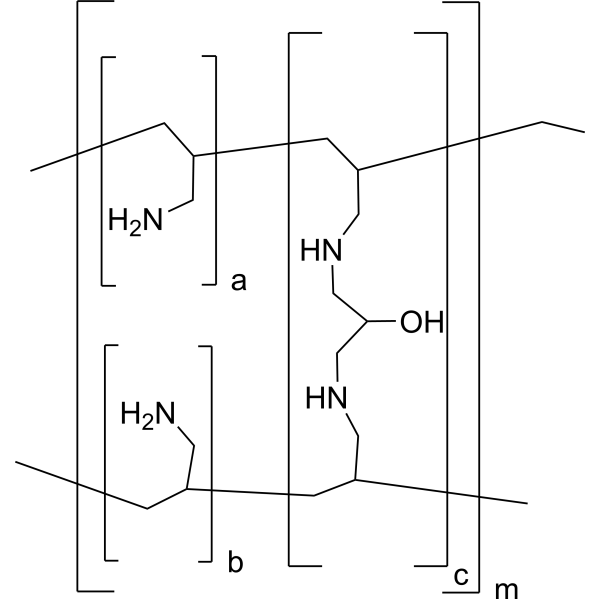
- Formula: [(C3H7N)a+b·(C9H18N2O)c]n
Sevelamer is an orally active polymeric phosphate binder and bile acid sequestrant. Sevelamer binds dietary phosphate in the gastrointestinal tract, reducing phosphate absorption and serum phosphorus levels, and reduces urinary phosphate excretion. Sevelamer binds polyanion bile acids, increases bile acid faecal excretion, and reduces total cholesterol and LDL cholesterol levels. Sevelamer can be used for the research of hyperphosphataemia, hyperparathyroidism, chronic renal failure, kidney disease, and type 2 diabetes.
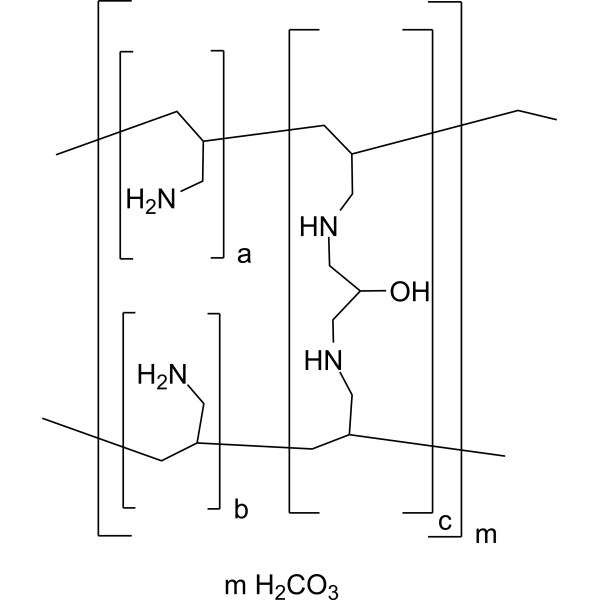
- Formula: [(C3H7N)a+b·(C9H18N2O)c]n·xH2CO3
Sevelamer carbonate is an orally active polymeric phosphate binder and bile acid sequestrant. Sevelamer carbonate binds dietary phosphate in the gastrointestinal tract, reducing phosphate absorption and serum phosphorus levels, and reduces urinary phosphate excretion. Sevelamer carbonate binds polyanion bile acids, increases bile acid faecal excretion, and reduces total cholesterol and LDL cholesterol levels. Sevelamer carbonate can be used for the research of hyperphosphataemia, hyperparathyroidism, chronic renal failure, kidney disease, and type 2 diabetes.
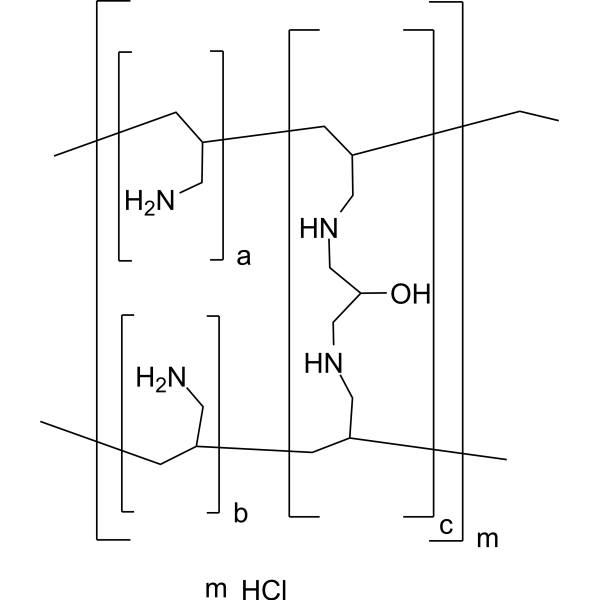
- Formula: [(C3H7N)a+b·(C9H18N2O)c]n·xHCl
- Molecular Weight: 186.08 (monomer)
Sevelamer hydrochloride is an orally active polymeric phosphate binder and bile acid sequestrant. Sevelamer hydrochloride binds dietary phosphate in the gastrointestinal tract, reducing phosphate absorption and serum phosphorus levels, and reduces urinary phosphate excretion. Sevelamer hydrochloride binds polyanion bile acids, increases bile acid faecal excretion, and reduces total cholesterol and LDL cholesterol levels. Sevelamer hydrochloride can be used for the research of hyperphosphataemia, hyperparathyroidism, chronic renal failure, kidney disease, and type 2 diabetes.

- Formula: C35H36F8N6O5
- Molecular Weight: 772.70
Atidafonat is an orally active sodium-dependent phosphate transporter inhibitor, with IC50 values of 6.8, 1.5, and 1.7 μM against human NaPi-IIb, PiT-1, PiT-2, respectively; and IC50 values of 3.9, 1.9, and 1.7 μM against rat NaPi-IIb, PiT-1, PiT-2, respectively. Atidafonat inhibits intestinal phosphate absorption, increases fecal phosphate excretion, reduces urinary phosphate excretion, and decreases the levels of serum phosphate, FGF23, and adult parathyroid hormone. Atidafonat ameliorates ectopic thoracic aortic calcification, renal injury and hyperphosphatemia, and inhibits the expression of fibrosis markers. Atidafonat can be used for the research of hyperphosphatemia and chronic kidney disease-mineral and bone disorder (CKD-MBD).

- Formula: C18H15Cl2F3N4OS
- Molecular Weight: 463.30
JTP-59557 is an orally active, stereospecific noncompetitive inhibitor of type IIb sodium/phosphate cotransporter (NaPi-IIb). JTP-59557 selectively inhibits type IIb-mediated inorganic phosphate uptake, without affecting Na+-independent inorganic phosphate transport or Na+-dependent D-glucose (HY-B0389) transport. JTP-59557 also suppresses Na+-dependent inorganic phosphate transport in intestinal brush border membrane vesicles. JTP-59557 is applicable to research related to hyperphosphatemia and hyperphosphatemia associated with chronic kidney disease.

- Formula: (C16H40N6.C3H5ClO)x
Bixalomer is a phosphate binder. Bixalomer can improve hyperphosphatemia in chronic kidney disease (CKD) rat model. Bixalomer reduces plasma phosphorus level in CKD rat models through binding phosphate in small intestine and reduces phosphate absorption. Bixalomer can be studied in research on hyperphosphatemia.



