

17 Results for "

Mus musculus

" in MedChemExpress (MCE) Product Catalog:
Products (17)

17 Results for "Mus musculus" in MCE Product Catalog:

Cat. No.: HY-P9991
CAS No.: 2460539-61-9
Synonyms: TST001

Target:  

Gap Junction Protein

Research Areas:  

Cancer

Osemitamab is an IgG1 antibody targeting to human claudin-18.2. Osemitamab consists of human-Mus musculus monoclonal TST001 γ1-chain, disulfide with human-Mus musculus monoclonal TST001 κ-chain, dimer (ACI). Osemitamab in combination with Capecitabine (HY-B0016) and Oxaliplatin (HY-17371), can be used for G/GEJ cancer study .
Cat. No.: HY-W341625
CAS No.: 474943-80-1
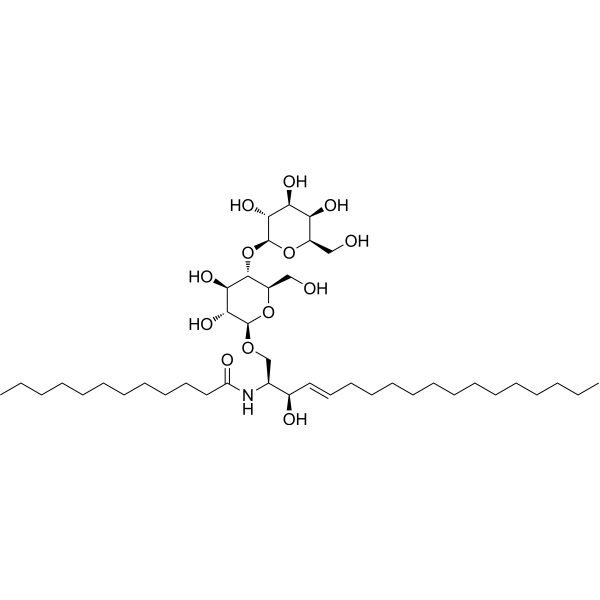
Trihexosylceramide (d18:1/12:0) is a glycosphingolipid and mood-related compound. Trihexosylceramide (d18:1/12:0) is characterized by elevated serum levels in Mus musculus fed a high-fat diet, and its levels are positively correlated with mood Z-scores. Accumulation of Trihexosylceramide (d18:1/12:0) in tissues is considered the etiology of angiokeratoma corporis diffusum. Trihexosylceramide (d18:1/12:0) can be used in studies related to high-fat diet-induced mood disorders .\n


Cat. No.: HY-P5081
CAS No.: 1678414-54-4
Research Areas:  

Inflammation/Immunology

Endotrophin (Mus musculus) is an adipokine, a cleavage fragment derived from Collagen VI, whose levels are elevated in adipose tissue and breast tumors of obese mice. Endotrophin (Mus musculus) activates the TGF-β signaling pathway and reduces the expression of hormone-sensitive lipase. Endotrophin (Mus musculus) induces adipogenesis, lipid accumulation, fibrosis, inflammation, angiogenesis, adipose tissue expansion, epithelial-mesenchymal transition, and insulin resistance; it also induces Cisplatin (HY-17394) resistance in cancer cells. Endotrophin (Mus musculus) can be used in research related to metabolic diseases such as obesity and type 2 diabetes, as well as cancers such as breast cancer .
Cat. No.: HY-145425
CAS No.: 2771006-54-1
Target:  

IRE1 Apoptosis FGFR

Research Areas:  

Inflammation/Immunology

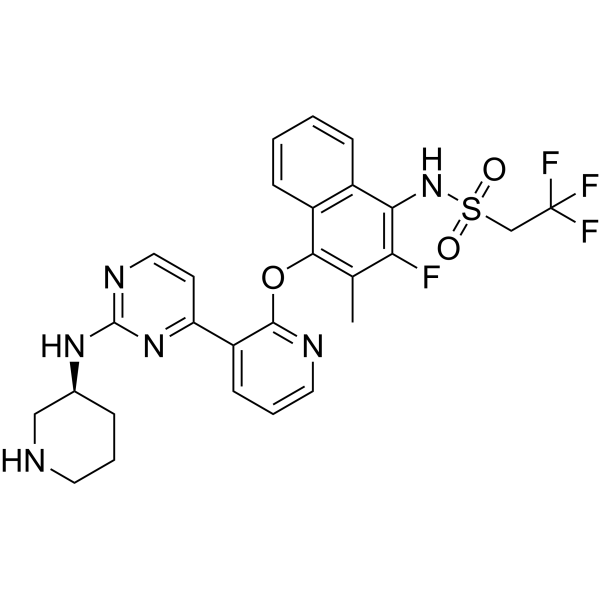
PAIR2 is a highly selective inhibitor targeting the kinase domain of human IRE1α, with a Ki value of 8.8 nM against human IRE1α. PAIR2 fully occupies the ATP-binding site of the IRE1α kinase domain, partially antagonizes the ribonuclease activity of IRE1α, specifically inhibits regulated IRE1α-dependent decay (RIDD) and its mediated substrate cleavage, while preserving the splicing function of Xbp1 mRNA. PAIR2 also promotes the differentiation of B cells into plasma cells, blocks IRE1α-induced cell apoptosis, and restores the expression of Fgfr2 mRNA in AT2 cells. PAIR2 effectively reaches a steady-state concentration in the lung tissues of Mus musculus, and serves as an important tool for investigating the function of the IRE1α signaling pathway in diseases such as pulmonary fibrosis .
Cat. No.: HY-172910
CAS No.: 3077252-76-4
MTHFD2-IN-6 is an orally active selective inhibitor of MTHFD2, with a human IC50 of 1.46 μM. MTHFD2-IN-6 binds directly to MTHFD2, selectively inhibits cancer cell proliferation, promotes ROS accumulation in cancer cells, and induces cancer cell cycle arrest and apoptosis. MTHFD2-IN-6 inhibits tumor growth in Mus musculus xenograft models. MTHFD2-IN-6 can be used for lung cancer research .
Cat. No.: HY-P5081A
Research Areas:  

Inflammation/Immunology

Endotrophin (Mus musculus) TFA is an adipokine, a cleavage fragment derived from Collagen VI, whose levels are elevated in adipose tissue and breast tumors of obese mice. Endotrophin (Mus musculus) TFA activates the TGF-β signaling pathway and reduces the expression of hormone-sensitive lipase. Endotrophin (Mus musculus) TFA induces adipogenesis, lipid accumulation, fibrosis, inflammation, angiogenesis, adipose tissue expansion, epithelial-mesenchymal transition, and insulin resistance; it also induces Cisplatin (HY-17394) resistance in cancer cells. Endotrophin (Mus musculus) TFA can be used in research related to metabolic diseases such as obesity and type 2 diabetes, as well as cancers such as breast cancer .
Cat. No.: HY-167244
CAS No.: 5823-25-6
Target:  

Insecticide

Research Areas:  

Others

AI 3-23445 is a compound with environmental toxicity and insecticidal activity, capable of inducing avoidance behavior in Peromyscus maniculatus and Mus musculus. AI 3-23445 can be utilized in agricultural research .
Cat. No.: HY-P703485
Purity:  ≥ 90%, as determined by reducing SDS-PAGE.
Synonyms: Ig kappa chain V-II region 7S34.1; Mus Musculus; Mouse; Monoclonal antibody
Species:  
Source:  
Cat. No.: HY-N11732
CAS No.: 36375-21-0
O-Demethylrotenone is a rotenone (HY-B1756) derivative and a photodegradation product of rotenone that induces acute intraperitoneal toxicity. The acute intraperitoneal LD50 of O-Demethylrotenone in Mus musculus is 8.0 mg/kg .
Cat. No.: HY-183924
CAS No.: 725237-11-6
Target:  

Syk Tyrosinase

Research Areas:  

Inflammation/Immunology

SYK-IN-14 is an orally active Syk and ZAP-70 inhibitor with human Syk IC50 of 0.006 μM, human ZAP-70 IC50 of 0.23 μM. SYK-IN-14 functionally inhibits Syk kinase activity in vitro. SYK-IN-14 functionally inhibits ZAP-70 kinase activity in vitro. SYK-IN-14 suppresses passive cutaneous anaphylaxis reaction in Mus musculus mice. SYK-IN-14 suppresses Concanavalin A (HY-P2149)-induced IL-2 production in Mus musculus mice. SYK-IN-14 can be used for the research of allergic disorders and autoimmune diseases .
Cat. No.: HY-P703362
Purity:  ≥ 95%, as determined by reducing SDS-PAGE.
Synonyms: Dipeptidyl peptidase 3; Dipeptidyl aminopeptidase III; Dipeptidyl arylamidase III; Dipeptidyl peptidase III; DPP III; Enkephalinase B; Dpp3; Mus Musculus; Mouse; DPP III; Aminopeptidase; Hydrolase; Metalloprotease; Protease; 3.4.14.4
Species:  
Source:  
Cat. No.: HY-182584
CAS No.: 153607-45-5
Target:  

5-HT Receptor

Research Areas:  

Neurological Disease

S 15931 is a 5-HT1A receptor inhibitor. S 15931 inhibits the late-phase hindpaw licking response induced by formalin and the abdominal writhing response induced by acetic acid in Mus musculus. S 15931 abolishes the spontaneous tail-flick response induced by 8-OH-DPAT in Rattus norvegicus and potentiates the analgesic effect of morphine. S 15931 is applicable for pain-related research .
Cat. No.: HY-P703477
Synonyms: Glycoprotein hormones alpha chain; Anterior pituitary glycoprotein hormones common subunit alpha; Follicle-stimulating hormone alpha chain; FSH-alpha; Follitropin alpha chain; Luteinizing hormone alpha chain; LSH-alpha; Lutropin alpha chain; Thyroid-stimulating hormone alpha chain; TSH-alpha; Thyrotropin alpha chain; Cga; Mus Musculus; Mouse; FSH-alpha; Hormone
Species:  
Source:  
Cat. No.: HY-P992098
Synonyms: NEI-01

Research Areas:  

Cancer

Adargiminase (NEI-01) is a modified arginine-depleting enzyme and albumin binder. Adargiminase catalyzes the conversion of arginine to citrulline and ammonia, reduces plasma arginine levels to undetectable levels, and binds to serum albumin from Mus musculus (mouse), Rattus norvegicus (rat), Canis lupus familiaris (dog) and Homo sapiens (human) to extend its half-life. Adargiminase inhibits the viability of ASS1-negative pancreatic cancer cells, and reduces tumor volume and weight. Adargiminase can be used for the research of pancreatic cancer .
Cat. No.: HY-181740
Target:  

CD1

Research Areas:  

Cancer

GCB-27b is an immunostimulant that binds to CD1d. GCB-27b forms a stable and long-lasting complex with CD1d, which is presented to the TCR of NKT cells to drive immune responses. GCB-27b induces a Th1-skewed immune response in *Mus musculus*, resulting in high expression of IFN?γ with restricted IL-4 levels. GCB-27b is applicable to research related to lung metastasis of melanoma .
Cat. No.: HY-181102
CAS No.: 3081614-92-5
TGR5 agonist 10 is a selective, allosteric and orally active Takeda G protein coupled receptor 5 (TGR5) agonist with EC50s of 0.8 μM and 0.6 μM for human TGR5 and mouse TGR5, respectively. TGR5 agonist 10 demonstrates selectivity for TGR5 over FXR. TGR5 agonist 10 activates hTGR5 and mTGR5 to induce cAMP accumulation, and positively modulates lithocholic acid functional activity and potency at hTGR5, with higher selectivity for cAMP formation over β-arrestin2 recruitment. TGR5 agonist 10 exerts glucose-lowering effects in Mus musculus oral glucose tolerance tests. TGR5 agonist 10 can be used for the research of diabetes .
Cat. No.: HY-183564
CAS No.: 2915280-95-2
RIPK1/RIPK3-PPI-IN-1 is an orally active dual-target inhibitor of RIPK1/RIPK3, with a Kd value of 2.4 nM for RIPK1 and 24 nM for RIPK3. RIPK1/RIPK3-PPI-IN-1 inhibits the phosphorylation of RIPK1, RIPK3 and MLKL, thereby suppressing necroptosis. RIPK1/RIPK3-PPI-IN-1 restores body temperature, improves survival rate, and reduces IL-1β/IL-6 levels in serum and multiple organs of Mus musculus, thus alleviating TNF-α-induced systemic inflammatory response syndrome. RIPK1/RIPK3-PPI-IN-1 can be used in research related to systemic inflammatory response syndrome .
  • 1

