



MARV
Marburg virus (MARV) is an enveloped, negative-sense RNA filovirus whose genome encodes seven proteins and causes severe, frequently fatal human disease[1][2]. Mechanistically, the MARV genome supports replication to generate progeny genomes and transcription to produce mRNAs, while VP30 enables transcription reinitiation at the GP gene and supports GP and downstream gene expression[1][3]. In disease models, MARV pathogenesis links uncontrolled virus replication with suppression of host type I interferon responses; VP40 inhibits interferon signaling through Jak1 antagonism and contributes to assembly and budding[4][5]. Compared with Ebola virus and other filoviruses, MARV shows distinct replication and transcription properties, including differences in nucleocapsid formation, genomic replication promoter structure, transcription protein requirements, and mRNA editing[3]. For experimental applications, MARV reverse genetics systems based on minigenomes, infectious virus-like particles, and full-length clones support replication-cycle studies, host-response analysis, infection imaging, and antiviral screening[6]. Cell-based high-throughput screening of VP40 interferon-antagonist function identified azaguanine-8, which inhibited MARV growth at noncytotoxic concentrations[7].
References:
- [1]. Edwards MR, et al. Marburg Virus VP30 Is Required for Transcription Initiation at the Glycoprotein Gene. mBio. 2022 Oct 26;13(5):e0224322. [Content Brief]
- [2]. Ascenzi P, et al. Ebolavirus and Marburgvirus: insight the Filoviridae family. Mol Aspects Med. 2008 Jun;29(3):151-85. [Content Brief]
- [3]. Mühlberger E. Filovirus replication and transcription. Future Virol. 2007 Mar;2(2):205-215. doi: 10.2217/17460794.2.2.205. PMID: 24093048; PMCID: PMC3787895. et al. Filovirus replication and transcription. Future Virol. 2007 Mar;2(2):205-215. [Content Brief]
- [4]. Messaoudi I, et al. Filovirus pathogenesis and immune evasion: insights from Ebola virus and Marburg virus. Nat Rev Microbiol. 2015 Nov;13(11):663-76. [Content Brief]
- [5]. Valmas C, et al. Marburg virus VP40 antagonizes interferon signaling in a species-specific manner. J Virol. 2011 May;85(9):4309-17. [Content Brief]
- [6]. Schmidt KM, et al. Marburg Virus Reverse Genetics Systems. Viruses. 2016 Jun 22;8(6):178. [Content Brief]
- [7]. Luthra P, et al. High-Throughput Screening Assay to Identify Small Molecule Inhibitors of Marburg Virus VP40 Protein. ACS Infect Dis. 2020 Oct 9;6(10):2783-2799. [Content Brief]
All Product Categories
-
MARV 관련 제품 (9)
관련 제품 (9)

-
K777
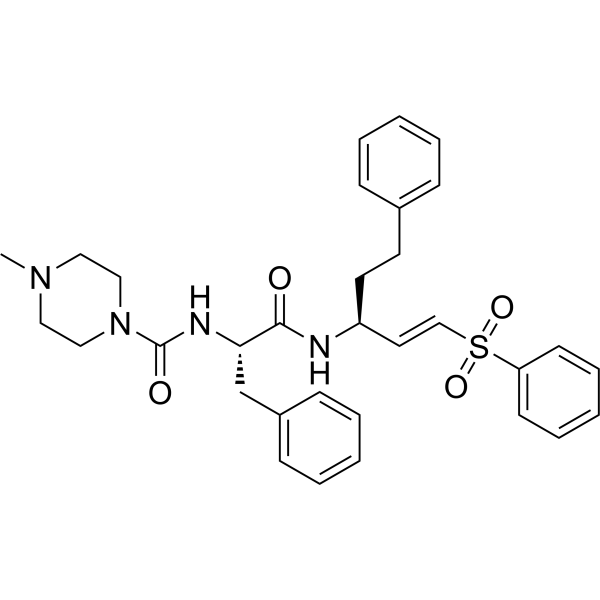 0 ImagesK777 is a potent, orally active and irreversible cysteine protease inhibitor. K777 is also a potent CYP3A4 inhibitor with an IC50 of 60 nM. K777 irreversibly inhibits Cruzain, the major cysteine protease of Trypansoma cruzi, and cathepsins B and L. K777 is a broad-spectrum antiviral by targeting cathepsin-mediated cell entry. K777 inhibits SARS-CoV and EBOV pseudovirus entry with IC50 values of 0.68 nM and 0.87 nM, respectively.
-
EBOV/MARV-IN-2
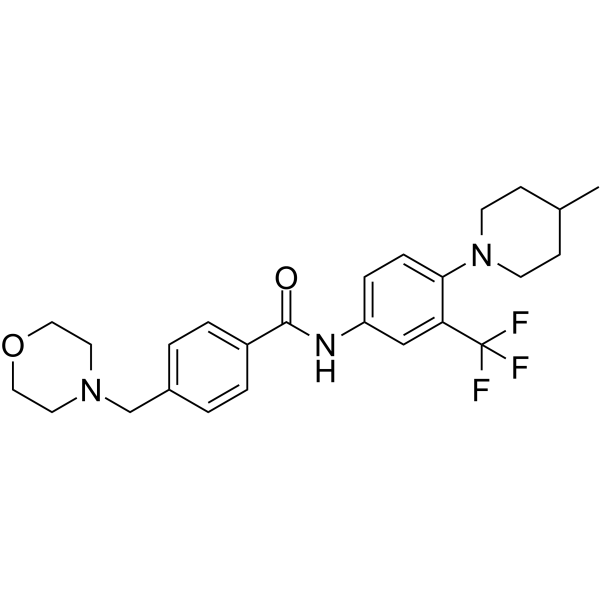
 0 ImagesCat. No.: HY-146813CAS No.: 2687244-84-2
-
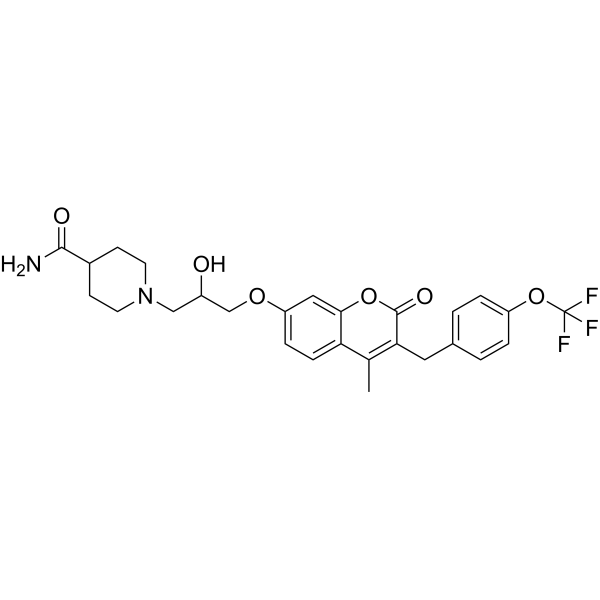
As-358
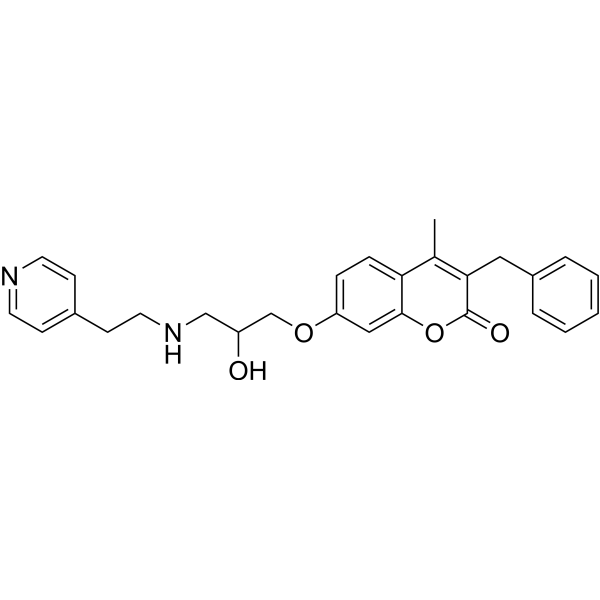
 0 ImagesCat. No.: HY-146883CAS No.: 2222042-47-7As-358 has inhibitory effects against Ebola virus and Marburg virus, with IC50s of 47.5 μM and 3.7 μM.
-
As-358 hydrochloride
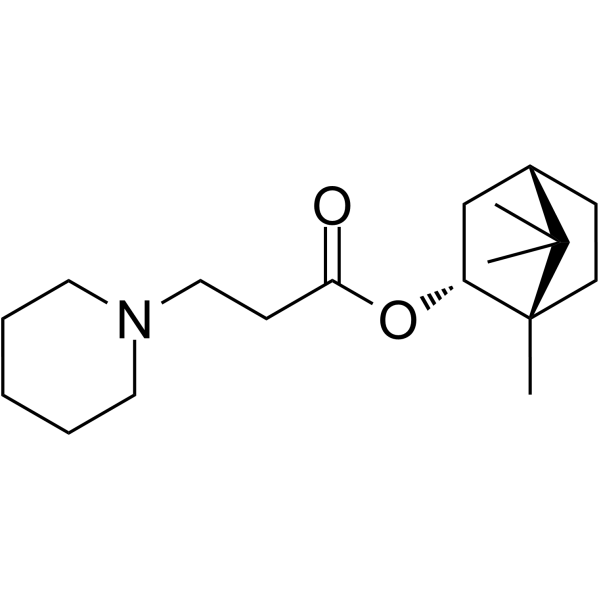
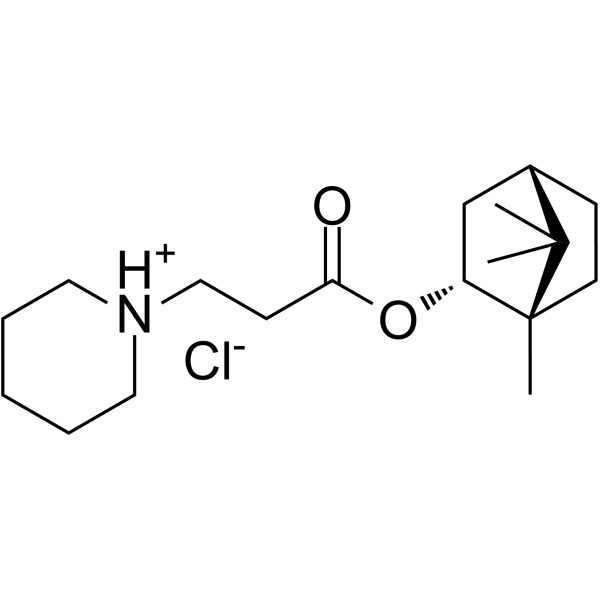 0 ImagesCat. No.: HY-146883ACAS No.: 2374723-26-7As-358 (hydrochloride) has inhibitory effects against Ebola virus and Marburg virus with IC50s of 9.1 μM and 18.1 μM, as well as exhibits good in vivo safety.
-
CP19
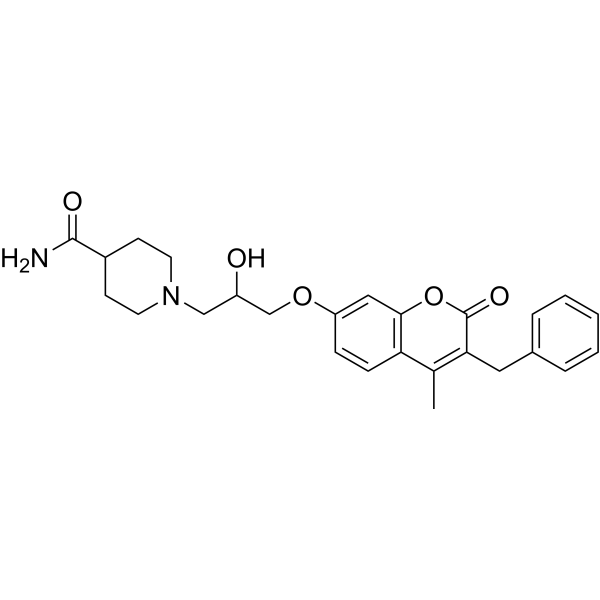 0 ImagesCat. No.: HY-146815CAS No.: 1018148-68-9
-
Antiviral agent-88
 0 ImagesCat. No.: HY-170493ACAS No.: 3097805-27-8Antiviral agent-88 is a broad-spectrum Filovirus inhibitor. Antiviral agent-88 inhibits pEBOV, pMARV, Zaire, Sudan, Bundibugyo, Reston, and Tai Forest viruses with EC50 values of 0.23, 3.89, 0.23, 1.61, 1.19, 0.26, and 0.13 μM, respectively. Antiviral agent-88 blocks viral entry into host cells by binding to the viral glycoprotein and occupying its binding pocket. Antiviral agent-88 can be used in research on Ebola virus (EBOV) and Marburg virus (MARV) infections.
-
SMA-245
 0 ImagesCat. No.: HY-187472SMA-245 is an inhibitor of Filovirus glycoproteins, acting on Ebola virus (EBOV) and Marburg virus (MARV). SMA-245 blocks the endosomal membrane fusion step of filoviruses by binding to the EBOV GP1/GP2 fusion loop. SMA-245 inhibits MARV viral entry. SMA-245 can be used in research related to filovirus infections.



