



CNQX (Standard)
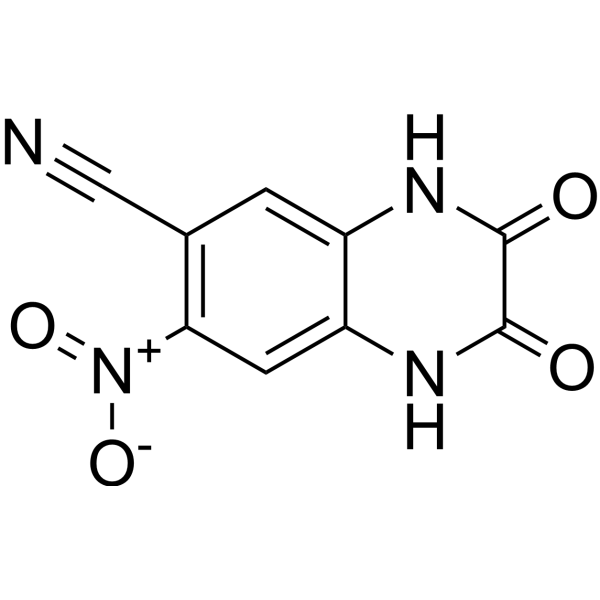
CNQX (Standard) is the analytical standard of CNQX. This product is intended for research and analytical applications. CNQX (FG9065) is a potent and competitive AMPA/kainate receptor antagonist with IC50s of 0.3 μM and 1.5 μM, respectively. CNQX is a competitive non-NMDA receptor antagonist. CNQX blocks the expression of fear-potentiated startle in rats.
연구목적의 판매만을 진행합니다. 환자를 대상으로 한 판매는 하지 않습니다.
- Purity : 98%
- CAS No.: 115066-14-3
- 화학식: C9H4N4O4
- 분자량:232.15
-
보관:
Please store the product under the recommended conditions in the Certificate of Analysis.


To place orders, for customer services and technical support, please contact: MedChemExpress USA
Tel: 609-228-6898 E-mail: [email protected] [email protected]


-
 Product Information
-
Chemical Information
- 순도&문서
-
 Help & FAQs


-
HY-15066
CNQXAMPA Antagonist -
HY-15068
NBQXAMPA Receptor Antagonist -
HY-10933
CX516AMPA Receptor PAM -
HY-B1140
DiazoxideAutophagy Inducer -
HY-15067
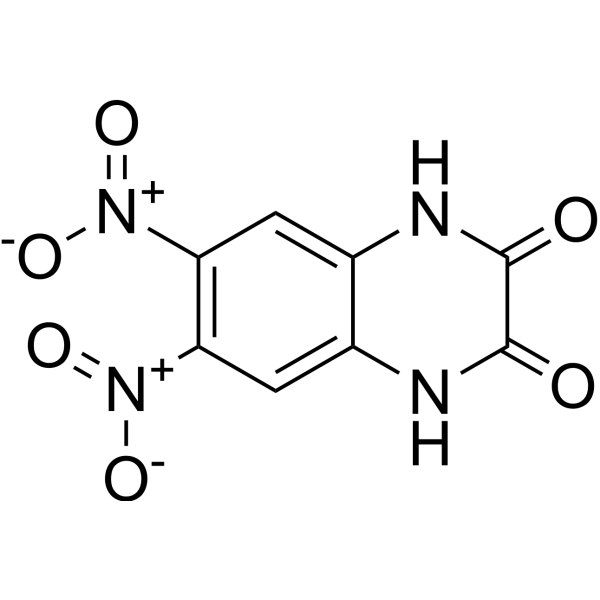
DNQXNon-NMDA Receptor Antagonist -
HY-12505
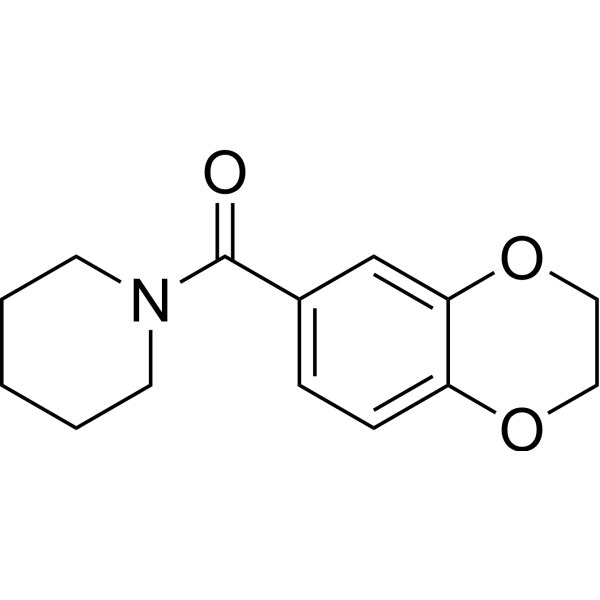
CX546Autophagy Inducer -
HY-101165
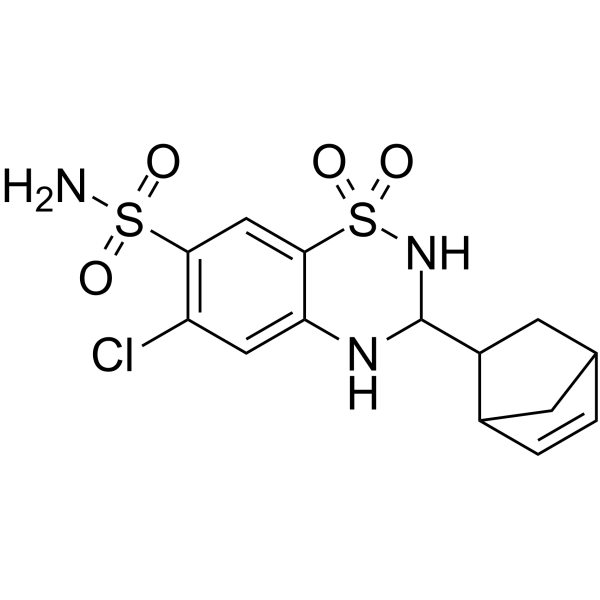
CyclothiazideAMPA Receptors PAM -
HY-10932
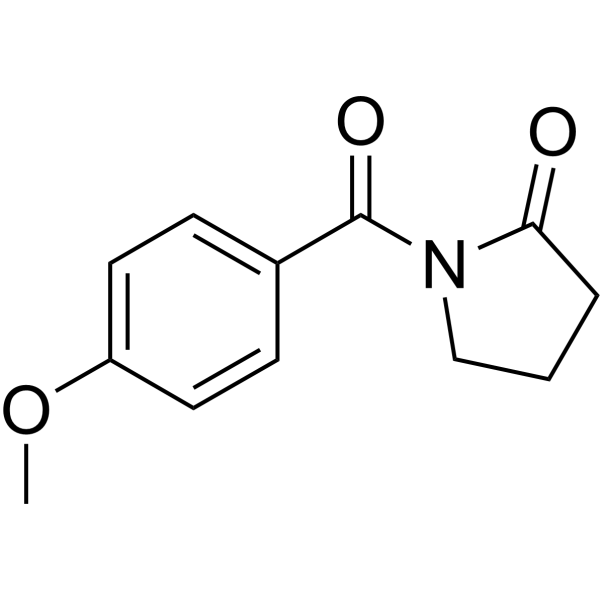
AniracetamNootropics and Neuroprotective Agent -
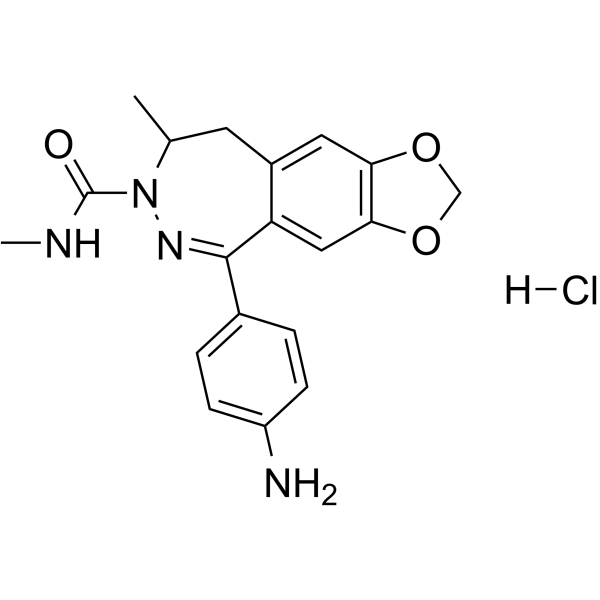
HY-103228
GYKI 53655 hydrochlorideAMPA Antagonist -
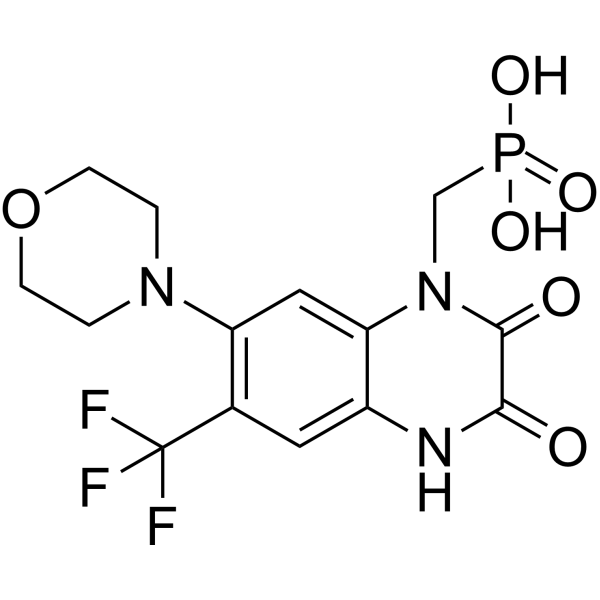
HY-15069
FanapanelAMPA Antagonist -

HY-B1140R
Diazoxide (Standard)Autophagy Inducer -
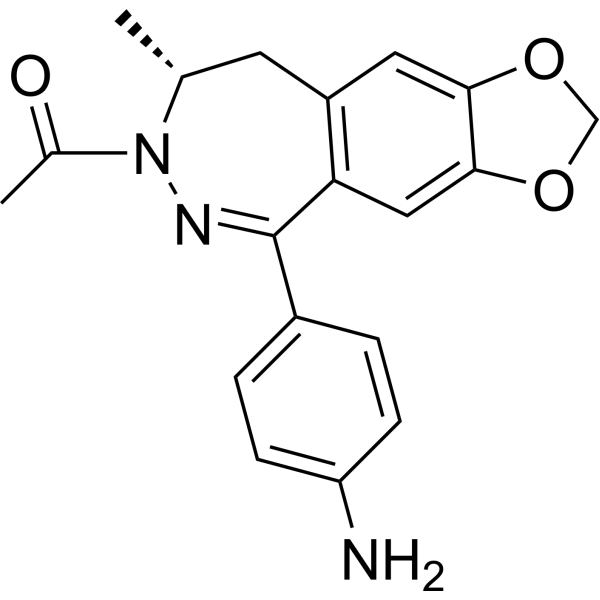
HY-15079
TalampanelAMPA receptor antagonist


Product Information
Information
신청
The compound is the grade of analytical standard, which is the reference standard supplied assay. It is commonly used in qualitative, quantitative and methodological research experiments in HPLC, GC and MS.


Chemical Information
-
CAS No. 115066-14-3
-
분자량 232.15
-
화학식 C9H4N4O4
-
SMILES
O=C1C(NC2=CC([N+]([O-])=O)=C(C#N)C=C2N1)=O
-
Synonyms
FG9065 (Standard)
-
선적
Room temperature in continental US; may vary elsewhere.
-
보관
Please store the product under the recommended conditions in the Certificate of Analysis.


순도&문서
References
[1]. T Honoré, et al. Quinoxalinediones: Potent Competitive non-NMDA Glutamate Receptor Antagonists. Science. 1988 Aug 5;241(4866):701-3. [Content Brief]
[2]. Neuman RS, et al. Blockade of excitatory synaptic transmission by 6-cyano-7-nitroquinoxaline-2,3-dione(CNQX) in the hippocampus in vitro. Neurosci Lett. 1988 Sep 23;92(1):64-8. [Content Brief]
[3]. Alford S, et al. CNQX and DNQX block non-NMDA synaptic transmission but not NMDA-evoked locomotion in lamprey spinal cord. Brain Res. 1990 Jan 8;506(2):297-302. [Content Brief]
[4]. Pia Bäckström, et al. Attenuation of Cocaine-Seeking Behaviour by the AMPA/kainate Receptor Antagonist CNQX in Rats. Psychopharmacology (Berl). 2003 Feb;166(1):69-76. [Content Brief]
[5]. Kim M, et al. Infusion of the non-NMDA receptor antagonist CNQX into the amygdala blocks the expression of fear-potentiated startle. Behav Neural Biol. 1993 Jan;59(1):5-8. [Content Brief]

Calculators
Concentration (start) × Volume (start) = Concentration (final) × Volume (final)


CNQX (Standard) Related Classifications
HY-15066R Related Classifications
 Powered by Bioz