11 Results for "

Allose

" in MedChemExpress (MCE) Product Catalog:
Products (11)

11 Results for "Allose" in MCE Product Catalog:

Cat. No.: HY-128741
CAS No.: 2595-97-3
Purity:  99.85%
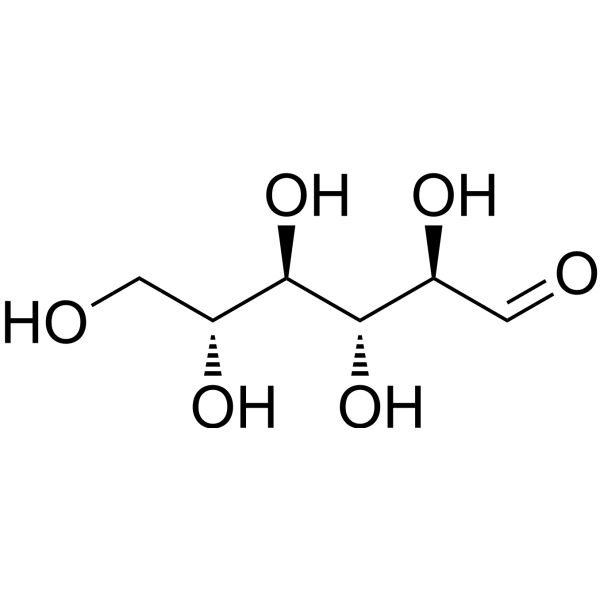
D-Allose exhibits antitumor activity against various cancer cells. D-Allose scavenges reactive oxygen species (ROS) and reduces oxidative stress damage. D-Allose exhibits anti-inflammatory and neuroprotective through inhibition of TLR4/PI3K/AKT signaling pathway. D-Allose exhibits antihypertensive, cryoprotective, and anti-osteoporotic activities .
Cat. No.: HY-W101299
CAS No.: 54831-20-8
Research Areas:  

Metabolic Disease

N-Acetyl-D-allo-isoleucine is an amino acid derivative. N-Acetyl-D-allo-isoleucine is promising for research of amino acid metabolism, such as abnormal isoleucine metabolism .
Cat. No.: HY-W019834
CAS No.: 7635-11-2
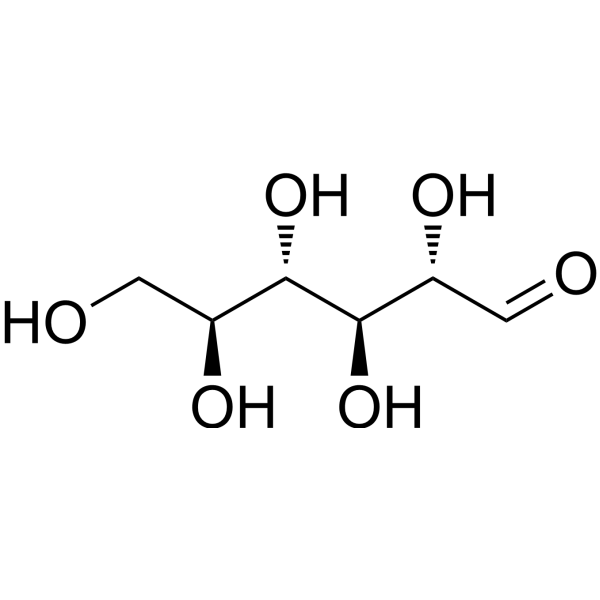
L-Allose is a biochemical reagent that can be used as a biological material or organic compound for life science related research.
Cat. No.: HY-128741S
CAS No.: 70849-28-4
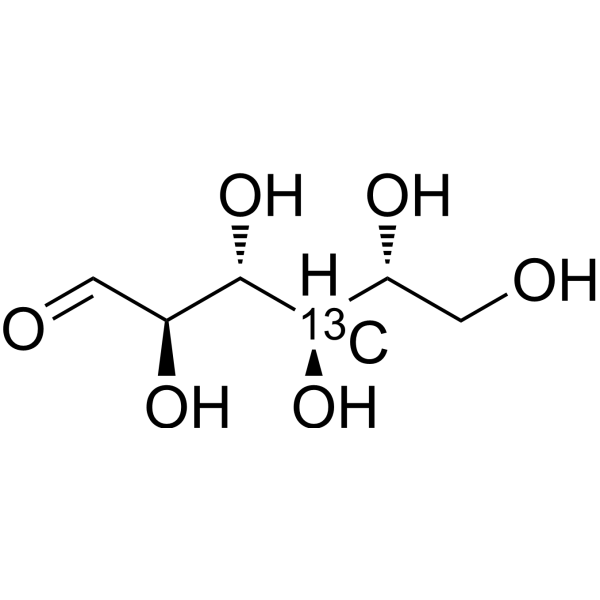
D-Allose- 13C is the 13C labeled D-Allose (HY-128741). D-Allose exhibits antitumor activity against various cancer cells. D-Allose scavenges reactive oxygen species (ROS) and reduces oxidative stress damage. D-Allose exhibits anti-inflammatory and neuroprotective through inhibition of TLR4/PI3K/AKT signaling pathway. D-Allose exhibits antihypertensive, cryoprotective, and anti-osteoporotic activities .
Cat. No.: HY-128741R
CAS No.: 2595-97-3
D-Allose (Standard) is the analytical standard of D-Allose (HY-128741). This product is intended for research and analytical applications. D-Allose exhibits antitumor activity against various cancer cells. D-Allose scavenges reactive oxygen species (ROS) and reduces oxidative stress damage. D-Allose exhibits anti-inflammatory and neuroprotective through inhibition of TLR4/PI3K/AKT signaling pathway. D-Allose exhibits antihypertensive, cryoprotective, and anti-osteoporotic activities .
Cat. No.: HY-128741S1
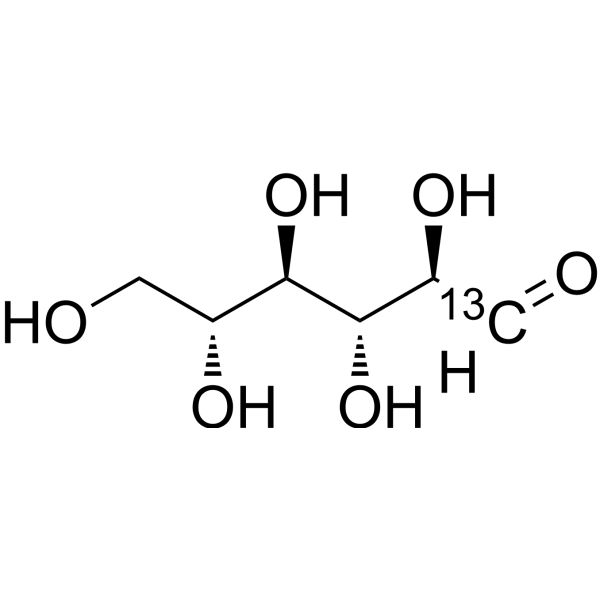
D-Allose- 13C-1 is the 13C labeled D-Allose (HY-128741). D-Allose exhibits antitumor activity against various cancer cells. D-Allose scavenges reactive oxygen species (ROS) and reduces oxidative stress damage. D-Allose exhibits anti-inflammatory and neuroprotective through inhibition of TLR4/PI3K/AKT signaling pathway. D-Allose exhibits antihypertensive, cryoprotective, and anti-osteoporotic activities .
Cat. No.: HY-128741S2
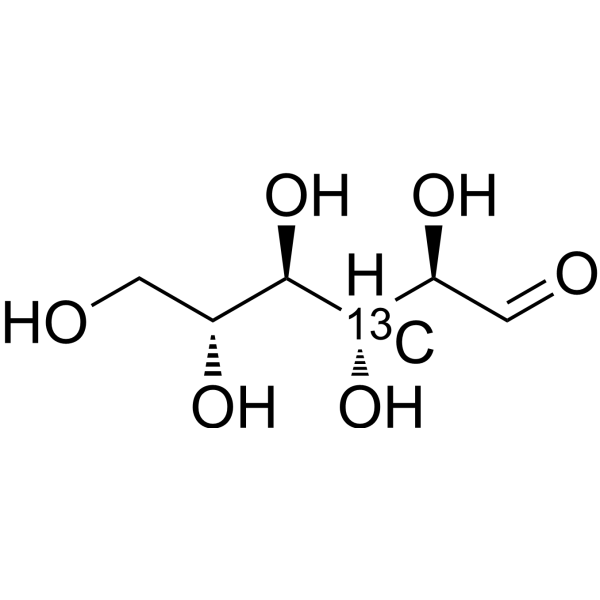
D-Allose- 13C-2 is the 13C labeled D-Allose (HY-128741). D-Allose exhibits antitumor activity against various cancer cells. D-Allose scavenges reactive oxygen species (ROS) and reduces oxidative stress damage. D-Allose exhibits anti-inflammatory and neuroprotective through inhibition of TLR4/PI3K/AKT signaling pathway. D-Allose exhibits antihypertensive, cryoprotective, and anti-osteoporotic activities .
Cat. No.: HY-P4910
CAS No.: 1622872-91-6
Target:  

Proteasome Apoptosis

Research Areas:  

Cancer

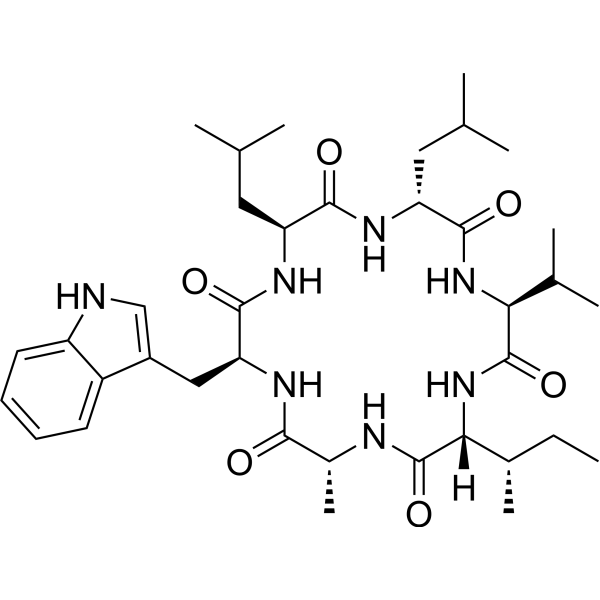
Baceridin is a proteasome inhibitor and a cyclic hexapeptide. Baceridin can be isolated from the culture medium of Epiphytic Bacillus. Baceridin can inhibit cell cycle progression and induce tumor cell apoptosis through a p53-independent pathway. Baceridin can be used in cancer research .
Cat. No.: HY-P2120
CAS No.: 79438-64-5
Target:  

Bacterial

Research Areas:  

Others

Pseudobactin A is a non-fluorescent extracellular iron carrier produced by the plant growth-promoting bacterium Pseudomonas B10 .
Cat. No.: HY-P4613
CAS No.: 130674-54-3
Research Areas:  

Others

Fmoc-D-allo-Thr-OH is a derivative of D-allothreonine (HY-W001959), which is commonly used as a building block in solid-phase peptide synthesis (SPPS) .
Cat. No.: HY-P11022
CAS No.: 55599-68-3
Synonyms: A-3302-B
Research Areas:  

Infection Cancer

TL-119 (A-3302-B) is a polypeptide. TL-119 can be isolated from the bacteria Micromonospora sp. MAG 9-7 and Saccharomonospora sp. CNQ-490. TL-119 inhibits TRPV-1. TL-119 exhibits antiviral activity against HSV-2. TL-119 possesses anticancer activity against gastric cancer and colorectal cancer .
  • 1

