
13 Results for "

Coconut+Oil

" in MedChemExpress (MCE) Product Catalog:
Products (13)

13 Results for "Coconut+Oil" in MCE Product Catalog:

7
7 Cited Publications
Cat. No.: HY-N2041
CAS No.: 544-63-8
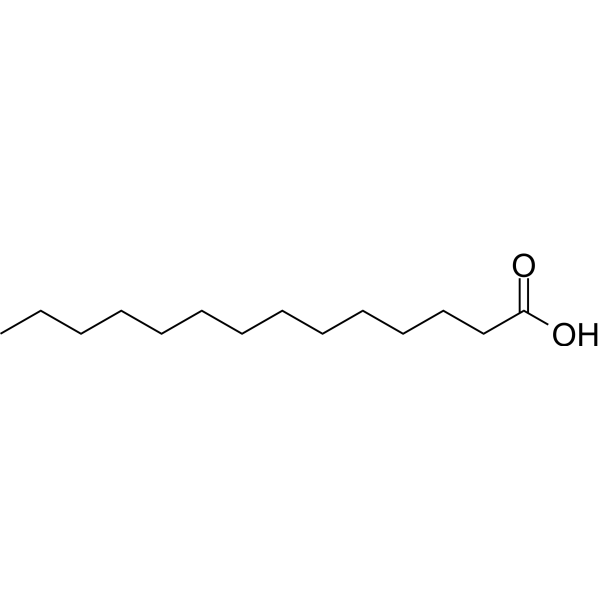
Myristic acid is an orally active saturated 14-carbon fatty acid found in most animal and plant fats, especially milk fat coconut oil, palm oil and nutmeg oil. Myristic acid exerts anti-inflammatory activity through the NF-κB pathway. Myristic acid has antibacterial, anti-inflammatory and analgesic properties .
4
4 Cited Publications
Cat. No.: HY-W015309
CAS No.: 334-48-5
Decanoic acid is a key component of the medium-chain triglyceride (MCT) found in coconut oil. Decanoic acid is a brain-penetrant and non-competitive inhibitor of AMPA receptor showing antiseizure activity in rats. Decanoic acid reduces tyrosinase activity and inhibits melanosome maturation. Decanoic acid suppresses the phosphorylation of c-Met and induced apoptosis in hepatocellular carcinoma (HCC) cells by inhibiting the expression of various oncogenic proteins, which is promising for research in the field of mTORC1 signaling, HCC and epilepsy .
Cat. No.: HY-N8451
CAS No.: 506-50-3
Synonyms: Triacontanoic acid
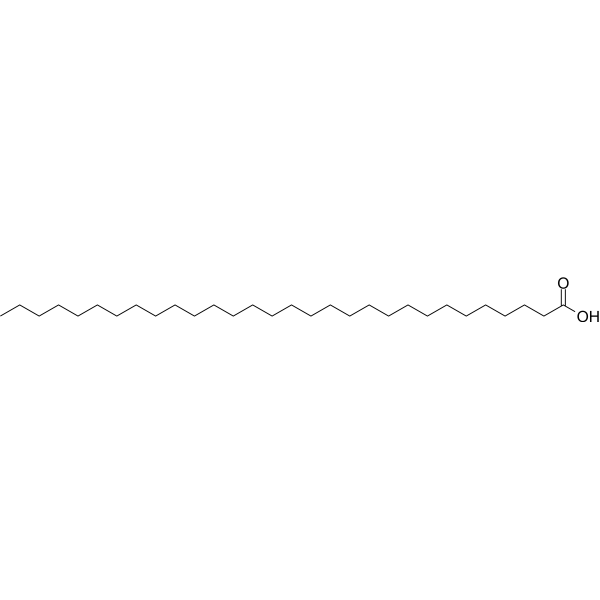
Melissic acid, which belongs to the category of long-chain saturated fatty acids. It is a 30-carbon straight-chain fatty acid found in a variety of natural sources, including beeswax and coconut oil. Due to its unique physical properties, such as high melting point and viscosity, Melissic acid has a variety of uses in industry. It can be used as a lubricant in the production of some plastics and rubber, and is also used in the manufacture of surfactants and detergents.
Cat. No.: HY-W250170
CAS No.: 68515-73-1
Synonyms: Octyldecyl glucoside
Decyl glucoside is a mild nonionic surfactant. Decyl glucoside can be derived from renewable raw materials such as glucose and fatty alcohols from coconut oil or palm kernel oil. Decyl glucoside is known for its excellent foaming and cleaning properties.
Cat. No.: HY-N2041R
CAS No.: 544-63-8
Myristic acid (Standard) is the analytical standard of Myristic acid. This product is intended for research and analytical applications. Myristic acid is an orally active saturated 14-carbon fatty acid found in most animal and plant fats, especially milk fat coconut oil, palm oil and nutmeg oil. Myristic acid exerts anti-inflammatory activity through the NF-κB pathway. Myristic acid has antibacterial, anti-inflammatory and analgesic properties .
Cat. No.: HY-W266188
CAS No.: 84600-66-8
Decanoic acid- 13C is the 13C-labeled Decanoic acid (HY-W015309). Decanoic acid is a key component of the medium-chain triglyceride (MCT) found in coconut oil. Decanoic acid is a brain-penetrant and non-competitive inhibitor of AMPA receptor showing antiseizure activity in rats. Decanoic acid reduces tyrosinase activity and inhibits melanosome maturation. Decanoic acid suppresses the phosphorylation of c-Met and induced apoptosis in hepatocellular carcinoma (HCC) cells by inhibiting the expression of various oncogenic proteins, which is promising for research in the field of mTORC1 signaling, HCC and epilepsy .
Cat. No.: HY-W099600
CAS No.: 645-66-9
Synonyms: Bisdodecanoic anhydride
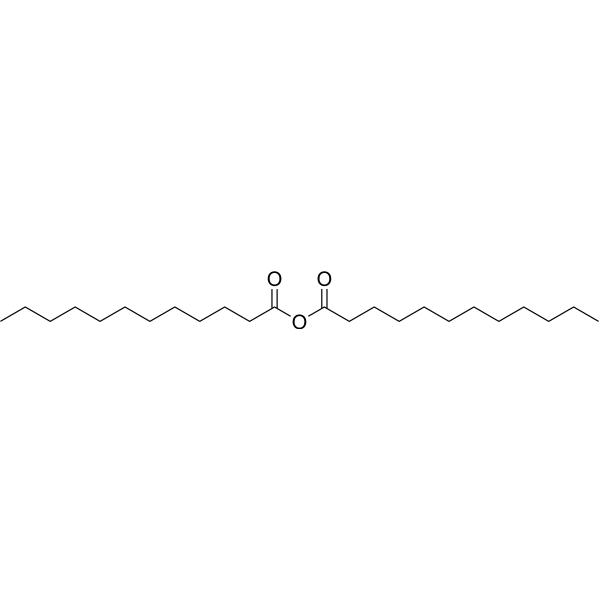
Lauric anhydride is a white waxy solid used as an intermediate in the production of various chemicals. It is primarily used in the synthesis of surfactants, emulsifiers, and lubricants, and as a raw material for other important industrial chemicals such as plasticizers and flavoring agents. It can be obtained from natural sources such as palm kernel oil and coconut oil, and its unique chemical structure allows it to be used to create compounds with specific surface and interfacial properties.
Cat. No.: HY-W133978
CAS No.: 8001-31-8
Synonyms: coconut oil from cocos nucifera
Category:  

Arecaceae Extract Plants

Coconut oil is a natural oil extracted from coconuts and is widely used in food, cosmetics, and traditional medicine.
Cat. No.: HY-N2041S8
CAS No.: 287111-20-0
Myristic acid- 13C2 is the 13C-labeled Myristic acid (HY-N2041). Myristic acid is an orally active saturated 14-carbon fatty acid found in most animal and plant fats, especially milk fat coconut oil, palm oil and nutmeg oil. Myristic acid exerts anti-inflammatory activity through the NF-κB pathway. Myristic acid has antibacterial, anti-inflammatory and analgesic properties .
Cat. No.: HY-W150407
CAS No.: 1653-31-2
Target:  

Endogenous Metabolite

Research Areas:  

Others

2-Tridecanol is a metabolite that can be found in extra virgin coconut oil, and serves as a growth substrate for Pseudomonas multivorans. 2-Tridecanol can be metabolized by Pseudomonas multivorans and Pseudomonas aeruginosa to produce 2-tridecanone, undecyl acetate, and 1-undecanol, and acts as a metabolic intermediate in their 2-tridecanone catabolic pathway .
Cat. No.: HY-W015309R
CAS No.: 334-48-5
Decanoic acid (Standard) is the analytical standard of Decanoic acid. This product is intended for research and analytical applications. Decanoic acid is a key component of the medium-chain triglyceride (MCT) found in coconut oil. Decanoic acid is a brain-penetrant and non-competitive inhibitor of AMPA receptor showing antiseizure activity in rats. Decanoic acid reduces tyrosinase activity and inhibits melanosome maturation. Decanoic acid suppresses the phosphorylation of c-Met and induced apoptosis in hepatocellular carcinoma (HCC) cells by inhibiting the expression of various oncogenic proteins, which is promising for research in the field of mTORC1 signaling, HCC and epilepsy .
Cat. No.: HY-N18790
CAS No.: 84836-98-6
Category:  

Extract

Target:  

Others

Coconut oil hydrogenated is a vegetable oil which is hydrogenated. It can be used in food manufactures.
Cat. No.: HY-W004303S
CAS No.: 1809273-36-6
Synonyms: Tetradecyl Aldehyde-d27
Tetradecanal-d27 (Tetradecyl Aldehyde-d27) is the deuterium labeled Tetradecanal. Tetradecanal is a compound belonging to the class of fatty aldehydes. It is an aldehyde with a 14-carbon chain that occurs naturally in certain plant and animal sources, such as coconut oil and butter. Due to its unique properties, Tetradecanal has several uses in industry, such as a flavoring agent in certain foods and as a precursor for the production of perfumes and other cosmetics. It is also used as an insecticide and insecticide due to its ability to repel certain types of insects.
  • 1

