11 Results for "

Proxy

" in MedChemExpress (MCE) Product Catalog:
Products (11)

11 Results for "Proxy" in MCE Product Catalog:

2
2 Cited Publications
Cat. No.: HY-66012
CAS No.: 5875-06-9
Synonyms: Proxymetacaine hydrochloride
Target:  

Sodium Channel

Research Areas:  

Neurological Disease

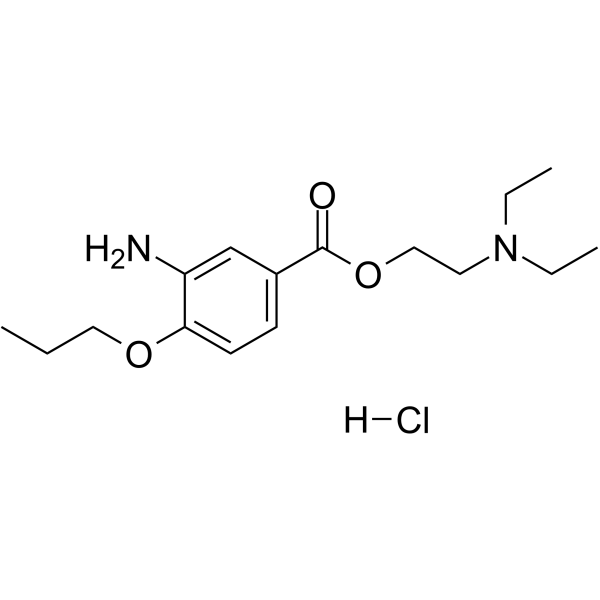
Proparacaine (Proxymetacaine) hydrochloride is a local anesthetic. Proparacaine hydrochloride blocks voltage-gated sodium channels on neuronal cell membranes, thereby inhibiting signal conduction and nociceptive signal transmission. Proparacaine hydrochloride blocks nociceptive signals in the eye and induces ocular muscle relaxation to reduce eye movement during surgery. Proparacaine hydrochloride is used in research related to cataracts .
1
1 Cited Publications
Cat. No.: HY-B1742
CAS No.: 603-00-9
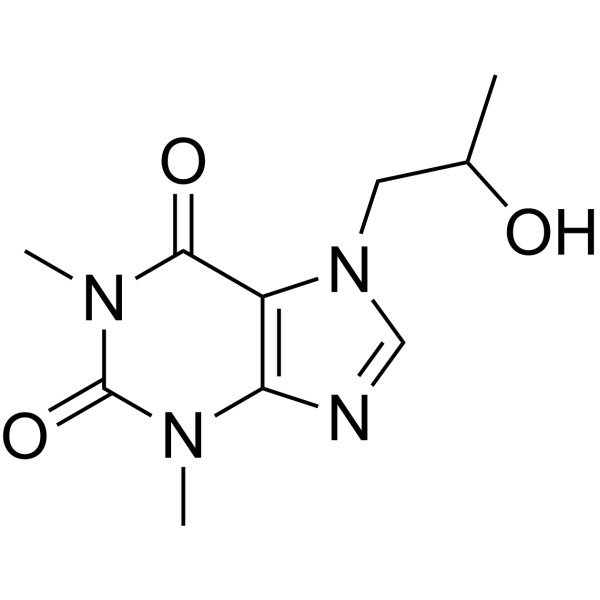
Proxyphylline is a methylxanthine derivative used as a cardiac stimulant, vasodilator and bronchodilator .
Cat. No.: HY-108036
CAS No.: 439685-79-7
Purity:  ≥98.0%
Synonyms: Hydroxypropyl tetrahydropyrantriol (30% in water)
Research Areas:  

Metabolic Disease

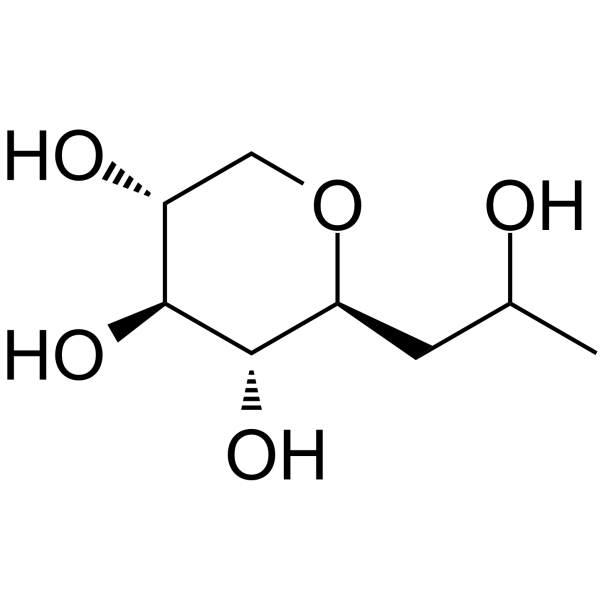
Pro-xylane (30% in water) (Hydroxypropyl tetrahydropyrantriol) is a bioactive C-glycoside that targets the biosynthesis pathway of glycosaminoglycans/mucopolysaccharides (GAGs) in the skin matrix and can be absorbed transdermally. Pro-xylane (30% in water) stimulates the biosynthesis of GAGs in fibroblasts, enhances the structural stability of the skin extracellular matrix, improves skin elasticity and moisturizing ability, and delays wrinkle formation. Pro-xylane (30% in water) can effectively promote the synthesis of collagen fibers and hyaluronic acid in the dermis. Pro-xylane (30% in water) is used in the field of anti-aging cosmetics to improve skin hydration and elasticity. Pro-xylane (30% in water) is eco-friendly and biodegradable .
Cat. No.: HY-108036B
CAS No.: 439685-79-7
Purity:  ≥98.0%
Synonyms: Hydroxypropyl tetrahydropyrantriol
Research Areas:  

Metabolic Disease

Pro-xylane (Hydroxypropyl tetrahydropyrantriol) is a bioactive C-glycoside that targets the biosynthesis pathway of glycosaminoglycans/mucopolysaccharides (GAGs) in the skin matrix and can be absorbed transdermally. Pro-xylane stimulates the biosynthesis of GAGs in fibroblasts, enhances the structural stability of the skin extracellular matrix, improves skin elasticity and moisturizing ability, and delays wrinkle formation. Pro-xylane can effectively promote the synthesis of collagen fibers and hyaluronic acid in the dermis. Pro-xylane is used in the field of anti-aging cosmetics to improve skin hydration and elasticity. Pro-xylane is eco-friendly and biodegradable .
Cat. No.: HY-107557
CAS No.: 177708-09-7
Target:  

Histamine Receptor

Research Areas:  

Neurological Disease

Proxyfan is a potent histamine H3 receptor antagonist with Ki values of 2.9 nM and 2.7 nM for rat and human H3 receptor, respectively. Proxyfan is over 1000-fold more potent at H3 receptors than other histamine receptors .
Cat. No.: HY-107557A
CAS No.: 1620017-81-3
Target:  

Histamine Receptor

Research Areas:  

Neurological Disease

Proxyfan Oxalate is a potent histamine H3 receptor antagonist with Ki values of 2.9 nM and 2.7 nM for rat and human H3 receptor, respectively. Proxyfan Oxalate is over 1000-fold more potent at H3 receptors than other histamine receptors .
Cat. No.: HY-B1742R
CAS No.: 603-00-9
Proxyphylline (Standard) is the analytical standard of Proxyphylline. This product is intended for research and analytical applications. Proxyphylline is a methylxanthine derivative used as a cardiac stimulant, vasodilator and bronchodilator .
Cat. No.: HY-W740075
CAS No.: 54606-49-4
3-(Aminomethyl)-proxyl is a biochemical reagent .
Cat. No.: HY-W776847
CAS No.: 27048-01-7
3-(2-Iodoacetamido)-proxyl serves as a free radical spin probe employed in spin labeling techniques, which facilitate the exploration of the dynamic interactions among molecules, proteins, lipids, and cell membranes.
Cat. No.: HY-66012R
CAS No.: 5875-06-9
Synonyms: Proxymetacaine hydrochloride (Standard)
Research Areas:  

Neurological Disease

Proparacaine (Hydrochloride) (Standard) is the analytical standard of Proparacaine (Hydrochloride). This product is intended for research and analytical applications. Proparacaine hydrochloride is a local anesthetic. Proparacaine hydrochloride blocks voltage-gated sodium channels on neuronal cell membranes, thereby inhibiting signal conduction and nociceptive signal transmission. Proparacaine hydrochloride blocks nociceptive signals in the eye and induces ocular muscle relaxation to reduce eye movement during surgery. Proparacaine hydrochloride is used in research related to cataracts.
Cat. No.: HY-66012A
CAS No.: 499-67-2
Synonyms: Proxymetacaine
Target:  

Sodium Channel

Research Areas:  

Neurological Disease

Proparacaine (Proxymetacaine) is a local anesthetic. Proparacaine blocks voltage-gated sodium channels on neuronal cell membranes, thereby inhibiting signal conduction and nociceptive signal transmission. Proparacaine blocks nociceptive signals in the eye and induces ocular muscle relaxation to reduce eye movement during surgery. Proparacaine is used in research related to cataracts .
  • 1

