



Balcinrenone

Based on 1 Customer Validation
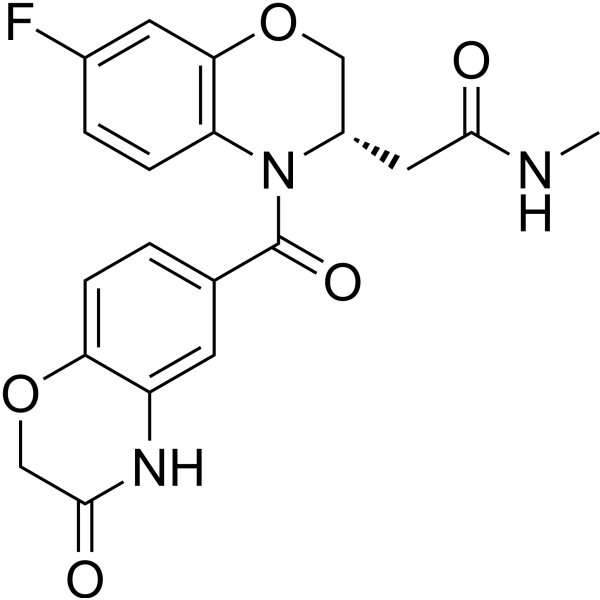
Balcinrenone (AZD9977) is an orally active mineralocorticoid receptor modulator. Balcinrenone regulates mineralocorticoid receptor activity, inhibits aldosterone-induced target gene expression, and suppresses the activities of renal Toll-like receptor 4, MyD88 and NF-κB. Balcinrenone alleviates renal extracellular matrix remodeling, inflammatory cell infiltration, and the expression of renal injury markers. Balcinrenone restores myocardial perfusion reserve, regulates potassium homeostasis, and induces fecal potassium excretion. Balcinrenone is applicable to research on metabolism-related chronic kidney disease and heart failure.
For research use only. We do not sell to patients.
- Purity : 99.62%
- CAS No.: 1850385-64-6
- Formula: C20H18FN3O5
- Molecular Weight:399.37
-
Storage:Powder -20°C, 3 years , 4°C, 2 years ; In solvent -80°C, 6 months , -20°C, 1 month

To place orders, for customer services and technical support, please contact: MedChemExpress USA
Tel: 609-228-6898 E-mail: [email protected] [email protected]


-
 Biological Activity
-
Chemical Information
-
Solvent & Solubility
- Protocols
- Purity & Documentation
- References
-
 Help & FAQs


-
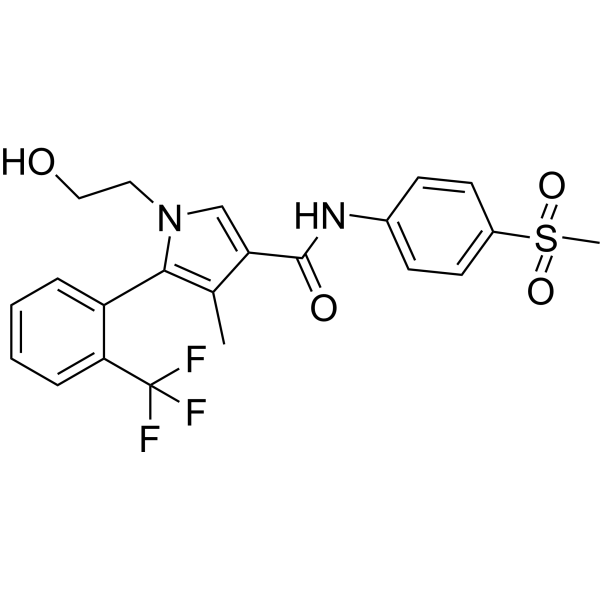
HY-100471
EsaxerenoneMineralocorticoid Antagonist -
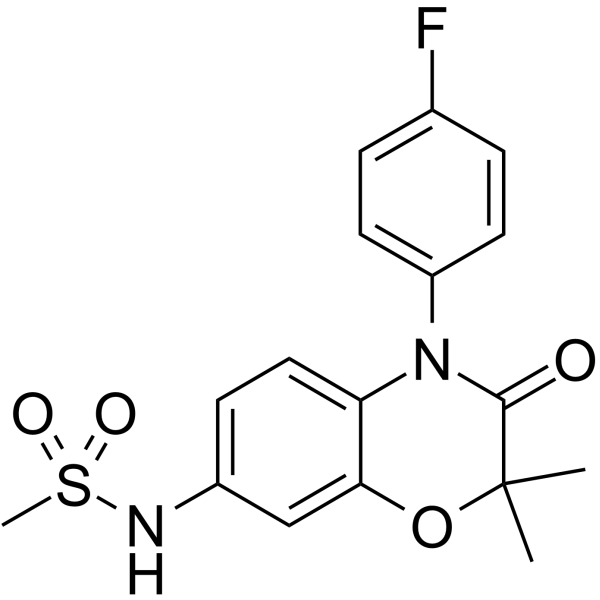
HY-109002
ApararenoneMineralocorticoid Receptor Antagonist -
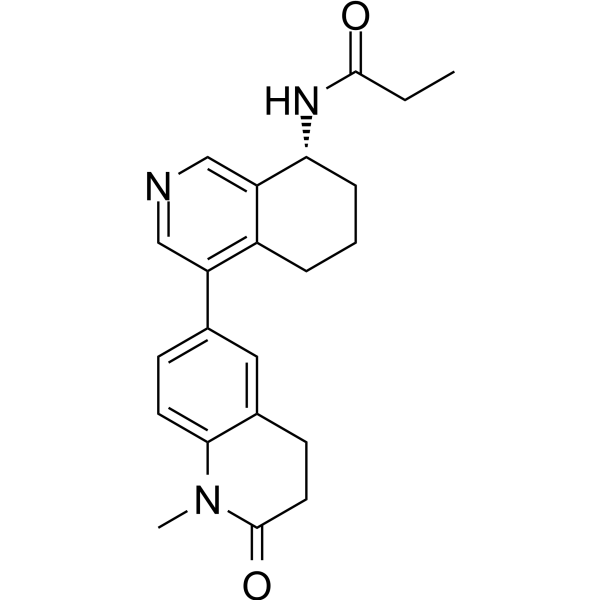
HY-132809
BaxdrostatAldosterone Synthase Inhibitor -
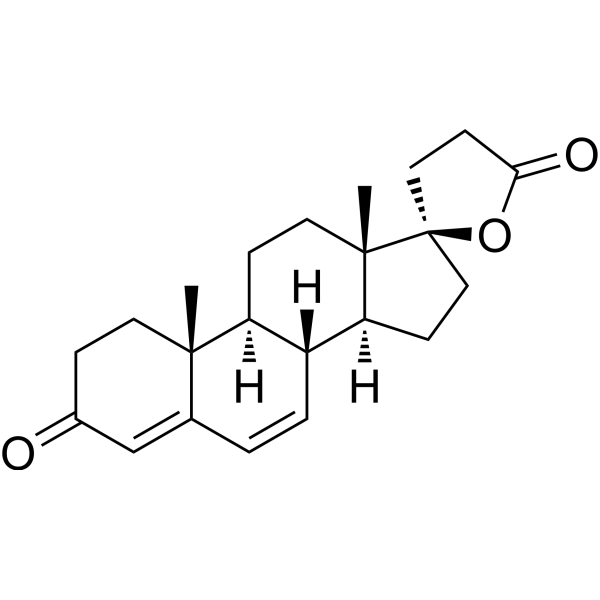
HY-B1438
CanrenoneEndogenous Metabolite -
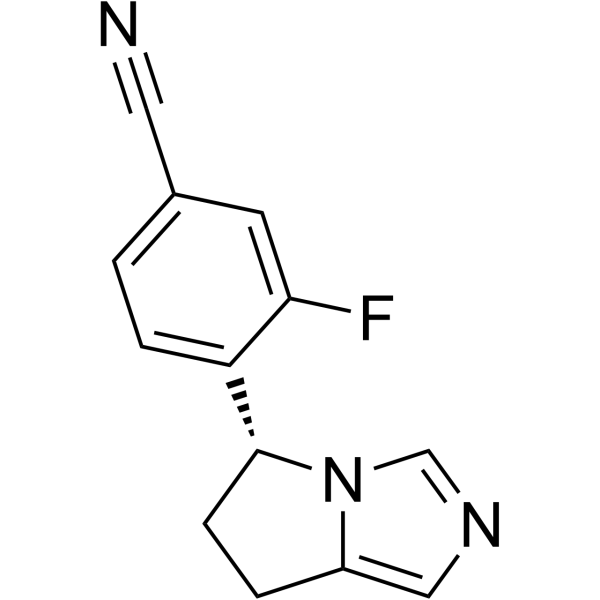
HY-16276
OsilodrostatCYP11B1/CYP11B2 Inhibitor -

HY-100471R
Esaxerenone (Standard)Mineralocorticoid Antagonist -
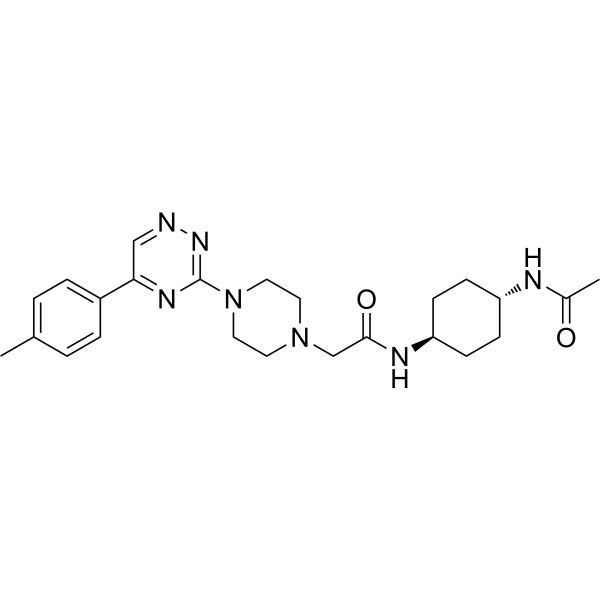
HY-147277
LorundrostatCYP11B2 Inhibitor -
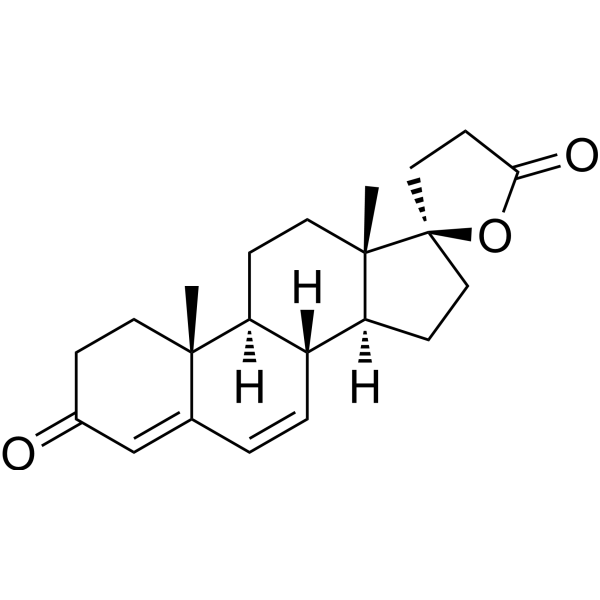
HY-B1438R
Canrenone (Standard) -
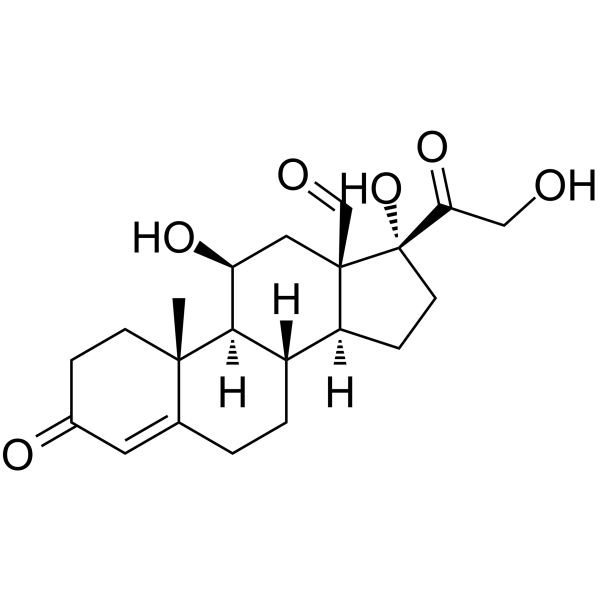
HY-113151
18-OxocortisolMineralocorticoid Agonist -
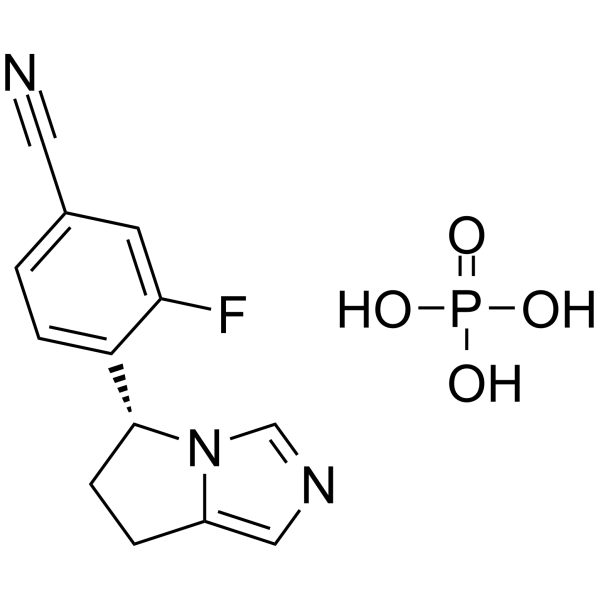
HY-16276A
Osilodrostat phosphateCYP11B1/CYP11B2 Inhibitor -
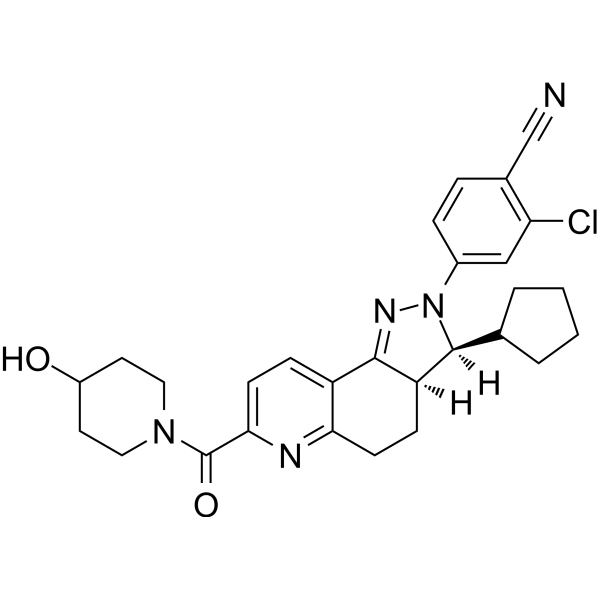
HY-132827
OcedurenoneCorticosteroid Receptor Antagonist -

HY-16276R
Osilodrostat (Standard)CYP11B1/CYP11B2 Inhibitor


Biological Activity
Description
IC50 & Target
|
TLR4 |
NF-κB |
IL-6 |
In Vitro
Balcinrenone (0.1-12.5 μM) concentration-dependently inhibits the expression of MR target genes and cardiac injury/inflammatory markers in Aldosterone (HY-113313)-induced H9C2/MR+ rat cardiomyocytes; in the absence of Aldosterone, it partially upregulates Sgk-1[2] at higher concentrations.
Balcinrenone inhibits aldosterone-induced fibrosis and inflammatory processes in primary human cardiac fibroblasts in a concentration-dependent manner, with complete inhibition of IL-6 at 0.5 μM and complete inhibition of type Ⅰ collagen at 12.5 μM[2].
MedChemExpress (MCE) has not independently confirmed the accuracy of these methods. They are for reference only.
In Vivo
Balcinrenone (10-100 mg/kg/day; administered via feed mixing; daily dosing; for 24 consecutive weeks) restores myocardial perfusion reserve to the level of healthy mice and attenuates diet-induced perivascular cardiac fibrosis in male C57BL/6J mice with heart failure with preserved ejection fraction (HFpEF)[2].
Balcinrenone (100 mg/kg; p.o.; twice daily for 4 consecutive days, with an additional single dose on day 5; total 5 days) does not increase plasma potassium levels in male CKD mice subjected to overnight potassium loading stimulation; instead, it enhances fecal potassium excretion[2].
MedChemExpress (MCE) has not independently confirmed the accuracy of these methods. They are for reference only.
-
Animal Model:C57Bl7J (8-week-old male, 25-26 g, 5/6 nephrectomy + 8 weeks 60% high-fat diet induced CKD)[1]
-
Dosage:100 mg/kg
-
Administration:p.o.; daily; 8 weeks
-
Result:Increased hematocrit to 29.6%, attenuated the decrease in hemoglobin to 10.1 g/dL, reduced plasma Na+ to 150.4 mM and increased plasma K+ to 4.6 mM.
Prevented the increase in Lcn2 expression, attenuated renal collagen deposition and reduced Col1a1 and Col3 mRNA levels.
Blunted elevated renal biglycan, syndecan-1 and versican deposition; fully blocked syndecan-1 and versican protein upregulation, partially lowered biglycan protein, and decreased their mRNA transcripts.
Blunted increased renal TLR4 immunostaining and reduced TLR4 mRNA levels, and prevented the upregulation of MyD88 protein and mRNA expression.
Reduced the ratio of phosphorylated vs total NFκB.
Reduced CD68+ macrophage infiltration and protein expression, as well as CD3+ and CD4+ lymphocyte protein expression; prevented the up-regulation of CD68, CD3, and CD4 mRNA levels.
-
Animal Model:C57BL/6J (male, 6 weeks old at study start, diet-induced model)[2]
-
Dosage:10 mg/kg/day; 30 mg/kg/day; 100 mg/kg/day
-
Administration:diet admixture; daily; 24 weeks
-
Result:Yielded myocardial perfusion reserve (MPR) values of 1.50, 1.78 and 1.68 (0.99-, 1.17-, 1.11-fold relative to high-fat diet) and attenuated diet-induced cardiac perivascular fibrosis.
-
Animal Model:C57BL/6J (male, 12 weeks old at study start, 5/6 nephrectomy-induced model)[2]
-
Dosage:100 mg/kg
-
Administration:p.o.; twice daily for 4 days, once on day 5; 5 days
-
Result:Resulted in plasma potassium levels similar to vehicle-treated CKD mice, and ~1.2 mM lower than eplerenone-treated CKD mice.
Left creatinine-normalized urinary potassium excretion prior to potassium challenge unaffected.
Elevated fecal potassium excretion compared with vehicle-treated CKD mice.
- RT-PCR
- Fibrosis/Collagen Morphometry
- RNA extraction experimental
- Collagen: Sirius Red Staining
- Nephrotoxicity Study
- ECM-Embedded Organoid (Matrigel/Dome) Culture
- Matrigel/ECM Transwell Invasion Assay
- Research Protocol for Cardiovascular Diseases
- Research Protocol for Inflammation-related Diseases
- Real Time qPCR (Q-PCR)
- Matrigel Transwell/Boyden Chamber Invasion Assay
Clinical Trial
| NCT Number | Sponsor | Condition | Start Date |
Phase

|
|---|---|---|---|---|
| NCT01329991 | Plexxikon| | 2011-05 | PHASE1 |


Chemical Information
-
CAS No. 1850385-64-6
-
Appearance Solid
-
Molecular Weight 399.37
-
Formula C20H18FN3O5
-
Color White to off-white
-
SMILES
FC1=CC2=C(N(C(C3=CC=C(OCC(N4)=O)C4=C3)=O)[C@@H](CC(NC)=O)CO2)C=C1
-
Synonyms
AZD9977
-
Shipping
Room temperature in continental US; may vary elsewhere.
-
Storage
Powder -20°C 3 years 4°C 2 years In solvent -80°C 6 months -20°C 1 month


Solvent & Solubility
In Vitro:
DMSO : 100 mg/mL (250.39 mM; Need ultrasonic; Hygroscopic DMSO has a significant impact on the solubility of product, please use newly opened DMSO)
Please refer to the solubility information to select the appropriate solvent. Once prepared, please aliquot and store the solution to prevent product inactivation from repeated freeze-thaw cycles.
Storage method and period of stock solution: -80°C, 6 months; -20°C, 1 month. When stored at -80°C, please use it within 6 months. When stored at -20°C, please use it within 1 month.
Please refer to the solubility information to select the appropriate solvent. Once prepared, please aliquot and store the solution to prevent product inactivation from repeated freeze-thaw cycles.
Storage method and period of stock solution: -80°C, 6 months; -20°C, 1 month. When stored at -80°C, please use it within 6 months. When stored at -20°C, please use it within 1 month.
Concentration (start) × Volume (start) = Concentration (final) × Volume (final)
In Vivo:
Select the appropriate dissolution method based on your experimental animal and administration route.
- For the following dissolution methods, please ensure to first prepare a clear stock solution using an In Vitro approach and then sequentially add co-solvents:
- To ensure reliable experimental results, the clarified stock solution can be appropriately stored based on storage conditions. As for the working solution for In Vivo experiments, it is recommended to prepare freshly and use it on the same day.
- The percentages shown for the solvents indicate their volumetric ratio in the final prepared solution. If precipitation or phase separation occurs during preparation, heat and/or sonication can be used to aid dissolution.
Add each solvent one by one: 10% DMSO 40% PEG300 5% Tween-80 45% Saline
Solubility: ≥ 2.08 mg/mL (5.21 mM); Clear solution
This protocol yields a clear solution of ≥ 2.08 mg/mL (saturation unknown).
Taking 1 mL working solution as an example, add 100 μL DMSO stock solution (20.8 mg/mL) to 400 μL PEG300, and mix evenly; then add 50 μL Tween-80 and mix evenly; then add 450 μL Saline to adjust the volume to 1 mL.
Preparation of Saline: Dissolve 0.9 g sodium chloride in ddH₂O and dilute to 100 mL to obtain a clear Saline solution.
Add each solvent one by one: 10% DMSO 90% (20% SBE-β-CD in Saline)
Solubility: ≥ 2.08 mg/mL (5.21 mM); Clear solution
This protocol yields a clear solution of ≥ 2.08 mg/mL (saturation unknown).
Taking 1 mL working solution as an example, add 100 μL DMSO stock solution (20.8 mg/mL) to 900 μL 20% SBE-β-CD in Saline, and mix evenly.
Preparation of 20% SBE-β-CD in Saline (4°C, storage for one week): 2 g SBE-β-CD powder is dissolved in 10 mL Saline, completely dissolve until clear.
In Vivo Dissolution Calculator
Please enter the basic information of animal experiments:
-
-
-
-
Recommended: Prepare an additional quantity of animals to account for potential losses during experiments.
Please enter your animal formula composition:
-
%DMSO +
Recommended: Keep the proportion of DMSO in working solution below 2% if your animal is weak.
-
%+
-
+%Tween-80 + +
-
%Saline +
The co-solvents required include: DMSO, . All of co-solvents are available by MedChemExpress (MCE). , Tween 80. All of co-solvents are available by MedChemExpress (MCE).
Working solution concentration: 0.22 mg/mL
Method for preparing stock solution: mg drug dissolved in μL DMSO. Stock solution concentration: mg/mL.
1. Take μL DMSO stock solution;
2. Add μL .
μL , mix evenly;
3. Then add μL Tween 80, mix evenly;
4. Then add μL
Please ensure that the stock solution in the first step is dissolved to a clear state, and add co-solvents in sequence. You can use ultrasonic heating (ultrasonic cleaner, recommended frequency 20-40 kHz), vortexing, etc. to assist dissolution.


Purity & Documentation
-
Data Sheet (284 KB)
-
SDS (252 KB)
- English - EN (252 KB)
- Français - FR (252 KB)
- Deutsch - DE (252 KB)
- Norwegian - NO (252 KB)
- Español - ES (252 KB)
- Swedish - SV (252 KB)
- Italian - IT (252 KB)
- Korean - KR (252 KB)
- Portuguese - PT (252 KB)
-
Handling Instructions (2659 KB)
References
[1]. Palacios-Ramirez R, et al. Mineralocorticoid receptor (MR) antagonist eplerenone and MR modulator balcinrenone prevent renal extracellular matrix remodeling and inflammation via the MR/proteoglycan/TLR4 pathway. Clinical science (London, England : 1979). 2024 Aug 21;138(16):1025-1038. [Content Brief]
[2]. Wolf MJ, et al. The novel mineralocorticoid receptor modulator balcinrenone protects against diet-induced cardiac microvascular dysfunction and plasma potassium elevation in mouse models. PloS one. 2026;21(2):e0341078. [Content Brief]


Complete Stock Solution Preparation Table
Please refer to the solubility information to select the appropriate solvent. Once prepared, please aliquot and store the solution to prevent product inactivation from repeated freeze-thaw cycles.
Storage method and period of stock solution: -80°C, 6 months; -20°C, 1 month. When stored at -80°C, please use it within 6 months. When stored at -20°C, please use it within 1 month.
| Optional Solvent | Concentration Solvent Mass | 1 mg | 5 mg | 10 mg | 25 mg |
|---|---|---|---|---|---|
| DMSO | 1 mM | 2.5039 mL | 12.5197 mL | 25.0394 mL | 62.5986 mL |
| 5 mM | 0.5008 mL | 2.5039 mL | 5.0079 mL | 12.5197 mL | |
| 10 mM | 0.2504 mL | 1.2520 mL | 2.5039 mL | 6.2599 mL | |
| 15 mM | 0.1669 mL | 0.8346 mL | 1.6693 mL | 4.1732 mL | |
| 20 mM | 0.1252 mL | 0.6260 mL | 1.2520 mL | 3.1299 mL | |
| 25 mM | 0.1002 mL | 0.5008 mL | 1.0016 mL | 2.5039 mL | |
| 30 mM | 0.0835 mL | 0.4173 mL | 0.8346 mL | 2.0866 mL | |
| 40 mM | 0.0626 mL | 0.3130 mL | 0.6260 mL | 1.5650 mL | |
| 50 mM | 0.0501 mL | 0.2504 mL | 0.5008 mL | 1.2520 mL | |
| 60 mM | 0.0417 mL | 0.2087 mL | 0.4173 mL | 1.0433 mL | |
| 80 mM | 0.0313 mL | 0.1565 mL | 0.3130 mL | 0.7825 mL | |
| 100 mM | 0.0250 mL | 0.1252 mL | 0.2504 mL | 0.6260 mL |


Balcinrenone Related Classifications
HY-120274 Related Classifications
 Powered by Bioz
Keywords
- Balcinrenone
- 1850385-64-6
- AZD9977
- AZD 9977
- AZD-9977
- Mineralocorticoid Receptor
- Toll-like Receptor (TLR)
- NF-κB
- Interleukin Related
- Toll-like receptor 4
- H9C2/MR+ rat cardiomyocytes
- chronic kidney disease
- male C57BL/6J mice
- heart failure with preserved ejection fraction
- mineralocorticoid receptor
- aldosterone
- primary human cardiac fibroblasts
- MyD88
- Inhibitor
- inhibitor
- inhibit