



PLGA (75:25)
Based on 7 publication(s) in Google Scholar
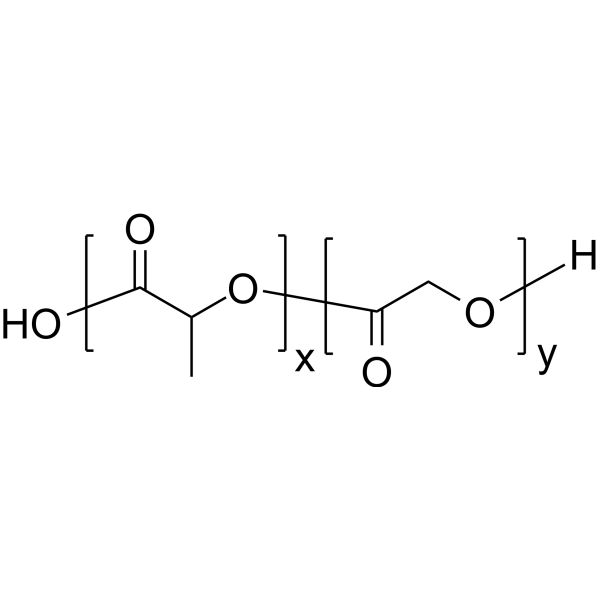
PLGA (75:25) is a low toxicity, biocompatible and biodegradable controlled drug delivery carrier, can achieve slow release in the organism. PLGA (75:25) is a copolymer of 75% poly lactic acid (PLA) and 25% poly glycolic acid (PGA). PLGA (75:25) has been extensively studied as delivery vehicles for agents, proteins and various other macromolecules such as DNA, RNA and peptides.
For research use only. We do not sell to patients.
- Assay : 99.54%
- CAS No.: 34346-01-5
-
Storage:Powder -20°C, 3 years , 4°C, 2 years ; In solvent -80°C, 2 years , -20°C, 1 year

To place orders, for customer services and technical support, please contact: MedChemExpress USA
Tel: 609-228-6898 E-mail: [email protected] [email protected]


-
 Biological Activity
-
Chemical Information
-
Solvent & Solubility
- Purity & Documentation
- References
-
 Help & FAQs


-
HY-B2247
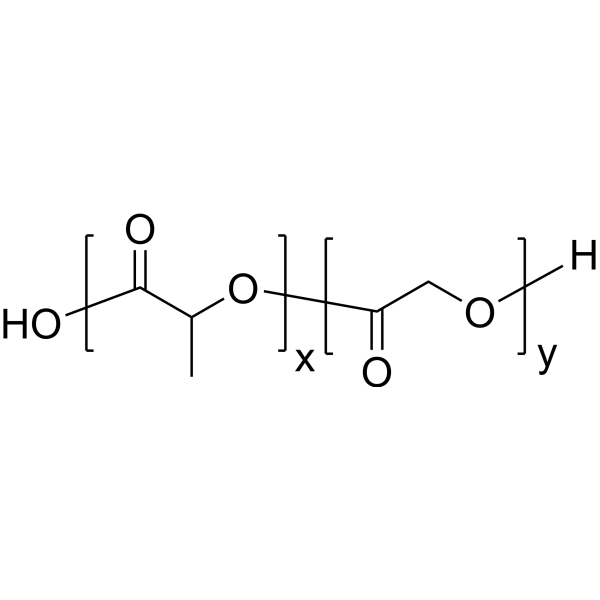
PLGA (50:50)Polymer drug Delivery Vehicle -
HY-Y0320
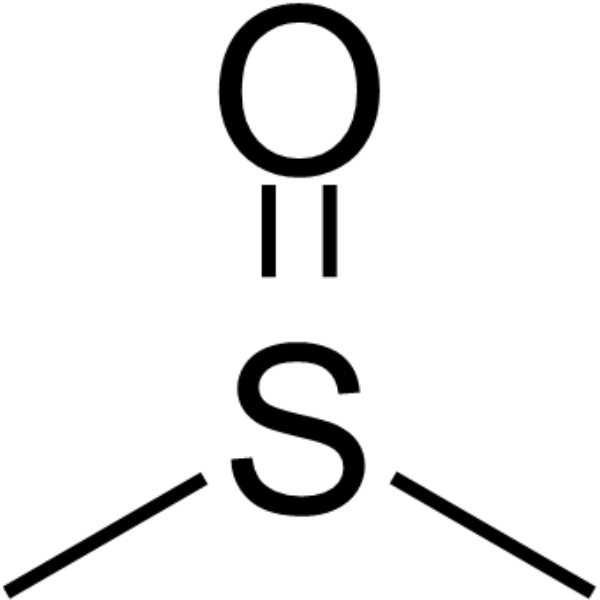
Dimethyl sulfoxide, meets analytical specification of Ch.P.Aprotic Solvent -
HY-17394
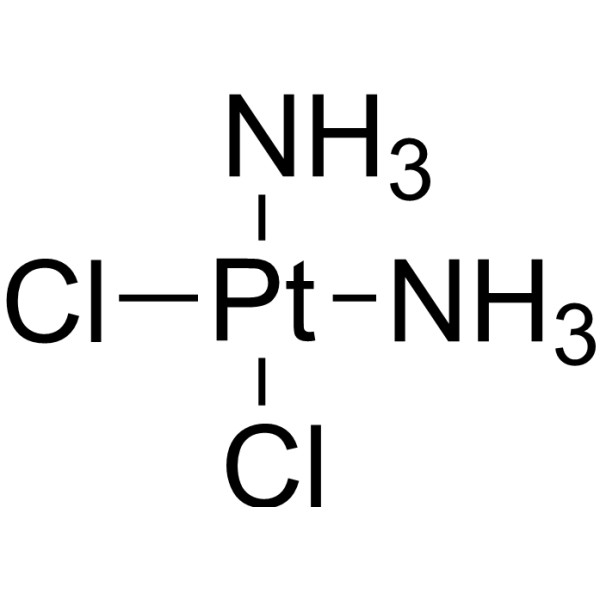
CisplatinDNA Alkylator -
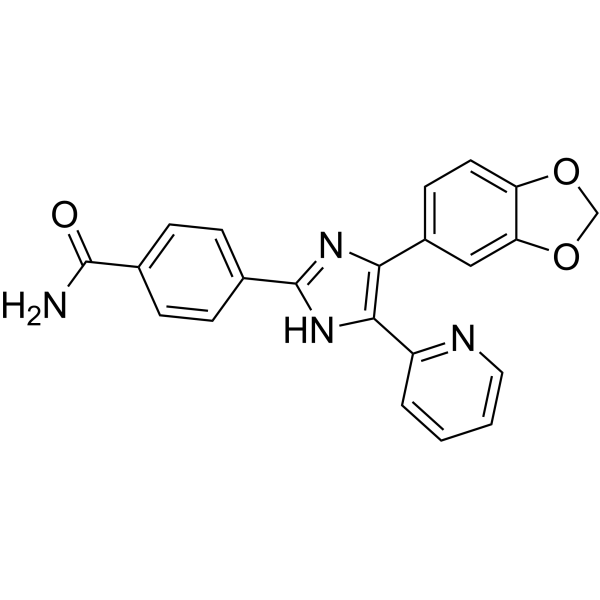
HY-10431
SB-431542TGF-β Receptor Kinase Inhibitor -
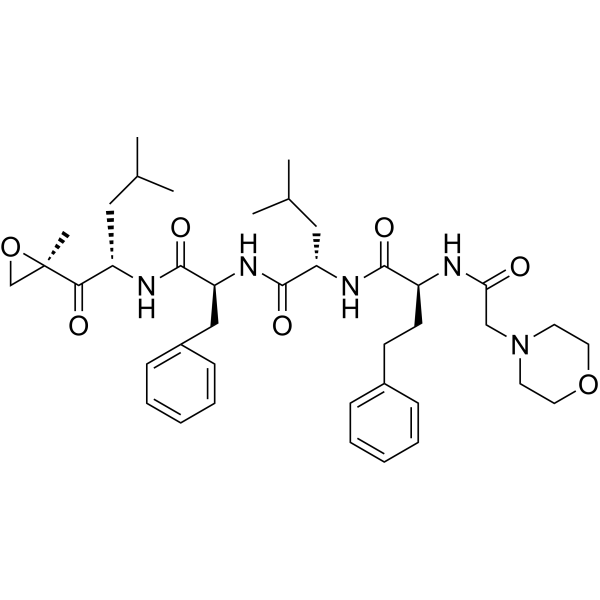
HY-10455
CarfilzomibProteasome Inhibitor -
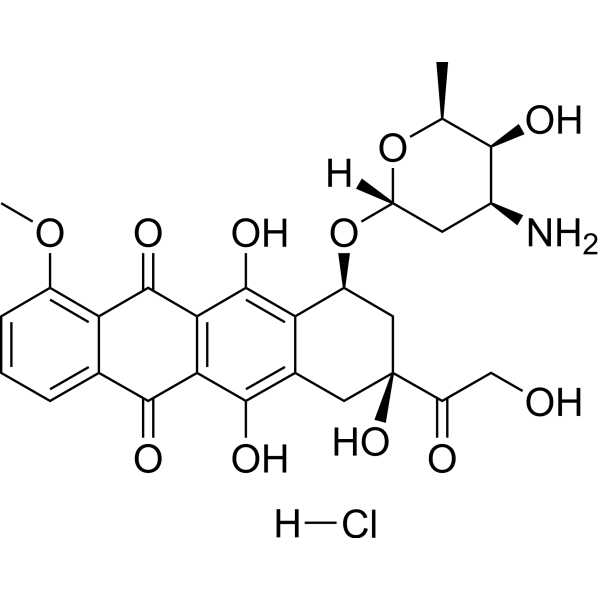
HY-15142
Doxorubicin hydrochlorideTopoisomerase Inhibitor -
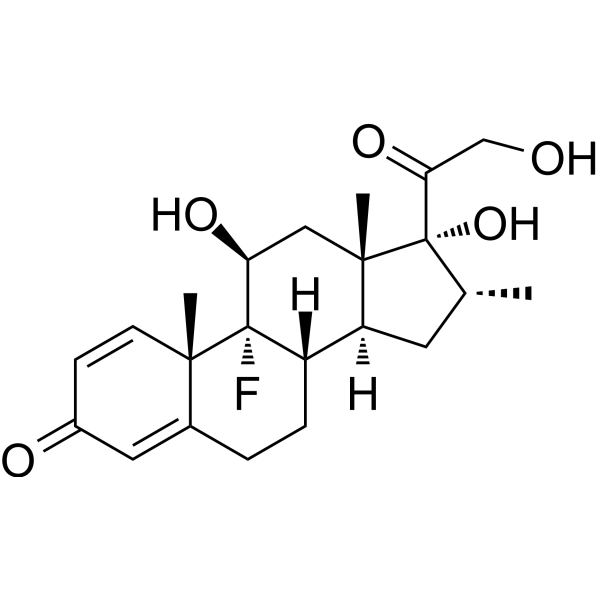
HY-14648
DexamethasoneGR Agonist -
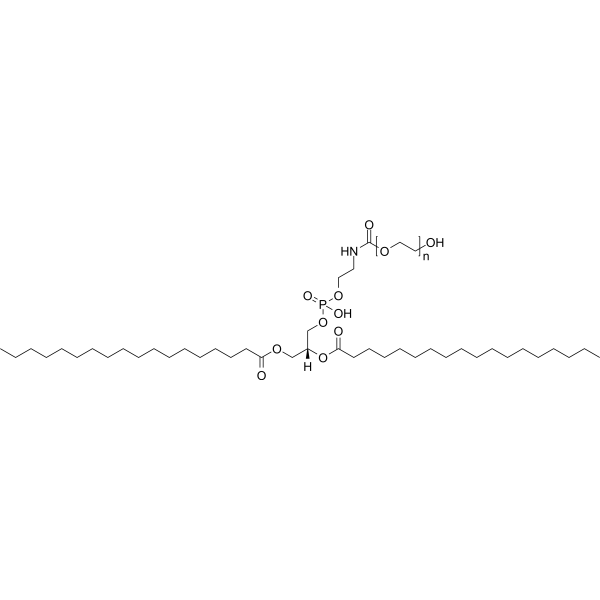
HY-142979
DSPE-PEG 2000PEG Lipid -
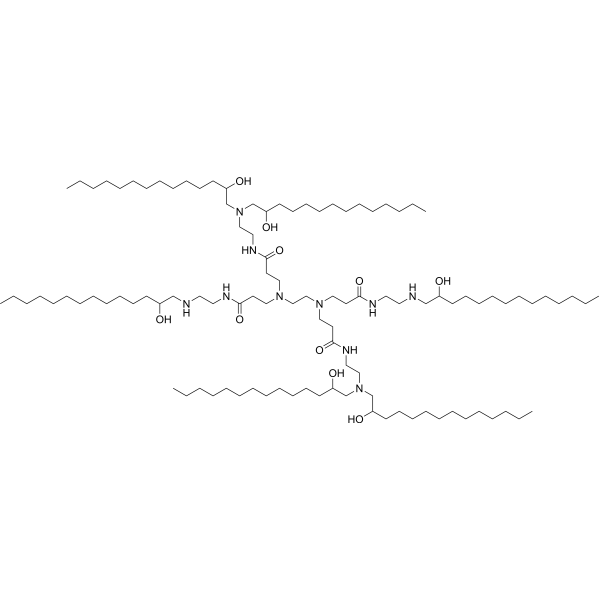
HY-152229
G0-C14PAMAM -
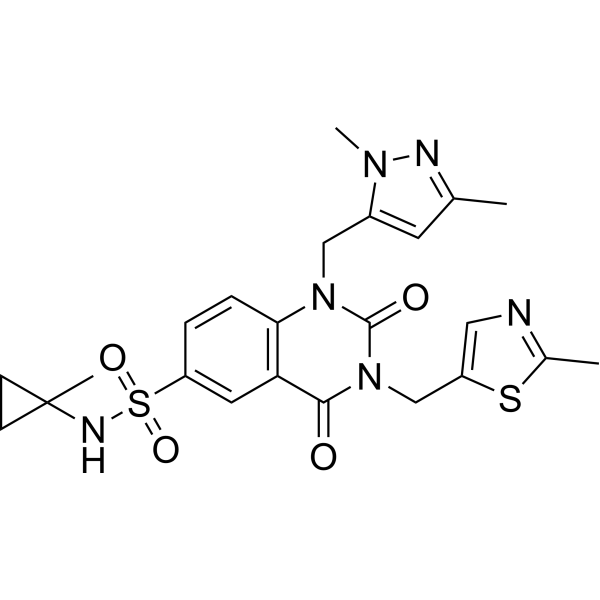
HY-108360
PDD 00017273PARG Inhibitor -
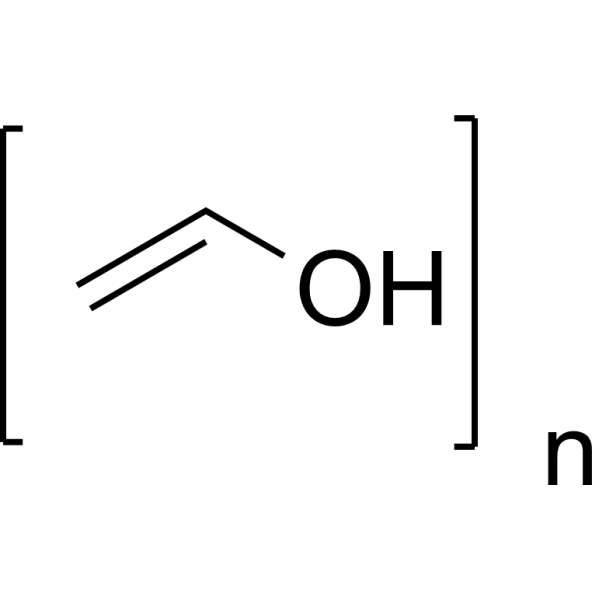
HY-Y0850
Polyvinyl alcohol (Mw 146000-186000, 99+% hydrolyzed)Biochemical reagents
Publications Citing Use of MedChemExpress (MCE) PLGA (75:25)
More- Nat Commun. 2026 Feb 14;17(1):2791. [Abstract]
- ACS Nano. 2025 Mar 25;19(11):10841-10853. [Abstract]
- Cell Rep Med. 2026 Feb 17;7(2):102592. [Abstract]
- Nanoscale Adv. 2025 Nov 21. [Abstract]
- ACS Biomater Sci Eng. 2026 Apr 13;12(4):2254-2269. [Abstract]
- mBio. 2025 Nov 25:e0290325. [Abstract]
- Fish Shellfish Immunol. 2026 Jan:168:111003. [Abstract]


Biological Activity
Description
In Vitro
PLGA (75:25) (0.03-5 mg/mL; 72 h) only affects the viability of Calu-3 cells at concentrations that are too high for clinical use[1].
MedChemExpress (MCE) has not independently confirmed the accuracy of these methods. They are for reference only.
-
Cell Line:Calu-3 cells
-
Concentration:0.03-5 mg/mL (for PLgA (75:25)/PVA and PLgA (75:25)/CS); 3-5 mg/mL (for PLgA (75:25)/CS and PLgA (75:25)/PF68); 0.03-1 mg/mL (for PLgA (75:25)/PVA and PLgA (75:25)/PF68) (CS (chitosan), PF68 and PVA (poly vinyl alcohol) serve as cationic stabilizer)
-
Incubation Time:72 h
-
Result:Showed low toxicity to cells (cell viability was always higher than 50%) even at the highest concentration tested, when xposured to PLgA (75:25)/PVA, PLgA (75:25)/CS and PLgA (75:25)/PF68 nanoparticles.
Increased cell viability, after short exposure (4 hours) to PLGA/PF68 nanoparticles.
In Vivo
MedChemExpress (MCE) has not independently confirmed the accuracy of these methods. They are for reference only.
-
Animal Model:Male Sprague-Dawley rats[2].
-
Dosage:40 mg/kg (dose of Risperidone, PLGA (75:25) as a drug delivery carrier).
-
Administration:Subcutaneous injection; single.
-
Result:Achieved slow release in vivo: after an initial burst, a sharp drop occurred and the drug levels through day 22 remained in a steady manner while progressing to a decline up to day 45.


Chemical Information
-
CAS No. 34346-01-5
-
Appearance Solid
-
Color White to off-white
-
SMILES
O=C(O)C(C)OC(CO[H])=O.[x].[y]
-
Synonyms
poly(lactic-co-glycolic acid) (75:25)
-
Shipping
Room temperature in continental US; may vary elsewhere.
-
Storage
Powder -20°C 3 years 4°C 2 years In solvent -80°C 2 years -20°C 1 year


Publications (7)
-
Journal Impact Factor
-
Most Recent
-
Nat Commun
Spatiotemporal interplay between epithelial and mesenchymal cells drives human dentinogenesis. [Abstract]2026 Feb 14;17(1):2791. PMID: 41690906 -
ACS Nano
2025 Mar 25;19(11):10841-10853. PMID: 40082064 -
Cell Rep Med
Chemomechanical remodeling of glucocorticoid-sensitive fibroblasts for multimodal synergistic therapy of skin fibrosis. [Abstract]2026 Feb 17;7(2):102592. PMID: 41707648 -
Nanoscale Adv
Dexamethasone-loaded lipid-polymeric nanoparticles to improve therapy for cisplatin-induced sensorineural hearing loss. [Abstract]2025 Nov 21. PMID: 41278499 -
ACS Biomater Sci Eng
Ultralong-Acting PLGA Microspheres Engineered to Sustain Release across the Entire Bone-Regeneration Timeline. [Abstract]2026 Apr 13;12(4):2254-2269. PMID: 41911044 -
mBio
Progranulin-driven lysosomal acidification facilitates exocytosis of PHEV-hijacked lysosomes for viral release. [Abstract]2025 Nov 25:e0290325. PMID: 41288096 -
Fish Shellfish Immunol
Evaluation of protective effect of infectious hematopoietic necrosis (IHN) oral DNA vaccine wrapped with 4 different delivery vectors against IHN virus (IHNV) infection in rainbow trout (Oncorhynchus mykiss). [Abstract]2026 Jan:168:111003. PMID: 41242626


Solvent & Solubility
In Vitro:
DMSO : 100 mg/mL (Need ultrasonic; Hygroscopic DMSO has a significant impact on the solubility of product, please use newly opened DMSO)
In Vivo:
Select the appropriate dissolution method based on your experimental animal and administration route.
- For the following dissolution methods, please ensure to first prepare a clear stock solution using an In Vitro approach and then sequentially add co-solvents:
- To ensure reliable experimental results, the clarified stock solution can be appropriately stored based on storage conditions. As for the working solution for In Vivo experiments, it is recommended to prepare freshly and use it on the same day.
- The percentages shown for the solvents indicate their volumetric ratio in the final prepared solution. If precipitation or phase separation occurs during preparation, heat and/or sonication can be used to aid dissolution.
In Vivo Dissolution Calculator
Please enter the basic information of animal experiments:
-
-
-
-
Recommended: Prepare an additional quantity of animals to account for potential losses during experiments.
Please enter your animal formula composition:
-
%DMSO +
Recommended: Keep the proportion of DMSO in working solution below 2% if your animal is weak.
-
%+
-
+%Tween-80 + +
-
%Saline +
The co-solvents required include: DMSO, . All of co-solvents are available by MedChemExpress (MCE). , Tween 80. All of co-solvents are available by MedChemExpress (MCE).
Working solution concentration: 0.22 mg/mL
Method for preparing stock solution: mg drug dissolved in μL DMSO. Stock solution concentration: mg/mL.
1. Take μL DMSO stock solution;
2. Add μL .
μL , mix evenly;
3. Then add μL Tween 80, mix evenly;
4. Then add μL
Please ensure that the stock solution in the first step is dissolved to a clear state, and add co-solvents in sequence. You can use ultrasonic heating (ultrasonic cleaner, recommended frequency 20-40 kHz), vortexing, etc. to assist dissolution.


Purity & Documentation
-
Data Sheet (271 KB)
-
SDS (251 KB)
- English - EN (251 KB)
- Français - FR (251 KB)
- Deutsch - DE (251 KB)
- Norwegian - NO (251 KB)
- Español - ES (251 KB)
- Swedish - SV (251 KB)
- Italian - IT (251 KB)
- Korean - KR (251 KB)
- Portuguese - PT (251 KB)
-
Handling Instructions (2659 KB)
References
[1]. Mura S, et al. Influence of surface charge on the potential toxicity of PLGA nanoparticles towards Calu-3 cells. Int J Nanomedicine. 2011;6:2591-605. [Content Brief]
[2]. D'Souza S, et al. Development of Risperidone PLGA Microspheres. J Drug Deliv. 2014;2014:620464. [Content Brief]
[3]. Makadia HK, et al. Poly Lactic-co-Glycolic Acid (PLGA) as Biodegradable Controlled Drug Delivery Carrier. Polymers (Basel). 2011 Sep 1;3(3):1377-1397. [Content Brief]
[4]. Chung TW, Tsai YL, Hsieh JH, Tsai WJ. Different ratios of lactide and glycolide in PLGA affect the surface property and protein delivery characteristics of the PLGA microspheres with hydrophobic additives. J Microencapsul. 2006;23(1):15-27. [Content Brief]

Calculators
Concentration (start) × Volume (start) = Concentration (final) × Volume (final)


PLGA (75:25) Related Classifications
HY-B2247A Related Classifications
 Powered by Bioz