



Quiflapon sodium
Based on 2 publication(s) in Google Scholar
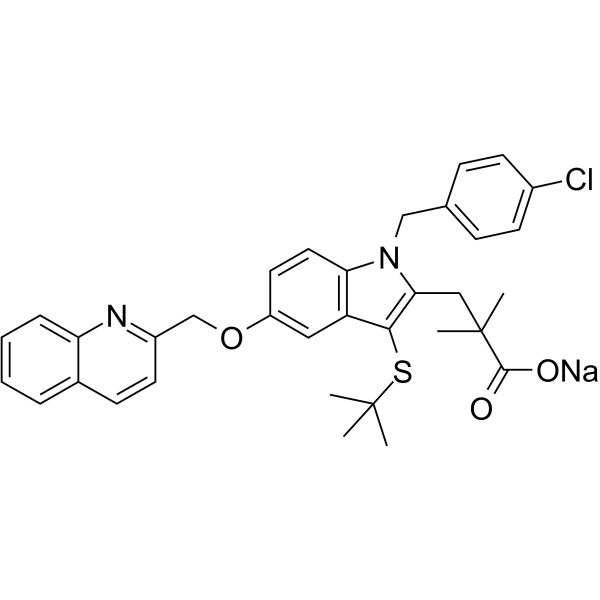
Quiflapon sodium (MK-591 sodium) is a selective and specific 5-Lipoxygenase-activating protein (FLAP) inhibitor. Quiflapon sodium is an orally active Leukotriene biosynthesis inhibitor. Induces apoptosis.
Nos produits utilisent uniquement pour la recherche. Nous ne vendons pas aux patients.
- Pureté : 98.72%
- CAS No.: 147030-01-1
- Formule: C34H34ClN2NaO3S
- Masse moléculaire:609.15
-
Stockage:
4°C, sealed storage, away from moisture
* In solvent : -80°C, 6 months; -20°C, 1 month (sealed storage, away from moisture)

To place orders, for customer services and technical support, please contact: MedChemExpress USA
Tel: 609-228-6898 E-mail: [email protected] [email protected]


-
 Activité biologique
-
Chemical Information
-
Solvant et solubilité
- Protocole
- Pureté et documentation
- Références
-
 Help & FAQs


-
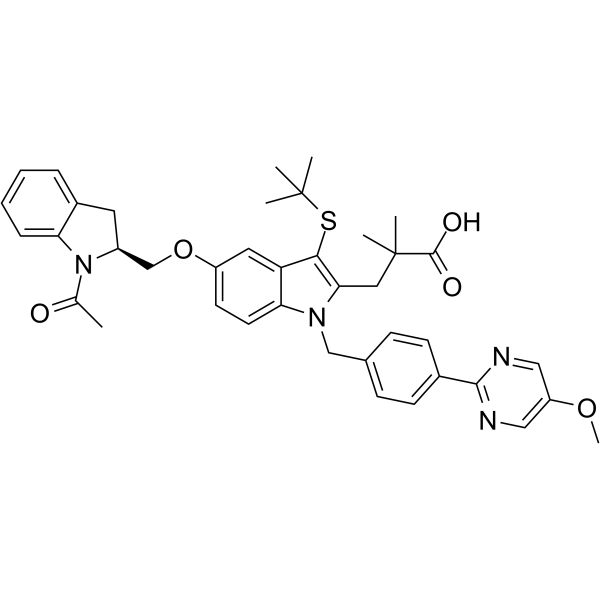
HY-14460
AM679FLAP Inhibitor -
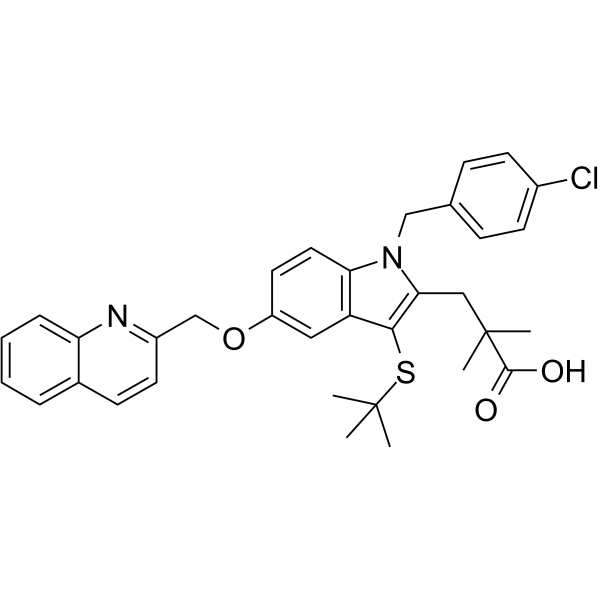
HY-10037
QuiflaponFLAP Inhibitor -
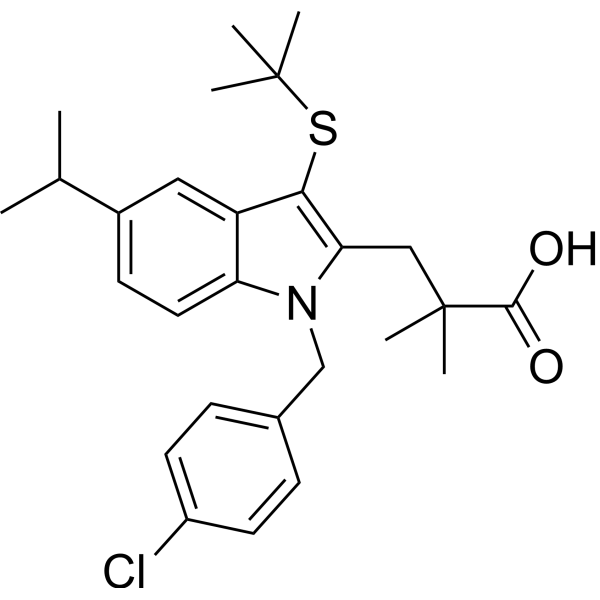
HY-14166
MK-886FLAP Inhibitor -
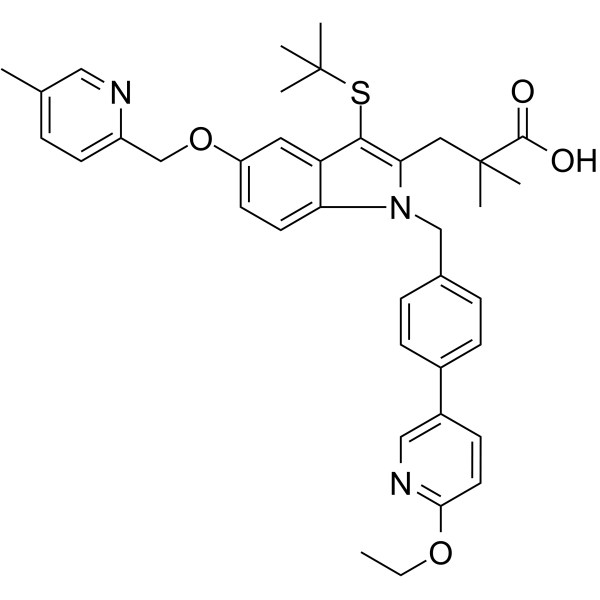
HY-15874
FiboflaponFLAP Inhibitor -

HY-10037R
Quiflapon (Standard)FLAP Inhibitor -

HY-50714R
Quiflapon sodium (Standard)FLAP Inhibitor -
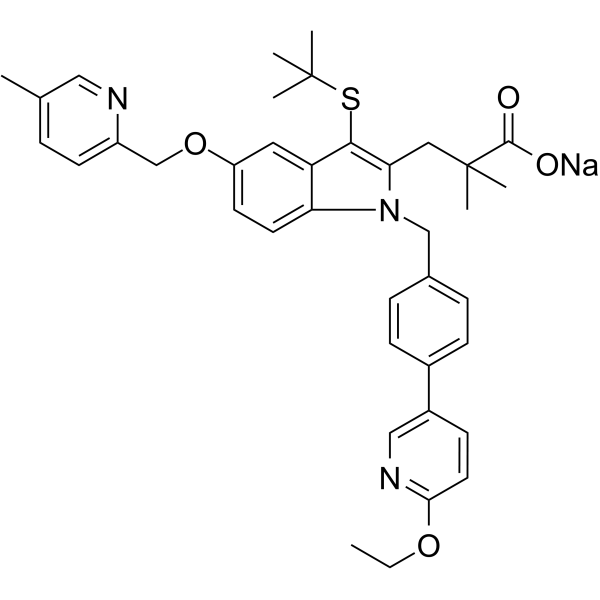
HY-15874A
Fiboflapon sodiumFLAP Inhibitor -
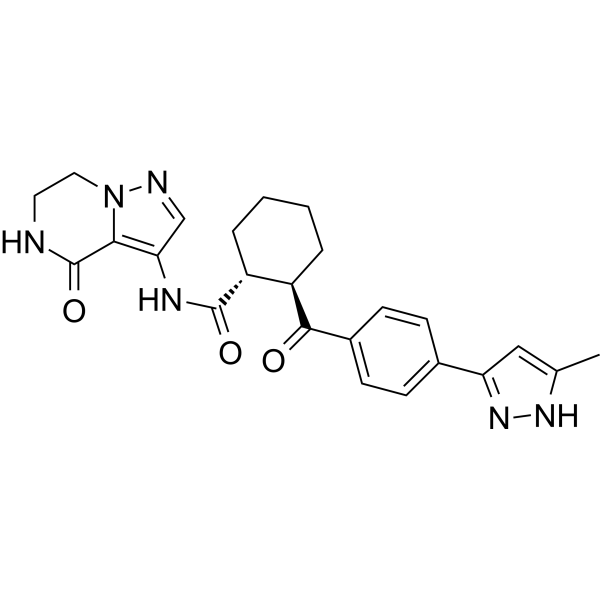
HY-122908
AtuliflaponFLAP Inhibitor -
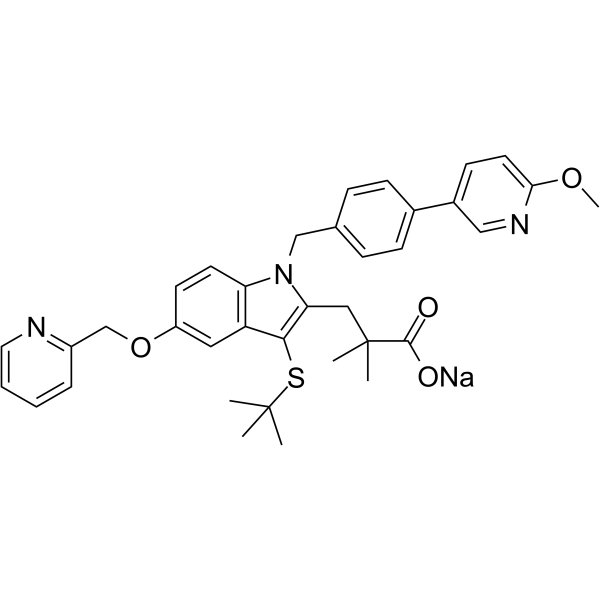
HY-14163
AM103 -

HY-14166R
MK-886 (Standard)FLAP Inhibitor -
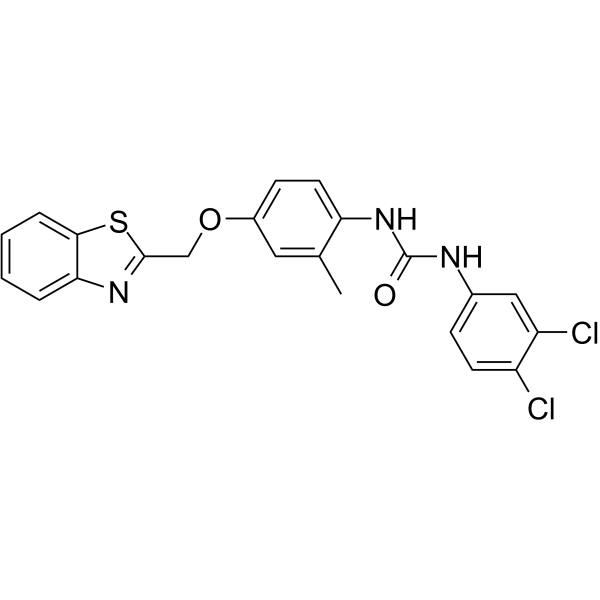
HY-128171
DiflapolinFLAP/sEH Inhibitor -
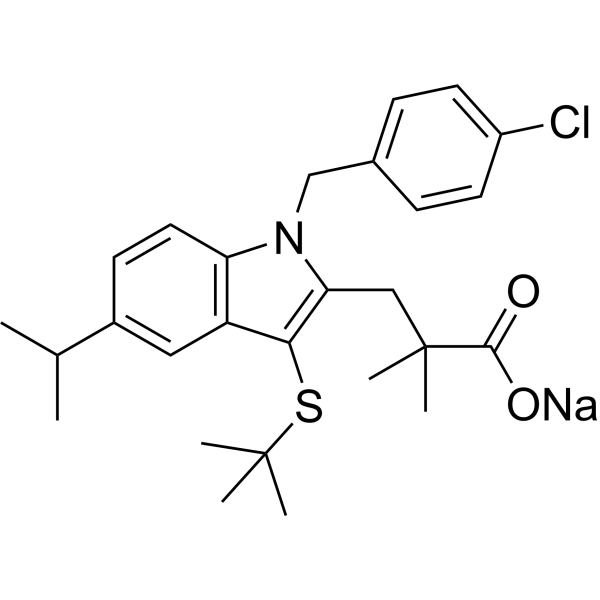
HY-14166A
MK-886 sodium saltFLAP Inhibitor
Publications Citing Use of MedChemExpress (MCE) Quiflapon sodium
More

Activité biologique
Description
Cellular Effect
|
Cell Line

|
Type | Value | Description | References |
|---|---|---|---|---|
| RBL-1 | IC50 |
6 nM
Compound: 19 MK-591
|
Compound were tested for in vitro inhibition against broken RBL-1.
Compound were tested for in vitro inhibition against broken RBL-1.
|
[PMID: 8709092] |
In Vitro
Quiflapon sodium (MK591) and SB203580 are able to block SEB-induced human PBMC cell proliferation. Quiflapon sodium (MK591) down regulates three genes [for cathepsin L, IL-17 and guanylate binding protein (GBP)-2] that are up regulated by SEB[1]. Quiflapon sodium (MK591) undergoes apoptosis within hours of treatment. Quiflapon sodium also induces rapid activation of the stress kinase, c-Jun N-terminal kinase (JNK), which plays an important role in the apoptosis process. Quiflapon sodium triggers apoptosis in prostate cancer cells without inhibition of PI3K-Akt, or ERK. Moreover, Quiflapon sodium and LY294002 exert synergistic effect in inducing apoptosis in prostate cancer cells[2]. Quiflapon sodium (MK591) influences cAMP response element-binding protein but not Sp1[4].
MedChemExpress (MCE) has not independently confirmed the accuracy of these methods. They are for reference only.
In Vivo
MedChemExpress (MCE) has not independently confirmed the accuracy of these methods. They are for reference only.


Chemical Information
-
CAS No. 147030-01-1
-
Appearance Solid
-
Masse moléculaire 609.15
-
Formule C34H34ClN2NaO3S
-
Color White to off-white
-
SMILES
ClC(C=C1)=CC=C1CN2C(CC(C)(C(O[Na])=O)C)=C(SC(C)(C)C)C3=C2C=CC(OCC4=NC5=CC=CC=C5C=C4)=C3
-
Synonyms
MK-591 sodium
-
Livraison
Room temperature in continental US; may vary elsewhere.
-
Stockage
4°C, sealed storage, away from moisture
* In solvent : -80°C, 6 months; -20°C, 1 month (sealed storage, away from moisture)


Publications (2)
-
Journal Impact Factor
-
Most Recent
-
SLAS Discov
A high-throughput cell-based screening method for Zika virus protease inhibitors discovery. [Abstract]2024 Jul;29(5):100164. PMID: 38796112 -


Solvant et solubilité
In Vitro:
DMSO : 50 mg/mL (82.08 mM; Need ultrasonic; Hygroscopic DMSO has a significant impact on the solubility of product, please use newly opened DMSO)
H2O : < 0.1 mg/mL (insoluble)
Please refer to the solubility information to select the appropriate solvent. Once prepared, please aliquot and store the solution to prevent product inactivation from repeated freeze-thaw cycles.
Storage method and period of stock solution: -80°C, 6 months; -20°C, 1 month (sealed storage, away from moisture). When stored at -80°C, please use it within 6 months. When stored at -20°C, please use it within 1 month.
Please refer to the solubility information to select the appropriate solvent. Once prepared, please aliquot and store the solution to prevent product inactivation from repeated freeze-thaw cycles.
Storage method and period of stock solution: -80°C, 6 months; -20°C, 1 month (sealed storage, away from moisture). When stored at -80°C, please use it within 6 months. When stored at -20°C, please use it within 1 month.
Concentration (start) × Volume (start) = Concentration (final) × Volume (final)
In Vivo:
Select the appropriate dissolution method based on your experimental animal and administration route.
- For the following dissolution methods, please ensure to first prepare a clear stock solution using an In Vitro approach and then sequentially add co-solvents:
- To ensure reliable experimental results, the clarified stock solution can be appropriately stored based on storage conditions. As for the working solution for In Vivo experiments, it is recommended to prepare freshly and use it on the same day.
- The percentages shown for the solvents indicate their volumetric ratio in the final prepared solution. If precipitation or phase separation occurs during preparation, heat and/or sonication can be used to aid dissolution.
Add each solvent one by one: 10% DMSO 40% PEG300 5% Tween-80 45% Saline
Solubility: ≥ 2.75 mg/mL (4.51 mM); Clear solution
This protocol yields a clear solution of ≥ 2.75 mg/mL (saturation unknown).
Taking 1 mL working solution as an example, add 100 μL DMSO stock solution (27.5 mg/mL) to 400 μL PEG300, and mix evenly; then add 50 μL Tween-80 and mix evenly; then add 450 μL Saline to adjust the volume to 1 mL.
Preparation of Saline: Dissolve 0.9 g sodium chloride in ddH₂O and dilute to 100 mL to obtain a clear Saline solution.
In Vivo Dissolution Calculator
Please enter the basic information of animal experiments:
-
-
-
-
Recommended: Prepare an additional quantity of animals to account for potential losses during experiments.
Please enter your animal formula composition:
-
%DMSO +
Recommended: Keep the proportion of DMSO in working solution below 2% if your animal is weak.
-
%+
-
+%Tween-80 + +
-
%Saline +
The co-solvents required include: DMSO, . All of co-solvents are available by MedChemExpress (MCE). , Tween 80. All of co-solvents are available by MedChemExpress (MCE).
Working solution concentration: 0.22 mg/mL
Method for preparing stock solution: mg drug dissolved in μL DMSO. Stock solution concentration: mg/mL. * In solvent : -80°C, 6 months; -20°C, 1 month (sealed storage, away from moisture)
1. Take μL DMSO stock solution;
2. Add μL .
μL , mix evenly;
3. Then add μL Tween 80, mix evenly;
4. Then add μL
Please ensure that the stock solution in the first step is dissolved to a clear state, and add co-solvents in sequence. You can use ultrasonic heating (ultrasonic cleaner, recommended frequency 20-40 kHz), vortexing, etc. to assist dissolution.


Pureté et documentation
-
Fiche technique (278 KB)
-
SDS (252 KB)
- English - EN (252 KB)
- Français - FR (252 KB)
- Deutsch - DE (252 KB)
- Norwegian - NO (252 KB)
- Español - ES (252 KB)
- Swedish - SV (252 KB)
- Italian - IT (252 KB)
- Korean - KR (252 KB)
- Portuguese - PT (252 KB)
-
Instruction de manipulation (2659 KB)
Références
[1]. Mendis C, et al. Effect of 5-lipoxygenase inhibitor MK591 on early molecular and signaling events induced by staphylococcal enterotoxin B in human peripheral blood mononuclear cells. FEBS J. 2008 Jun;275(12):3088-98. [Content Brief]
[2]. Sarveswaran S, et al. MK591, a leukotriene biosynthesis inhibitor, induces apoptosis in prostate cancer cells: synergistic action with LY294002, an inhibitor of phosphatidylinositol 3'-kinase. Cancer Lett. 2010 May 28;291(2):167-76. [Content Brief]
[3]. Park MS, et al. 5-Lipoxygenase-activating protein (FLAP) inhibitor MK-0591 prevents aberrant alveolarization in newborn mice exposed to 85% oxygen in a dose- and time-dependent manner. Lung. 2011 Feb;189(1):43-50. [Content Brief]
[4]. Chu J, et al. Involvement of 5-lipoxygenase activating protein in the amyloidotic phenotype of an Alzheimer's disease mouse model. J Neuroinflammation. 2012 Jun 14;9:127. [Content Brief]


Complete Stock Solution Preparation Table
Please refer to the solubility information to select the appropriate solvent. Once prepared, please aliquot and store the solution to prevent product inactivation from repeated freeze-thaw cycles.
Storage method and period of stock solution: -80°C, 6 months; -20°C, 1 month (sealed storage, away from moisture). When stored at -80°C, please use it within 6 months. When stored at -20°C, please use it within 1 month.
| Optional Solvent | Concentration Solvent Mass | 1 mg | 5 mg | 10 mg | 25 mg |
|---|---|---|---|---|---|
| DMSO | 1 mM | 1.6416 mL | 8.2082 mL | 16.4163 mL | 41.0408 mL |
| 5 mM | 0.3283 mL | 1.6416 mL | 3.2833 mL | 8.2082 mL | |
| 10 mM | 0.1642 mL | 0.8208 mL | 1.6416 mL | 4.1041 mL | |
| 15 mM | 0.1094 mL | 0.5472 mL | 1.0944 mL | 2.7361 mL | |
| 20 mM | 0.0821 mL | 0.4104 mL | 0.8208 mL | 2.0520 mL | |
| 25 mM | 0.0657 mL | 0.3283 mL | 0.6567 mL | 1.6416 mL | |
| 30 mM | 0.0547 mL | 0.2736 mL | 0.5472 mL | 1.3680 mL | |
| 40 mM | 0.0410 mL | 0.2052 mL | 0.4104 mL | 1.0260 mL | |
| 50 mM | 0.0328 mL | 0.1642 mL | 0.3283 mL | 0.8208 mL | |
| 60 mM | 0.0274 mL | 0.1368 mL | 0.2736 mL | 0.6840 mL | |
| 80 mM | 0.0205 mL | 0.1026 mL | 0.2052 mL | 0.5130 mL |


Quiflapon sodium Related Classifications
HY-50714 Related Classifications
 Powered by Bioz