



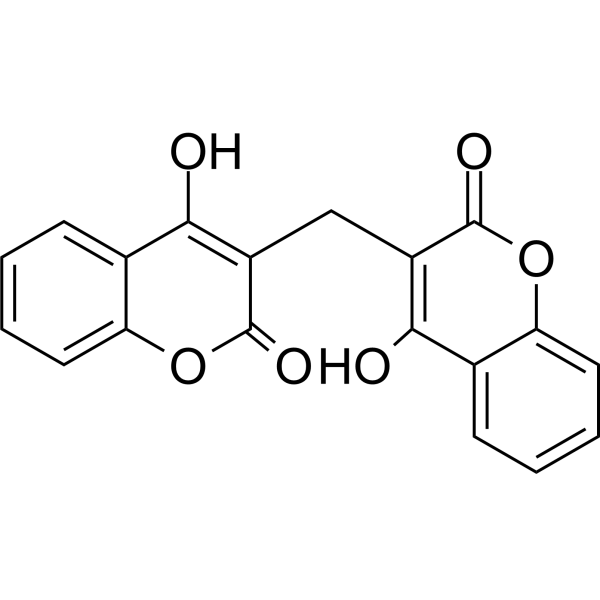
Dicoumarol
Based on 18 publication(s) in Google Scholar
Dicoumarol is an inhibitor of both NAD(P)H:quinone oxidoreductase 1 (NQO1) and PDK1 with IC50s of 0.37 and 19.42 μM, respectively.
For research use only. We do not sell to patients.
- Purity : 99.89%
- CAS No.: 66-76-2
- Formula: C19H12O6
- Molecular Weight:336.29
-
Storage:Powder -20°C, 3 years , 4°C, 2 years ; In solvent -80°C, 6 months , -20°C, 1 month

To place orders, for customer services and technical support, please contact: MedChemExpress USA
Tel: 609-228-6898 E-mail: [email protected] [email protected]


-
 Biological Activity
-
Chemical Information
-
Solvent & Solubility
- Purity & Documentation
- References
-
 Help & FAQs


-

HY-100367
ES 936NQO1 Inhibitor -
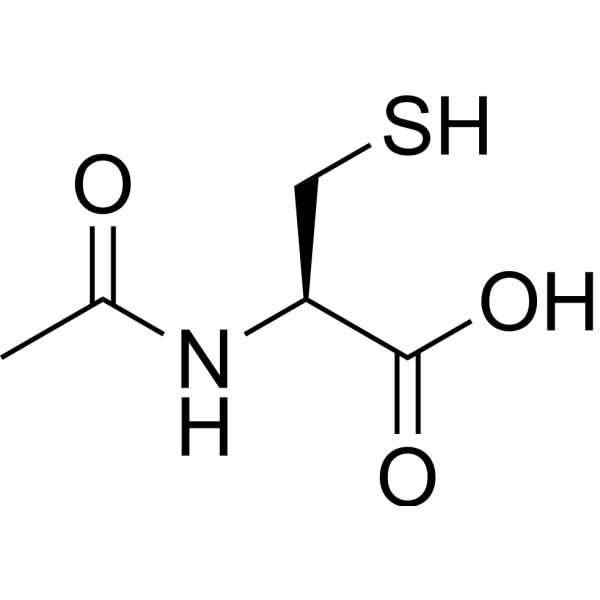
HY-B0215
AcetylcysteineMucolytic Agent -
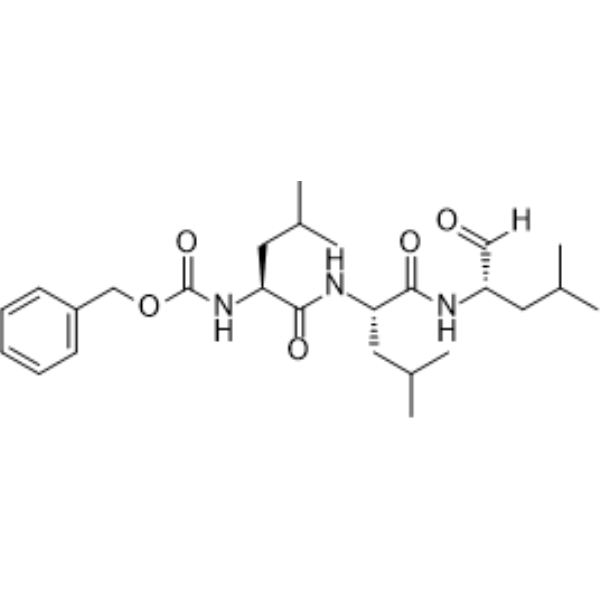
HY-13259
MG-132Proteasome Inhibitor -
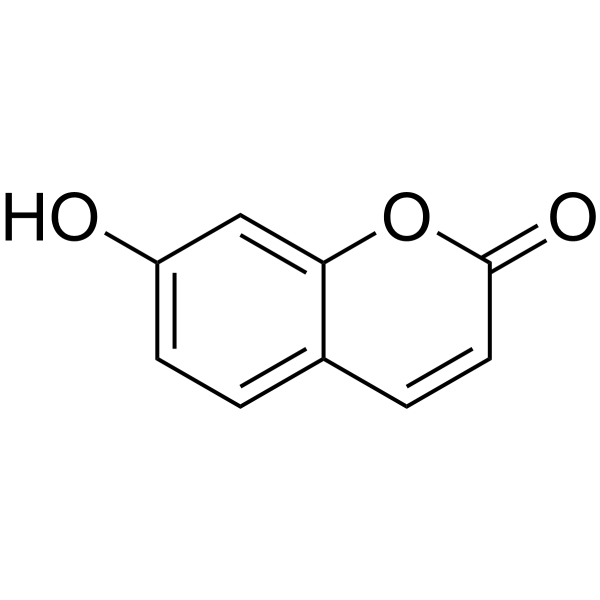
HY-N0573
UmbelliferoneFluorescence Probe -
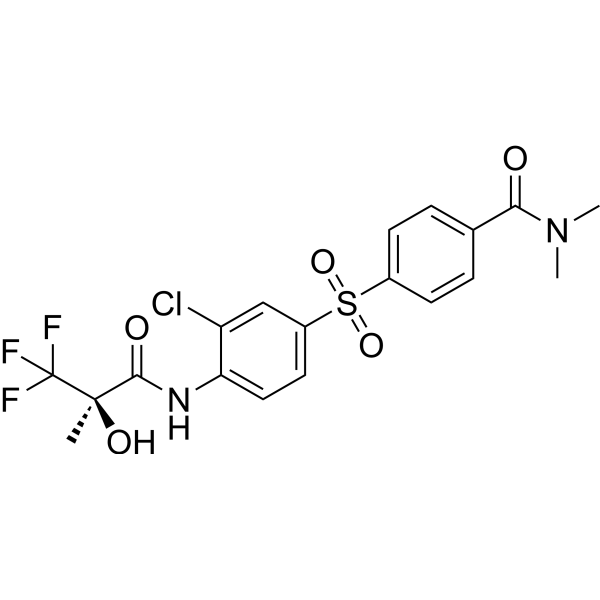
HY-16082
AZD7545PDHK2 Inhibitor -
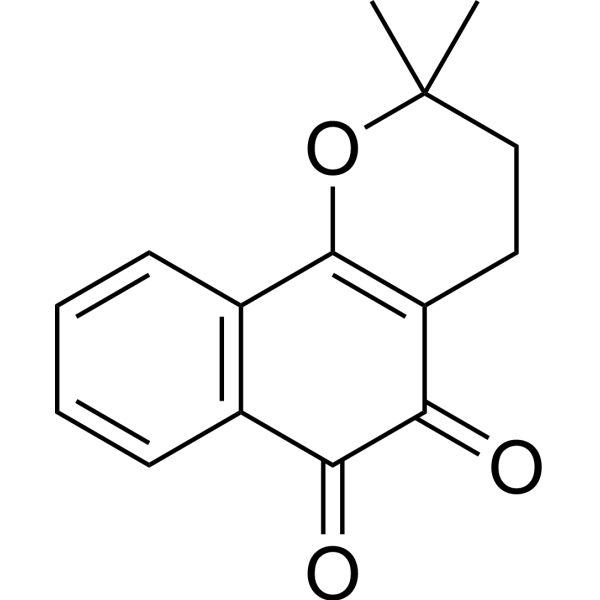
HY-13555
β-LapachoneAutophagy Inducer -
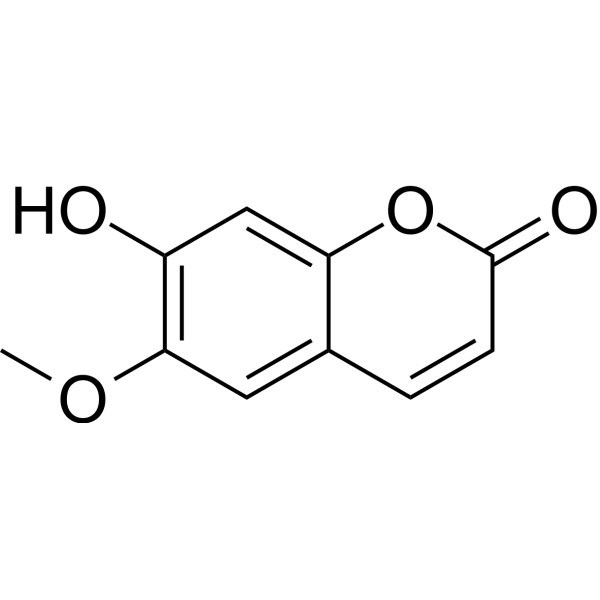
HY-N0342
ScopoletinCholinesterase (ChE) Inhibitor -
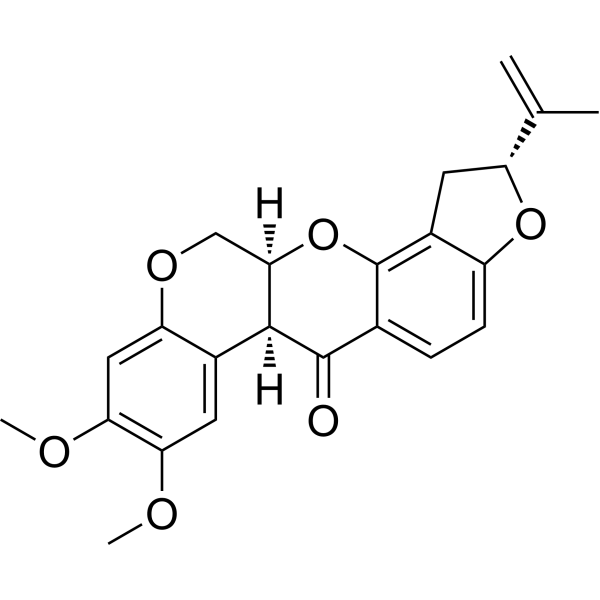
HY-B1756
RotenoneMitochondrial Complex I Inhibitor -
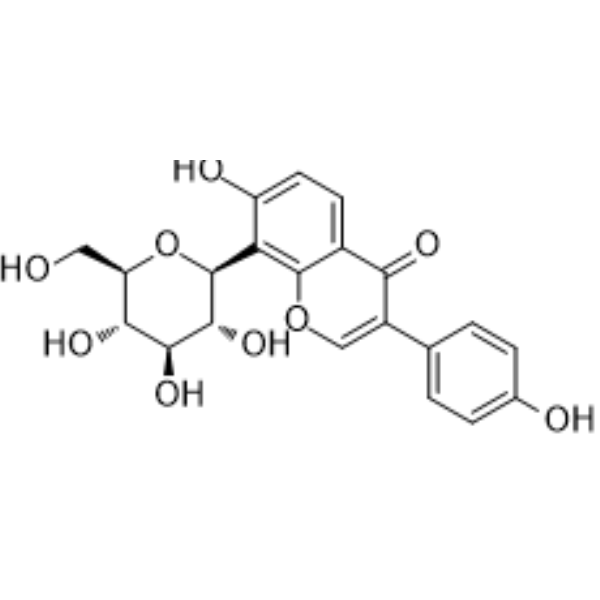
HY-N0145
Puerarin5-HT Receptor Antagonist -
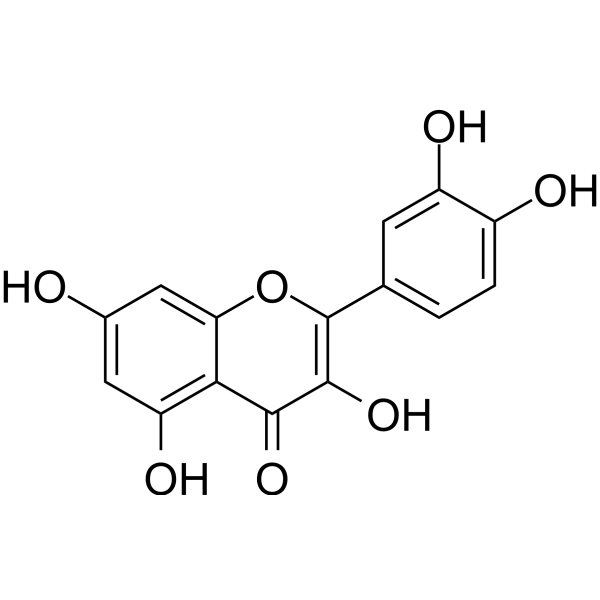
HY-18085
QuercetinFlavonoid Antioxidant -
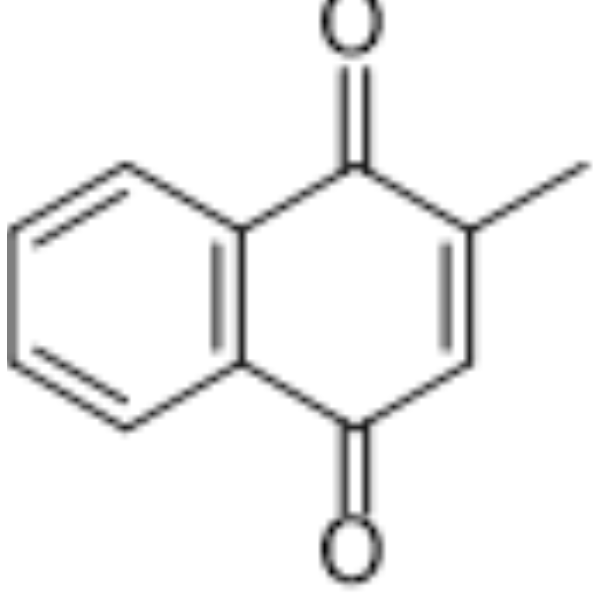
HY-B0332
MenadioneEndogenous Metabolite -
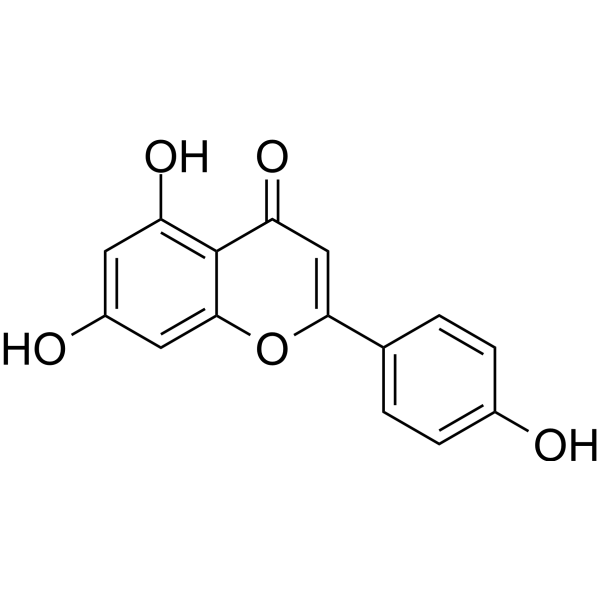
HY-N1201
ApigeninCytochrome P450 Inhibitor
Publications Citing Use of MedChemExpress (MCE) Dicoumarol
More- Nat Microbiol. 2025 Oct;10(10):2521-2536. [Abstract]
- Adv Sci (Weinh). 2026 May 7:e75538. [Abstract]
- Cell Rep Med. 2026 Aug 18;7(8):102948.
- J Control Release. 2022 May 31;347:632-648. [Abstract]
- Phytomedicine. 2021 Mar:83:153479. [Abstract]
- Biomater Res. 2026 Apr 29.
- Free Radic Biol Med. 2025 Oct 30:242:275-287. [Abstract]
- Anal Chem. 2026 May 24. [Abstract]
- Life Sci. 2025 May 15:369:123526. [Abstract]
- Oncogenesis. 2026 Sep 28.
- Chem Biol Interact. 2022 Dec 1:368:110222. [Abstract]
- Bioorg Chem. 2022 Dec:129:106191. [Abstract]
- Mol Cell Biochem. 2026 Aug 3.
- Aquaculture. 2026 Jul 18;626:744390.
- J Funct Foods. 2019, 103562.
- Neuroscience. 2020 Jun 1:436:154-166. [Abstract]
- Oxid Med Cell Longev. 2022 Jun 8:2022:8585598. [Abstract]
- Research Square Preprint. 2020 Sep.
 Customer Validation & Images

-
In Vivo Efficacy Study
-
In Vivo Efficacy Study
-
Cell Proliferation/Viability Assay
-
Flow Cytometry
-
WB


Biological Activity
Description
IC50 & Target
Cellular Effect
|
Cell Line

|
Type | Value | Description | References |
|---|---|---|---|---|
| CHO | EC50 |
9.78 μM
Compound: 6
|
Agonist activity at C-terminal beta-galactosidase tagged human recombinant GPR35 expressed in CHO cells after 90 mins by beta-arrestin recruitment assay
Agonist activity at C-terminal beta-galactosidase tagged human recombinant GPR35 expressed in CHO cells after 90 mins by beta-arrestin recruitment assay
|
[PMID: 23888932] |
| HCT-116 | IC50 |
103 μM
Compound: 1, PBD150
|
Cytotoxicity against human HCT116 cells assessed as reduction in cell number after 24 hrs by MTT assay
Cytotoxicity against human HCT116 cells assessed as reduction in cell number after 24 hrs by MTT assay
|
[PMID: 19877692] |
| HCT-116 | IC50 |
19 μM
Compound: 1, PBD150
|
Cytotoxicity against human HCT116 cells assessed as reduction in cell number after 96 hrs by MTT assay
Cytotoxicity against human HCT116 cells assessed as reduction in cell number after 96 hrs by MTT assay
|
[PMID: 19877692] |
| HEK-293T | EC50 |
1.3 μM
Compound: 6
|
Agonist activity at human GPR35 expressed in HEK293T cells at 5 uM by EYPF-based beta-arrestin-2 luciferase reporter gene assay
Agonist activity at human GPR35 expressed in HEK293T cells at 5 uM by EYPF-based beta-arrestin-2 luciferase reporter gene assay
|
[PMID: 23888932] |
| MIA PaCa-2 | IC50 |
52 μM
Compound: 1, PBD150
|
Cytotoxicity against human MIAPaCa2 cells assessed as reduction in cell number after 96 hrs by MTT assay
Cytotoxicity against human MIAPaCa2 cells assessed as reduction in cell number after 96 hrs by MTT assay
|
[PMID: 19877692] |
| MIA PaCa-2 | IC50 |
75 μM
Compound: 1, dicoumarol
|
Cytotoxicity against human MIA PaCa2 cells by MTT assay
Cytotoxicity against human MIA PaCa2 cells by MTT assay
|
[PMID: 17999461] |
| MIA PaCa-2 | IC50 |
90 μM
Compound: 1, PBD150
|
Cytotoxicity against human MIAPaCa2 cells assessed as reduction in cell number after 24 hrs by MTT assay
Cytotoxicity against human MIAPaCa2 cells assessed as reduction in cell number after 24 hrs by MTT assay
|
[PMID: 19877692] |
In Vitro
Dicoumarol is an inhibitor of both NAD(P)H:quinone oxidoreductase 1 (NQO1) and PDK1 with IC50s of 0.37±0.15 and 19.42±0.032 μM, respectively. The PDK1 activity is inhibited by Dicoumarol in a dose-dependent manner. The enzymatic activity of PDK1 is reduced by approximately 94% when treated with 200 μM Dicoumarol. Dicoumarol decreases the p-PDHA1 level by 26% (100 μM Dicoumarol) and by 72% (200 μM Dicoumarol), with no statistical difference in the total PDHA1 level. Both 100 μM and 200 μM Dicoumarol markedly induce apoptosis of SKOV3 cells. Similarly, flow cytometric analysis of annexin V+PI+ cells reveals that 100 μM and 200 μM Dicoumarol treatments generate approximately 20.87% and 24.94% apoptotic cells, respectively, significantly higher than vehicle treatment[2].
It is also observed that treatment of MCF-7-TAMR cells with Dicoumarol, a known NQO1 inhibitor, reverses their Tamoxifen-resistance phenotype[3].
MedChemExpress (MCE) has not independently confirmed the accuracy of these methods. They are for reference only.
In Vivo
MedChemExpress (MCE) has not independently confirmed the accuracy of these methods. They are for reference only.


Chemical Information
-
CAS No. 66-76-2
-
Appearance Solid
-
Molecular Weight 336.29
-
Formula C19H12O6
-
Color White to off-white
-
SMILES
O=C1C(CC2=C(C3=CC=CC=C3OC2=O)O)=C(C4=CC=CC=C4O1)O
-
Synonyms
Dicumarol
-
Structure Classification
-
Initial Source
-
Shipping
Room temperature in continental US; may vary elsewhere.
-
Storage
Powder -20°C 3 years 4°C 2 years In solvent -80°C 6 months -20°C 1 month


Publications (18)
-
Journal Impact Factor
-
Most Recent
-
Nat Microbiol
Oxaloacetate sensing promotes innate immune antiviral defence against influenza virus infection. [Abstract]2025 Oct;10(10):2521-2536. PMID: 40983701
Dicoumarol purchased from MedChemExpress. Usage Cited in: Nat Microbiol. 2025 Oct;10(10):2521-2536. [Abstract]
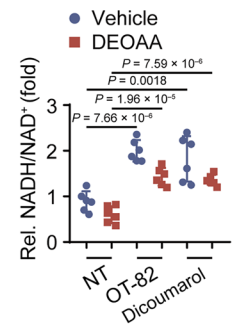
C57BL/6J mice (n=6 per group) were intraperitoneally injected with Sodium diethyl oxaloacetate (20 mg/kg) daily for 3 days, and intraperitoneally injected with either OT-82 (10 mg/kg) or Dicumarol (10 mg/kg) once daily for 2 days. Three days after intranasal inoculation with H1N1 (PR8) influenza virus, the relative NADH/NAD+ levels in lung homogenates were analyzed.
Dicoumarol purchased from MedChemExpress. Usage Cited in: Nat Microbiol. 2025 Oct;10(10):2521-2536. [Abstract]
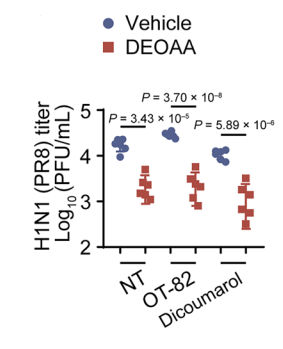
C57BL/6J mice (n=6 per group) were intraperitoneally injected with Sodium diethyl oxaloacetate (20 mg/kg) daily for 3 days, and intraperitoneally injected with either OT-82 (10 mg/kg) or Dicumarol (10 mg/kg) once daily for 2 days. Influenza virus titers were analyzed 3 days after intranasal inoculation with H1N1 (PR8) influenza virus.
-
Adv Sci (Weinh)
Rewiring NADH Metabolism Through NQO1-Mediated Redox Cycling for Targeted Follicular Lymphoma Therapy. [Abstract]2026 May 7:e75538. PMID: 42095505 -
-
J Control Release
Bladder cancer selective chemotherapy with potent NQO1 substrate co-loaded prodrug nanoparticles. [Abstract]2022 May 31;347:632-648. PMID: 35618186 -
Phytomedicine
In vivo hepatoprotective activity and the underlying mechanism of chebulinic acid from Terminalia chebula fruit. [Abstract]2021 Mar:83:153479. PMID: 33561764 -
-
Free Radic Biol Med
7,8-Dihydroxyflavone protects acetaminophen induced liver injury through activating PI3K/Akt/NRF2/GPX4 mediated ferroptosis suppression. [Abstract]2025 Oct 30:242:275-287. PMID: 41173313 -
Anal Chem
A Dual-Channel Self-Calibrated Fluorescent Probe for the Correlation of Nitroreductase Activity and DNA Damage. [Abstract]2026 May 24. PMID: 42178687 -
Life Sci
Molecular docking- and reporter-based screening identify dicoumarol against ER stress-induced liver injury in mice through inhibiting IRE1α activity. [Abstract]2025 May 15:369:123526. PMID: 40049366 -
-
Chem Biol Interact
Discovery and characterization of the flavonoids in Cortex Mori Radicis as naturally occurring inhibitors against intestinal nitroreductases. [Abstract]2022 Dec 1:368:110222. PMID: 36244406 -
Bioorg Chem
Structure-based screening and biological validation of the anti-thrombotic drug-dicoumarol as a novel and potent PPARγ-modulating ligand. [Abstract]2022 Dec:129:106191. PMID: 36270169 -
-
-
-
Neuroscience
Downregulation of BACH1 Protects AGAINST Cerebral Ischemia/Reperfusion Injury through the Functions of HO-1 and NQO1. [Abstract]2020 Jun 1:436:154-166. PMID: 32311410 -
Oxid Med Cell Longev
Osthole Induces Apoptosis and Caspase-3/GSDME-Dependent Pyroptosis via NQO1-Mediated ROS Generation in HeLa Cells. [Abstract]2022 Jun 8:2022:8585598. PMID: 35720178
Dicoumarol purchased from MedChemExpress. Usage Cited in: Oxid Med Cell Longev. 2022 Jun 8:2022:8585598. [Abstract]
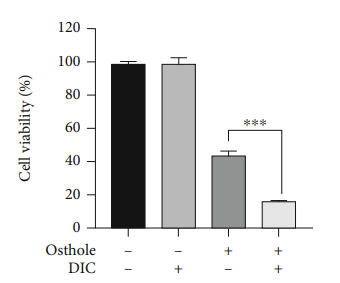
Incubation with 100 μM Dicoumarol for 1 h ahead of treatment with 320 μM osthole. Cell viability was detected by MTT assay.
Dicoumarol purchased from MedChemExpress. Usage Cited in: Oxid Med Cell Longev. 2022 Jun 8:2022:8585598. [Abstract]
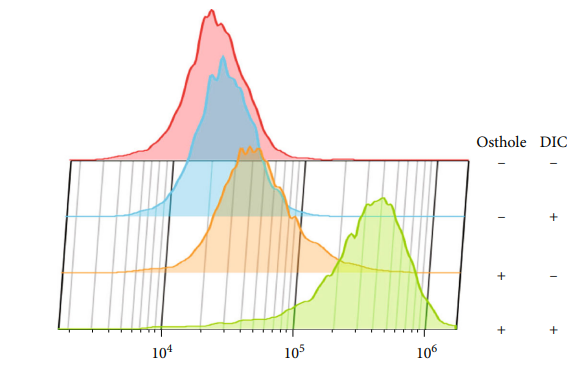
Incubation with 100 μM DIC for 1 h ahead of treatment with 320 μM osthole. Treatment with osthole for 4 h, DCFH-DA staining was detected by flow cytometry.
Dicoumarol purchased from MedChemExpress. Usage Cited in: Oxid Med Cell Longev. 2022 Jun 8:2022:8585598. [Abstract]
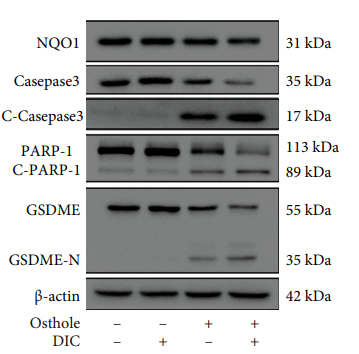
Incubation with 100 μM Dicoumarol for 1 h ahead of treatment with 320 μM osthole. Western blotting analysis for the expression of apoptosis- and pyroptosis-related proteins.
Dicoumarol purchased from MedChemExpress. Usage Cited in: Oxid Med Cell Longev. 2022 Jun 8:2022:8585598. [Abstract]
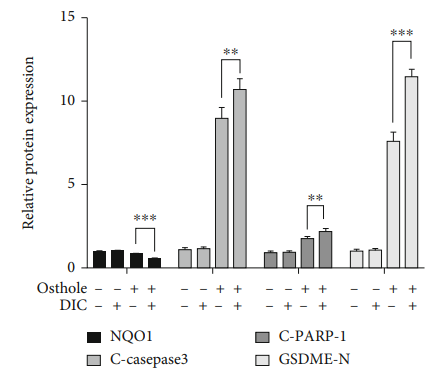
Incubation with 100 μM Dicoumarol for 1 h ahead of treatment with 320 μM osthole. The intensity of bands was quantified by Image J, and β-actin was used as a control.
-


Solvent & Solubility
In Vitro:
H2O : 25 mg/mL (74.34 mM; ultrasonic and adjust pH to 11 with NaOH)
DMSO : 3.67 mg/mL (10.91 mM; Need ultrasonic; Hygroscopic DMSO has a significant impact on the solubility of product, please use newly opened DMSO)
Please refer to the solubility information to select the appropriate solvent. Once prepared, please aliquot and store the solution to prevent product inactivation from repeated freeze-thaw cycles.
Storage method and period of stock solution: -80°C, 6 months; -20°C, 1 month. When stored at -80°C, please use it within 6 months. When stored at -20°C, please use it within 1 month.
* Note: If you choose water as the stock solution, please dilute it to the working solution, then filter and sterilize it with a 0.22 μm filter before use.
Please refer to the solubility information to select the appropriate solvent. Once prepared, please aliquot and store the solution to prevent product inactivation from repeated freeze-thaw cycles.
Storage method and period of stock solution: -80°C, 6 months; -20°C, 1 month. When stored at -80°C, please use it within 6 months. When stored at -20°C, please use it within 1 month.
* Note: If you choose water as the stock solution, please dilute it to the working solution, then filter and sterilize it with a 0.22 μm filter before use.
Concentration (start) × Volume (start) = Concentration (final) × Volume (final)
In Vivo:
Select the appropriate dissolution method based on your experimental animal and administration route.
- For the following dissolution methods, please ensure to first prepare a clear stock solution using an In Vitro approach and then sequentially add co-solvents:
- To ensure reliable experimental results, the clarified stock solution can be appropriately stored based on storage conditions. As for the working solution for In Vivo experiments, it is recommended to prepare freshly and use it on the same day.
- The percentages shown for the solvents indicate their volumetric ratio in the final prepared solution. If precipitation or phase separation occurs during preparation, heat and/or sonication can be used to aid dissolution.
Add each solvent one by one: 10% DMSO 40% PEG300 5% Tween-80 45% Saline
Solubility: ≥ 1.67 mg/mL (4.97 mM); Clear solution
This protocol yields a clear solution of ≥ 1.67 mg/mL (saturation unknown).
Taking 1 mL working solution as an example, add 100 μL DMSO stock solution (16.7 mg/mL) to 400 μL PEG300, and mix evenly; then add 50 μL Tween-80 and mix evenly; then add 450 μL Saline to adjust the volume to 1 mL.
Preparation of Saline: Dissolve 0.9 g sodium chloride in ddH₂O and dilute to 100 mL to obtain a clear Saline solution.
For the following dissolution methods, please prepare the working solution directly:
It is recommended to prepare fresh solutions and use them promptly within a short period of time.
The percentages shown for the solvents indicate their volumetric ratio in the final prepared solution. If precipitation or phase separation occurs during preparation, heat and/or sonication can be used to aid dissolution.
In Vivo Dissolution Calculator
Please enter the basic information of animal experiments:
-
-
-
-
Recommended: Prepare an additional quantity of animals to account for potential losses during experiments.
Working solution concentration: 0.22 mg/mL
This product has good water solubility, please refer to the measured solubility data in water/PBS/Saline for details.


Purity & Documentation
-
Data Sheet (283 KB)
-
SDS (788 KB)
- English - EN (788 KB)
- Français - FR (788 KB)
- Deutsch - DE (788 KB)
- Norwegian - NO (788 KB)
- Español - ES (788 KB)
- Swedish - SV (788 KB)
- Italian - IT (788 KB)
- Korean - KR (788 KB)
- Portuguese - PT (788 KB)
-
Handling Instructions (2659 KB)
References
[1]. Bian J, et al. Affinity-based small fluorescent probe for NAD(P)H:quinone oxidoreductase 1 (NQO1). Design, synthesis and pharmacological evaluation. Eur J Med Chem. 2017 Feb 15;127:828-839. [Content Brief]
[2]. Zhang W, et al. Dicumarol inhibits PDK1 and targets multiple malignant behaviors of ovarian cancer cells. PLoS One. 2017 Jun 15;12(6):e0179672. [Content Brief]
[3]. Fiorillo M, et al. Mitochondrial "power" drives tamoxifen resistance: NQO1 and GCLC are new therapeutic targets in breast cancer. Oncotarget. 2017 Mar 2;8(12):20309-20327. [Content Brief]


Complete Stock Solution Preparation Table
Please refer to the solubility information to select the appropriate solvent. Once prepared, please aliquot and store the solution to prevent product inactivation from repeated freeze-thaw cycles.
Storage method and period of stock solution: -80°C, 6 months; -20°C, 1 month. When stored at -80°C, please use it within 6 months. When stored at -20°C, please use it within 1 month.
| Optional Solvent | Concentration Solvent Mass | 1 mg | 5 mg | 10 mg | 25 mg |
|---|---|---|---|---|---|
| DMSO / H2O | 1 mM | 2.9736 mL | 14.8681 mL | 29.7362 mL | 74.3406 mL |
| 5 mM | 0.5947 mL | 2.9736 mL | 5.9472 mL | 14.8681 mL | |
| 10 mM | 0.2974 mL | 1.4868 mL | 2.9736 mL | 7.4341 mL | |
| H2O | 15 mM | 0.1982 mL | 0.9912 mL | 1.9824 mL | 4.9560 mL |
| 20 mM | 0.1487 mL | 0.7434 mL | 1.4868 mL | 3.7170 mL | |
| 25 mM | 0.1189 mL | 0.5947 mL | 1.1894 mL | 2.9736 mL | |
| 30 mM | 0.0991 mL | 0.4956 mL | 0.9912 mL | 2.4780 mL | |
| 40 mM | 0.0743 mL | 0.3717 mL | 0.7434 mL | 1.8585 mL | |
| 50 mM | 0.0595 mL | 0.2974 mL | 0.5947 mL | 1.4868 mL | |
| 60 mM | 0.0496 mL | 0.2478 mL | 0.4956 mL | 1.2390 mL |
* Note: If you choose water as the stock solution, please dilute it to the working solution, then filter and sterilize it with a 0.22 μm filter before use.


Dicoumarol Related Classifications
HY-N0645 Related Classifications
 Powered by Bioz