



RUNX2
RUNX2 (Runt-related transcription factor 2) is a master transcription factor that governs osteoblast differentiation, bone formation, and skeletal development by regulating osteogenic gene expression programs[1][2]. RUNX2 functions early during mesenchymal stem cell commitment to the osteoblast lineage and remains essential for progression through multiple stages of osteogenesis, while its expression is tightly controlled during osteoblast maturation[3][4]. Mechanistically, RUNX2 integrates signals from developmental and intracellular pathways, including MAPK-mediated activation and BMP-2/SMAD signaling, to coordinate transcriptional programs required for bone matrix production and mineralization[2][5]. RUNX2 also participates in chondrocyte maturation and endochondral bone development, highlighting its central role in skeletal tissue formation beyond osteoblast biology[3][6]. In disease and experimental models, loss of RUNX2 function causes profound skeletal abnormalities, and RUNX2 deficiency in mice results in the absence of osteoblasts and impaired bone formation, establishing RUNX2 as an indispensable regulator of skeletal development[3][7]. In humans, heterozygous mutations in RUNX2 cause cleidocranial dysplasia, a hereditary skeletal disorder characterized by defects in bone development[7][8]. Compared with related RUNX family members, RUNX2 exhibits a specialized role in osteoblast lineage specification and bone-forming activity, although partial functional overlap with RUNX3 has been reported during chondrocyte maturation[3]. Two major RUNX2 isoforms have been described, with evidence indicating distinct contributions to osteoblast development, where type I is associated with early osteoblastogenesis and type II contributes to later stages of osteoblastic maturation[9]. For experimental applications, RUNX2 activity is widely used as a molecular indicator of osteogenic differentiation, and modulation of BMP-2 signaling can alter RUNX2 expression in osteoblast models, providing a useful framework for studying bone formation mechanisms[5].
Referencias:
- [1]. Vimalraj S, et al. Runx2: Structure, function, and phosphorylation in osteoblast differentiation. Int J Biol Macromol. 2015;78:202-8. [Content Brief]
- [2]. Franceschi RT, et al. Regulation of the osteoblast-specific transcription factor, Runx2: responsiveness to multiple signal transduction pathways. J Cell Biochem. 2003 Feb 15;88(3):446-54. [Content Brief]
- [3]. Komori T. Regulation of Proliferation, et al. Regulation of Proliferation, Differentiation and Functions of Osteoblasts by Runx2. Int J Mol Sci. 2019 Apr 4;20(7):1694. [Content Brief]
- [4]. Zhu S, et al. Cell signaling and transcriptional regulation of osteoblast lineage commitment, differentiation, bone formation, and homeostasis. Cell Discov. 2024 Jul 2;10(1):71. [Content Brief]
- [5]. Young-Eun Cho, et al. Zinc upregulates bone-specific transcription factor Runx2 expression via BMP-2 signaling and Smad-1 phosphorylation in osteoblasts. J Nutr Health. 2018 Feb;51(1):23-30.
- [6]. Liu TM, et al. Transcriptional regulatory cascades in Runx2-dependent bone development. Tissue Eng Part B Rev. 2013 Jun;19(3):254-63. [Content Brief]
- [7]. Baniwal SK, et al. Runx2 promotes both osteoblastogenesis and novel osteoclastogenic signals in ST2 mesenchymal progenitor cells. Osteoporos Int. 2012 Apr;23(4):1399-413. [Content Brief]
- [8]. RUNX2 gene information from NCBI.
- [9]. Bruderer M, et al. Role and regulation of RUNX2 in osteogenesis. Eur Cell Mater. 2014 Oct 23;28:269-86. [Content Brief]
All Product Categories
-
Productos relacionados con RUNX2 (14)
Productos relacionados con (14)

- 1
-
Potassium dihydrogen phosphate, AR,99.5%
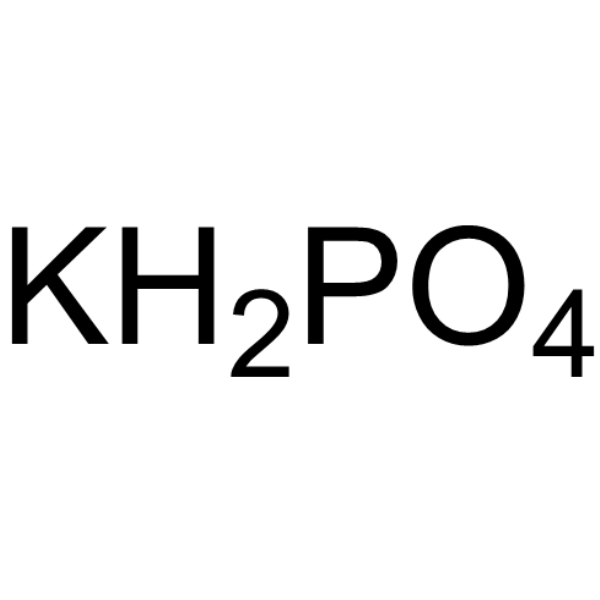 0 ImagesPotassium dihydrogen phosphate, AR,99.5% is a potassium salt. Potassium dihydrogen phosphate, AR,99.5% activates NF-κB. Potassium dihydrogen phosphate, AR,99.5% upregulates the expression of dental/osteogenic markers (OCN, DSP/DSPP, OSX, RUNX2, ALP) and enhances the mineralization capacity of human periodontal ligament stem cells. Potassium dihydrogen phosphate, AR,99.5% promotes the proliferation of human periodontal ligament stem cells in logarithmic growth phase. Potassium dihydrogen phosphate, AR,99.5% promotes the growth of somatic embryos of Dendrobium Sonia, increases leaf number, leaf length and fresh weight of tissue-cultured seedlings. Potassium dihydrogen phosphate, AR,99.5% is applicable to periodontal disease-related research.
-
BMP2-derived peptide
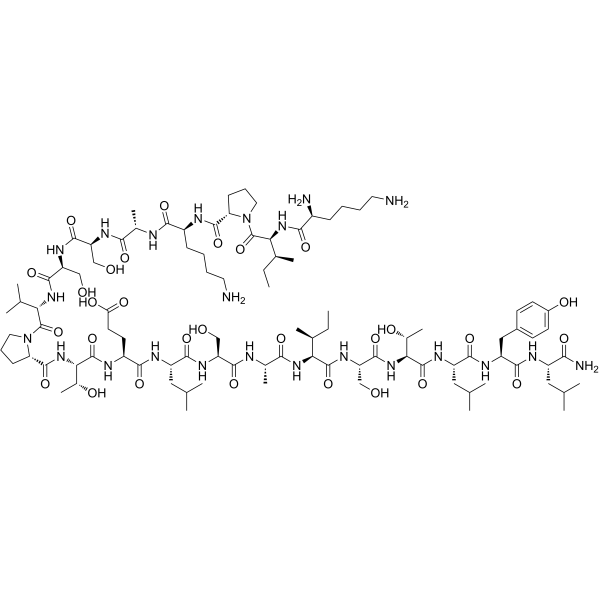 0 ImagesBMP2-derived peptide is an osteogenic inducer and BMP receptor ligand. BMP2-derived peptide binds to BMP receptors on the cell surface to form a complex, activates the downstream Smad signaling pathway, and regulates the expression of osteogenic transcription factors. BMP2-derived peptide effectively promotes the adhesion, proliferation, osteogenic differentiation and mineralization of bone marrow mesenchymal stem cells, significantly up-regulates the mRNA levels of OCN, Runx2 and type I collagen, and increases alkaline phosphatase activity and calcium deposition. BMP2-derived peptide induces osteoblast differentiation and ectopic bone regeneration, and improves cranial bone defect repair. Meanwhile, BMP2-derived peptide enhances the cytocompatibility of mesoporous silica nanoparticles, synergistically increases osteogenic activity with Dexamethasone (HY-14648), serving as an important tool for bone defect repair research.
-
Segetalin B
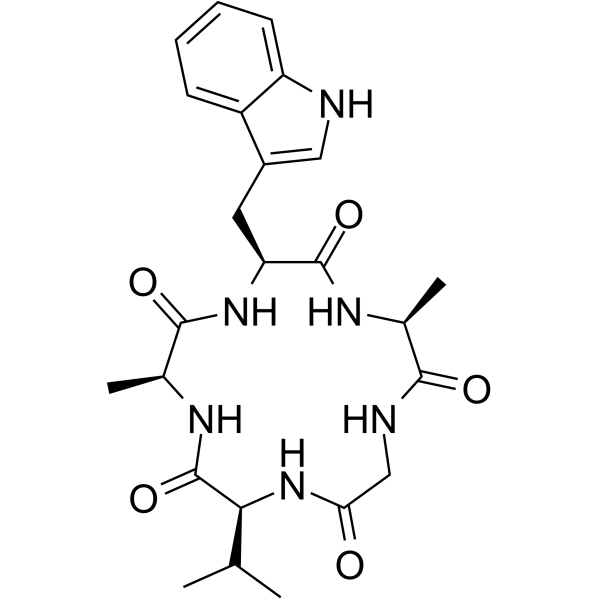 0 ImagesSegetalin B, an orally active cyclopentapeptide found in Vaccaria segetalis, possesses estrogen-like activity. Segetalin B promotes mineralization of ovariectomized rat-derived bone marrow mesenchymal stem cells (BMSCs) in vitro and increases the level of osteocalcin, BMP-2, ALP, and SIRT1 activity. Segetalin B is promising for research of post-menopausal osteoporosis (PMOP).
-
Potassium dihydrogen phosphate, for cell culture
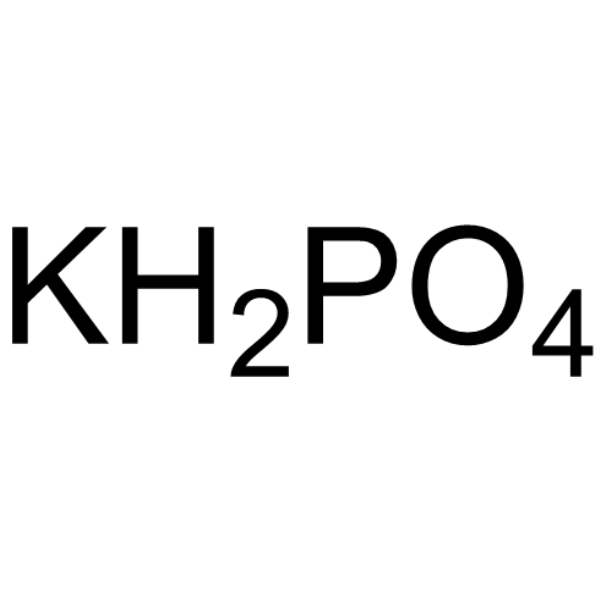 0 ImagesSynonyms: Potassium phosphate monobasic, for cell culturePotassium dihydrogen phosphate, for cell culture (Potassium phosphate monobasic, for cell culture) is a cell culture reagent. Potassium dihydrogen phosphate, for cell culture activates NF-κB. Potassium dihydrogen phosphate, for cell culture upregulates the expression of dental/osteogenic markers (OCN, DSP/DSPP, OSX, RUNX2, ALP) and enhances the mineralization capacity of human periodontal ligament stem cells. Potassium dihydrogen phosphate, for cell culture promotes the proliferation of human periodontal ligament stem cells in logarithmic growth phase. Potassium dihydrogen phosphate, for cell culture promotes the growth of somatic embryos of Dendrobium Sonia, increases leaf number, leaf length and fresh weight of tissue-cultured seedlings. Potassium dihydrogen phosphate, for cell culture is applicable to periodontal disease-related research.
-
Mucic acid
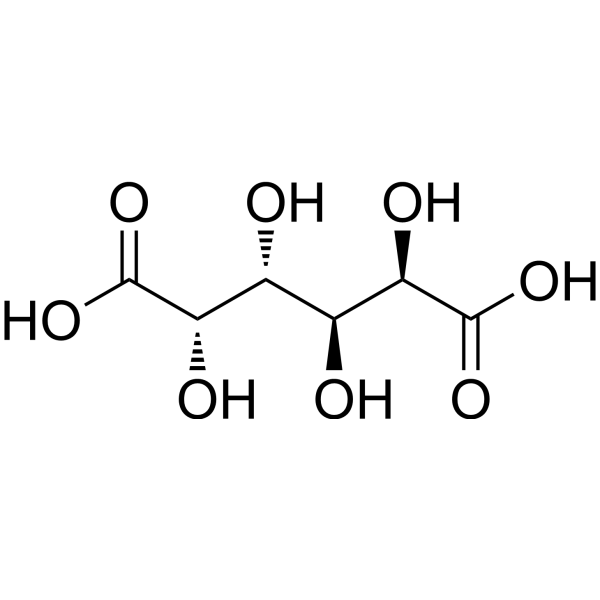 0 ImagesMucic acid is an aldonic acid that can be prepared from pectin. Mucic acid increases the expression level of Runx2, promotes osteoblast differentiation, and upregulates osteogenic differentiation marker genes. Mucic acid can be used to prepare platform compounds, polymers, polymer materials and metal-organic frameworks. Mucic acid is applicable to the research of bone-related defects.
-
Dichotomitin
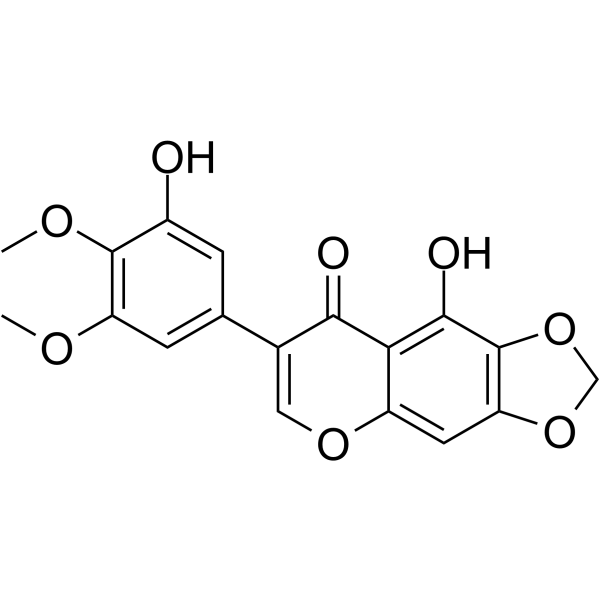 0 ImagesDichotomitin is an isoflavonoid compound isolated from the rhizomes of Belamcanda chinensis. Dichotomitin exhibits antioxidant activity, alleviates oxidative stress, reduces intracellular reactive oxygen species (ROS) levels, and upregulates the expression of SOD1, SOD2 and CAT. Dichotomitin increases ALP activity while upregulating the expression of RUNX2, OPN and OCN. Dichotomitin has antitussive activity and helps improve symptoms of upper respiratory tract infections.
-
Zinc borate
 0 ImagesReferencia número: HY-W115785No. CAS: 1332-07-6Zinc borate is a bioactive inorganic substance with properties including osteogenic induction, pro-angiogenesis, antioxidation, antimutagenesis and cytotoxicity. In the field of bone tissue engineering, Zinc borate is often incorporated into chitosan scaffolds. By releasing zinc ions and borate ions, Zinc borate induces the differentiation of human dental pulp stem cells into osteoblasts, upregulates the expression of bone-related genes and promotes calcium deposition. Zinc borate also promotes angiogenesis by upregulating key factors such as vascular endothelial growth factor. Zinc borate exhibits antioxidant capacity to scavenge free radicals, and can specifically reduce mutagenicity under specific conditions. Zinc borate reduces the survival rate of mouse fibroblasts, but it can still be used in studies related to bone tissue engineering.
-
Mucic acid (Standard)
 0 ImagesMucic acid (Standard) is the analytical standard of Mucic acid (HY-W014410). This product is intended for research and analytical applications. Mucic acid is an aldonic acid that can be prepared from pectin. Mucic acid increases the expression level of Runx2, promotes osteoblast differentiation, and upregulates osteogenic differentiation marker genes. Mucic acid can be used to prepare platform compounds, polymers, polymer materials and metal-organic frameworks. Mucic acid is applicable to the research of bone-related defects.
-
Anhydrous calcium sulfate (97%)
 0 ImagesSynonyms: Gypsum ustum (97%)Anhydrous calcium sulfate (97%) serves as an oil-based drilling fluid additive and an osteogenic material. Anhydrous calcium sulfate (97%) increases the plastic viscosity, yield point, apparent viscosity and gel strength of oil-based drilling fluids. Anhydrous calcium sulfate (97%) upregulates the expression of bone-related genes FOSL1, RUNX2 and SPP1. Anhydrous calcium sulfate (97%) significantly affects the behavior of dental pulp stem cells, enhancing their proliferation, differentiation and matrix deposition.
-
P15
 0 ImagesP15 is a type I collagen-mimetic peptide with pro-adhesive properties. P15 binds to membrane integrin, including α2β1, to mediate cell adhesion and trigger the production of growth factors and cytokines. P15 upregulates the expression of osteogenic genes via targets including RUNX2, OSTRX and BSP. P15 stimulates the adhesion and proliferation of osteoblasts, enhances alkaline phosphatase activity and calcium deposition, and supports osteogenic differentiation. P15 can be used in research related to periodontal bone defects, cervical intervertebral disc defects, and non-union/bone defects.
-
Potassium dihydrogen phosphate, United States Pharmacopeia (USP) Reference Standard
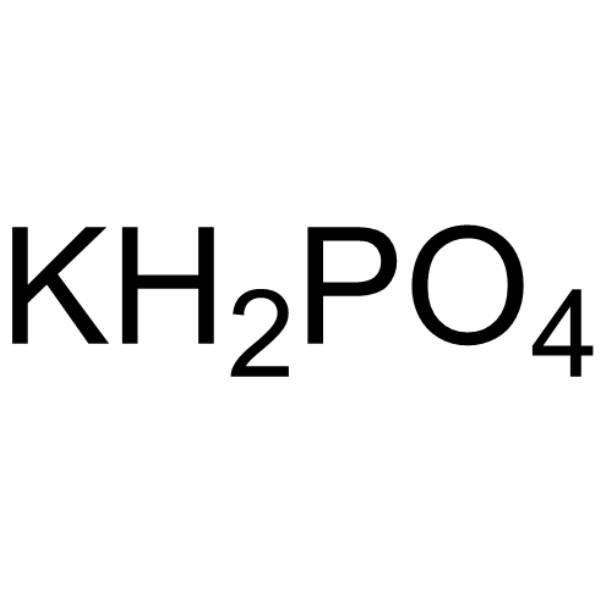 0 ImagesSynonyms: Potassium phosphate monobasic (Pharmaceutical primary standard, USP)Potassium dihydrogen phosphate, United States Pharmacopeia (USP) Reference Standard (Potassium phosphate monobasic (Pharmaceutical primary standard, USP)) is a potassium salt. Potassium dihydrogen phosphate, United States Pharmacopeia (USP) Reference Standard activates NF-κB. Potassium dihydrogen phosphate, United States Pharmacopeia (USP) Reference Standard upregulates the expression of dental/osteogenic markers (OCN, DSP/DSPP, OSX, RUNX2, ALP) and enhances the mineralization capacity of human periodontal ligament stem cells. Potassium dihydrogen phosphate, United States Pharmacopeia (USP) Reference Standard promotes the proliferation of human periodontal ligament stem cells in logarithmic growth phase. Potassium dihydrogen phosphate, United States Pharmacopeia (USP) Reference Standard promotes the growth of somatic embryos of Dendrobium Sonia, increases leaf number, leaf length and fresh weight of tissue-cultured seedlings. Potassium dihydrogen phosphate, United States Pharmacopeia (USP) Reference Standard is applicable to periodontal disease-related research.
-
Potassium dihydrogen phosphate, meets analytical specification of Ph. Eur., NF, E340
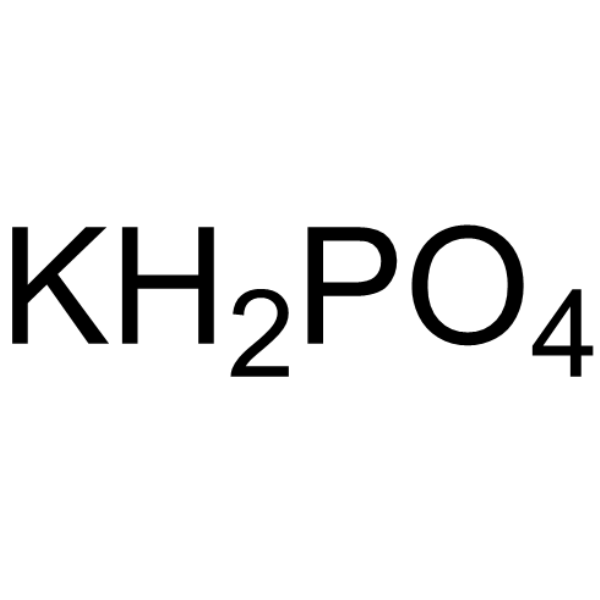 0 ImagesSynonyms: Potassium phosphate monobasic, meets analytical specification of Ph. Eur., NF, E340Potassium dihydrogen phosphate, meets analytical specification of Ph. Eur., NF, E340 (Potassium phosphate monobasic, meets analytical specification of Ph. Eur., NF, E340) is a potassium salt. Potassium dihydrogen phosphate, meets analytical specification of Ph. Eur., NF, E340 activates NF-κB. Potassium dihydrogen phosphate, meets analytical specification of Ph. Eur., NF, E340 upregulates the expression of dental/osteogenic markers (OCN, DSP/DSPP, OSX, RUNX2, ALP) and enhances the mineralization capacity of human periodontal ligament stem cells. Potassium dihydrogen phosphate, meets analytical specification of Ph. Eur., NF, E340 promotes the proliferation of human periodontal ligament stem cells in logarithmic growth phase. Potassium dihydrogen phosphate, meets analytical specification of Ph. Eur., NF, E340 promotes the growth of somatic embryos of Dendrobium Sonia, increases leaf number, leaf length and fresh weight of tissue-cultured seedlings. Potassium dihydrogen phosphate, meets analytical specification of Ph. Eur., NF, E340 is applicable to periodontal disease-related research.
-
Potassium dihydrogen phosphate, for molecular biology
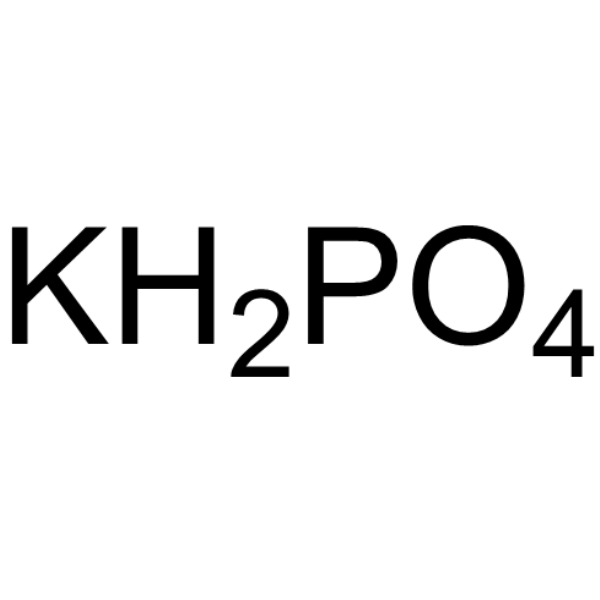 0 ImagesSynonyms: Potassium phosphate monobasic, for molecular biologyPotassium dihydrogen phosphate, for molecular biology (Potassium phosphate monobasic, for molecular biology) is a potassium salt. Potassium dihydrogen phosphate, for molecular biology activates NF-κB. Potassium dihydrogen phosphate, for molecular biology upregulates the expression of dental/osteogenic markers (OCN, DSP/DSPP, OSX, RUNX2, ALP) and enhances the mineralization capacity of human periodontal ligament stem cells. Potassium dihydrogen phosphate, for molecular biology promotes the proliferation of human periodontal ligament stem cells in logarithmic growth phase. Potassium dihydrogen phosphate, for molecular biology promotes the growth of somatic embryos of Dendrobium Sonia, increases leaf number, leaf length and fresh weight of tissue-cultured seedlings. Potassium dihydrogen phosphate, for molecular biology is applicable to periodontal disease-related research.
-
Magnesium malate
 0 ImagesMagnesium malate is an orally active organic acid-chelated magnesium complex. Magnesium malate promotes the release of prostaglandin E2 (PGE2) from macrophages, synergistically stimulates the synthesis/release of calcitonin gene-related peptide (CGRP) from dorsal root ganglion neurons, and upregulates the osteogenic transcription factor RUNX2 in osteoblasts via the Mg2+-PGE2-CGRP axis, thereby promoting osteoblast proliferation. Magnesium malate can be incorporated into calcium phosphate bone cement as a modifying component to improve compressive strength, shorten setting time and enhance disintegration resistance. Magnesium malate increases serum magnesium levels. Magnesium malate can be used in studies related to bone defects and magnesium deficiency.
- 1



