



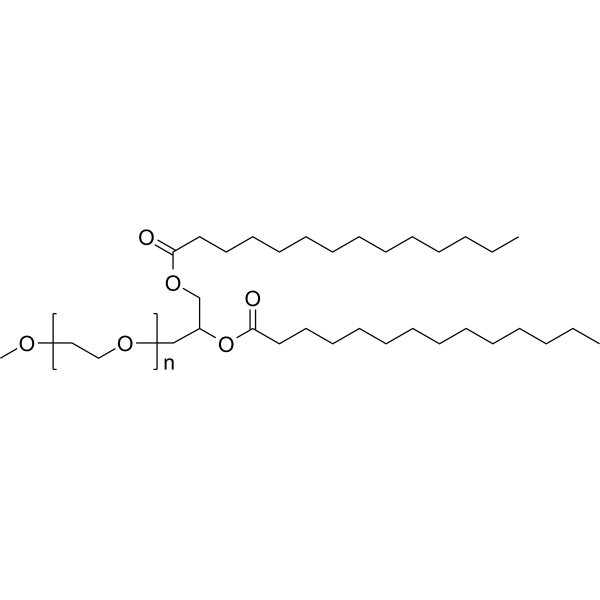
mPEG2000-DMG
Based on 27 publication(s) in Google Scholar
mPEG2000-DMG is used for the preparation of liposome for siRNA delivery with improved transfection efficiency in vitro. mPEG2000-DMG is also used for the lipid nanoparticle for an oral plasmid DNA delivery approach in vivo through a facile surface modification to improve the mucus permeability and delivery efficiency of the nanoparticles.
연구목적의 판매만을 진행합니다. 환자를 대상으로 한 판매는 하지 않습니다.
- Purity : 98.40%
- CAS No.: 160743-62-4
- 화학식: (C2H4O)nC32H62O5
- 분자량:2000 (Average)
-
보관:
-20°C, sealed storage, away from moisture and light
* In solvent : -80°C, 6 months; -20°C, 1 month (sealed storage, away from moisture and light)

To place orders, for customer services and technical support, please contact: MedChemExpress USA
Tel: 609-228-6898 E-mail: [email protected] [email protected]


-
 Biological Activity
-
Chemical Information
-
용액&용해도
- Protocol
- 순도&문서
- References
-
 Help & FAQs


-
HY-112251
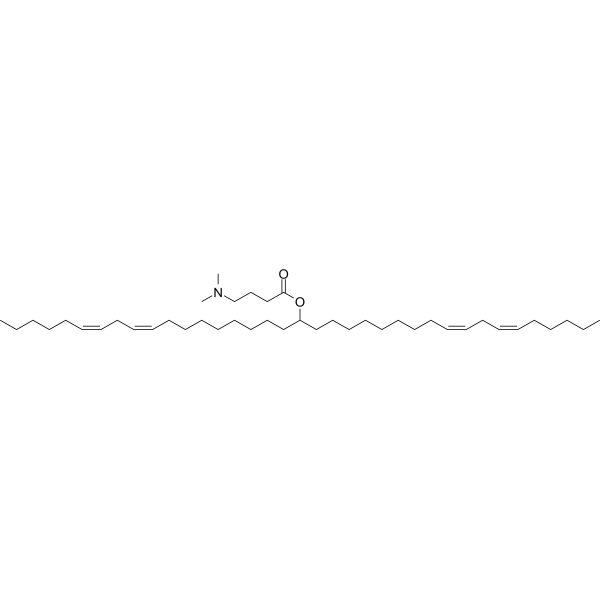
D-Lin-MC3-DMAsiRNA Delivery Vehicle -
HY-N0322
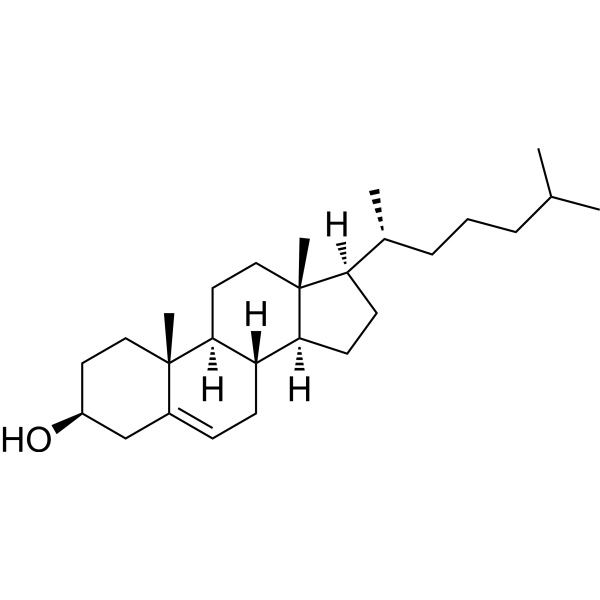
Cholesterol (from animal)ERRα Agonist -
HY-W040193
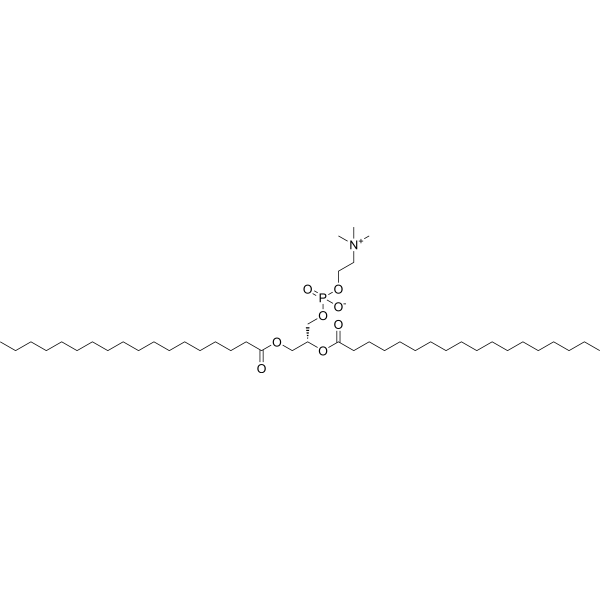
DSPCLiposome Compound -
HY-112754A
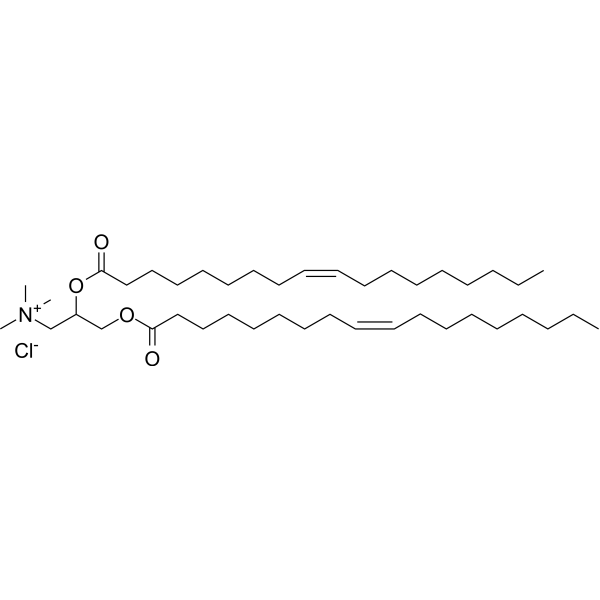
DOTAP chlorideCationic Lipid -
HY-134541
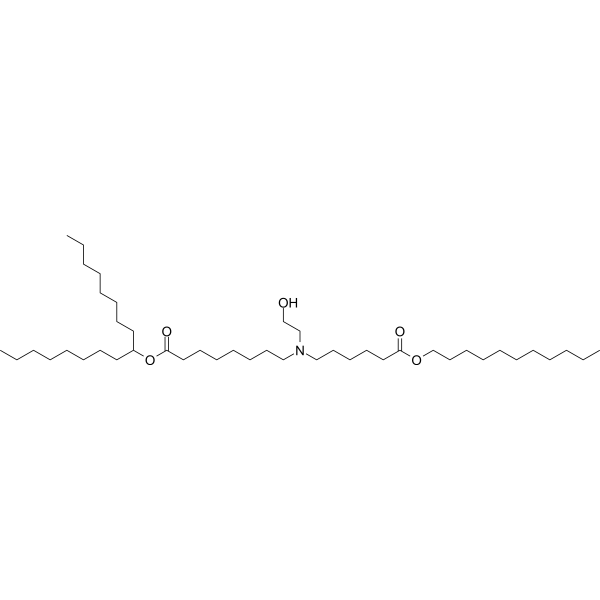
SM-102Ionizable Amino Lipid -
HY-138300
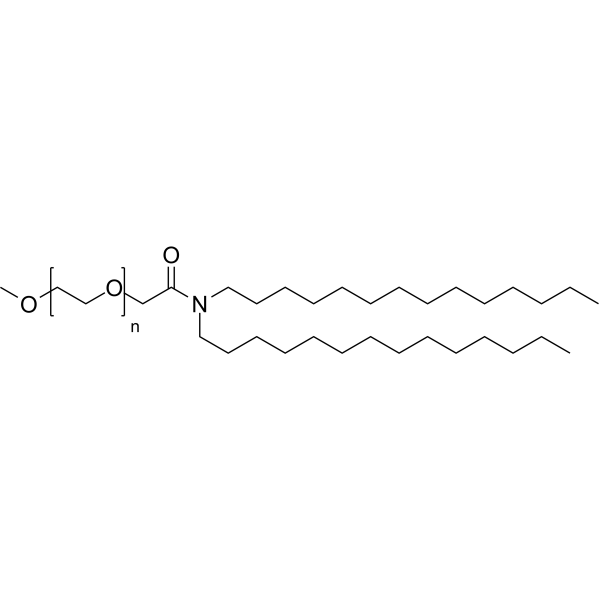
ALC-0159Liposome -
HY-112005
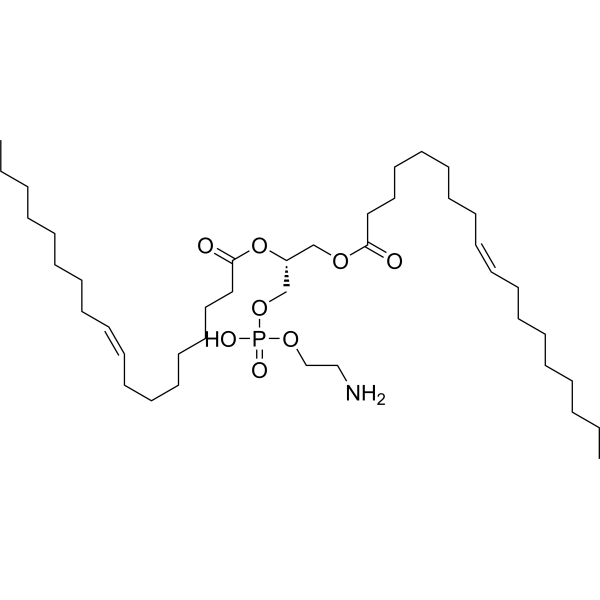
DOPEFerroptosis Inhibitor -
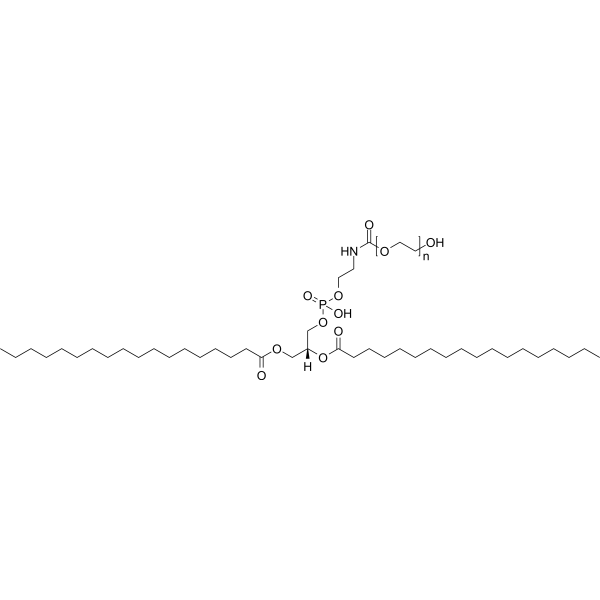
HY-142979
DSPE-PEG 2000PEG Lipid -
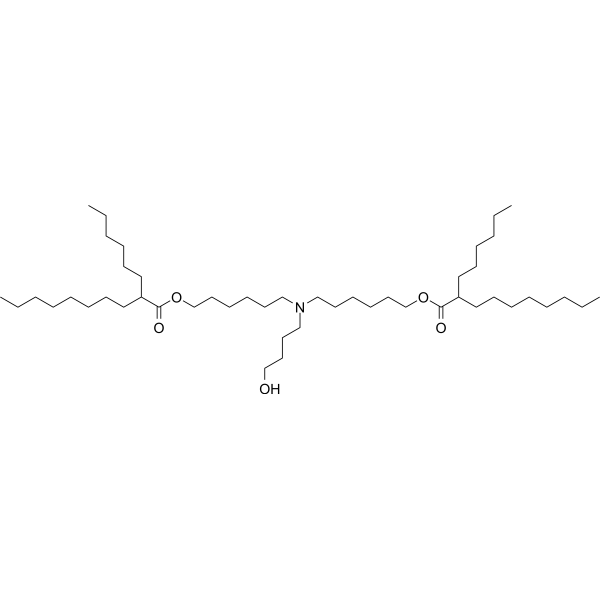
HY-138170
ALC-0315Lipid Nanoparticle Component -
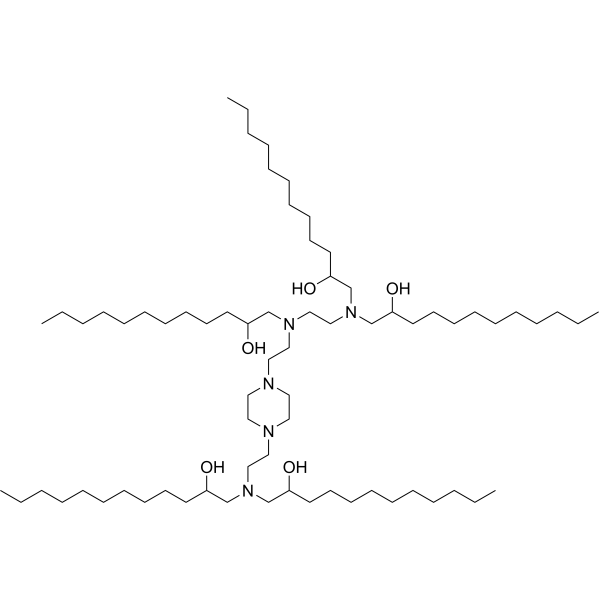
HY-145405
C12-200Cationic Lipidoid -
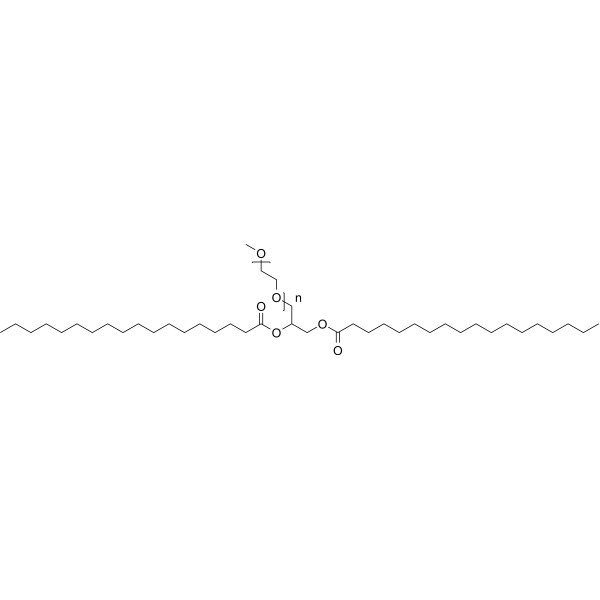
HY-W591381
DSG-PEG2000PEG Derivative -

HY-112764GL
mPEG2000-DMG (GMP Like)Liposome
Publications Citing Use of MedChemExpress (MCE) mPEG2000-DMG
More- Signal Transduct Target Ther. 2025 Mar 24;10(1):101. [Abstract]
- Cell Host Microbe. 2025 Dec 30:S1931-3128(25)00521-9. [Abstract]
- Nat Commun. 2026 Apr 1;17(1):4716. [Abstract]
- ACS Nano. 2024 Oct 1;18(39):27077-27089. [Abstract]
- Redox Biol. 2026 May:92:104101. [Abstract]
- J Biomed Sci. 2023 Jun 28;30(1):46. [Abstract]
- J Biomed Sci. 2022 Dec 22;29(1):108. [Abstract]
- J Biomed Sci. 2022 Jul 7;29(1):49. [Abstract]
- J Control Release. 2026 May 23:396:115047. [Abstract]
- Int J Nanomedicine. 2026 Mar 20:21:577606. [Abstract]
- Int J Nanomedicine. 2025 Oct 22:20:12783-12804. [Abstract]
- EMBO Mol Med. 2024 Aug;16(8):1755-1790. [Abstract]
- ACS Appl Mater Interfaces. 2024 Sep 4;16(35):46044-46052. [Abstract]
- NPJ Vaccines. 2025 Dec 19. [Abstract]
- J Drug Deliv Sci Technol. 2026 Jan 5;117:107981.
- Bioorg Chem. 2026 Apr:171:109526. [Abstract]
- Microorganisms. 2026 Apr 29;14(5):1000. [Abstract]
- Mol Immunol. 2026 Feb:190:101-109. [Abstract]
- Vaccines. 2024 Jun 26;12(7):714. [Abstract]
- Vaccine. 2025 May 31:57:127216. [Abstract]
- bioRxiv. 2026 Jul 10.
- Res Sq. 2026 May 14.
- bioRxiv. 2026 Apr 27.
- SSRN. 2025 Oct 29.
- Patent. US20250248939A1.
- Saarland University. 2024 Jul 28.
- University of Toronto. 2023 Nov.


Biological Activity
제품 설명
In Vitro
Preparation of Lipid Nanoparticles
Here we provide lipid molar ratios for LNPs in FDA-approved mRNA-1273 (a COVID-19 mRNA vaccine). The molar ratio of lipids in this formulation is SM-102 : DSPC : Cholesterol : mPEG2000-DMG = 50 : 10 : 38.5 : 1.5[1], and RNA to lipid weight ratio is 0.05 (wt/wt).
A. Lipid Mixture Preparation
1. Dissolve lipids in ethanol and prepare 10 mg/m stock solutions. The lipid stock solutions can be stored at 20°C for later use.
Note 1: The ionizable lipid is usually a liquid. Due to the viscosity, it should always be weighed rather than relying on the autopipette volume.
Note 2: Cholesterol in solution should be kept warm (>37°C) to maintain fluidity. Transfer the cholesterol solution promptly to avoid cooling.
2. Prepare the lipid mixture solution as described. For each mL of lipid mixture add the following: 572 μL of 10mg/mL SM-102 (HY-134541), 240 μL of 10mg/mL Cholesterol (HY-N0322), 127 μL of 10mg/mL DSPC (HY-W040193), and 61 μL of mPEG2000-DMG (HY-112764). Mix the solutions thoroμghly to achieve a clear solution. This mixture contains 10 mg of total lipid.
Note 3: The choice of lipids and ratios may be changed as desired and this will affect the LNP properties (size, polydispersity, and efficacy) and the amount of mRNA required.
B. mRNA Preparation
1. Prepare a 166.7 μg/mL mRNA solution with 100 mM pH 5 sodium acetate buffer.
Note 4: The lipid:mRNA weight ratio influences the encapsulation efficiency. Other weight ratios may be prepared as alternative formulations and should be adjusted accordingly by user.
C. Mixing
There are three commonly used methods to achieve rapid mixing of the solutions from: the pipette mixing method, the vortex mixing method, and the microfluidic mixing method. All these mixing methods can be used for various applications.
It is important to note that pipette mixing method and vortex mixing method may yield more heterogeneous LNPs with lower encapsulation efficiencies and is prone to variability. Microfluidic devices enable rapid mixing in a highly controllable, reproducible manner that achieves homogeneous LNPs and high encapsulation efficiency. Within these devices, the ethanolic lipid mixture and aqueous solution are rapidly combined in individual streams. LNPs are formed as the two streams mix and are then collected into a single collection tube.
1. Pipette Mixing Method:
1.1. Pipette 3 mL of the mRNA solution and quickly add it into 1 mL of the lipid mixture solution (A 1:3 ratio of ethanolic lipid mixture to aqueous buffer is generally used.) Pipette up and down rapidly for 20-30 seconds.
1.2. Incubate the resulting solution at room temperature for up to 15 minutes.
1.3. After mixing, the LNPs were dialyzed against PBS (pH 7.4) for 2 h, sterile filtered using 0.2 μm filters, and stored at 4°C.
2. Vortex Mixing Method:
1.1. Vortex 3 mL of mRNA solution at a moderate speed on the vortex mixer. Then, Quickly add 1 mL of the lipid mixture solution into the vortexing solution (A 1:3 ratio of ethanolic lipid mixture to aqueous buffer is generally used.). Continue vortexing the resulting dispersion for another 20-30 seconds.
1.2. Incubate the resulting solution at room temperature for up to 15 minutes.
1.3. After mixing, the LNPs were dialyzed against PBS (pH 7.4) for 2 h, sterile filtered using 0.2 μm filters, and stored at 4°C.
3. Microfluidic Mixing Method:
1.1 The 3 mL of mRNA buffer solution and 1 mL of the lipid mixture solution were mixed at a total flow rate of 12 mL/min in a microfluidic device (A 1:3 ratio of ethanolic lipid mixture to aqueous buffer is generally used.).
Note 5: Parameters such as the flow rate ratio and total flow rate can be altered to fine-tune LNPs.
1.2. After mixing, the LNPs were dialyzed against PBS (pH 7.4) for 2 h, sterile filtered using 0.2 μm filters, and stored at 4°C.
Reference
1. Curr Issues Mol Biol. 2022 Oct 19;44(10):5013-5027.
2. Curr Protoc. 2023;3(9):e898.
MedChemExpress (MCE) has not independently confirmed the accuracy of these methods. They are for reference only. Further protocols information, click here.


Chemical Information
-
CAS No. 160743-62-4
-
Appearance Solid
-
분자량 2000 (Average)
-
화학식 (C2H4O)nC32H62O5
-
Color White to light yellow
-
SMILES
CCCCCCCCCCCCCC(OC(COCCOC)COC(CCCCCCCCCCCCC)=O)=O.[n]
-
선적
Room temperature in continental US; may vary elsewhere.
-
보관
-20°C, sealed storage, away from moisture and light
* In solvent : -80°C, 6 months; -20°C, 1 month (sealed storage, away from moisture and light)


Publications (27)
-
Journal Impact Factor
-
Most Recent
-
Signal Transduct Target Ther
Intranasal prime-boost RNA vaccination elicits potent T cell response for lung cancer therapy. [Abstract]2025 Mar 24;10(1):101. PMID: 40122855 -
Cell Host Microbe
2025 Dec 30:S1931-3128(25)00521-9. PMID: 41475336 -
Nat Commun
2026 Apr 1;17(1):4716. PMID: 41922346 -
ACS Nano
2024 Oct 1;18(39):27077-27089. PMID: 39298422 -
Redox Biol
Stromal cell-derived itaconate promotes endometriosis via macrophage NRF2 and lysosomal pH modulation. [Abstract]2026 May:92:104101. PMID: 41780193 -
J Biomed Sci
2023 Jun 28;30(1):46. PMID: 37380988 -
J Biomed Sci
Monoclonal antibodies against S2 subunit of spike protein exhibit broad reactivity toward SARS-CoV-2 variants. [Abstract]2022 Dec 22;29(1):108. PMID: 36550570 -
J Biomed Sci
A booster dose of Delta × Omicron hybrid mRNA vaccine produced broadly neutralizing antibody against Omicron and other SARS-CoV-2 variants. [Abstract]2022 Jul 7;29(1):49. PMID: 35799178 -
J Control Release
Antimicrobial peptide-derived lipid nanoparticles enable lung-targeted mRNA therapy for multidrug-resistant bacterial pneumonia. [Abstract]2026 May 23:396:115047. PMID: 42178062 -
Int J Nanomedicine
Intraperitoneal Co-Delivery of Claudin18.2×41BB and EpCAM×CD3 Bispecific Antibodies via mRNA-LNPs Synergistically Suppresses Gastric Cancer Peritoneal Metastasis Through T Cell Co-Activation. [Abstract]2026 Mar 20:21:577606. PMID: 41884275 -
Int J Nanomedicine
Optimized Lipid Nanoparticle-Mediated mRNA Co-Delivery of SOX5/SOX9 Enables Synergistic Senescence Reversal for Osteoarthritis Therapy. [Abstract]2025 Oct 22:20:12783-12804. PMID: 41146650 -
EMBO Mol Med
LILRB1-HLA-G axis defines a checkpoint driving natural killer cell exhaustion in tuberculosis. [Abstract]2024 Aug;16(8):1755-1790. PMID: 39030302 -
ACS Appl Mater Interfaces
Size-Controllable and Monodispersed Lipid Nanoparticle Production with High mRNA Delivery Efficiency Using 3D-Printed Ring Micromixers. [Abstract]2024 Sep 4;16(35):46044-46052. PMID: 39103250 -
NPJ Vaccines
mRNA-lipid nanoparticle vaccines provide protection against lethal Nipah virus infection. [Abstract]2025 Dec 19. PMID: 41419782 -
-
Bioorg Chem
Design and synthesis of novel ionizable lipids enables highly efficient mRNA delivery via lipid nanoparticles. [Abstract]2026 Apr:171:109526. PMID: 41621179 -
Microorganisms
Heterologous Prime-Boost Vaccination with GRA35-Encoding DNA and mRNA Vaccines Enhances Protective Immunity Against Toxoplasma gondii Infection in Mouse Models. [Abstract]2026 Apr 29;14(5):1000. PMID: 42197386 -
Mol Immunol
2026 Feb:190:101-109. PMID: 41564652 -
Vaccines
Multivalent mRNA Vaccine Elicits Broad Protection against SARS-CoV-2 Variants of Concern. [Abstract]2024 Jun 26;12(7):714. PMID: 39066352 -
Vaccine
Enhanced immunogenicity of an mRNA vaccine against dengue virus serotype 2 with modified key residue. [Abstract]2025 May 31:57:127216. PMID: 40373693 -
-
-
-
-
-
-


용액&용해도
In Vitro:
DMSO : 125 mg/mL (ultrasonic and warming and heat to 60°C; Hygroscopic DMSO has a significant impact on the solubility of product, please use newly opened DMSO)
Ethanol : 100 mg/mL (Need ultrasonic)
H2O : 16.67 mg/mL (Need ultrasonic)
In Vivo:
Select the appropriate dissolution method based on your experimental animal and administration route.
- For the following dissolution methods, please ensure to first prepare a clear stock solution using an In Vitro approach and then sequentially add co-solvents:
- To ensure reliable experimental results, the clarified stock solution can be appropriately stored based on storage conditions. As for the working solution for In Vivo experiments, it is recommended to prepare freshly and use it on the same day.
- The percentages shown for the solvents indicate their volumetric ratio in the final prepared solution. If precipitation or phase separation occurs during preparation, heat and/or sonication can be used to aid dissolution.
Add each solvent one by one: 10% DMSO 90% Saline
Solubility: ≥ 10 mg/mL; Clear solution
Add each solvent one by one: 5% DMSO 95% Saline
Solubility: ≥ 5 mg/mL; Clear solution
Add each solvent one by one: 10% EtOH 40% PEG300 5% Tween-80 45% Saline
Solubility: ≥ 2.5 mg/mL; Clear solution
This protocol yields a clear solution of ≥ 2.5 mg/mL (saturation unknown).
Taking 1 mL working solution as an example, add 100 μL EtOH stock solution (25.0 mg/mL) to 400 μL PEG300, and mix evenly; then add 50 μL Tween-80 and mix evenly; then add 450 μL Saline to adjust the volume to 1 mL.
Preparation of Saline: Dissolve 0.9 g sodium chloride in ddH₂O and dilute to 100 mL to obtain a clear Saline solution.
Add each solvent one by one: 10% EtOH 90% (20% SBE-β-CD in Saline)
Solubility: ≥ 2.5 mg/mL; Clear solution
This protocol yields a clear solution of ≥ 2.5 mg/mL (saturation unknown).
Taking 1 mL working solution as an example, add 100 μL EtOH stock solution (25.0 mg/mL) to 900 μL 20% SBE-β-CD in Saline, and mix evenly.
Preparation of 20% SBE-β-CD in Saline (4°C, storage for one week): 2 g SBE-β-CD powder is dissolved in 10 mL Saline, completely dissolve until clear.
Add each solvent one by one: 10% EtOH 90% Corn Oil
Solubility: ≥ 2.5 mg/mL; Clear solution
This protocol yields a clear solution of ≥ 2.5 mg/mL (saturation unknown). If the continuous dosing period exceeds half a month, please choose this protocol carefully.
Taking 1 mL working solution as an example, add 100 μL EtOH stock solution (25.0 mg/mL) to 900 μL Corn oil, and mix evenly.
Add each solvent one by one: 10% DMSO 40% PEG300 5% Tween-80 45% Saline
Solubility: ≥ 2.08 mg/mL; Clear solution
This protocol yields a clear solution of ≥ 2.08 mg/mL (saturation unknown).
Taking 1 mL working solution as an example, add 100 μL DMSO stock solution (20.8 mg/mL) to 400 μL PEG300, and mix evenly; then add 50 μL Tween-80 and mix evenly; then add 450 μL Saline to adjust the volume to 1 mL.
Preparation of Saline: Dissolve 0.9 g sodium chloride in ddH₂O and dilute to 100 mL to obtain a clear Saline solution.
Add each solvent one by one: 10% DMSO 90% (20% SBE-β-CD in Saline)
Solubility: ≥ 2.08 mg/mL; Clear solution
This protocol yields a clear solution of ≥ 2.08 mg/mL (saturation unknown).
Taking 1 mL working solution as an example, add 100 μL DMSO stock solution (20.8 mg/mL) to 900 μL 20% SBE-β-CD in Saline, and mix evenly.
Preparation of 20% SBE-β-CD in Saline (4°C, storage for one week): 2 g SBE-β-CD powder is dissolved in 10 mL Saline, completely dissolve until clear.
In Vivo Dissolution Calculator
Please enter the basic information of animal experiments:
-
-
-
-
Recommended: Prepare an additional quantity of animals to account for potential losses during experiments.
Working solution concentration: 0.22 mg/mL
This product has good water solubility, please refer to the measured solubility data in water/PBS/Saline for details.

Protocol
-
Transepithelial/transendothelial electrical resistance assay
TEER measures electrical resistance across epithelial or endothelial monolayers cultured on permeable supports, and the readout reflects ionic conductance through the cell barrier, especially the paracellular pathway regulated by junctional integrity. TEER can be measured without destroying the monolayer and is commonly used before or during transport, permeability, barrier-disruption, and barrier-maturation experiments. TEER values are influenced by biological maturation and technical conditions; reported factors include temperature, medium formulation, passage number, electrode geometry, membrane properties, and junctional length during early monolayer maturation. Therefore, TEER should be interpreted with blank-insert subtraction, area normalization, repeated readings, and, when possible, orthogonal barrier readouts such as FITC-dextran flux or tight-junction staining.
-
RNA interference technology
RNA interference (RNAi) is a cellular mechanism that inhibits gene expression by suppressing gene transcription or activating RNA degradation. This mechanism was discovered in plants in 1998 by Andrew Fire and Craig Mello. Today, this phenomenon can be observed in almost all eukaryotes, including protozoa, flies, nematodes, insects, parasites, and mammals.
-
Plasmid construction
Plasmid construction refers to the method of producing recombinant plasmid by connecting the target DNA molecule fragment with the DNA molecule of a specific carrier in Escherichia coli.


순도&문서
-
Data Sheet (279 KB)
-
SDS (394 KB)
- English - EN (394 KB)
- Français - FR (394 KB)
- Deutsch - DE (394 KB)
- Norwegian - NO (394 KB)
- Español - ES (394 KB)
- Swedish - SV (394 KB)
- Italian - IT (394 KB)
- Korean - KR (394 KB)
- Portuguese - PT (394 KB)
-
Handling Instructions (2659 KB)
References

Calculators
Concentration (start) × Volume (start) = Concentration (final) × Volume (final)


mPEG2000-DMG Related Classifications
HY-112764 Related Classifications
 Powered by Bioz