13 Results for "

TAR RNA

" in MedChemExpress (MCE) Product Catalog:
Products (13)

13 Results for "TAR RNA" in MCE Product Catalog:

2
2 Cited Publications
Cat. No.: HY-B0268
CAS No.: 74011-58-8
Synonyms: AT 2266; CI 919
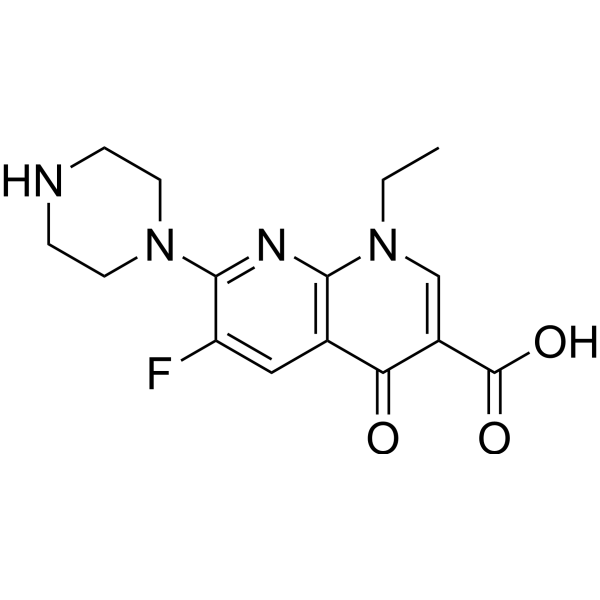
Enoxacin (AT 2266), a fluoroquinolone, interferes with DNA replication and inhibits bacterial DNA gyrase (IC50=126 µg/ml) and topoisomerase IV (IC50=26.5 µg/ml). Enoxacin is a miRNA processing activator and enhances siRNA-mediated mRNA degradation and promotes the biogenesis of endogenous miRNAs. Enoxacin has potent activities against gram-positive and -negative bacteria. Enoxacin is a cancer-specific growth inhibitor that acts by enhancing TAR RNA-binding protein 2 (TRBP)-mediated microRNA processing .
2
2 Cited Publications
Cat. No.: HY-B0268A
CAS No.: 84294-96-2
Synonyms: Enoxacin sesquihydrate; AT-2266 hydrate; CI-919 hydrate
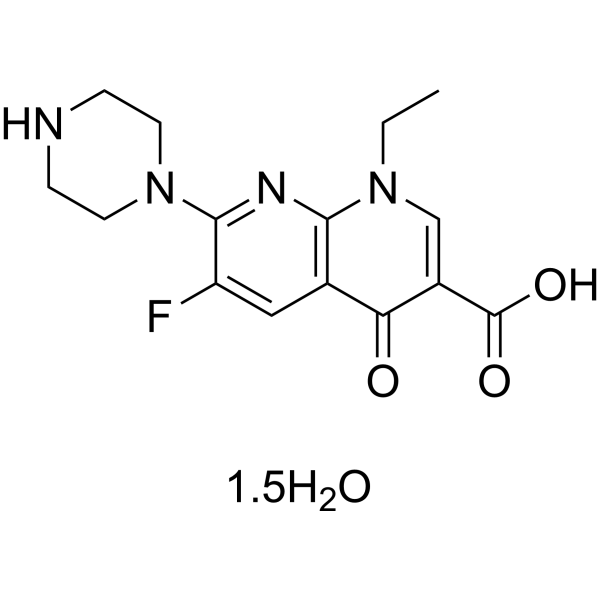
Enoxacin hydrate (Enoxacin sesquihydrate), a fluoroquinolone, interferes with DNA replication and inhibits bacterial DNA gyrase (IC50=126 µg/ml) and topoisomerase IV (IC50=26.5 µg/ml). Enoxacin hydrate is a miRNA processing activator and enhances siRNA-mediated mRNA degradation and promotes the biogenesis of endogenous miRNAs. Enoxacin hydrate has potent activities against gram-positive and -negative bacteria. Enoxacin hydrate is a cancer-specific growth inhibitor that acts by enhancing TAR RNA-binding protein 2 (TRBP)-mediated microRNA processing .
1
1 Cited Publications
Cat. No.: HY-147918
CAS No.: 124811-87-6
Purity:  99.92%
Target:  

DNA/RNA Synthesis

연구분야:  

Cancer

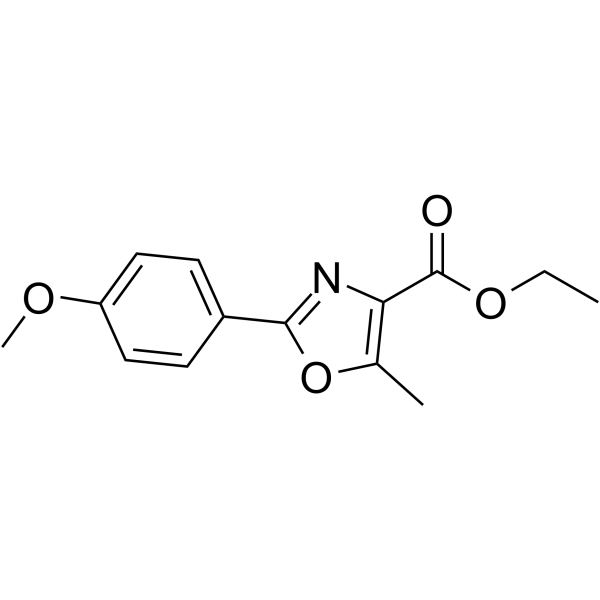
Anticancer agent 73 (compound CIB-3b) is a anticancer agent, potently targeting TAR RNA-binding protein 2 (TRBP) and disrupts its interaction with Dicer. Anticancer agent 73 can rebalance the expression profile of oncogenic or tumor-suppressive miRNAs. Anticancer agent 73 suppresses the proliferation and metastasis of HCC in vitro and in vivo .
Cat. No.: HY-146382
CAS No.: 1174719-68-6
Target:  

HIV

연구분야:  

Inflammation/Immunology

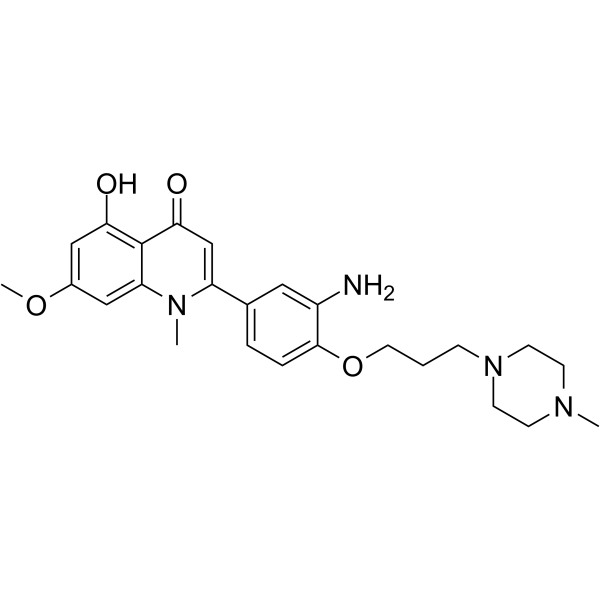
WRNA10 is a potent HIV-1 TAR RNA binder with an IC50 of 10 µM and an CC50 of 40 µM .
Cat. No.: HY-B0268S1
CAS No.: 2930288-95-0
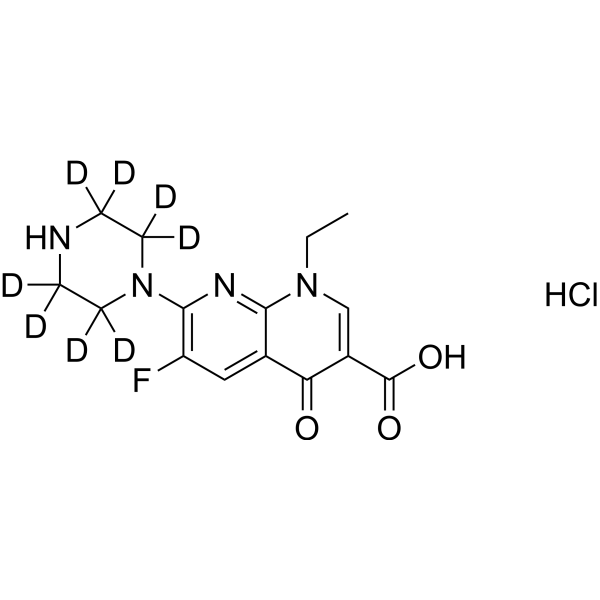
Enoxacin-d8 (hydrochloride) is deuterium labeled Enoxacin. Enoxacin (AT 2266), a fluoroquinolone, interferes with DNA replication and inhibits bacterial DNA gyrase (IC50=126 μg/ml) and topoisomerase IV (IC50=26.5 μg/ml). Enoxacin is a miRNA processing activator and enhances siRNA-mediated mRNA degradation and promotes the biogenesis of endogenous miRNAs. Enoxacin has potent activities against gram-positive and -negative bacteria. Enoxacin is a cancer-specific growth inhibitor that acts by enhancing TAR RNA-binding protein 2 (TRBP)-mediated microRNA processing .
Cat. No.: HY-B0268S2
Enoxacin-d8 (hydrate) is deuterium labeled Enoxacin. Enoxacin (AT 2266), a fluoroquinolone, interferes with DNA replication and inhibits bacterial DNA gyrase (IC50=126 μg/ml) and topoisomerase IV (IC50=26.5 μg/ml). Enoxacin is a miRNA processing activator and enhances siRNA-mediated mRNA degradation and promotes the biogenesis of endogenous miRNAs. Enoxacin has potent activities against gram-positive and -negative bacteria. Enoxacin is a cancer-specific growth inhibitor that acts by enhancing TAR RNA-binding protein 2 (TRBP)-mediated microRNA processing .
Cat. No.: HY-B0268AR
CAS No.: 84294-96-2
Synonyms: Enoxacin sesquihydrate (Standard); AT-2266 hydrate (Standard); CI-919 hydrate (Standard)
Enoxacin (hydrate) (Standard) is the analytical standard of Enoxacin (hydrate). This product is intended for research and analytical applications. Enoxacin hydrate (Enoxacin sesquihydrate), a fluoroquinolone, interferes with DNA replication and inhibits bacterial DNA gyrase (IC50=126 μg/ml) and topoisomerase IV (IC50=26.5 μg/ml). Enoxacin hydrate is a miRNA processing activator and enhances siRNA-mediated mRNA degradation and promotes the biogenesis of endogenous miRNAs. Enoxacin hydrate has potent activities against gram-positive and -negative bacteria. Enoxacin hydrate is a cancer-specific growth inhibitor that acts by enhancing TAR RNA-binding protein 2 (TRBP)-mediated microRNA processing [4].
Cat. No.: HY-172885
연구분야:  

Cancer

TRBP-IN-1 (Compound 13j) is an orally active TAR RNA binding protein 2 (TRBP) inhibitor (IC50: 12.72 μM). TRBP-IN-1 has significant anti-hepatocellular carcinoma (HCC) activity and can inhibit the proliferation and metastasis of HCC cells (HCCLM3 cells (IC50: 18.96 μM); SK-Hep-1 cells (IC50: 16.45 μM)). TRBP-IN-1 regulates miRNA biogenesis and inhibits oncogenic miRNA expression by targeting TRBP. TRBP-IN-1 induces apoptosis and pyroptosis in HCC cells by inhibiting the level of miRNA. TRBP-IN-1 can be used for targeted therapy research of HCC .
Cat. No.: HY-180187
Target:  

HIV

연구분야:  

Infection

019854-B06 is a potent inhibitor of Tat-mediated HIV-1 transcription (IC50 = 1.44 μM), exhibiting antiviral activity against HIV-1 (EC50 = 0.83 μM). 019854-B06 binds to Tat peptide (KD = 33.5 μM), but not to TAR RNA. 019854-B06 neither promotes Tat degradation nor disrupts the Tat/CycT1 complex, supporting a Tat-centric, nondegradative mechanism .
Cat. No.: HY-P810915
Synonyms: OK/SW-cl.32, RPL3, Large ribosomal subunit protein uL3, 60S ribosomal protein L3, HIV-1 TAR RNA-binding protein B, TARBP-B

Host:  

Rabbit

Application:  

WB, IHC-P

Reactivity:  

Human, Mouse

Cat. No.: HY-P705997
Purity:  ≥ 90%, as determined by reducing SDS-PAGE.
Synonyms: LRRFIP1; Leucine-rich repeat flightless-interacting protein 1; LRR FLII-interacting protein 1; GC-binding factor 2; TAR RNA-interacting protein
Species:  
Source:  
Cat. No.: HY-P85550
Synonyms: FLAP1; FLIIAP 1; GC binding factor 2; GCF2; HUFI1; Leucine rich repeat; in FLII; interacting protein 1; Leucine rich repeat flightless interacting protein 1; LRR FLII interacting protein 1; LRRFIP 1; Lrrfip1; MGC10947; MGC119738; MGC119739; NEDD8 conjugating enzyme; TAR RNA interacting protein; TAR RNA-interacting protein; Transcription factor 9 like; TRIP.

Host:  

Mouse

Application:  

WB

Reactivity:  

Human, Mouse

Cat. No.: HY-P85441
Synonyms: LRRFIP1; GCF2; TRIP; Leucine-rich repeat flightless-interacting protein 1; LRR FLII-interacting protein 1; GC-binding factor 2; TAR RNA-interacting protein

Host:  

Mouse

Application:  

WB

Reactivity:  

Human

  • 1

