



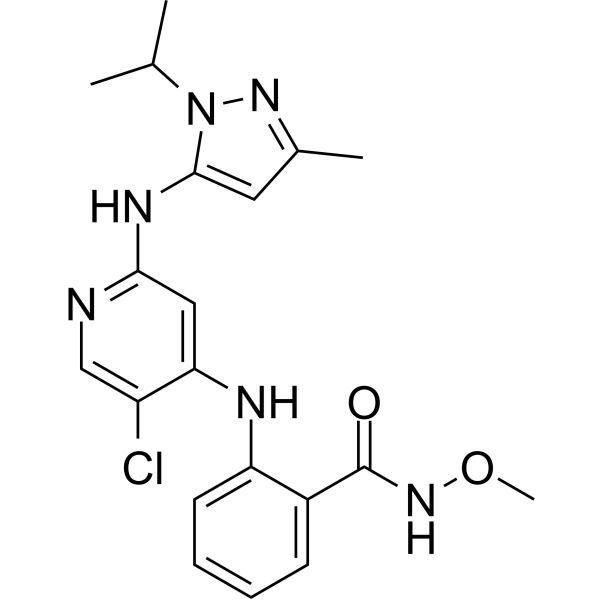
GSK2256098
Based on 14 publication(s) in Google Scholar
GSK2256098 is a selective FAK kinase inhibitor, which inhibits growth and survival of pancreatic ductal adenocarcinoma cells.
For research use only. We do not sell to patients.
- Purity : 99.86%
- CAS No.: 1224887-10-8
- Formula: C20H23ClN6O2
- Molecular Weight:414.89
-
Storage:Powder -20°C, 3 years , 4°C, 2 years ; In solvent -80°C, 2 years , -20°C, 1 year

To place orders, for customer services and technical support, please contact: MedChemExpress USA
Tel: 609-228-6898 E-mail: [email protected] [email protected]


-
 Biological Activity
-
Chemical Information
-
Solvent & Solubility
- Purity & Documentation
- References
-
 Help & FAQs


-
HY-12289
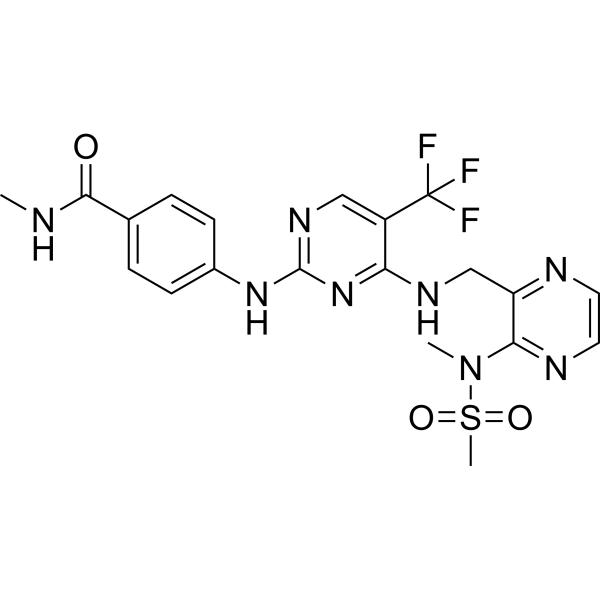
DefactinibFAK Inhibitor -
HY-13917
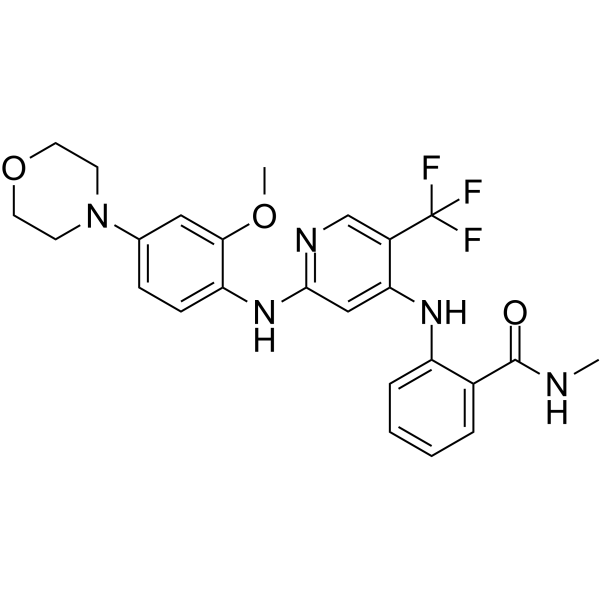
PND-1186FAK Inhibitor -
HY-10459
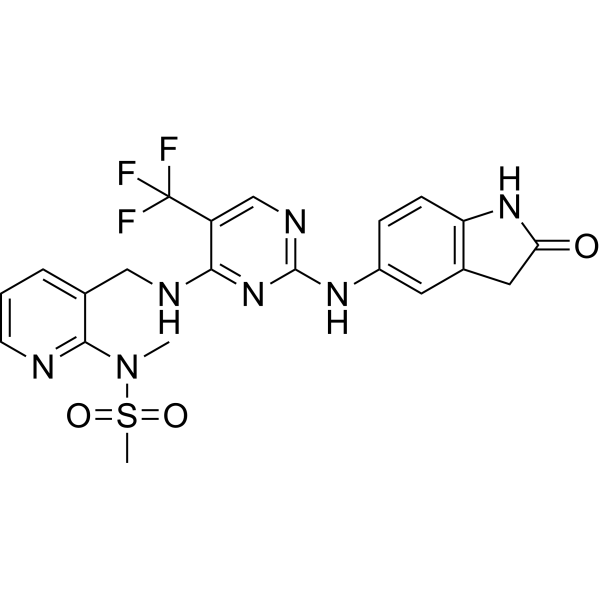
PF-562271FAK/Pyk2 Inhibitor -
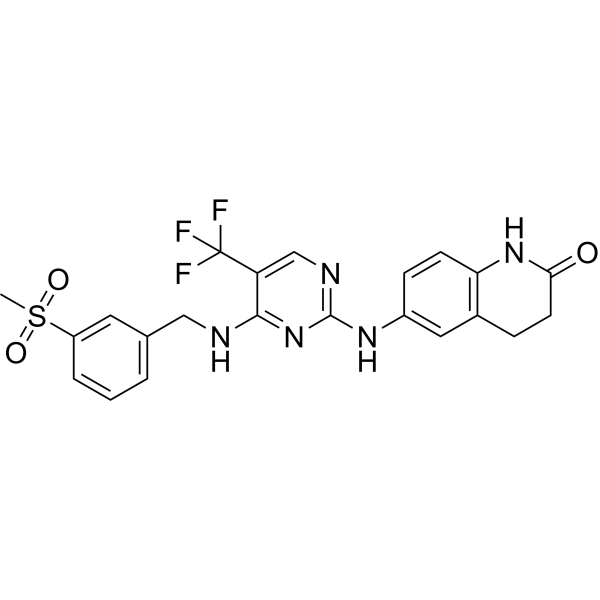
HY-10461
PF-573228FAK Inhibitor -
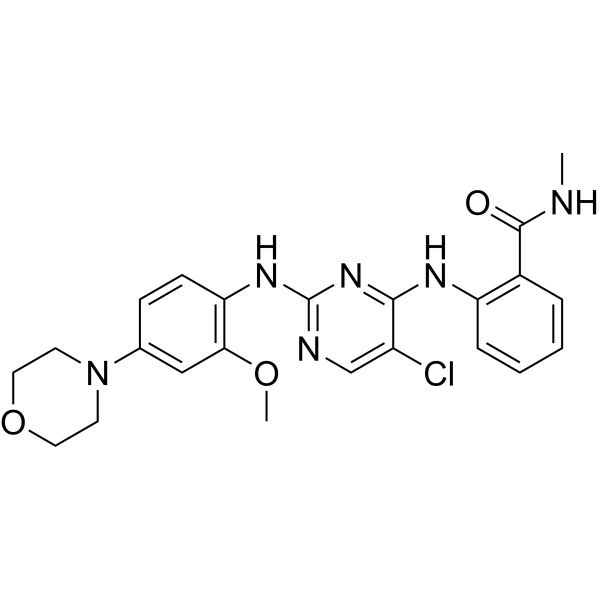
HY-13203
NVP-TAE 226Apoptosis Inducer -
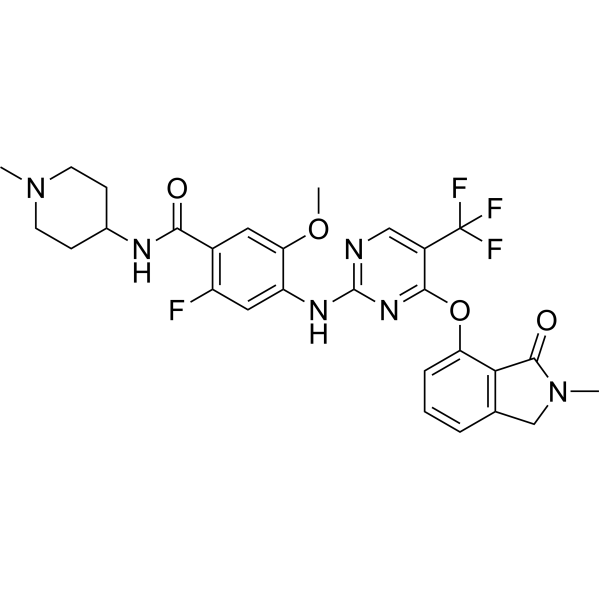
HY-122844
IfebemtinibFAK Inhibitor -
HY-12444
Y15FAK Inhibitor -
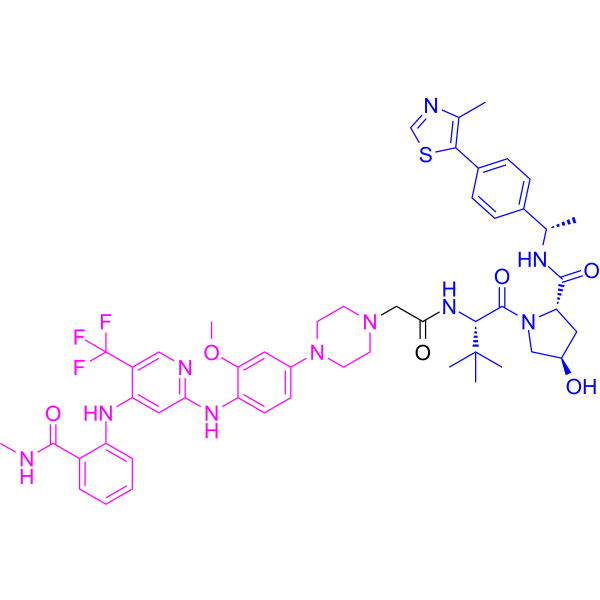
HY-132296
GSK215PROTAC FAK Degrader -
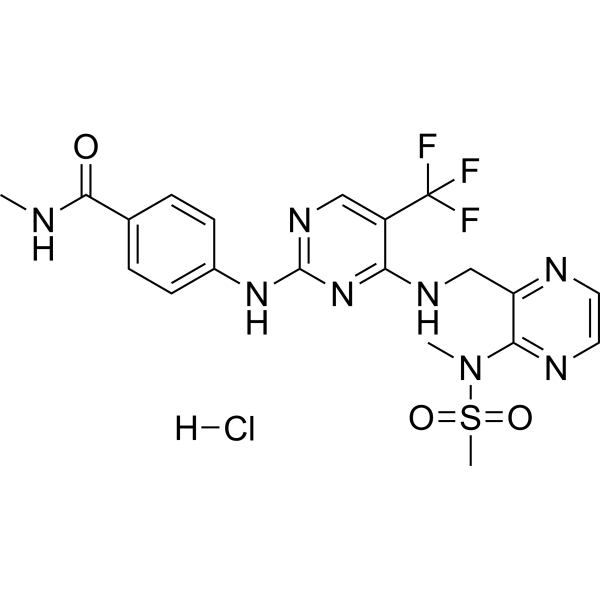
HY-12289A
Defactinib hydrochlorideFAK Inhibitor -
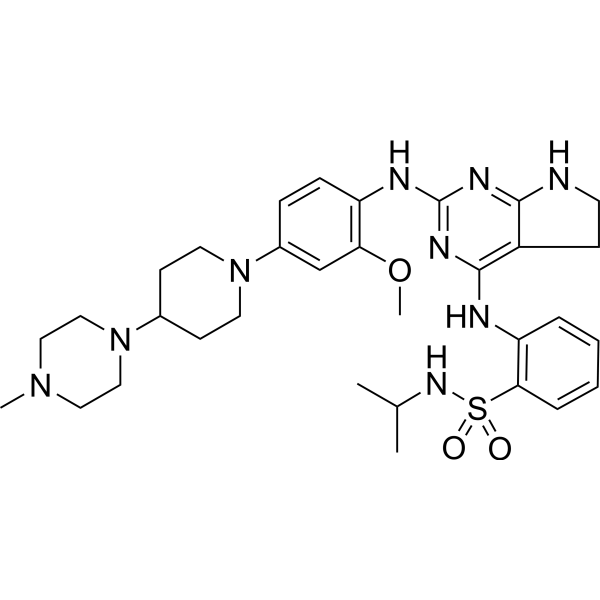
HY-109084
ConteltinibFAK Inhibitor -
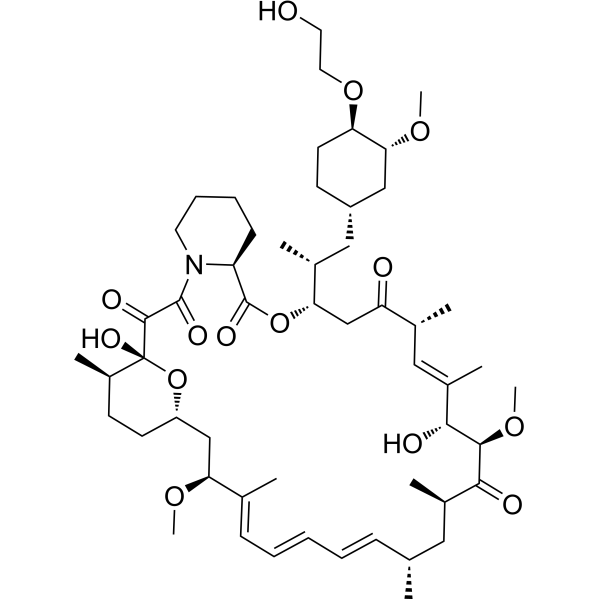
HY-10218
EverolimusmTORC Inhibitor -
HY-10219
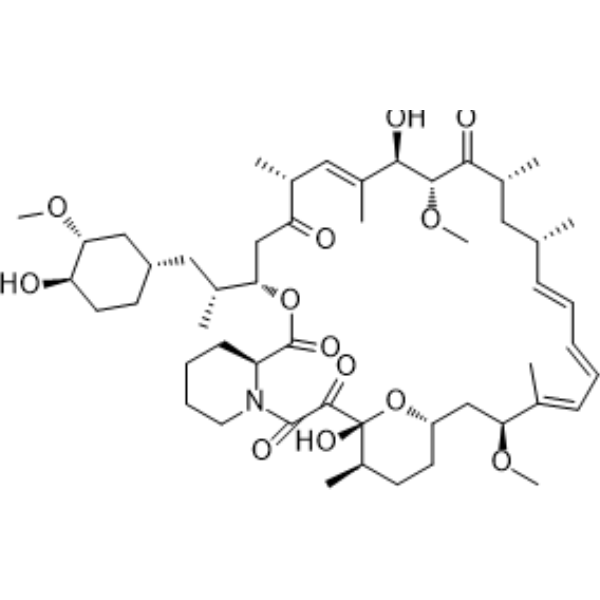
RapamycinmTOR Inhibitor
Publications Citing Use of MedChemExpress (MCE) GSK2256098
More- Nat Mater. 2025 Sep 5. [Abstract]
- Autophagy. 2026 May 29:1-15. [Abstract]
- Sci Adv. 2026 Jan 30;12(5):eady8382. [Abstract]
- Cell Death Dis. 2025 Mar 27;16(1):210. [Abstract]
- Oncogene. 2025 Sep 30. [Abstract]
- JCI Insight. 2020 Feb 13;5(3):e133232. [Abstract]
- Biochem Pharmacol. 2026 Jun 25;251(Pt 2):118189. [Abstract]
- Cell Biol Toxicol. 2024 Jul 12;40(1):54. [Abstract]
- Biochim Biophys Acta Mol Basis Dis. 2025 Aug 18;1871(8):168023. [Abstract]
- Am J Pathol. 2026 Jul 28:S0002-9440(26)00202-6.
- J Cell Physiol. 2024 Nov;239(11):e31359. [Abstract]
- Cell Immunol. 2026 Apr 6:425:105103. [Abstract]
- bioRxiv. 2024 Jun 28:2024.06.28.601153. [Abstract]
- Research Square Preprint. 2024 Jan 31.
 Customer Validation & Images

-
Cell Imaging/Staining

-
WB

-
WB

-
Bio/Physico-chemical Assay

-
Cell Imaging/Staining


Biological Activity
Description
IC50 & Target
FAK[1]
Cellular Effect
|
Cell Line

|
Type | Value | Description | References |
|---|---|---|---|---|
| 786-0 | IC50 |
>50 μM
Compound: GSK2256098
|
Antiproliferative activity against human 786-O cells assessed as reduction in cell viability
Antiproliferative activity against human 786-O cells assessed as reduction in cell viability
|
[PMID: 32784087] |
| BXPC-3 | IC50 |
>50 μM
Compound: GSK2256098
|
Antiproliferative activity against human BXPC-3 cells assessed as reduction in cell viability
Antiproliferative activity against human BXPC-3 cells assessed as reduction in cell viability
|
[PMID: 32784087] |
| DU-145 | IC50 |
>40 μM
Compound: GSK2256098
|
Antiproliferative activity against human DU-145 cells assessed as reduction in cell viability
Antiproliferative activity against human DU-145 cells assessed as reduction in cell viability
|
[PMID: 32784087] |
| MDA-MB-231 | IC50 |
3.82 μM
Compound: GSK2256098
|
Antiproliferative activity against human MDA-MB-231 cells assessed as reduction in cell viability
Antiproliferative activity against human MDA-MB-231 cells assessed as reduction in cell viability
|
[PMID: 32784087] |
| NCI-H1975 | IC50 |
>50 μM
Compound: GSK2256098
|
Antiproliferative activity against human NCI-H1975 cells assessed as reduction in cell viability
Antiproliferative activity against human NCI-H1975 cells assessed as reduction in cell viability
|
[PMID: 32784087] |
In Vitro
GSK2256098 is a thousand fold more selective for FAK compared to the nearest FAK family member, Pyk2. GSK2256098 inhibits FAK activity through targeting the phosphorylation site of FAK, tyrosine (Y) 397. GSK2256098 inhibits FAK activity or Y397 phosphorylation in cancer cell lines, OVCAR8 (ovary), U87MG (brain), and A549 (lung), at IC50s of 15, 8.5 and 12 nM, respectively. The responses of 6 PDAC cell lines in regards to FAK Y397 phosphorylation or activity to GSK2256098 treatments (0.1–10 μM) ranged from low (less than 20% inhibition) to high (more than 90% inhibition). The least and most sensitive cell lines (PANC-1 and L3.6P1) are selected for further analysis. GSK2256098 inhibition of FAK Y397 phosphorylation correlated with decreased levels of phosphorylated Akt and ERK in L3.6P1 cells. GSK2256098 decreases cell viability, anchorage-independent growth, and motility in a dose dependent manner[1].
MedChemExpress (MCE) has not independently confirmed the accuracy of these methods. They are for reference only. .
In Vivo
MedChemExpress (MCE) has not independently confirmed the accuracy of these methods. They are for reference only.
Clinical Trial
| NCT Number | Sponsor | Condition | Start Date |
Phase
|
|---|---|---|---|---|
| NCT01329991 | Plexxikon| | 2011-05 | PHASE1 |


Chemical Information
-
CAS No. 1224887-10-8
-
Appearance Solid
-
Molecular Weight 414.89
-
Formula C20H23ClN6O2
-
Color White to yellow
-
SMILES
O=C(NOC)C1=CC=CC=C1NC2=CC(NC3=CC(C)=NN3C(C)C)=NC=C2Cl
-
Shipping
Room temperature in continental US; may vary elsewhere.
-
Storage
Powder -20°C 3 years 4°C 2 years In solvent -80°C 2 years -20°C 1 year


Publications (14)
-
Journal Impact Factor
-
Most Recent
-
Nat Mater
Local photocrosslinking of native tissue matrix regulates lung epithelial cell mechanosensing and function. [Abstract]2025 Sep 5. PMID: 40913159
GSK2256098 purchased from MedChemExpress. Usage Cited in: Nat Mater. 2025 Sep 5. [Abstract]
Quantification of LAMP3+GFP+, and %PDPNhi GFP+ cell area in STIFF regions of murine PCLS without or with 10 μM GSK2256098 (FAKi) for 2 days (n = 32 images per group from 4 mice (STIFF −FAKi, STIFF +FAKi), p as indicated by two-tailed unpaired Mann Whitney test.
-
Autophagy
PTK2/FAK inhibition triggers TMED9-mediated protective autophagy in pancreatic cancer cell via enhancing ERGIC-ERES contact. [Abstract]2026 May 29:1-15. PMID: 42144738
GSK2256098 purchased from MedChemExpress. Usage Cited in: Autophagy. 2026 May 29:1-15. [Abstract]
Fewer autophagic puncta were observed compared with torin1 treatment group, whereas a marked accumulation of yellow autophagic puncta was detected after the addition of BAF, particularly in the groups treated with torin 1 alone or in combination with GSK2256098.
GSK2256098 purchased from MedChemExpress. Usage Cited in: Autophagy. 2026 May 29:1-15. [Abstract]
Immunoblot analysis and quantitative assessment of SQSTM1/p62 and LC3 expression in PANC1 cells treated with GSK2256098 at different concentrations for 12 h.
GSK2256098 purchased from MedChemExpress. Usage Cited in: Autophagy. 2026 May 29:1-15. [Abstract]
Immunobloting of LC3-II levels following treatment with GSK (GSK2256098) (5 μM) and chloroquine (CQ) (30 μM) alone or in combination for 12 h.
-
Sci Adv
Inhibition of focal adhesion kinase impairs tumor formation and preserves hearing in a murine model of NF2-related schwannomatosis. [Abstract]2026 Jan 30;12(5):eady8382. PMID: 41616055 -
Cell Death Dis
Role of the PI3K/AKT signaling pathway in the cellular response to Tumor Treating Fields (TTFields). [Abstract]2025 Mar 27;16(1):210. PMID: 40148314 -
Oncogene
C1QBP forms a positive feedback loop with the PAICS/FAK/C-MYC axis to promote cancer cell proliferation. [Abstract]2025 Sep 30. PMID: 41028903 -
JCI Insight
2020 Feb 13;5(3):e133232. PMID: 32051338
GSK2256098 purchased from MedChemExpress. Usage Cited in: JCI Insight. 2020 Feb 13;5(3):e133232. [Abstract]
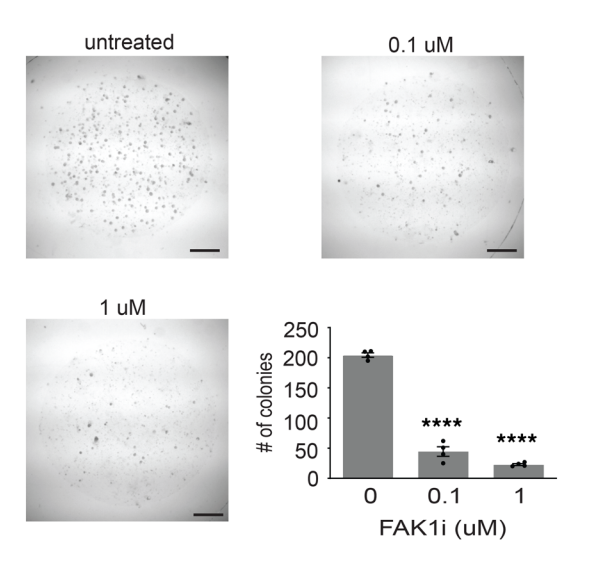
Representative images and scatter dot plot indicating clonogenic potential of primary bladder cell cultures (n = 4) on Matrigel isolated from C57BL/6 mice treated with increasing concentration of the FAK1 inhibitor GSK2256098 (0-1 μM). On the y axis is presented the number of colonies obtained from 10,000 cells.
-
Biochem Pharmacol
2026 Jun 25;251(Pt 2):118189. PMID: 42349620 -
Cell Biol Toxicol
TRAF6 promotes spinal microglial M1 polarization to aggravate neuropathic pain by activating the c-JUN/NF-kB signaling pathway. [Abstract]2024 Jul 12;40(1):54. PMID: 38995476 -
Biochim Biophys Acta Mol Basis Dis
Inhibition of ELOVL6 activity impairs mitochondrial respiratory function and inhibits tumor progression in FGFR3-mutated bladder cancer cells. [Abstract]2025 Aug 18;1871(8):168023. PMID: 40835210 -
-
J Cell Physiol
Ankrd1 inhibits the FAK/Rho-GTPase/F-actin pathway by downregulating ITGA6 transcriptional to regulate myoblast functions. [Abstract]2024 Nov;239(11):e31359. PMID: 38988048 -
Cell Immunol
WISP-3 enhances proinflammatory cytokine IL-1β production in rheumatoid arthritis through the FAK, JNK and AP-1 pathways. [Abstract]2026 Apr 6:425:105103. PMID: 41955703 -
bioRxiv
Regulation of intracellular cAMP levels in osteocytes by mechano-sensitive focal adhesion kinase via PDE8A. [Abstract]2024 Jun 28:2024.06.28.601153. PMID: 38979143 -


Solvent & Solubility
In Vitro:
DMSO : ≥ 30 mg/mL (72.31 mM; Hygroscopic DMSO has a significant impact on the solubility of product, please use newly opened DMSO)
* "≥" means soluble, but saturation unknown.
Please refer to the solubility information to select the appropriate solvent. Once prepared, please aliquot and store the solution to prevent product inactivation from repeated freeze-thaw cycles.
Storage method and period of stock solution: -80°C, 2 years; -20°C, 1 year. When stored at -80°C, please use it within 2 years. When stored at -20°C, please use it within 1 year.
Please refer to the solubility information to select the appropriate solvent. Once prepared, please aliquot and store the solution to prevent product inactivation from repeated freeze-thaw cycles.
Storage method and period of stock solution: -80°C, 2 years; -20°C, 1 year. When stored at -80°C, please use it within 2 years. When stored at -20°C, please use it within 1 year.
Concentration (start) × Volume (start) = Concentration (final) × Volume (final)
In Vivo:
Select the appropriate dissolution method based on your experimental animal and administration route.
- For the following dissolution methods, please ensure to first prepare a clear stock solution using an In Vitro approach and then sequentially add co-solvents:
- To ensure reliable experimental results, the clarified stock solution can be appropriately stored based on storage conditions. As for the working solution for In Vivo experiments, it is recommended to prepare freshly and use it on the same day.
- The percentages shown for the solvents indicate their volumetric ratio in the final prepared solution. If precipitation or phase separation occurs during preparation, heat and/or sonication can be used to aid dissolution.
Add each solvent one by one: 10% DMSO 40% PEG300 5% Tween-80 45% Saline
Solubility: ≥ 2.5 mg/mL (6.03 mM); Clear solution
This protocol yields a clear solution of ≥ 2.5 mg/mL (saturation unknown).
Taking 1 mL working solution as an example, add 100 μL DMSO stock solution (25.0 mg/mL) to 400 μL PEG300, and mix evenly; then add 50 μL Tween-80 and mix evenly; then add 450 μL Saline to adjust the volume to 1 mL.
Preparation of Saline: Dissolve 0.9 g sodium chloride in ddH₂O and dilute to 100 mL to obtain a clear Saline solution.
In Vivo Dissolution Calculator
Please enter the basic information of animal experiments:
-
-
-
-
Recommended: Prepare an additional quantity of animals to account for potential losses during experiments.
Please enter your animal formula composition:
-
%DMSO +
Recommended: Keep the proportion of DMSO in working solution below 2% if your animal is weak.
-
%+
-
+%Tween-80 + +
-
%Saline +
The co-solvents required include: DMSO, . All of co-solvents are available by MedChemExpress (MCE). , Tween 80. All of co-solvents are available by MedChemExpress (MCE).
Working solution concentration: 0.22 mg/mL
Method for preparing stock solution: mg drug dissolved in μL DMSO. Stock solution concentration: mg/mL.
1. Take μL DMSO stock solution;
2. Add μL .
μL , mix evenly;
3. Then add μL Tween 80, mix evenly;
4. Then add μL
Please ensure that the stock solution in the first step is dissolved to a clear state, and add co-solvents in sequence. You can use ultrasonic heating (ultrasonic cleaner, recommended frequency 20-40 kHz), vortexing, etc. to assist dissolution.


Purity & Documentation
-
Data Sheet (283 KB)
-
SDS (393 KB)
- English - EN (393 KB)
- Français - FR (393 KB)
- Deutsch - DE (393 KB)
- Norwegian - NO (393 KB)
- Español - ES (393 KB)
- Swedish - SV (393 KB)
- Italian - IT (393 KB)
- Korean - KR (393 KB)
- Portuguese - PT (393 KB)
-
Handling Instructions (2659 KB)
References
[1]. Zhang J, et al. A small molecule FAK kinase inhibitor, GSK2256098, inhibits growth and survival of pancreatic ductal adenocarcinoma cells. Cell Cycle. 2014;13(19):3143-9. [Content Brief]
[2]. Thanapprapasr D, et al. PTEN Expression as a Predictor of Response to Focal Adhesion Kinase Inhibition in Uterine Cancer. Mol Cancer Ther. 2015 Jun;14(6):1466-75. [Content Brief]


Complete Stock Solution Preparation Table
Please refer to the solubility information to select the appropriate solvent. Once prepared, please aliquot and store the solution to prevent product inactivation from repeated freeze-thaw cycles.
Storage method and period of stock solution: -80°C, 2 years; -20°C, 1 year. When stored at -80°C, please use it within 2 years. When stored at -20°C, please use it within 1 year.
| Optional Solvent | Concentration Solvent Mass | 1 mg | 5 mg | 10 mg | 25 mg |
|---|---|---|---|---|---|
| DMSO | 1 mM | 2.4103 mL | 12.0514 mL | 24.1028 mL | 60.2569 mL |
| 5 mM | 0.4821 mL | 2.4103 mL | 4.8206 mL | 12.0514 mL | |
| 10 mM | 0.2410 mL | 1.2051 mL | 2.4103 mL | 6.0257 mL | |
| 15 mM | 0.1607 mL | 0.8034 mL | 1.6069 mL | 4.0171 mL | |
| 20 mM | 0.1205 mL | 0.6026 mL | 1.2051 mL | 3.0128 mL | |
| 25 mM | 0.0964 mL | 0.4821 mL | 0.9641 mL | 2.4103 mL | |
| 30 mM | 0.0803 mL | 0.4017 mL | 0.8034 mL | 2.0086 mL | |
| 40 mM | 0.0603 mL | 0.3013 mL | 0.6026 mL | 1.5064 mL | |
| 50 mM | 0.0482 mL | 0.2410 mL | 0.4821 mL | 1.2051 mL | |
| 60 mM | 0.0402 mL | 0.2009 mL | 0.4017 mL | 1.0043 mL |


GSK2256098 Related Classifications
HY-100498 Related Classifications
 Powered by Bioz