
17 Results for "

Pyrolysis

" in MedChemExpress (MCE) Product Catalog:
Products (17)

17 Results for "Pyrolysis" in MCE Product Catalog:

Cat. No.: HY-W050145
CAS No.: 498-07-7
Synonyms: 1,6-Anhydro-β-D-glucopyranose; 1,6-Anhydro-β-D-glucose
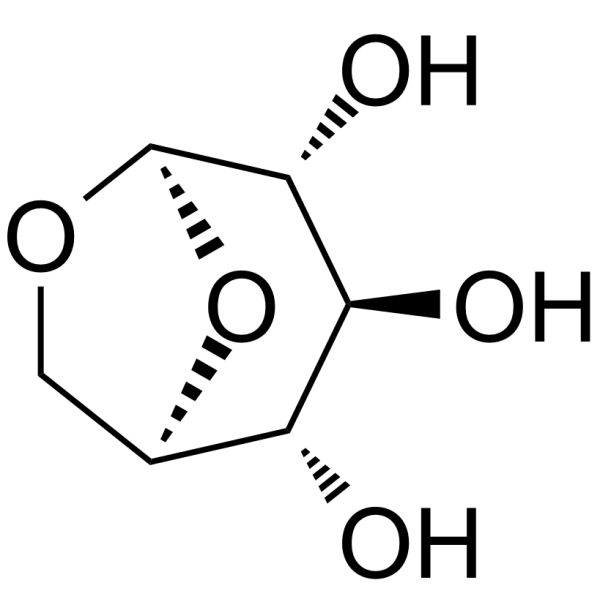
Levoglucosan (1,6-Anhydro-β-D-glucopyranose) is an anhydrosugar produced through glucan pyrolysis and is widely found in nature .
Cat. No.: HY-W050145S
CAS No.: 2483832-05-7
Synonyms: 1,6-Anhydro-β-D-glucopyranose-d7; 1,6-Anhydro-β-D-glucose-d7
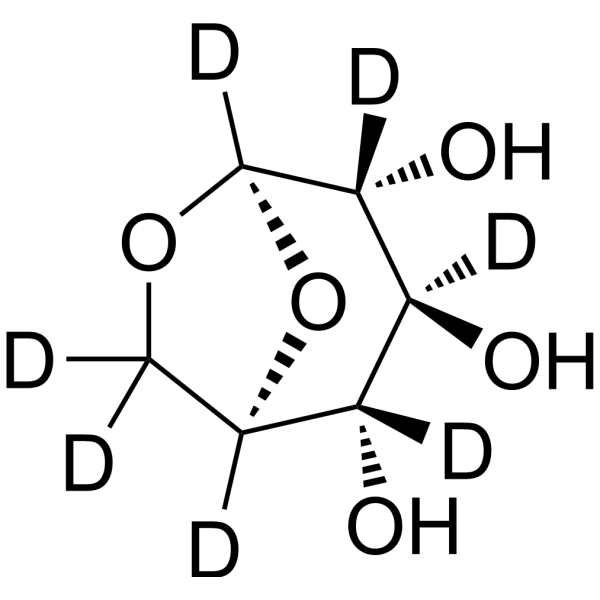
Levoglucosan-d7 is the deuterium labeled Levoglucosan. Levoglucosan (1,6-Anhydro-β-D-glucopyranose) is an anhydrosugar produced through glucan pyrolysis and is widely found in nature .
Cat. No.: HY-W250112
CAS No.: 8068-05-1
Lignin alkali acts as a decomposer, depolymerizer and structural modifier. Lignin alkali is recovered from lignocellulosic biomass via alkaline pretreatment. Lignin alkali consists of p-hydroxyphenyl, guaiacyl and syringyl propanoid units. Lignin alkali can be custom-converted into high-value-added chemicals and materials. Lignin alkali exhibits significant application potential in the fields of biomass refining and high-value utilization .
Cat. No.: HY-W002820
CAS No.: 33421-40-8
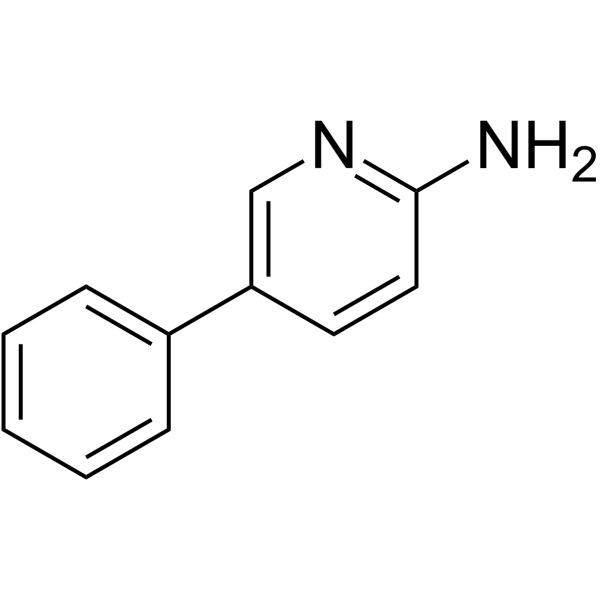
2-Amino-5-phenylpyridine is a mutagenic heterocyclic aromatic amine that is formed by pyrolysis of phenylalanine in proteins. 2-Amino-5-phenylpyridine is in broiled sardines and is considered as potentially carcinogenic .
Cat. No.: HY-N11513
CAS No.: 132054-38-7
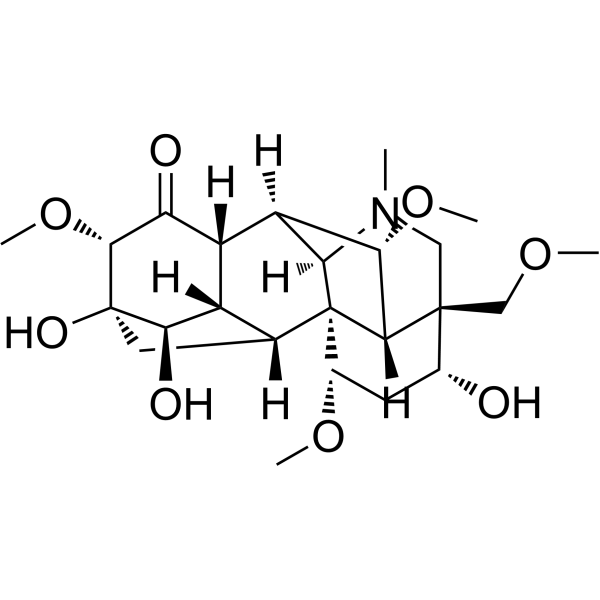
16-Epipyromesaconitine is a natural product that can be obtained by the pyrolysis of Mesaconitine (HY-N0724) .
Cat. No.: HY-W050145R
CAS No.: 498-07-7
Synonyms: 1,6-Anhydro-β-D-glucopyranose (Standard); 1,6-Anhydro-β-D-glucose (Standard)
Levoglucosan (Standard) is the analytical standard of Levoglucosan. This product is intended for research and analytical applications. Levoglucosan (1,6-Anhydro-β-D-glucopyranose) is an anhydrosugar produced through glucan pyrolysis and is widely found in nature .
Cat. No.: HY-W002820R
CAS No.: 33421-40-8
2-Amino-5-phenylpyridine is a mutagenic heterocyclic aromatic amine that is formed by pyrolysis of phenylalanine in proteins. 2-Amino-5-phenylpyridine is in broiled sardines and is considered as potentially carcinogenic .
Cat. No.: HY-W040094
CAS No.: 35405-71-1
Synonyms: 1,6-Anhydro-β-cellobiose
Target:  

Endogenous Metabolite

Research Areas:  

Others

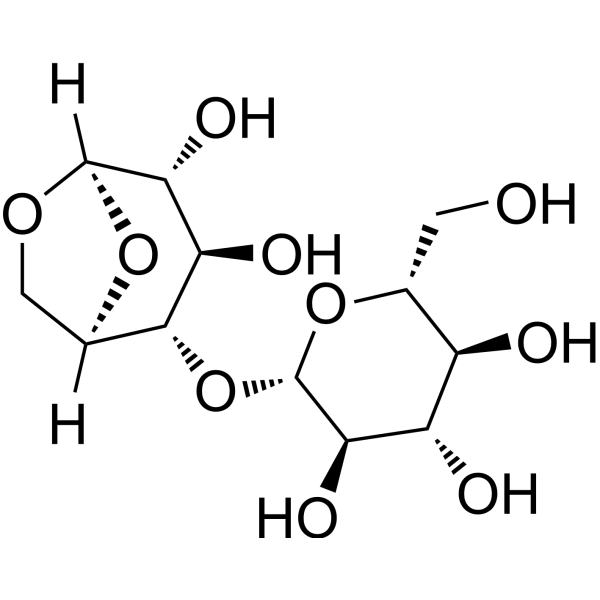
Cellobiosan is an anhydrosugar, which is produced from burning of biomass .
Cat. No.: HY-W050145S2
CAS No.: 1375293-81-4
Synonyms: 1,6-Anhydro-β-D-glucopyranose-13C6; 1,6-Anhydro-β-D-glucose-13C6
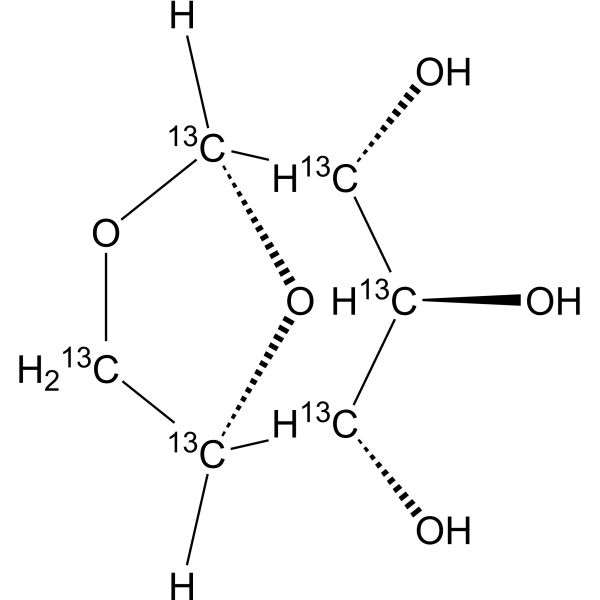
Levoglucosan- 13C6 is the 13C labeled Levoglucosan . Levoglucosan (1,6-Anhydro-β-D-glucopyranose) is an anhydrosugar produced through glucan pyrolysis and is widely found in nature .
Cat. No.: HY-184628
PEGylated ultrasmall iron oxide nanoparticles (high-temperature pyrolysis method) are magnetic nanomaterials synthesized by high-temperature pyrolysis. These nanoparticles typically have a diameter of less than 10 nanometers (<10 nm), and the size observed by TEM is usually in the range of 5-10 nm.
Cat. No.: HY-184624
Carboxylated iron oxide nanoparticles (high-temperature pyrolysis method) are obtained by modifying DMSA on the basis of XFJ67 to obtain carboxyl groups, which converts oil-soluble nanoparticles into water-soluble nanoparticles, making them more suitable for applications in the biological field.
Cat. No.: HY-N9742
CAS No.: 6216-82-6
Synonyms: Lirioresinol A
(-)-Episyringaresinol (Lirioresinol A) is likely a pyrolysis product of lignin and can be isolated from extracts of charred wood of Platycarya strobilacea.
Cat. No.: HY-184621
PEGylated iron oxide nanoparticles (amino-terminated) are prepared by high-temperature pyrolysis and modified with PEG-amino-terminated oleic acid-modified iron oxide. This modification transforms the nanoparticles from the oil phase to the aqueous phase, thereby broadening their application in the biological field.
Cat. No.: HY-184623
PEGylated iron oxide nanoparticles (methoxy-terminated) are prepared by high-temperature pyrolysis and modified with PEG-methoxy-terminated oleic acid-modified iron oxide. This modification transforms the nanoparticles from the oil phase to the aqueous phase, thereby broadening their application in the biological field.
Cat. No.: HY-184634
OA Coated Fe3O4 Nanoparticles (Oleic acid-modified iron(III) oxide nanoparticles) were prepared using a high-temperature pyrolysis method. Oleic acid was added as a surfactant to a solution containing an iron precursor. Oleic acid not only helps control the growth of nanoparticles but also forms a stable coating on the particle surface. The solution containing the iron precursor and oleic acid was heated to a high temperature, typically around 300°C, to promote the thermal decomposition of the iron precursor. At high temperatures, the iron precursor decomposes to produce iron atoms, which aggregate to form magnetic nanoparticles. During pyrolysis, the iron nanoparticles react with oxygen in the air to form iron(III) oxide (Fe3O4).
Cat. No.: HY-184622
PEGylated iron oxide nanoparticles (carboxyl-terminated) (10-50 nm) are prepared by high-temperature pyrolysis and then modified with PEG-carboxyl-terminated iron oxide. This modification transforms the nanoparticles from an oil phase to an aqueous phase, thus broadening their applications in the biological field. The iron oxide used in the 100 nm nanoparticles is prepared by a solvothermal method.
Cat. No.: HY-184626
Thiol-modified magnetite nanoparticles are prepared via high-temperature pyrolysis and surface-modified with thiol functional groups. Magnetite is widely used in magnetic resonance imaging, magnetic separation, targeted drug delivery, tumor hyperthermia, cell labeling and separation, as a contrast agent, and in retinal detachment repair surgery due to its stable properties, good biocompatibility, high strength, and lack of toxicity. It is also used as a catalyst carrier, microwave absorbing material, and magnetic recording material. Xianfeng has developed numerous derivatives of magnetite, including oleic acid-modified magnetite, magnetite with different PEG ends, DMSA-modified magnetite, polylysine-modified magnetite, carboxylated dextran-modified magnetite nanoparticles, streptavidin-modified magnetite particles, thiol-modified magnetite magnetic nanoparticles, and polyethyleneimine (PEI)-modified magnetic magnetite nanoparticles, among others.
  • 1

