



NINJ1
NINJ1 encodes a cell-surface protein originally identified as a nerve injury-induced homophilic adhesion molecule that promotes axonal growth[1]. Mechanistically, NINJ1 now defines an active execution step in plasma membrane rupture (PMR), where lytic cell death releases intracellular DAMPs that propagate inflammation[2]. Structural studies show that NINJ1 oligomerizes into membrane-associated filaments or rings, enabling plasma membrane rupture during pyroptosis and other lytic cell death pathways[3][4]. In ferroptosis models, NINJ1 oligomerizes after lipid peroxidation and controls plasma membrane integrity, cytosolic protein release, and DAMP release from macrophages and fibroblasts[5]. Compared with the related isoform NINJ2, NINJ1 is functionally distinct because NINJ1, but not NINJ2, is required for LDH release downstream of GSDMD activation[4]. Cryo-EM analysis further explains this isoform distinction by showing that NINJ2 is a close paralog that cannot mediate PMR despite structural relatedness to NINJ1[6]. For experimental applications, anti-NINJ1 monoclonal antibodies block NINJ1 oligomerization and prevent PMR in mouse models, supporting NINJ1 inhibition as a practical tool for studying inflammatory tissue injury[7].
References:
- [1]. Araki T, et al. Ninjurin, a novel adhesion molecule, is induced by nerve injury and promotes axonal growth. Neuron. 1996 Aug;17(2):353-61. [Content Brief]
- [2]. Kayagaki N, et al. NINJ1 mediates plasma membrane rupture during lytic cell death. Nature. 2021 Mar;591(7848):131-136. [Content Brief]
- [3]. Degen M, et al. Structural basis of NINJ1-mediated plasma membrane rupture in cell death. Nature. 2023 Jun;618(7967):1065-1071. [Content Brief]
- [4]. David L, et al. NINJ1 mediates plasma membrane rupture by cutting and releasing membrane disks. Cell. 2024 Apr 25;187(9):2224-2235.e16. [Content Brief]
- [5]. Ramos S, et al. NINJ1 induces plasma membrane rupture and release of damage-associated molecular pattern molecules during ferroptosis. EMBO J. 2024 Apr;43(7):1164-1186. [Content Brief]
- [6]. Sahoo B, et al. How NINJ1 mediates plasma membrane rupture and why NINJ2 cannot. Cell. 2025 Jan 23;188(2):292-302.e11. [Content Brief]
- [7]. Kayagaki N, et al. Inhibiting membrane rupture with NINJ1 antibodies limits tissue injury. Nature. 2023 Jun;618(7967):1072-1077. [Content Brief]
All Product Categories
-
NINJ1 Related Products (1)
Related Products (1)

-
Glycine
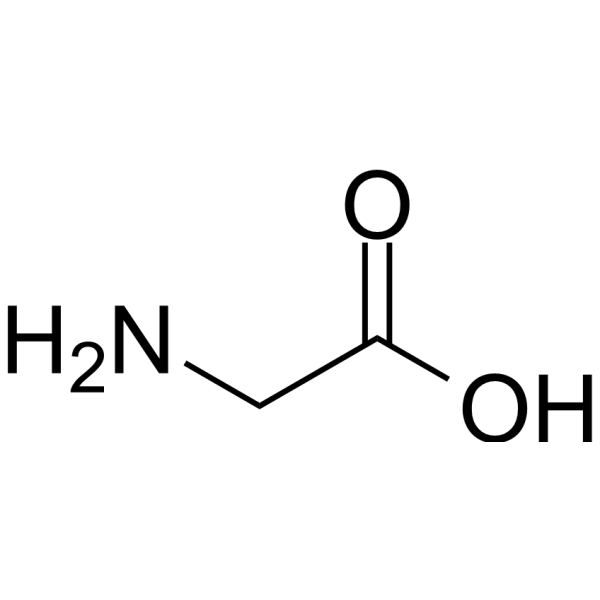 0 ImagesGlycine is an inhibitory neurotransmitter in the CNS and also acts as a co-agonist along with glutamate, facilitating an excitatory potential at the glutaminergic N-methyl-D-aspartic acid (NMDA) receptors. Glycine is orally active. Glycine inhibits the membrane aggregation of NINJ1 and prevents plasma membrane rupture during cell death. Glycine can be used to study cell protection, cancer, neurological diseases, and angiogenesis.



