



Encequidar mesylate
Based on 5 publication(s) in Google Scholar
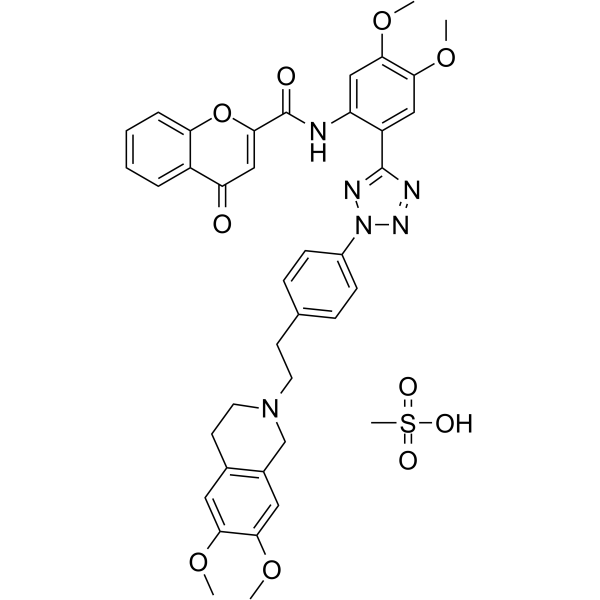
Encequidar mesylate (HM30181 mesylate; HM30181A mesylate) is a competitive and potent P-glycoprotein inhibitor.
Nos produits utilisent uniquement pour la recherche. Nous ne vendons pas aux patients.
- Pureté : 99.76%
- CAS No.: 849675-87-2
- Formule: C39H40N6O10S
- Masse moléculaire:784.83
-
Stockage:
4°C, sealed storage, away from moisture
* In solvent : -80°C, 6 months; -20°C, 1 month (sealed storage, away from moisture)

To place orders, for customer services and technical support, please contact: MedChemExpress USA
Tel: 609-228-6898 E-mail: [email protected] [email protected]


-
 Activité biologique
-
Chemical Information
-
Solvant et solubilité
- Pureté et documentation
- Références
-
 Help & FAQs


-
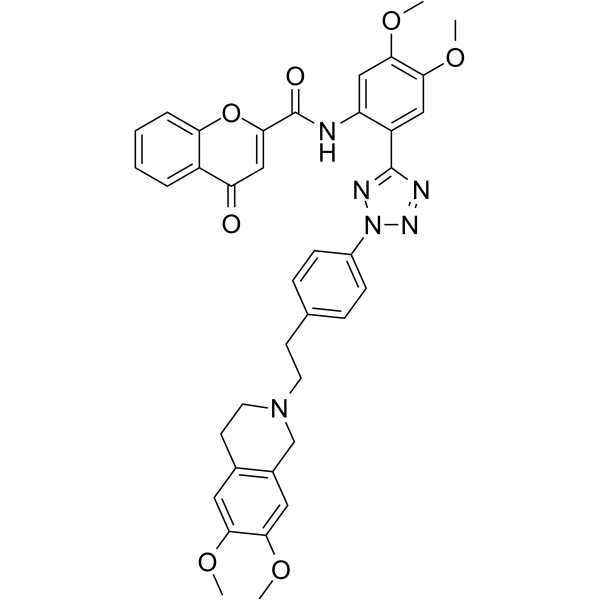
HY-13646
EncequidarP-glycoprotein Inhibitor -
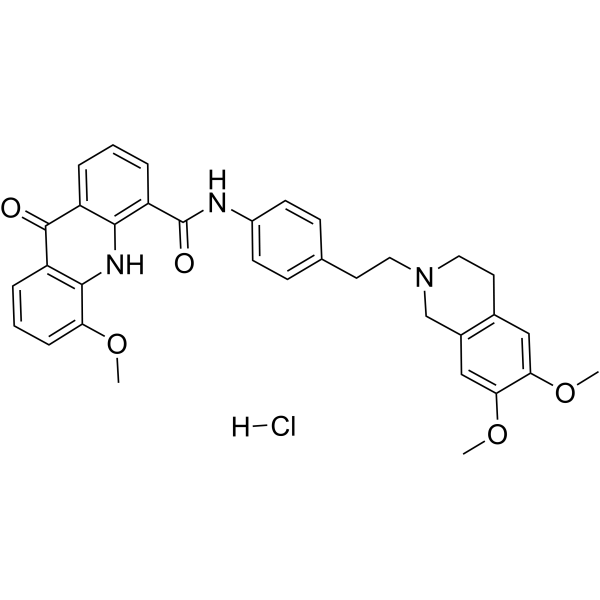
HY-50880
Elacridar hydrochlorideP-gp And BCRP Dual-Inhibitor -
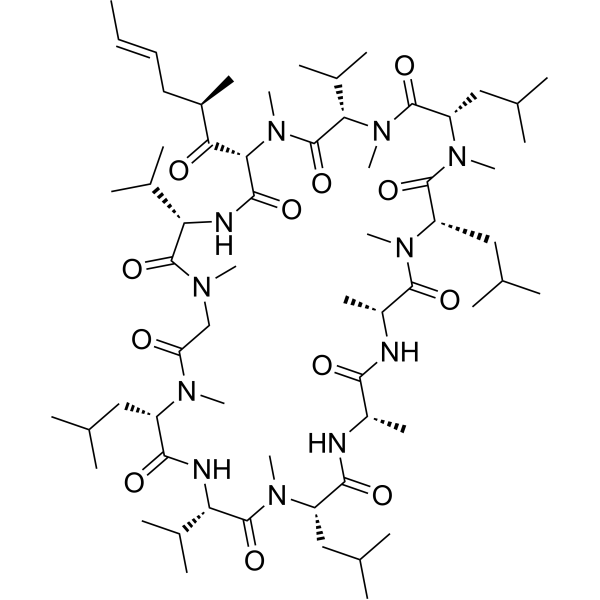
HY-17384
ValspodarP-glycoprotein Inhibitor -
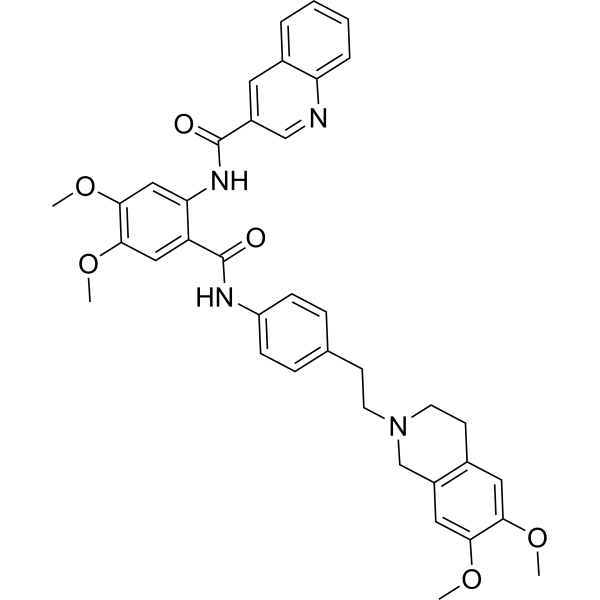
HY-10550
TariquidarP-gp Inhibitor -
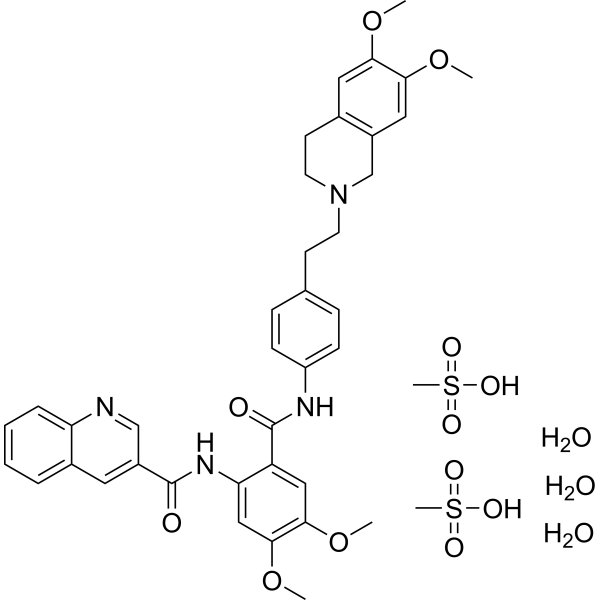
HY-10550A
Tariquidar methanesulfonate, hydrateP-gp Inhibitor -
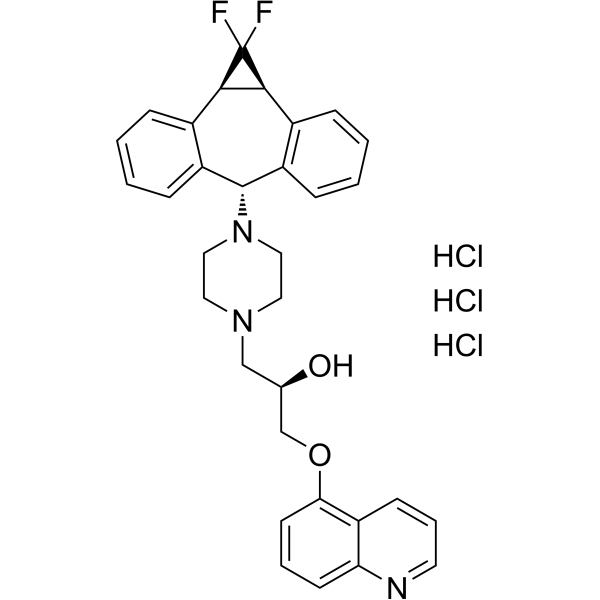
HY-50671
Zosuquidar trihydrochlorideP-gp Inhibitor -
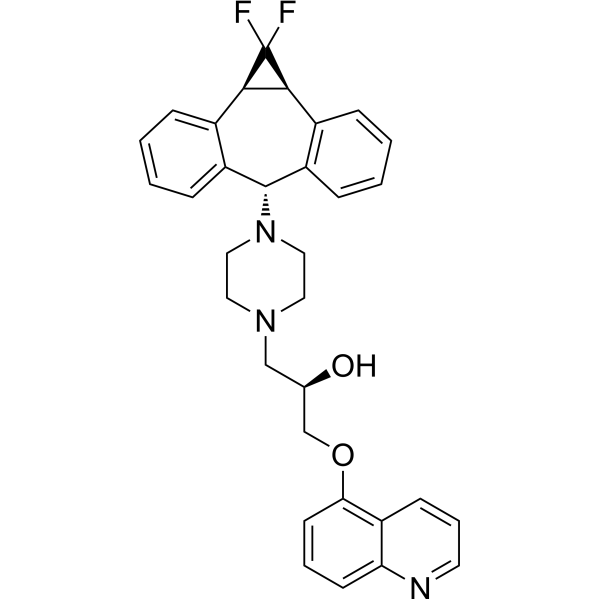
HY-15255
ZosuquidarP-gp Inhibitor -
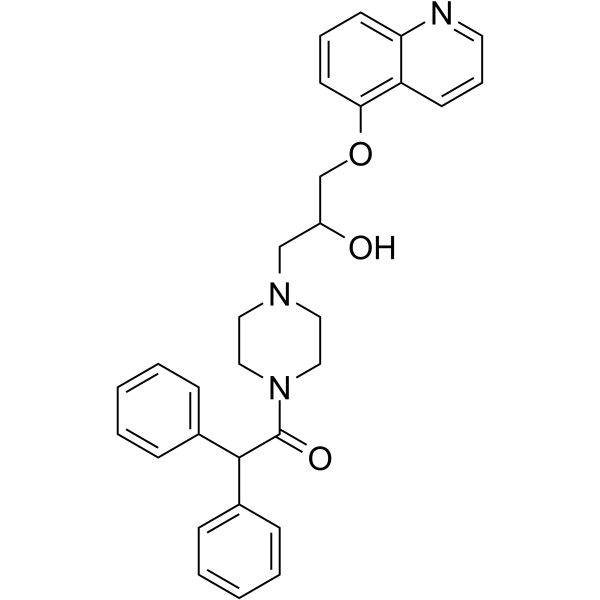
HY-17013
DofequidarP-glycoprotein Inhibitor -
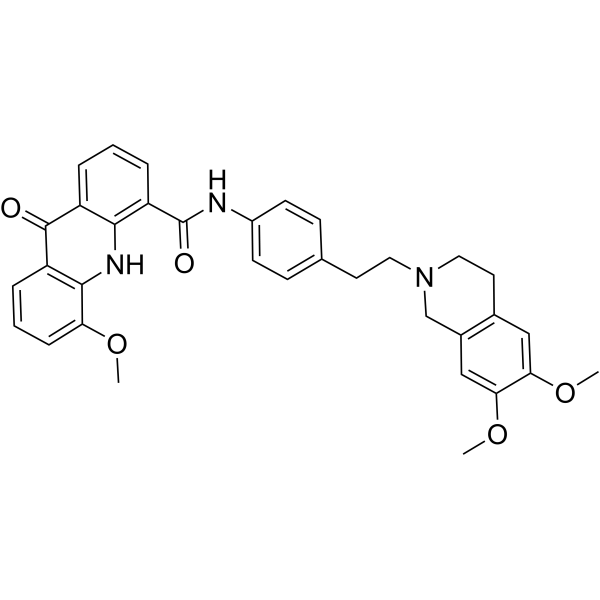
HY-50879
ElacridarP-gp And BCRP Dual-Inhibitor -
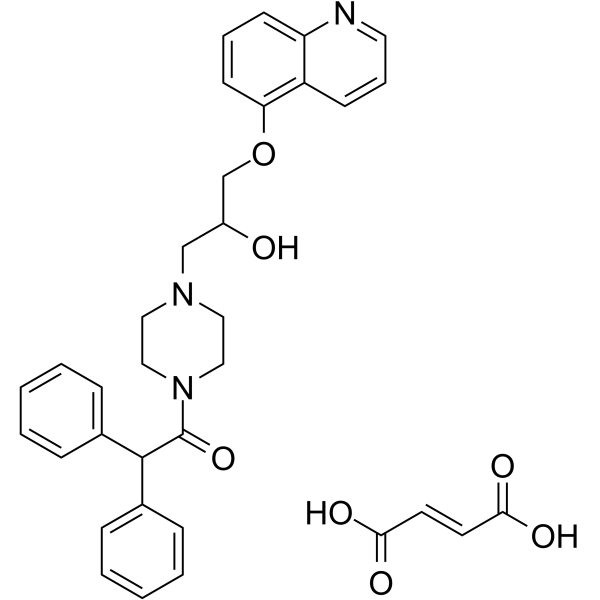
HY-17013A
Dofequidar fumarateP-glycoprotein Inhibitor -
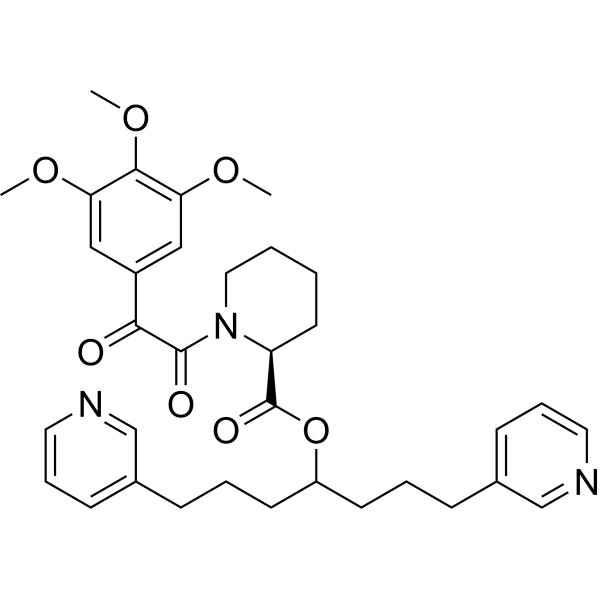
HY-13574A
BiricodarP-glycoprotein Modulator -

HY-10550R
Tariquidar (Standard)P-gp Inhibitor
Publications Citing Use of MedChemExpress (MCE) Encequidar mesylate
More

Activité biologique
Description
IC50 & Target
In Vitro
Treatment of 0.1 or 1 nM Encequidar (HM30181) lead to 20 and 42% inhibition of survival at the 100 nM and 1000 nM NSC 125973 treatment, respectively[2].
MedChemExpress (MCE) has not independently confirmed the accuracy of these methods. They are for reference only.
In Vivo
MedChemExpress (MCE) has not independently confirmed the accuracy of these methods. They are for reference only.
Essai clinique
| NCT Number | Sponsor | Condition | Start Date |
Phase

|
|---|---|---|---|---|
| NCT01329991 | Plexxikon| | 2011-05 | PHASE1 |


Chemical Information
-
CAS No. 849675-87-2
-
Appearance Solid
-
Masse moléculaire 784.83
-
Formule C39H40N6O10S
-
Color Light yellow to yellow
-
SMILES
O=C(C1=CC(C2=CC=CC=C2O1)=O)NC3=CC(OC)=C(OC)C=C3C4=NN(C5=CC=C(CCN6CC7=C(C=C(OC)C(OC)=C7)CC6)C=C5)N=N4.CS(=O)(O)=O
-
Synonyms
HM30181 mesylate; HM30181A mesylate
-
Livraison
Room temperature in continental US; may vary elsewhere.
-
Stockage
4°C, sealed storage, away from moisture
* In solvent : -80°C, 6 months; -20°C, 1 month (sealed storage, away from moisture)


Publications (5)
-
Journal Impact Factor
-
Most Recent
-
Nat Commun
Carbon nano-onion-mediated dual targeting of P-selectin and P-glycoprotein to overcome cancer drug resistance. [Abstract]2021 Jan 12;12(1):312. PMID: 33436622 -
EMBO J
2024 Oct;43(19):4406-4436. PMID: 39160273 -
Crit Rev Anal Chem
A Critical Review on Advancement in Analytical Strategies for the Quantification of Clinically Relevant Biological Transporters. [Abstract]2022;52(7):1557-1571. PMID: 33691566 -
Hepatol Commun
Inhibition of the transmembrane transporter ABCB1 overcomes resistance to doxorubicin in patient-derived organoid models of HCC. [Abstract]2024 May 2;8(5):e0437. PMID: 38696353 -
Drug Metab Dispos
Encequidar is a multispecies gut-restricted P-glycoprotein inhibitor that delineates between intestinal secretion and biliary elimination in animals and predicts human disposition pathways. [Abstract]2026 Jan 16;54(3):100237. PMID: 41655312


Solvant et solubilité
In Vitro:
DMSO : 25 mg/mL (31.85 mM; Need ultrasonic; Hygroscopic DMSO has a significant impact on the solubility of product, please use newly opened DMSO)
Please refer to the solubility information to select the appropriate solvent. Once prepared, please aliquot and store the solution to prevent product inactivation from repeated freeze-thaw cycles.
Storage method and period of stock solution: -80°C, 6 months; -20°C, 1 month (sealed storage, away from moisture). When stored at -80°C, please use it within 6 months. When stored at -20°C, please use it within 1 month.
Please refer to the solubility information to select the appropriate solvent. Once prepared, please aliquot and store the solution to prevent product inactivation from repeated freeze-thaw cycles.
Storage method and period of stock solution: -80°C, 6 months; -20°C, 1 month (sealed storage, away from moisture). When stored at -80°C, please use it within 6 months. When stored at -20°C, please use it within 1 month.
Concentration (start) × Volume (start) = Concentration (final) × Volume (final)
In Vivo:
Select the appropriate dissolution method based on your experimental animal and administration route.
- For the following dissolution methods, please ensure to first prepare a clear stock solution using an In Vitro approach and then sequentially add co-solvents:
- To ensure reliable experimental results, the clarified stock solution can be appropriately stored based on storage conditions. As for the working solution for In Vivo experiments, it is recommended to prepare freshly and use it on the same day.
- The percentages shown for the solvents indicate their volumetric ratio in the final prepared solution. If precipitation or phase separation occurs during preparation, heat and/or sonication can be used to aid dissolution.
Add each solvent one by one: 10% DMSO 90% (20% SBE-β-CD in Saline)
Solubility: 2.5 mg/mL (3.19 mM); Suspended solution; Need ultrasonic
This protocol yields a suspended solution of 2.5 mg/mL. Suspended solution can be used for oral and intraperitoneal injection.
Taking 1 mL working solution as an example, add 100 μL DMSO stock solution (25.0 mg/mL) to 900 μL 20% SBE-β-CD in Saline, and mix evenly.
Preparation of 20% SBE-β-CD in Saline (4°C, storage for one week): 2 g SBE-β-CD powder is dissolved in 10 mL Saline, completely dissolve until clear.
In Vivo Dissolution Calculator
Please enter the basic information of animal experiments:
-
-
-
-
Recommended: Prepare an additional quantity of animals to account for potential losses during experiments.
Please enter your animal formula composition:
-
%DMSO +
Recommended: Keep the proportion of DMSO in working solution below 2% if your animal is weak.
-
%+
-
+%Tween-80 + +
-
%Saline +
The co-solvents required include: DMSO, . All of co-solvents are available by MedChemExpress (MCE). , Tween 80. All of co-solvents are available by MedChemExpress (MCE).
Working solution concentration: 0.22 mg/mL
Method for preparing stock solution: mg drug dissolved in μL DMSO. Stock solution concentration: mg/mL. * In solvent : -80°C, 6 months; -20°C, 1 month (sealed storage, away from moisture)
1. Take μL DMSO stock solution;
2. Add μL .
μL , mix evenly;
3. Then add μL Tween 80, mix evenly;
4. Then add μL
Please ensure that the stock solution in the first step is dissolved to a clear state, and add co-solvents in sequence. You can use ultrasonic heating (ultrasonic cleaner, recommended frequency 20-40 kHz), vortexing, etc. to assist dissolution.


Pureté et documentation
-
Fiche technique (278 KB)
-
SDS (393 KB)
- English - EN (393 KB)
- Français - FR (393 KB)
- Deutsch - DE (393 KB)
- Norwegian - NO (393 KB)
- Español - ES (393 KB)
- Swedish - SV (393 KB)
- Italian - IT (393 KB)
- Korean - KR (393 KB)
- Portuguese - PT (393 KB)
-
Instruction de manipulation (2659 KB)
Références
[1]. Kim JC, et al. Effect of HM30181 mesylate salt-loaded microcapsules on the oral absorption of NSC 125973 as a novel P-glycoprotein inhibitor. Int J Pharm. 2016 Jun 15;506(1-2):93-101. [Content Brief]
[2]. Joo KM, et al. Response of brain specific microenvironment to P-glycoprotein inhibitor: an important factor determining therapeutic effect of P-glycoprotein inhibitor on brain metastatic tumors. Int J Oncol. 2008 Oct;33(4):705-12. [Content Brief]


Complete Stock Solution Preparation Table
Please refer to the solubility information to select the appropriate solvent. Once prepared, please aliquot and store the solution to prevent product inactivation from repeated freeze-thaw cycles.
Storage method and period of stock solution: -80°C, 6 months; -20°C, 1 month (sealed storage, away from moisture). When stored at -80°C, please use it within 6 months. When stored at -20°C, please use it within 1 month.
| Optional Solvent | Concentration Solvent Mass | 1 mg | 5 mg | 10 mg | 25 mg |
|---|---|---|---|---|---|
| DMSO | 1 mM | 1.2742 mL | 6.3708 mL | 12.7416 mL | 31.8540 mL |
| 5 mM | 0.2548 mL | 1.2742 mL | 2.5483 mL | 6.3708 mL | |
| 10 mM | 0.1274 mL | 0.6371 mL | 1.2742 mL | 3.1854 mL | |
| 15 mM | 0.0849 mL | 0.4247 mL | 0.8494 mL | 2.1236 mL | |
| 20 mM | 0.0637 mL | 0.3185 mL | 0.6371 mL | 1.5927 mL | |
| 25 mM | 0.0510 mL | 0.2548 mL | 0.5097 mL | 1.2742 mL | |
| 30 mM | 0.0425 mL | 0.2124 mL | 0.4247 mL | 1.0618 mL |


Encequidar mesylate Related Classifications
HY-13646A Related Classifications
 Powered by Bioz