



4533-39-5
4533-39-5
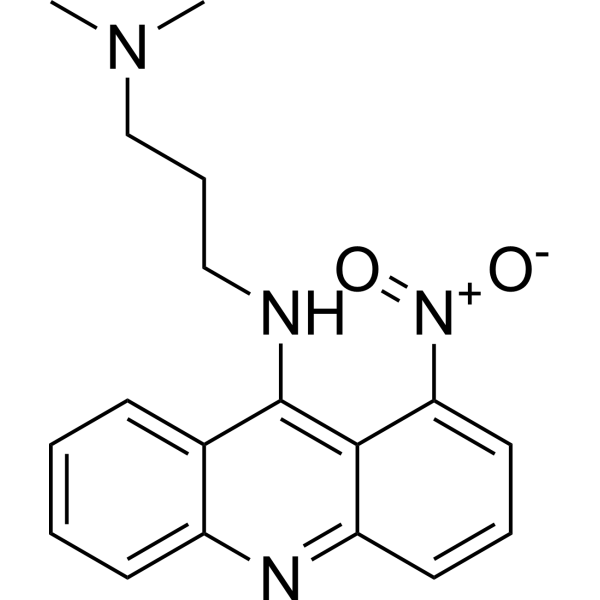
Chemical Structure
Nitracrine
- CAS No.: 4533-39-5
- Formula:C18H20N4O2
- Molecular Weight:324.38
IUPAC Name: N1,N1-dimethyl-N3-(1-nitroacridin-9-yl)propane-1,3-diamine
InChIKey: YMVWGSQGCWCDGW-UHFFFAOYSA-N
SMILES: O=[N+](C1=CC=CC2=NC3=CC=CC=C3C(NCCCN(C)C)=C21)[O-]
Biological Activity: Nitracrine inhibits RNA synthesis and covalently, reversibly binds to DNA but also forms covalent adducts with DNA in vivo. Nitracrine, a 1-nitroacridine derivative, is a potent hypoxia-selective agent in vitro and antitumor agent. Nitracrine has cytotoxicity towards most cells[1][2][3].
| Cat. No. | Product Name | Purity | Description | Pricing | |||||||||||||||||||
|---|---|---|---|---|---|---|---|---|---|---|---|---|---|---|---|---|---|---|---|---|---|---|---|
|
|
Nitracrine | 97.04% | Nitracrine inhibits RNA synthesis and covalently, reversibly binds to DNA but also forms covalent adducts with DNA in vivo. Nitracrine, a 1-nitroacridine derivative, is a potent hypoxia-selective agent in vitro and antitumor agent. Nitracrine has cytotoxicity towards most cells. | ||||||||||||||||||||
|
loading...
/
|
|||||||||||||||||||||||
Structural Analogs
-
Similarity Score 0.98
 HY-U00279BNitracrine hydrochloride
-
Similarity Score 0.96
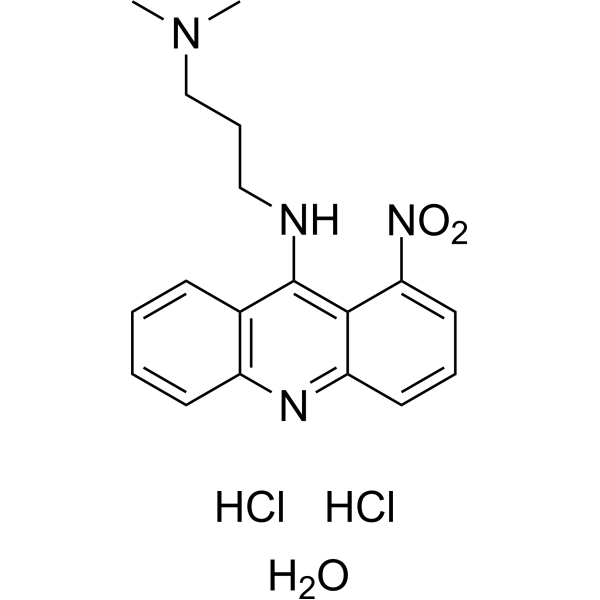 HY-U00279ANitracrine dihydrochloride hydrate
-
Similarity Score 0.73
 HY-119113C 175
-
Similarity Score 0.62
 HY-145748SYUIQ-5
-
Similarity Score 0.60
 HY-100358RAQ-13 dihydrochloride (Standard)
-
Similarity Score 0.59
 HY-W004570R5-Nitro-1,10-phenanthroline (Standard)
-
Similarity Score 0.59
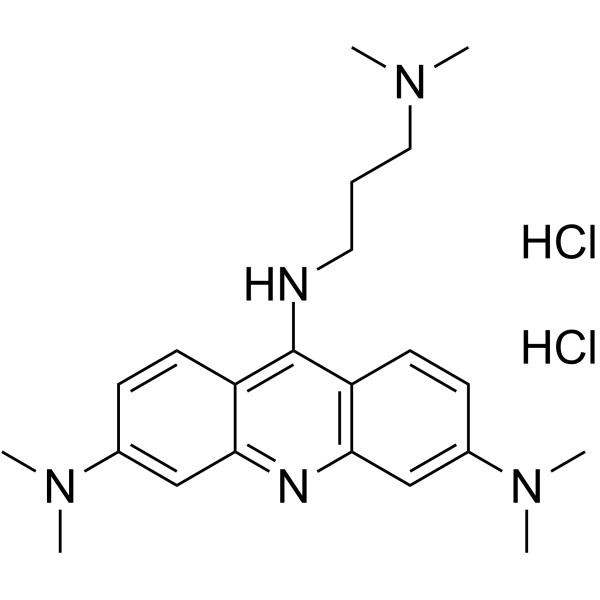 HY-U00460B3,6-DMAD dihydrochloride
-
Similarity Score 0.59
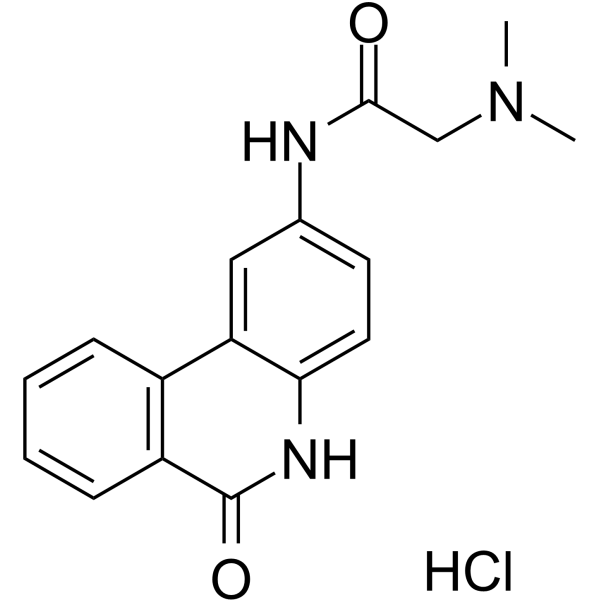 HY-13688PJ34 hydrochloride
-
Similarity Score 0.59
 HY-178822AQ-13
-

Explore the MedChemAI to find more analogs


References
- [1]. Wilson WR, et al. Selective toxicity of nitracrine to hypoxic mammalian cells. Br J Cancer. 1984 Feb;49(2):215-23. [Content Brief]
- [2]. Gniazdowski M, et al. Nitracrine and its congeners--an overview. Gen Pharmacol. 1995 May;26(3):473-81. [Content Brief]
- [3]. Daghastanli NA, et al. Cytotoxicity of nitroheterocyclic compounds, quinifuryl and nitracrine, towards leukaemic and normal cells on the dark and under illumination with visible light. J Photochem Photobiol B. 2004 Jul 19;75(1-2):27-32. [Content Brief]



