



Butylhydroxyanisole
Based on 5 publication(s) in Google Scholar
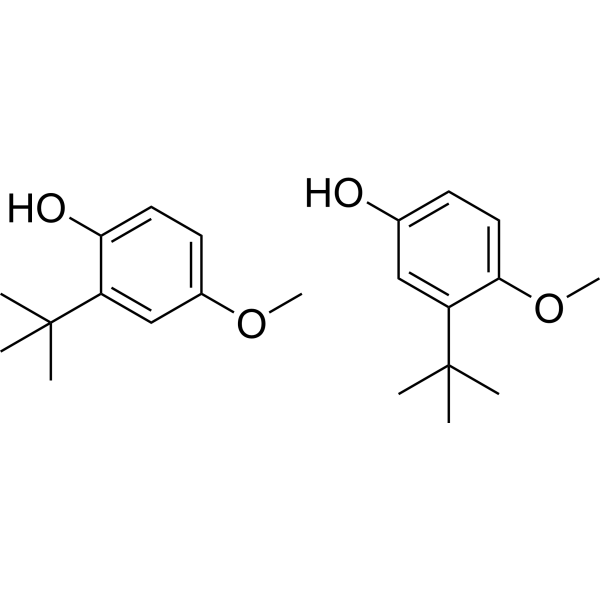
Butylhydroxyanisole (Butylated hydroxyanisole) is an antioxidant used as a food additive preservative. Butylhydroxyanisole mediates liver toxicity, retardation in reproductive organ development and learning, and sleep deficit. Butylhydroxyanisole exerts neurotoxic effects and leads to disruption of the brain and nerve development. Butylhydroxyanisole is a ferroptosis inducer.
Nur für Forschungszwecke. Wir verkaufen nicht an Patienten.
- Reinheit : 99.93%
- CAS. Nr.: 25013-16-5
- Formel: C22H32O4
- Molecular Weight:180.24
-
Speicherung:Powder -20°C, 3 years , 4°C, 2 years ; In solvent -80°C, 2 years , -20°C, 1 year

To place orders, for customer services and technical support, please contact: MedChemExpress USA
Tel: 609-228-6898 E-mail: [email protected] [email protected]


-
 Biologische Aktivität
-
Chemical Information
-
Lösungsmittel & Löslichkeit
- Protokoll
- Reinheit & Dokumentation
- Verweise
-
 Help & FAQs


-
HY-Y0172
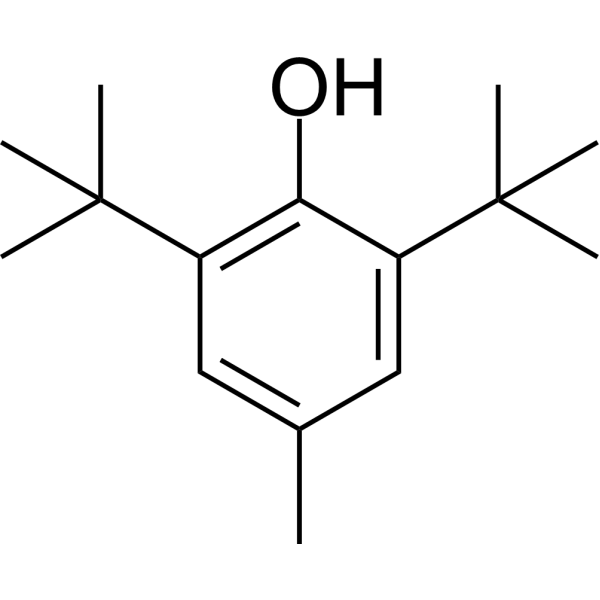
Butylated hydroxytoluene -
HY-B0215
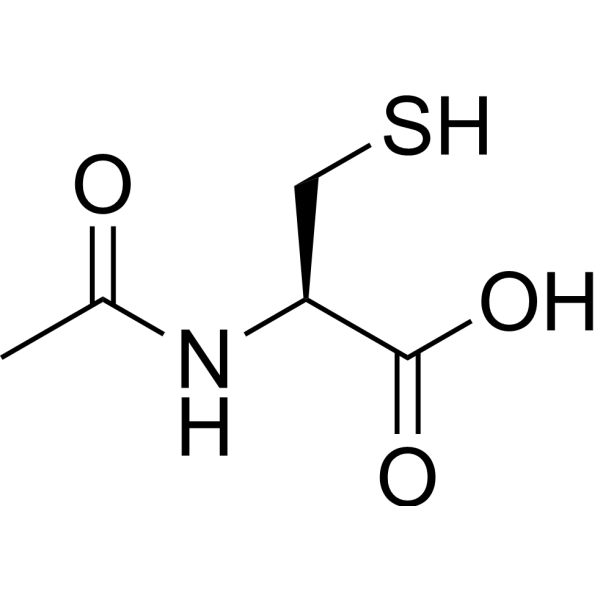
AcetylcysteineMucolytic Agent -
HY-B1066R
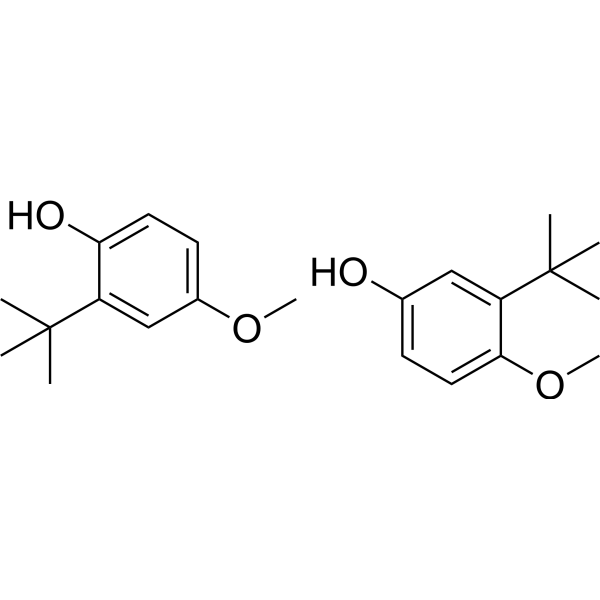
Butylhydroxyanisole (Standard)Antioxidant -
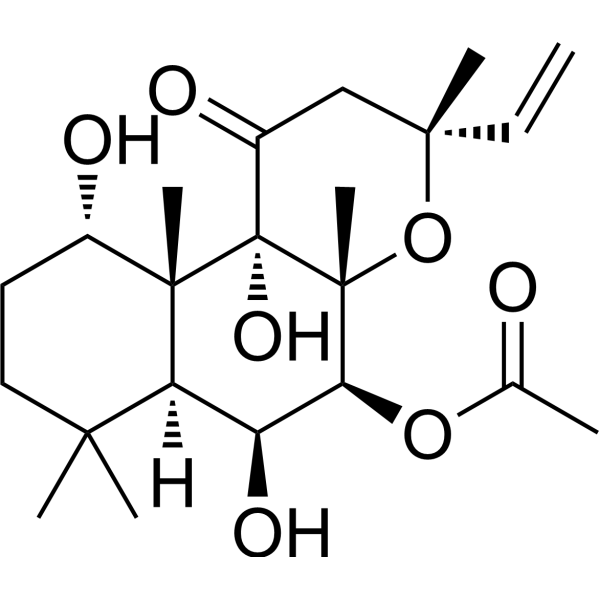
HY-15371
ForskolinAdenylate Cyclase Activator -
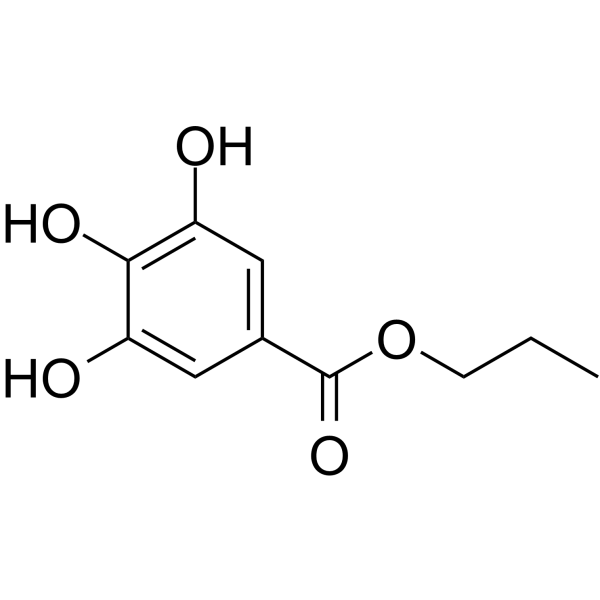
HY-N0524
Propyl gallateAntioxidant -
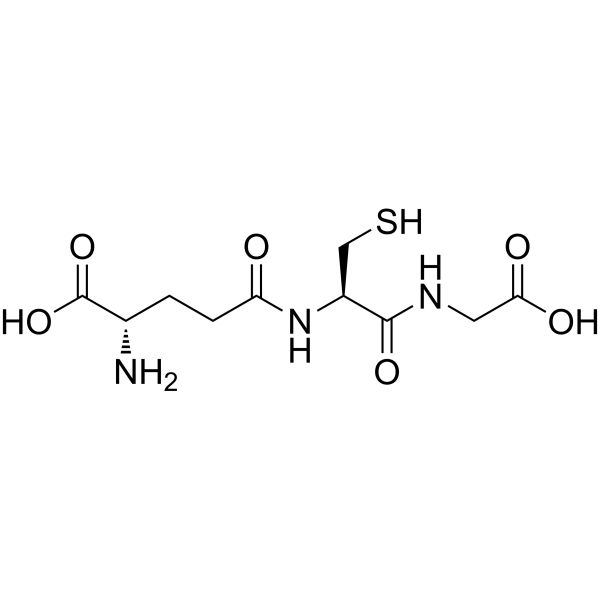
HY-D0187
L-Glutathione reducedAntioxidant -
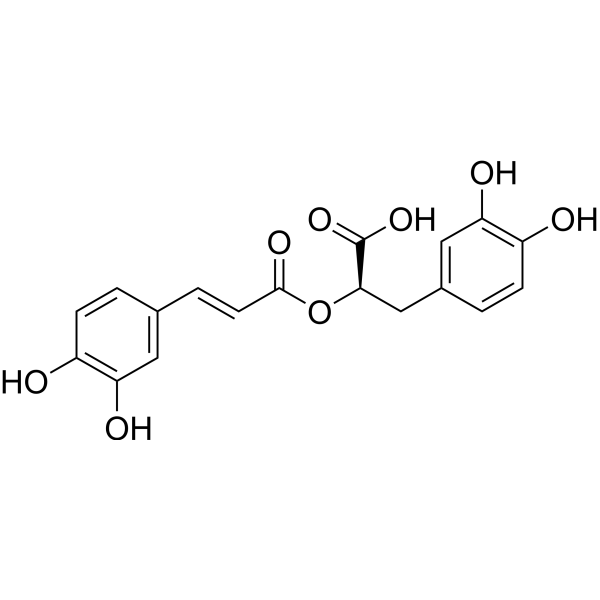
HY-N0529
Rosmarinic acidAnti-Inflammatory Agent -
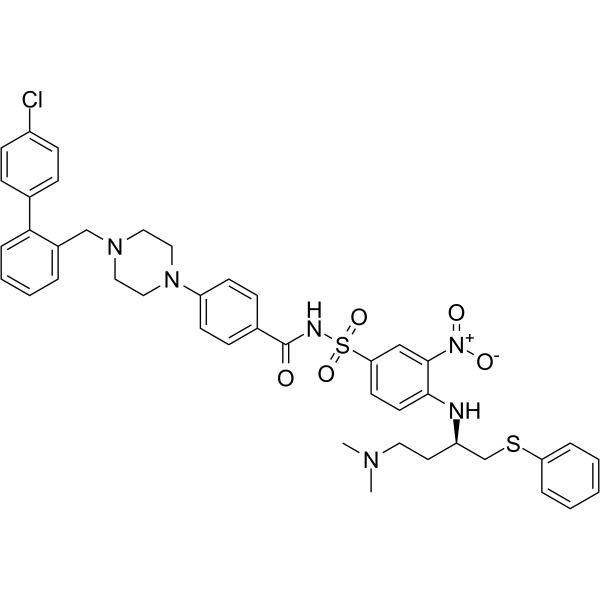
HY-50907
ABT-737Bcl-2 Family Inhibitor/BH3 Mimetic -
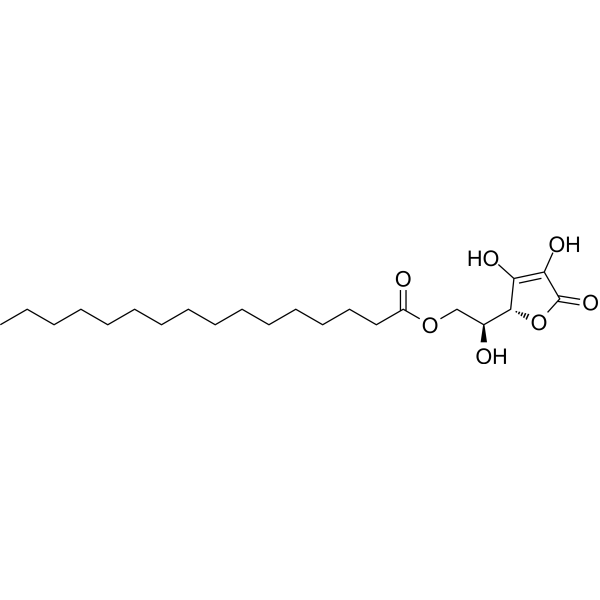
HY-B0987
Ascorbyl palmitateEndogenous Metabolite, Antioxidant, Food Additive -
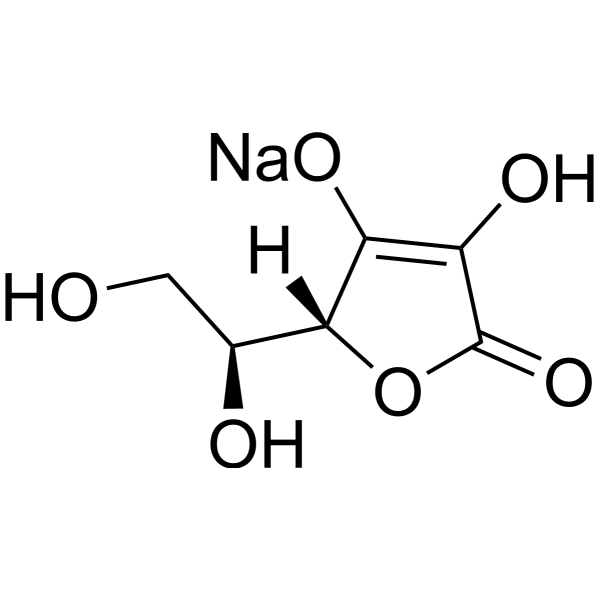
HY-B0166A
L-Ascorbic acid sodium saltCalcium Channel Inhibitor -
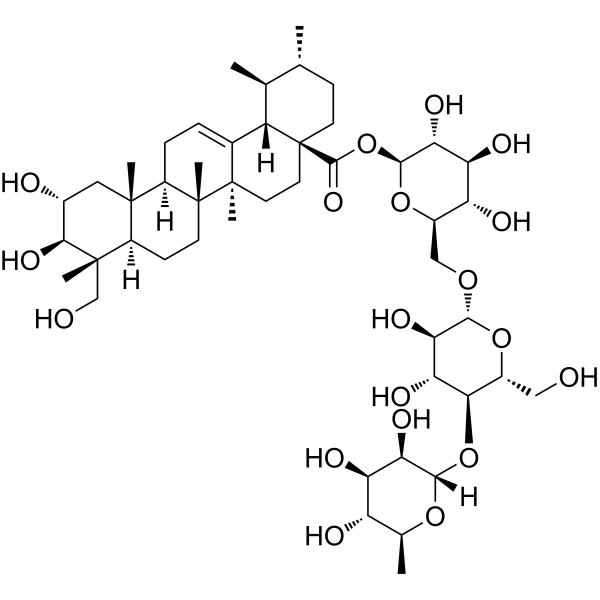
HY-N0439
AsiaticosideTriterpene Glycoside -
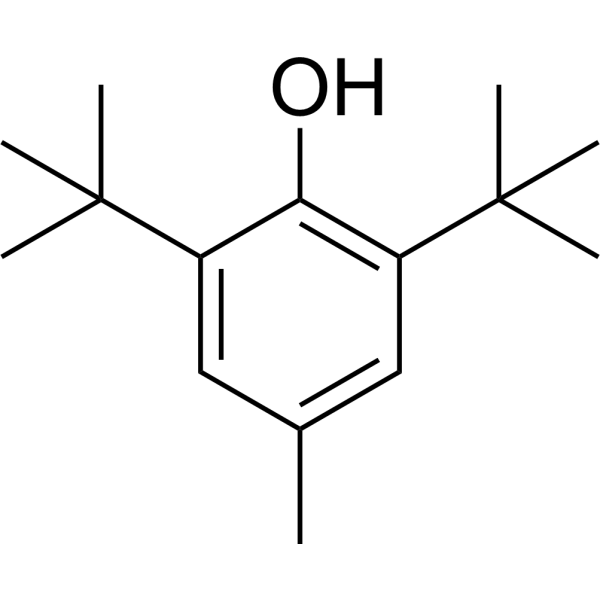
HY-Y0172R
Butylated hydroxytoluene (Standard)
Publications Citing Use of MedChemExpress (MCE) Butylhydroxyanisole
More

Biologische Aktivität
Beschreibung
Cellular Effect
|
Cell Line

|
Type | Value | Description | References |
|---|---|---|---|---|
| HL-60 | IC50 |
1.38 μM
Compound: table 1, 52(BHA)
|
Induction of DNA fragmentation in human HL60 cells after 16 hrs
Induction of DNA fragmentation in human HL60 cells after 16 hrs
|
[PMID: 16279782] |
In Vitro
Butylhydroxyanisole exerts neurotoxic effects by promoting cytosolic calcium accumulation and endoplasmic reticulum stress in astrocytes[1].
Butylhydroxyanisole (25-100 μM; 48 hours) inhibits growth and induces death in human astrocytes[1].
Butylhydroxyanisole (100 μM; 48 hours) decreases the expression of cell-cycle-related proteins and increased the expression of the cell cycle inhibitory protein[1].
Butylhydroxyanisole (100 μM; 48 hours) mediates apoptotic signals in NHA-SV40LT Cells[1].
Butylhydroxyanisole also increases the cytosolic calcium level and the expression of endoplasmic reticulum stress proteins[1].
Butylhydroxyanisole induces testicular dysfunction in mouse testis cells by dysregulating calcium homeostasis and stimulating endoplasmic reticulum stress[2].
MedChemExpress (MCE) has not independently confirmed the accuracy of these methods. They are for reference only.
-
Cell Line:NHA-SV40LT cells
-
Concentration:0 μM, 25 μM, 50 μM, 75 μM, 100 μM
-
Incubation Time:48 hours
-
Result:Exerted antiproliferative effects.
-
Cell Line:NHA-SV40LT cells
-
Concentration:100 μM
-
Incubation Time:48 hours
-
Result:Downregulated the typical cell proliferative signaling pathways, phosphoinositide 3-kinase/protein kinase B and extracellular signal-regulated kinase 1/2.
-
Cell Line:NHA-SV40LT cells
-
Concentration:100 μM
-
Incubation Time:48 hours
-
Result:Increased the levels of pro-apoptotic proteins, such as BAX, cytochrome c, cleaved caspase 3, and cleaved caspase 9, and decreased the level of anti-apoptotic protein BCL-XL.
-
Cell Line:NHA-SV40LT cells
-
Concentration:100 μM
-
Incubation Time:48 hours
-
Result:Increased the expression of pro-apoptotic proteins and decreased the levels of anti-apoptotic proteins. Asterisks show significant effects.
In Vivo
MedChemExpress (MCE) has not independently confirmed the accuracy of these methods. They are for reference only.
-
Animal Model:Five-week-old C57BL/6 mice (WT and Nrf2-/-)[3]
-
Dosage:200 mg/kg
-
Administration:Oral gavage, daily, for three days
-
Result:Increased Nqo1 staining in hepatocytes, predominately in the pericentral region.
Clinical Trial
| NCT Number | Sponsor | Condition | Start Date |
Phase
|
|---|---|---|---|---|
| NCT01329991 | Plexxikon| | 2011-05 | PHASE1 |


Chemical Information
-
CAS. Nr. 25013-16-5
-
Appearance Solid
-
Molecular Weight 180.24
-
Formel C22H32O4
-
Color White to off-white
-
SMILES
OC1=CC=C(OC)C=C1C(C)(C)C.OC2=CC=C(OC)C(C(C)(C)C)=C2
-
Synonyms
Butylated hydroxyanisole; E320
-
Versand
Room temperature in continental US; may vary elsewhere.
-
Speicherung
Powder -20°C 3 years 4°C 2 years In solvent -80°C 2 years -20°C 1 year


Publications (5)
-
Journal Impact Factor
-
Most Recent
-
Autophagy
Sulforaphane Activates a lysosome-dependent transcriptional program to mitigate oxidative stress. [Abstract]2021 Apr;17(4):872-887. PMID: 32138578 -
Free Radic Biol Med
The PGC1α/NRF1-MPC1 axis suppresses tumor progression and enhances the sensitivity to sorafenib/doxorubicin treatment in hepatocellular carcinoma. [Abstract]2021 Feb 1:163:141-152. PMID: 33276082 -
Cell Rep
Mitochondrial UQCC3 Modulates Hypoxia Adaptation by Orchestrating OXPHOS and Glycolysis in Hepatocellular Carcinoma. [Abstract]2020 Nov 3;33(5):108340. PMID: 33147459 -
Life Sci
Short-term standard alcohol consumption enhances platelet response to clopidogrel through inhibition of Nrf2/Ces1 pathway and induction of Cyp2c in mice. [Abstract]2021 Aug 15:279:119268. PMID: 33626394 -
Sci Rep
A novel chalcone derivative S17 induces apoptosis through ROS dependent DR5 up-regulation in gastric cancer cells. [Abstract]2017 Aug 29;7(1):9873. PMID: 28852176


Lösungsmittel & Löslichkeit
In Vitro:
DMSO : ≥ 100 mg/mL (554.82 mM; Hygroscopic DMSO has a significant impact on the solubility of product, please use newly opened DMSO)
H2O : 1 mg/mL (5.55 mM; ultrasonic and warming and heat to 60°C)
* "≥" means soluble, but saturation unknown.
Please refer to the solubility information to select the appropriate solvent. Once prepared, please aliquot and store the solution to prevent product inactivation from repeated freeze-thaw cycles.
Storage method and period of stock solution: -80°C, 2 years; -20°C, 1 year. When stored at -80°C, please use it within 2 years. When stored at -20°C, please use it within 1 year.
* Note: If you choose water as the stock solution, please dilute it to the working solution, then filter and sterilize it with a 0.22 μm filter before use.
Please refer to the solubility information to select the appropriate solvent. Once prepared, please aliquot and store the solution to prevent product inactivation from repeated freeze-thaw cycles.
Storage method and period of stock solution: -80°C, 2 years; -20°C, 1 year. When stored at -80°C, please use it within 2 years. When stored at -20°C, please use it within 1 year.
* Note: If you choose water as the stock solution, please dilute it to the working solution, then filter and sterilize it with a 0.22 μm filter before use.
Konzentration (Stammlösung) × Volumen (Stammlösung) = Konzentration (Ziellösung) × Volumen (Ziellösung)
In Vivo:
Select the appropriate dissolution method based on your experimental animal and administration route.
- For the following dissolution methods, please ensure to first prepare a clear stock solution using an In Vitro approach and then sequentially add co-solvents:
- To ensure reliable experimental results, the clarified stock solution can be appropriately stored based on storage conditions. As for the working solution for In Vivo experiments, it is recommended to prepare freshly and use it on the same day.
- The percentages shown for the solvents indicate their volumetric ratio in the final prepared solution. If precipitation or phase separation occurs during preparation, heat and/or sonication can be used to aid dissolution.
Add each solvent one by one: 10% DMSO 40% PEG300 5% Tween-80 45% Saline
Solubility: ≥ 2.5 mg/mL (13.87 mM); Clear solution
This protocol yields a clear solution of ≥ 2.5 mg/mL (saturation unknown).
Taking 1 mL working solution as an example, add 100 μL DMSO stock solution (25.0 mg/mL) to 400 μL PEG300, and mix evenly; then add 50 μL Tween-80 and mix evenly; then add 450 μL Saline to adjust the volume to 1 mL.
Preparation of Saline: Dissolve 0.9 g sodium chloride in ddH₂O and dilute to 100 mL to obtain a clear Saline solution.
Add each solvent one by one: 10% DMSO 90% (20% SBE-β-CD in Saline)
Solubility: ≥ 2.5 mg/mL (13.87 mM); Clear solution
This protocol yields a clear solution of ≥ 2.5 mg/mL (saturation unknown).
Taking 1 mL working solution as an example, add 100 μL DMSO stock solution (25.0 mg/mL) to 900 μL 20% SBE-β-CD in Saline, and mix evenly.
Preparation of 20% SBE-β-CD in Saline (4°C, storage for one week): 2 g SBE-β-CD powder is dissolved in 10 mL Saline, completely dissolve until clear.
For the following dissolution methods, please prepare the working solution directly:
It is recommended to prepare fresh solutions and use them promptly within a short period of time.
The percentages shown for the solvents indicate their volumetric ratio in the final prepared solution. If precipitation or phase separation occurs during preparation, heat and/or sonication can be used to aid dissolution.
Add each solvent one by one: PBS
Solubility: 100 mg/mL (554.82 mM); Clear solution; Need ultrasonic
In Vivo Dissolution Calculator
Please enter the basic information of animal experiments:
-
-
-
-
Recommended: Prepare an additional quantity of animals to account for potential losses during experiments.
Please enter your animal formula composition:
-
%DMSO +
Recommended: Keep the proportion of DMSO in working solution below 2% if your animal is weak.
-
%+
-
+%Tween-80 + +
-
%Saline +
The co-solvents required include: DMSO, . All of co-solvents are available by MedChemExpress (MCE). , Tween 80. All of co-solvents are available by MedChemExpress (MCE).
Working solution concentration: 0.22 mg/mL
Method for preparing stock solution: mg drug dissolved in μL DMSO. Stock solution concentration: mg/mL.
1. Take μL DMSO stock solution;
2. Add μL .
μL , mix evenly;
3. Then add μL Tween 80, mix evenly;
4. Then add μL
Please ensure that the stock solution in the first step is dissolved to a clear state, and add co-solvents in sequence. You can use ultrasonic heating (ultrasonic cleaner, recommended frequency 20-40 kHz), vortexing, etc. to assist dissolution.


Reinheit & Dokumentation
-
Data Sheet (279 KB)
-
SDS (419 KB)
- English - EN (419 KB)
- Français - FR (419 KB)
- Deutsch - DE (419 KB)
- Norwegian - NO (419 KB)
- Español - ES (419 KB)
- Swedish - SV (419 KB)
- Italian - IT (419 KB)
- Korean - KR (419 KB)
- Portuguese - PT (419 KB)
-
Handling Instructions (2659 KB)
Verweise
[1]. Sunwoo Park, et al. Butylated Hydroxyanisole Exerts Neurotoxic Effects by Promoting Cytosolic Calcium Accumulation and Endoplasmic Reticulum Stress in Astrocytes. J Agric Food Chem. 2019 Aug 28;67(34):9618-9629. [Content Brief]
[2]. Jiyeon Ham, et al. Butylated Hydroxyanisole Exerts Neurotoxic Effects by Promoting Cytosolic Calcium Accumulation and Endoplasmic Reticulum Stress in Astrocytes. Sci Total Environ. 2020 Feb 1;702:134775. [Content Brief]
[3]. Lin Luo, et al. Butylated hydroxyanisole induces distinct expression patterns of Nrf2 and detoxification enzymes in the liver and small intestine of C57BL/6 mice. Toxicol Appl Pharmacol. 2015 Nov 1;288(3):339-48. [Content Brief]
[4]. Jennifer Yinuo Cao, et al. Mechanisms of ferroptosis. Cell Mol Life Sci. 2016 Jun;73(11-12):2195-209. [Content Brief]


Complete Stock Solution Preparation Table
Please refer to the solubility information to select the appropriate solvent. Once prepared, please aliquot and store the solution to prevent product inactivation from repeated freeze-thaw cycles.
Storage method and period of stock solution: -80°C, 2 years; -20°C, 1 year. When stored at -80°C, please use it within 2 years. When stored at -20°C, please use it within 1 year.
| Optional Solvent | Concentration Solvent Mass | 1 mg | 5 mg | 10 mg | 25 mg |
|---|---|---|---|---|---|
| H2O / DMSO | 1 mM | 5.5482 mL | 27.7408 mL | 55.4816 mL | 138.7039 mL |
| 5 mM | 1.1096 mL | 5.5482 mL | 11.0963 mL | 27.7408 mL | |
| DMSO | 10 mM | 0.5548 mL | 2.7741 mL | 5.5482 mL | 13.8704 mL |
| 15 mM | 0.3699 mL | 1.8494 mL | 3.6988 mL | 9.2469 mL | |
| 20 mM | 0.2774 mL | 1.3870 mL | 2.7741 mL | 6.9352 mL | |
| 25 mM | 0.2219 mL | 1.1096 mL | 2.2193 mL | 5.5482 mL | |
| 30 mM | 0.1849 mL | 0.9247 mL | 1.8494 mL | 4.6235 mL | |
| 40 mM | 0.1387 mL | 0.6935 mL | 1.3870 mL | 3.4676 mL | |
| 50 mM | 0.1110 mL | 0.5548 mL | 1.1096 mL | 2.7741 mL | |
| 60 mM | 0.0925 mL | 0.4623 mL | 0.9247 mL | 2.3117 mL | |
| 80 mM | 0.0694 mL | 0.3468 mL | 0.6935 mL | 1.7338 mL | |
| 100 mM | 0.0555 mL | 0.2774 mL | 0.5548 mL | 1.3870 mL |
* Note: If you choose water as the stock solution, please dilute it to the working solution, then filter and sterilize it with a 0.22 μm filter before use.


Butylhydroxyanisole Related Classifications
HY-B1066 Related Classifications
 Powered by Bioz