
18 Results for "

noncoding RNA

" in MedChemExpress (MCE) Product Catalog:
Products (18)

18 Results for "noncoding RNA" in MCE Product Catalog:

1
1 Cited Publications
Art. -Nr.: HY-113061
CAS. Nr.: 1445-07-4
Reinheit:  99.93%
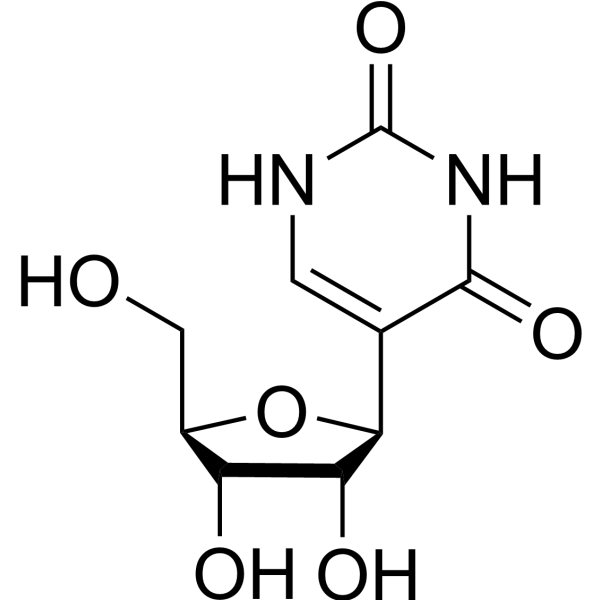
Pseudouridine is an isomer of uridine and the most abundant modified nucleoside in non-coding RNA. It fine-tunes and stabilizes regional structures in rRNA and tRNA, maintaining their functions in mRNA decoding, ribosome assembly, processing, and translation. Pseudouridine-modified tRNA fragments can inhibit aberrant protein synthesis and hold promise for research on myelodysplastic syndrome (MDS)-related leukemia. .
loading...
    loading...
Art. -Nr.: HY-164899
CAS. Nr.: 2765091-45-8
Synonyms: 2-aminopyridine-3-carboxylic acid imidazolide
Target:  

DNA/RNA Synthesis

Forschungsgebiete:  

Infection

2A3 (2-aminopyridine-3-carboxylic acid imidazolide) is a covalent probe reagent for Selective 2'-Hydroxyl Acylation analyzed by Primer Extension (SHAPE) that targets the RNA ribose 2'-OH group. 2A3 efficiently permeates the biological membranes of Gram-negative bacteria, Gram-positive bacteria, and mammalian cells. 2A3 exhibits no base bias and specifically labels conformationally flexible, unpaired regions within RNA. 2A3 forms covalent adducts by acylating the 2'-OH groups of flexible RNA residues. When combined with SHAPE-MaP (mutational profiling) sequencing technology, these modification sites are converted into detectable mutational signals, thereby accurately reflecting local RNA backbone flexibility and base-pairing status. 2A3 is primarily utilized in molecular biology and transcriptomics research, including the resolution of RNA structuromes in living cells, the study of RNA folding regulatory mechanisms, and the investigation of non-coding RNA functions .
loading...
    loading...
Art. -Nr.: HY-148688
Reinheit:  96.25%
Target:  

DNA/RNA Synthesis

Forschungsgebiete:  

Others

ASO 556089 sodium is a 16 nucleotide length gapmer (3-10-3) that targets the human and mouse long non-coding RNA MALAT1, with the sequence: 5’-GmCATTmCTAATAGmCAGmC-3’ .
loading...
    loading...
Art. -Nr.: HY-152038
CAS. Nr.: 2863686-82-0
Reinheit:  98.47%
Forschungsgebiete:  

Others

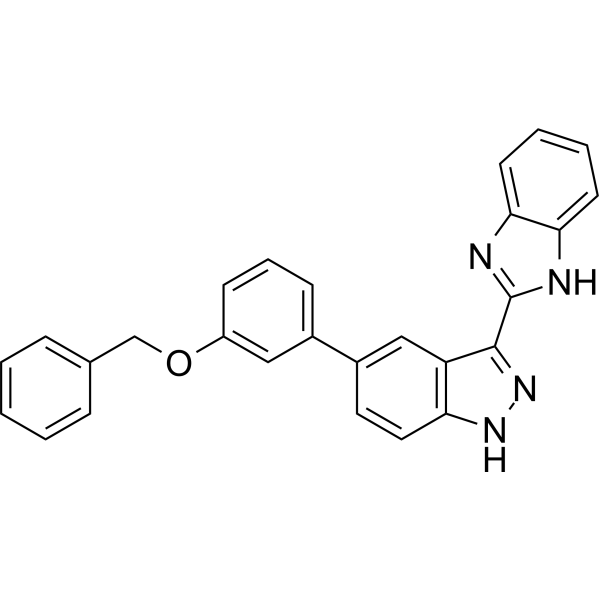
SPEN-IN-1 (compound X1) is an inhibitor of SPEN which is a protein factor with a Kd value of 47 nM. SPEN-IN-1 has high selectivity for RepA, a 431-nucleotide domain in Xist (a non-coding RNA prototype) that comprises 8.5 units of a GC-rich motif responsible for gene silencing .
loading...
    loading...
Art. -Nr.: HY-148062
CAS. Nr.: 2769753-48-0
Reinheit:  99.85%
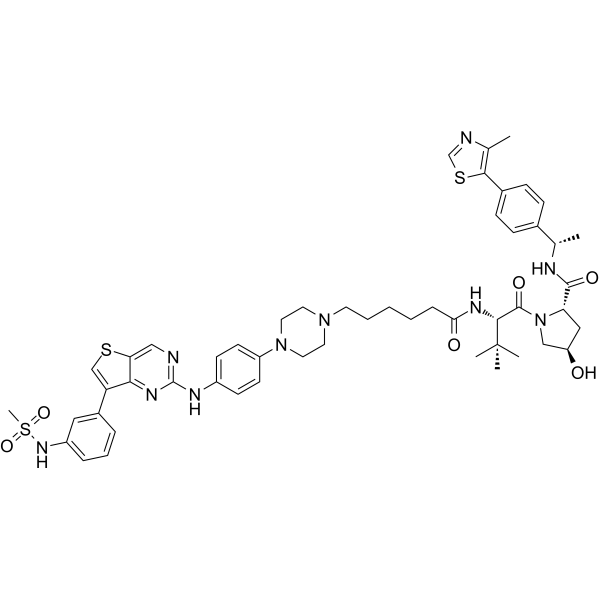
RSS0680 is a small noncoding RNA (sRNA) targeting the mRNA ribosome binding site (RBS) and a PROTAC. RSS0680 competitively binds to RBS through the conserved CCUCCUCCC anti-Shine-Dalgarno (aSD) sequence and inhibits the translation initiation of target genes. RSS0680 can interact with the DUF1127 protein CcaF1, regulate its own stability and participate in bacterial oxidative stress defense, enhancing the host's resistance to heat shock and oxidative damage by affecting pathways such as C1 metabolism and pyruvate dehydrogenase complex. RSS0680 degrades AAK1, CDK1, CDK16, CDK2, CDK4, CDK6, EIF2AK4, GAK, LATSl, LIMK2, MAPK6, MAPKAPK5, MARK2, MARK4, MKNK2, NEK9, RPS6KB1, SIK2, SNRK, STK17A, STK17B, STK35, and WEEl. RSS0680 can be used to study diseases or disorders mediated by aberrant kinase activity and regulatory mechanisms of noncoding RNAs in α-proteobacteria[1][2].
loading...
    loading...
Art. -Nr.: HY-113061R
CAS. Nr.: 1445-07-4
Pseudouridine (Standard) is the analytical standard of Pseudouridine. This product is intended for research and analytical applications. Pseudouridine is an isomer of the nucleoside uridine, and the most abundant modified nucleoside in non-coding RNAs. Pseudouridine in rRNA and tRNA can fine-tune and stabilize the regional structure and help maintain their functions in mRNA decoding, ribosome assembly, processing and translation [4].
loading...
    loading...
Art. -Nr.: HY-162384
CAS. Nr.: 3034959-68-4
Forschungsgebiete:  

Cancer

EPIC-0628 is an inhibitor of the HOTAIR-EZH2 interaction and promotes ATF3 expression. The long noncoding RNA HOTAIR has been found to regulate glioblastoma (GBM) progression and mediate DNA damage repair (DDR) by interacting with the catalytic subunit EZH2 of PRC2. EPIC-0628 also inhibits the ATF3-p38-E2F1 DDR pathway to inhibit the HR pathway and upregulates CDKN1A (p21) expression, causing cell cycle arrest. EPIC-0628 also synergizes with Temozolomide (TMZ) (HY-17364) to enhance its in vivo potency .
loading...
    loading...
Art. -Nr.: HY-175604
CAS. Nr.: 1061105-16-5
Target:  

PD-1/PD-L1

Forschungsgebiete:  

Cancer

SCL-1 is an orally active anti-PD-1/PD-L1 inhibitor. SCL-1 can inhibit PD-1/PD-L1 binding. SCL-1 increases T cells, B cells and natural killer cells. SCL-1 exerts strong tumor growth inhibitory effects that were mediated by effector T-cell induction inside tumors and the up-regulated expression of long non-coding RNAs as neoantigens leading to cytotoxic T lymphocyte activation. SCL-1 can be used for the research of cancer, such as triple-negative breast cancer .
loading...
    loading...
Art. -Nr.: HY-145623
CAS. Nr.: 2576358-63-7
Synonyms: ANDES-1537
Target:  

DNA/RNA Synthesis

Forschungsgebiete:  

Cancer

Mulnitorsen is an antisense non-coding mitochondrial RNA (ASncmtRNA) synthesis reducer. Mulnitorsen is an antitumor agent .
loading...
    loading...
Art. -Nr.: HY-W768571
CAS. Nr.: 2230887-15-5
Pseudouridine- 13C, 15N2 is the 13C- and 15N-labeled Pseudouridine (HY-113061). Pseudouridine is an isomer of uridine and the most abundant modified nucleoside in non-coding RNA. It fine-tunes and stabilizes regional structures in rRNA and tRNA, maintaining their functions in mRNA decoding, ribosome assembly, processing, and translation. Pseudouridine-modified tRNA fragments can inhibit aberrant protein synthesis and hold promise for research on myelodysplastic syndrome (MDS)-related leukemia. .
loading...
    loading...
Art. -Nr.: HY-163592
CAS. Nr.: 3034746-11-4
Forschungsgebiete:  

Cancer

PRMT5-IN-43 (compound 4A) is a PRMT5 inhibitor. PRMT5-IN-43 can be used in cancer research .
loading...
    loading...
Art. -Nr.: HY-163593
CAS. Nr.: 3034746-35-2
Forschungsgebiete:  

Cancer

PRMT5-IN-44 (compound 12) is a PRMT5 inhibitor. PRMT5-IN-44 can be used in cancer research .
loading...
    loading...
Art. -Nr.: HY-113061S
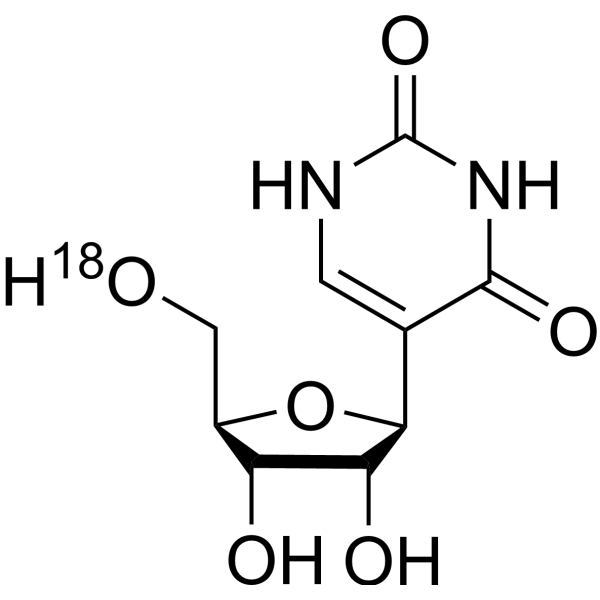
Pseudouridine- 18O is the 18O labeled Pseudouridine (HY-113061). Pseudouridine is an isomer of the nucleoside uridine, and the most abundant modified nucleoside in non-coding RNAs. Pseudouridine in rRNA and tRNA can fine-tune and stabilize the regional structure and help maintain their functions in mRNA decoding, ribosome assembly, processing and translation.
loading...
    loading...
Art. -Nr.: HY-171281
Synonyms: MIR200C
Target:  

MicroRNA

Forschungsgebiete:  

Cancer

Human microRNA 200c (MIR200C), a nucleotide small endogenous non-coding RNA, is an illustrious tumor suppressor. Human microRNA 200c is one of the highly studied miRNAs in terms of development, stemness, proliferation, epithelial-mesenchymal transition (EMT), therapy resistance, and metastasis .
loading...
    loading...
Art. -Nr.: HY-148688H
Target:  

DNA/RNA Synthesis

Forschungsgebiete:  

Others

ASO 556089 (with PS modification) sodium is the PS-modified version of ASO 556089 (HY-148688). ASO 556089 sodium is a 16 nucleotide length gapmer (3-10-3) that targets the human and mouse long non-coding RNA MALAT1, with the sequence: 5’-GmCATTmCTAATAGmCAGmC-3’ .
loading...
    loading...
Art. -Nr.: HY-L005M
295 compounds

Epigenetics involves heritable phenotypic changes that occur without alterations to the underlying DNA sequence. Key mechanisms include DNA methylation, histone modifications, and regulation by small non-coding RNAs such as microRNAs. By modifying DNA, histones, or RNA—while leaving their primary sequences intact—these processes influence molecular function and regulation, thereby playing critical roles in cellular differentiation, embryonic development, gene expression control, aging, and diseases such as cancer.

MCE provide a unique collection of 295 epigenetics-related compounds. For each regulatory target and its subtype, 3 to 5 highly specific representative compounds have been retained, which can be used in epigenetic and related disease research.

Art. -Nr.: HY-L005
1,984 compounds

Epigenetics refers to changes in phenotype that are not rooted in DNA sequence. Many types of epigenetic processes have been identified, including DNA methylation, alteration in the structure of histone proteins and gene regulation by small noncoding microRNAs. Modification of DNA, protein, or RNA, resulting in changes to the function and/or regulation of these molecules, without altering their primary sequences, reveals the complexities of cellular differentiation, embryology, the regulation of gene expression, aging, cancer, and other diseases.

MCE provide a unique collection of 1,984 epigenetics-related compounds that can be used in the research of the related diseases.

Art. -Nr.: HY-L248
858 compounds

The RNA-targeted bioactive compound library is a high-quality collection of small molecules specifically designed and curated to target RNA structures and functions. It is widely applied in cutting-edge drug discovery and life science research. Unlike traditional strategies that focus on protein targets, RNA-targeted compounds can directly modulate various functional RNA molecules by influencing their splicing, translation, stability, or structural conformation, thereby enabling precise intervention in key biological processes. In the field of drug development, these compounds provide a novel approach to addressing previously “undruggable” targets and have demonstrated significant potential in areas such as oncology, antiviral therapies, and neurodegenerative diseases. For example, by targeting disease-associated RNA structural domains or regulating the aberrant expression of non-coding RNAs, these compounds can effectively inhibit disease progression or restore normal cellular function. In mechanistic studies, RNA-targeted compounds serve as valuable chemical biology tools to elucidate the roles of RNA in gene expression regulation, cellular signaling pathways, and disease development.

The MCE RNA-targeted bioactive compound library contains 858 compounds, sourced from databases such as TargetRX Atlas and R-BIND. The library features excellent structural diversity and biological activity, making it suitable for high-throughput screening (HTS), target validation, phenotypic screening, and lead compound discovery. It represents a valuable resource for RNA-related research and innovative drug development.

  • 1

