



Tenapanor
Based on 8 publication(s) in Google Scholar
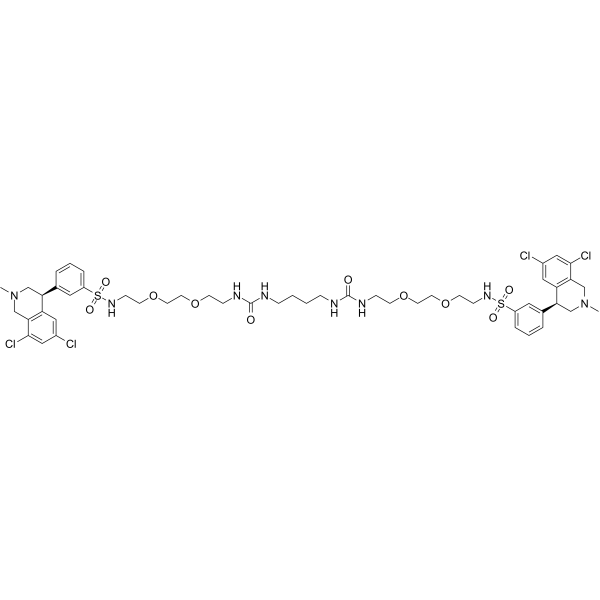
Tenapanor (AZD1722) is a potent and orally active sodium/hydrogen exchanger isoform 3 (NHE3) inhibitor. Tenapanor reduces intestinal phosphate absorption predominantly through reduction of passive paracellular phosphate flux. Tenapanor has the potential for the research of hyperphosphatemia.
For research use only. We do not sell to patients.
- Purity : 99.59%
- CAS No.: 1234423-95-0
- Formula: C50H66Cl4N8O10S2
- Molecular Weight:1145.05
-
Storage:Powder -20°C, 3 years , 4°C, 2 years ; In solvent -80°C, 2 years , -20°C, 1 year

To place orders, for customer services and technical support, please contact: MedChemExpress USA
Tel: 609-228-6898 E-mail: [email protected] [email protected]


-
 Biological Activity
-
Chemical Information
-
Solvent & Solubility
- Purity & Documentation
- References
-
 Help & FAQs


-
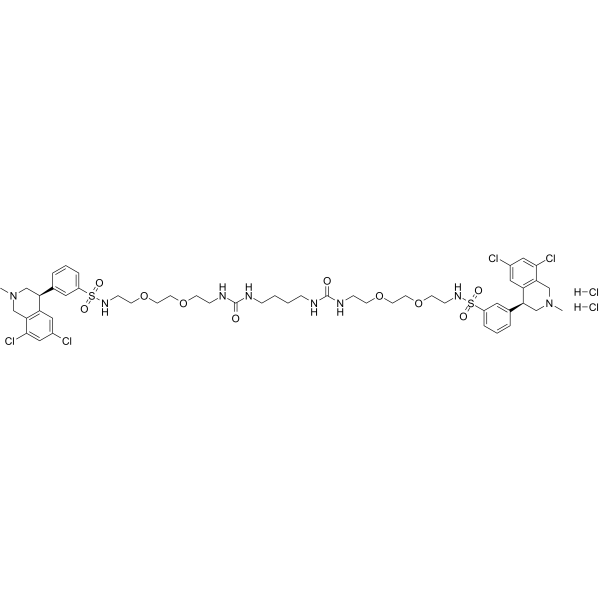
HY-15991A
Tenapanor hydrochlorideNHE3 Inhibitor -
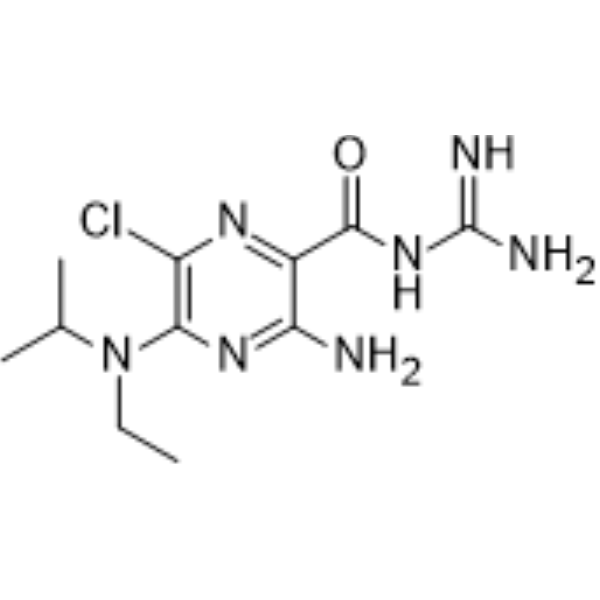
HY-101840
EIPATRPP3 Channel Inhibitor -
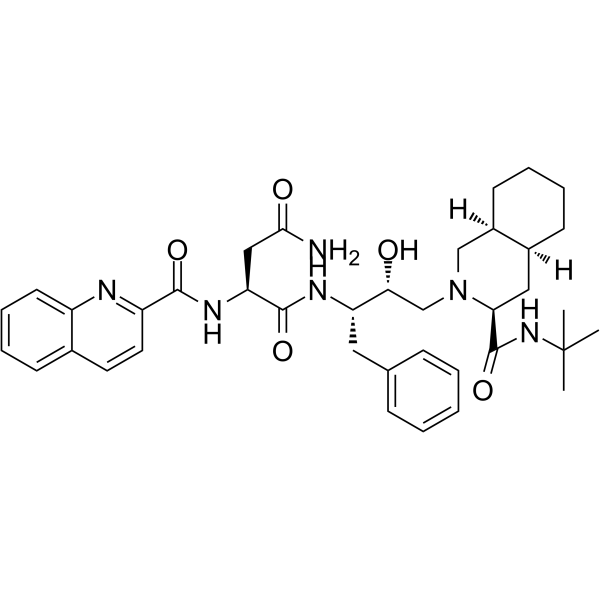
HY-17007
SaquinavirHIV Protease Inhibitor -
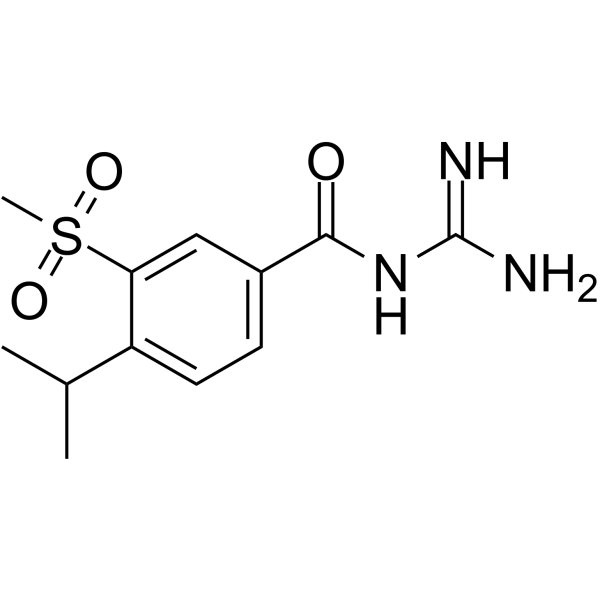
HY-19693
CariporideNa+/H+ Exchange Inhibitor -
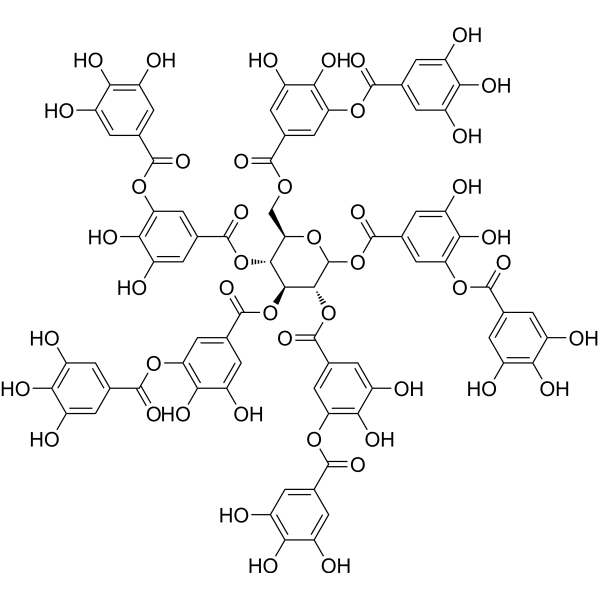
HY-B2136
Tannic acidhERG Channel Blocker -
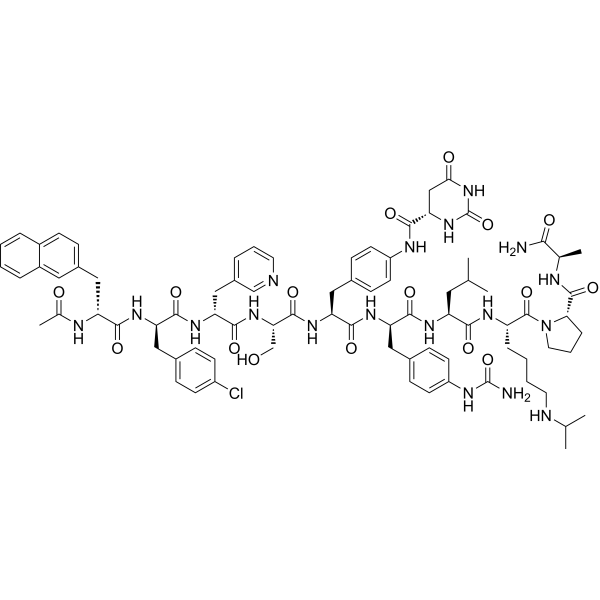
HY-16168A
DegarelixGnRHR Antagonist -
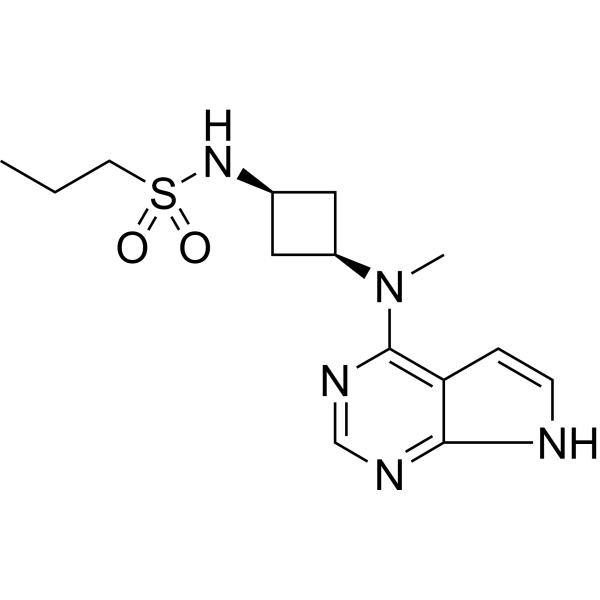
HY-107429
AbrocitinibJAK1 Inhibitor -
HY-17006
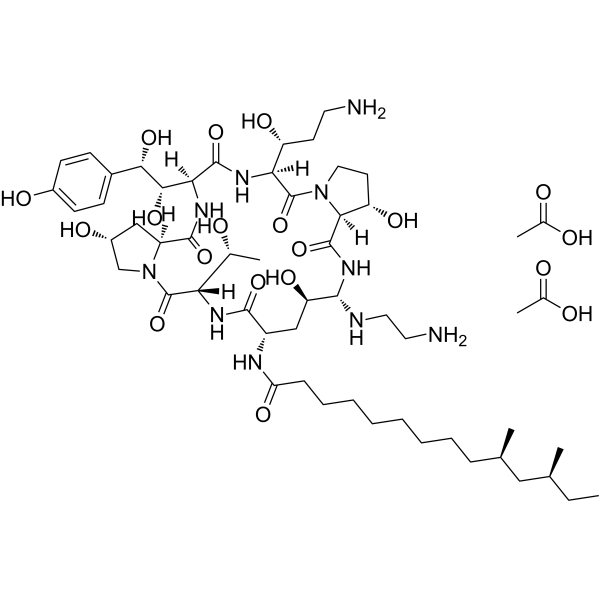
Caspofungin diacetateAntifungal Agent -
HY-P1959A
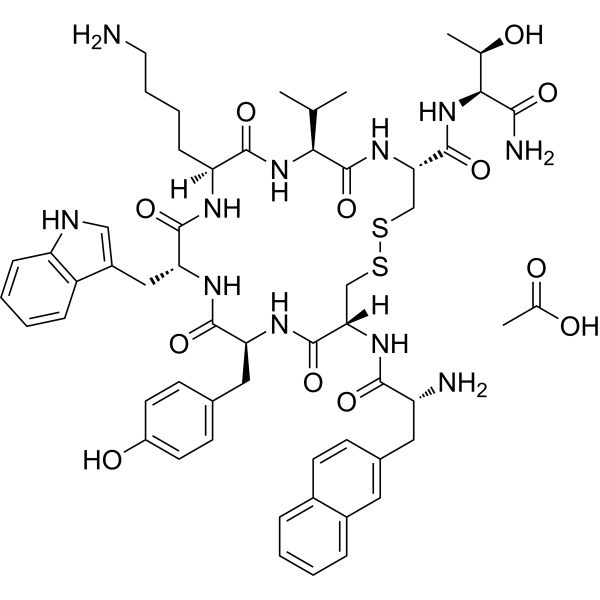
Lanreotide acetateAntineoplastic Agent -
HY-B0292A
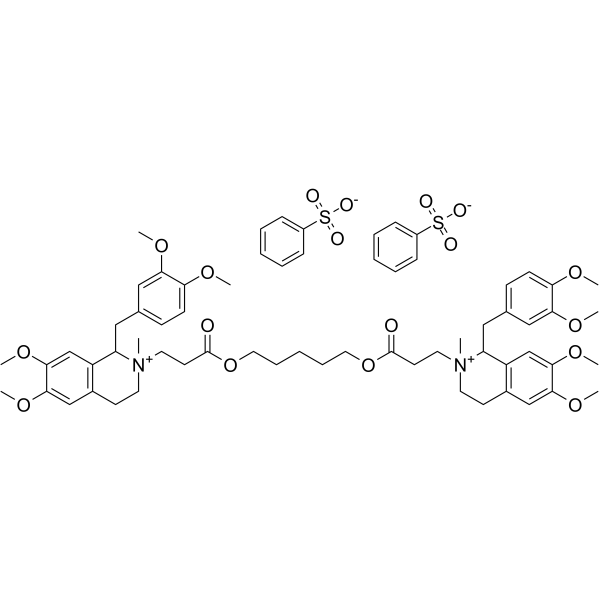
Atracurium besylateNeuromuscular Blocking Agent -
HY-123797
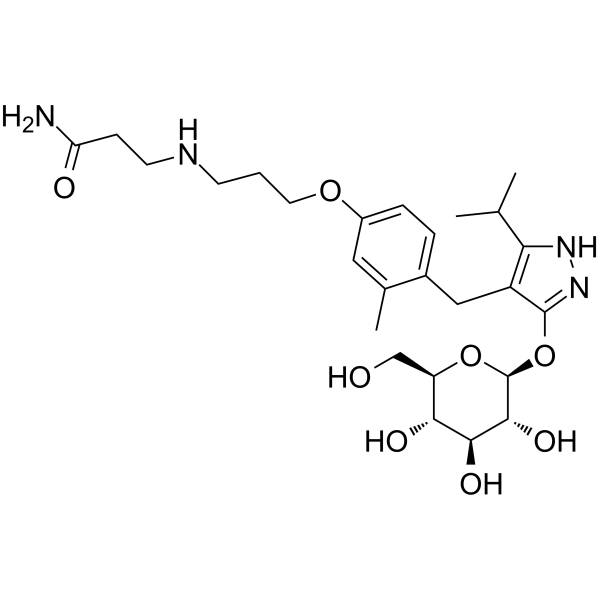
KGA-2727SGLT1 Inhibitor -
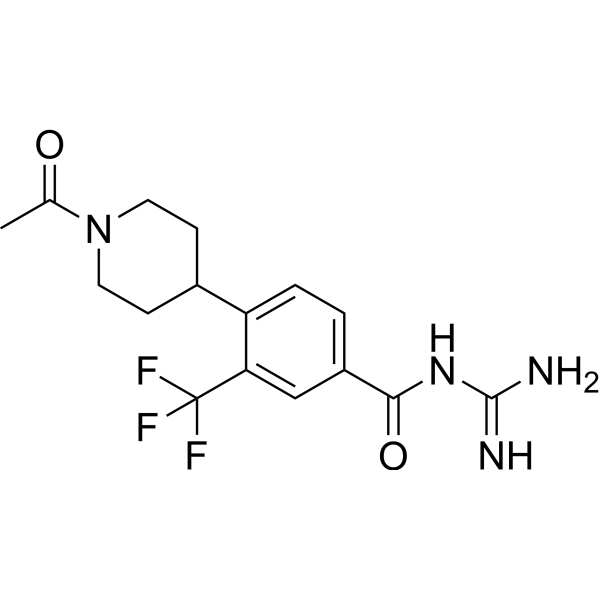
HY-18071
BI-9627NHE1 Inhibitor
Publications Citing Use of MedChemExpress (MCE) Tenapanor
More- J Exp Med. 2021 Nov 1;218(11):e20210479. [Abstract]
- JCI Insight. 2021 Jun 8;6(11):e147699. [Abstract]
- Int J Mol Sci. 2026 Apr 21;27(8):3683. [Abstract]
- Neuropharmacology. 2026 Apr 1:287:110829. [Abstract]
- J Virol. 2025 Jun 17;99(6):e0189424. [Abstract]
- J Virol. 2022 Nov 23;96(22):e0147322. [Abstract]
- Vet Microbiol. 2021 Dec:263:109263. [Abstract]
- Biochem Biophys Res Commun. 2025 Sep 19:785:152676. [Abstract]


Biological Activity
Description
IC50 & Target
IC50: 5 nM (NHE3, human), 10 nM (NHE3, rat)[1]
In Vivo
Tenapanor (0.15 mg/kg; p.o.; twice-daily for 11 consecutive days) increases the reduction in urinary phosphorus excretion in rats[2].
MedChemExpress (MCE) has not independently confirmed the accuracy of these methods. They are for reference only.
-
Animal Model:Rats (intestinal loop model)[1]
-
Dosage:0.15, 0.5 mg/kg
-
Administration:P.o.
-
Result:Reduced passive paracellular phosphate absorption by reduced urinary phosphate and sodium excretion after the high-phosphate meal and increased sodium and phosphate delivery to the cecum.
-
Animal Model:8 weeks, 250 g male Sprague–Dawley rats[2]
-
Dosage:0.15 mg/kg in combination with sevelamer (0%, 0.75%, 1.5%, and 3% (wt/wt))
-
Administration:Oral gavage; twice-daily for 11 consecutive days
-
Result:Significantly augmented the reduction in urinary phosphorus excretion.
Clinical Trial
| NCT Number | Sponsor | Condition | Start Date |
Phase

|
|---|---|---|---|---|
| NCT01329991 | Plexxikon| | 2011-05 | PHASE1 |


Chemical Information
-
CAS No. 1234423-95-0
-
Appearance Solid
-
Molecular Weight 1145.05
-
Formula C50H66Cl4N8O10S2
-
Color White to off-white
-
SMILES
O=C(NCCOCCOCCNS(=O)(C1=CC=CC([C@@H]2CN(C)CC3=C2C=C(Cl)C=C3Cl)=C1)=O)NCCCCNC(NCCOCCOCCNS(=O)(C4=CC=CC([C@@H]5CN(C)CC6=C5C=C(Cl)C=C6Cl)=C4)=O)=O
-
Synonyms
AZD1722; RDX5791
-
Shipping
Room temperature in continental US; may vary elsewhere.
-
Storage
Powder -20°C 3 years 4°C 2 years In solvent -80°C 2 years -20°C 1 year


Publications (8)
-
Journal Impact Factor
-
Most Recent
-
J Exp Med
Gut-associated cGMP mediates colitis and dysbiosis in a mouse model of an activating mutation in GUCY2C. [Abstract]2021 Nov 1;218(11):e20210479. PMID: 34546338 -
JCI Insight
SLC26A6-selective inhibitor identified in a small-molecule screen blocks fluid absorption in small intestine. [Abstract]2021 Jun 8;6(11):e147699. PMID: 34100381 -
Int J Mol Sci
Analysis of Phosphate Transporters in Peritoneal Cells and Tissues and Their Transport Kinetics In Vitro. [Abstract]2026 Apr 21;27(8):3683. PMID: 42074321 -
Neuropharmacology
Acetazolamide alleviates motion sickness by inhibiting inner ear carbonic anhydrase 2 and reducing endolymph volume. [Abstract]2026 Apr 1:287:110829. PMID: 41512954 -
J Virol
Dexamethasone disrupts intracellular pH homeostasis to delay coronavirus infectious bronchitis virus cell entry via sodium hydrogen exchanger 3 activation. [Abstract]2025 Jun 17;99(6):e0189424. PMID: 40340398 -
J Virol
Transmissible Gastroenteritis Virus Nucleocapsid Protein Interacts with Na+/H+ Exchanger 3 To Reduce Na+/H+ Exchanger Activity and Promote Piglet Diarrhea. [Abstract]2022 Nov 23;96(22):e0147322. PMID: 36342433 -
Vet Microbiol
Decreased NHE3 activity in intestinal epithelial cells in TGEV and PEDV-induced piglet diarrhea. [Abstract]2021 Dec:263:109263. PMID: 34749283 -
Biochem Biophys Res Commun
Glucose transports in the ileum: mechanism, regulation and physiological role of ileal glucose absorption. [Abstract]2025 Sep 19:785:152676. PMID: 41005286


Solvent & Solubility
In Vitro:
DMSO : 50 mg/mL (43.67 mM; Need ultrasonic; Hygroscopic DMSO has a significant impact on the solubility of product, please use newly opened DMSO)
Please refer to the solubility information to select the appropriate solvent. Once prepared, please aliquot and store the solution to prevent product inactivation from repeated freeze-thaw cycles.
Storage method and period of stock solution: -80°C, 2 years; -20°C, 1 year. When stored at -80°C, please use it within 2 years. When stored at -20°C, please use it within 1 year.
Please refer to the solubility information to select the appropriate solvent. Once prepared, please aliquot and store the solution to prevent product inactivation from repeated freeze-thaw cycles.
Storage method and period of stock solution: -80°C, 2 years; -20°C, 1 year. When stored at -80°C, please use it within 2 years. When stored at -20°C, please use it within 1 year.
Concentration (start) × Volume (start) = Concentration (final) × Volume (final)
In Vivo:
Select the appropriate dissolution method based on your experimental animal and administration route.
- For the following dissolution methods, please ensure to first prepare a clear stock solution using an In Vitro approach and then sequentially add co-solvents:
- To ensure reliable experimental results, the clarified stock solution can be appropriately stored based on storage conditions. As for the working solution for In Vivo experiments, it is recommended to prepare freshly and use it on the same day.
- The percentages shown for the solvents indicate their volumetric ratio in the final prepared solution. If precipitation or phase separation occurs during preparation, heat and/or sonication can be used to aid dissolution.
Add each solvent one by one: 10% DMSO 40% PEG300 5% Tween-80 45% Saline
Solubility: ≥ 2.5 mg/mL (2.18 mM); Clear solution
This protocol yields a clear solution of ≥ 2.5 mg/mL (saturation unknown).
Taking 1 mL working solution as an example, add 100 μL DMSO stock solution (25.0 mg/mL) to 400 μL PEG300, and mix evenly; then add 50 μL Tween-80 and mix evenly; then add 450 μL Saline to adjust the volume to 1 mL.
Preparation of Saline: Dissolve 0.9 g sodium chloride in ddH₂O and dilute to 100 mL to obtain a clear Saline solution.
Add each solvent one by one: 10% DMSO 90% (20% SBE-β-CD in Saline)
Solubility: 2.5 mg/mL (2.18 mM); Suspended solution; Need ultrasonic
This protocol yields a suspended solution of 2.5 mg/mL. Suspended solution can be used for oral and intraperitoneal injection.
Taking 1 mL working solution as an example, add 100 μL DMSO stock solution (25.0 mg/mL) to 900 μL 20% SBE-β-CD in Saline, and mix evenly.
Preparation of 20% SBE-β-CD in Saline (4°C, storage for one week): 2 g SBE-β-CD powder is dissolved in 10 mL Saline, completely dissolve until clear.
In Vivo Dissolution Calculator
Please enter the basic information of animal experiments:
-
-
-
-
Recommended: Prepare an additional quantity of animals to account for potential losses during experiments.
Please enter your animal formula composition:
-
%DMSO +
Recommended: Keep the proportion of DMSO in working solution below 2% if your animal is weak.
-
%+
-
+%Tween-80 + +
-
%Saline +
The co-solvents required include: DMSO, . All of co-solvents are available by MedChemExpress (MCE). , Tween 80. All of co-solvents are available by MedChemExpress (MCE).
Working solution concentration: 0.22 mg/mL
Method for preparing stock solution: mg drug dissolved in μL DMSO. Stock solution concentration: mg/mL.
1. Take μL DMSO stock solution;
2. Add μL .
μL , mix evenly;
3. Then add μL Tween 80, mix evenly;
4. Then add μL
Please ensure that the stock solution in the first step is dissolved to a clear state, and add co-solvents in sequence. You can use ultrasonic heating (ultrasonic cleaner, recommended frequency 20-40 kHz), vortexing, etc. to assist dissolution.


Purity & Documentation
-
Data Sheet (270 KB)
-
SDS (396 KB)
- English - EN (396 KB)
- Français - FR (396 KB)
- Deutsch - DE (396 KB)
- Norwegian - NO (396 KB)
- Español - ES (396 KB)
- Swedish - SV (396 KB)
- Italian - IT (396 KB)
- Korean - KR (396 KB)
- Portuguese - PT (396 KB)
-
Handling Instructions (2659 KB)
References
[1]. King AJ, et al. Inhibition of sodium/hydrogen exchanger 3 in the gastrointestinal tract by tenapanor reduces paracellular phosphate permeability. Sci Transl Med. 2018 Aug 29;10(456):eaam6474. [Content Brief]
[2]. King AJ, et al. Combination treatment with tenapanor and sevelamer synergistically reduces urinary phosphorus excretion in rats. Am J Physiol Renal Physiol. 2021 Jan 1;320(1):F133-F144. [Content Brief]


Complete Stock Solution Preparation Table
Please refer to the solubility information to select the appropriate solvent. Once prepared, please aliquot and store the solution to prevent product inactivation from repeated freeze-thaw cycles.
Storage method and period of stock solution: -80°C, 2 years; -20°C, 1 year. When stored at -80°C, please use it within 2 years. When stored at -20°C, please use it within 1 year.
| Optional Solvent | Concentration Solvent Mass | 1 mg | 5 mg | 10 mg | 25 mg |
|---|---|---|---|---|---|
| DMSO | 1 mM | 0.8733 mL | 4.3666 mL | 8.7332 mL | 21.8331 mL |
| 5 mM | 0.1747 mL | 0.8733 mL | 1.7466 mL | 4.3666 mL | |
| 10 mM | 0.0873 mL | 0.4367 mL | 0.8733 mL | 2.1833 mL | |
| 15 mM | 0.0582 mL | 0.2911 mL | 0.5822 mL | 1.4555 mL | |
| 20 mM | 0.0437 mL | 0.2183 mL | 0.4367 mL | 1.0917 mL | |
| 25 mM | 0.0349 mL | 0.1747 mL | 0.3493 mL | 0.8733 mL | |
| 30 mM | 0.0291 mL | 0.1456 mL | 0.2911 mL | 0.7278 mL | |
| 40 mM | 0.0218 mL | 0.1092 mL | 0.2183 mL | 0.5458 mL |


Tenapanor Related Classifications
HY-15991 Related Classifications
 Powered by Bioz