47 Results for "

clindamycin-

" in MedChemExpress (MCE) Product Catalog:
Products (47)

47 Results for "clindamycin-" in MCE Product Catalog:

16
16 Publications Verification
Cat. No.: HY-B0408A
CAS No.: 21462-39-5
Target:  

Bacterial Antibiotic

Research Areas:  

Infection Cancer

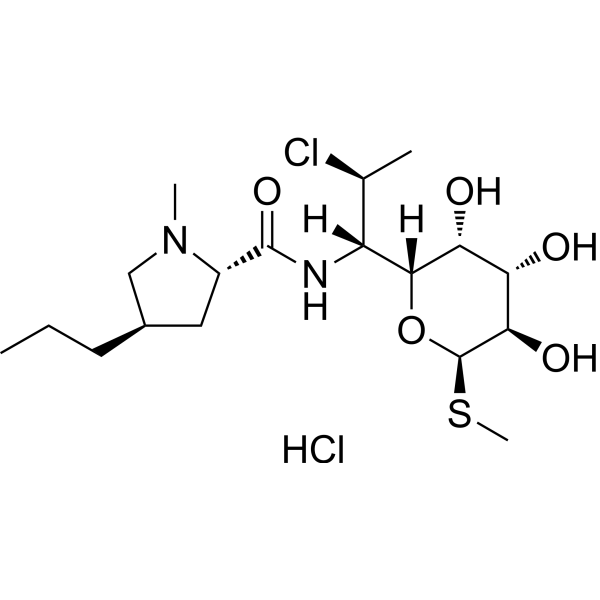
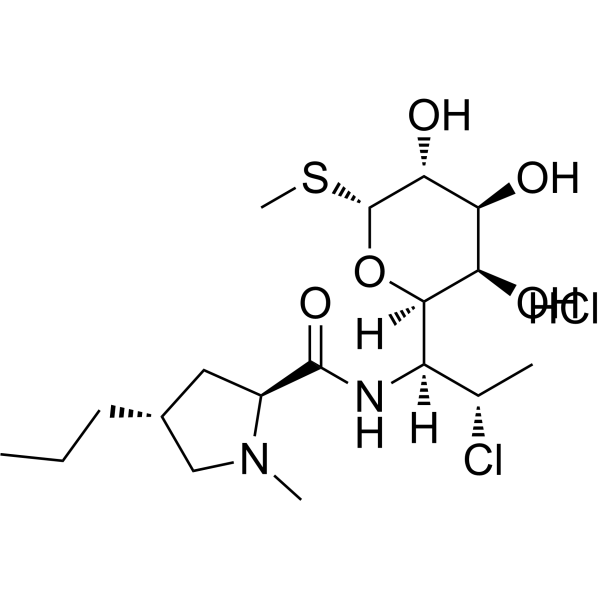
Clindamycin (hydrochloride) is a semisynthetic lincosamide antibiotic, which inhibits protein synthesis by acting on the 50S ribosomal.
15
15 Cited Publications
Cat. No.: HY-B1455
CAS No.: 18323-44-9
Research Areas:  

Infection Cancer

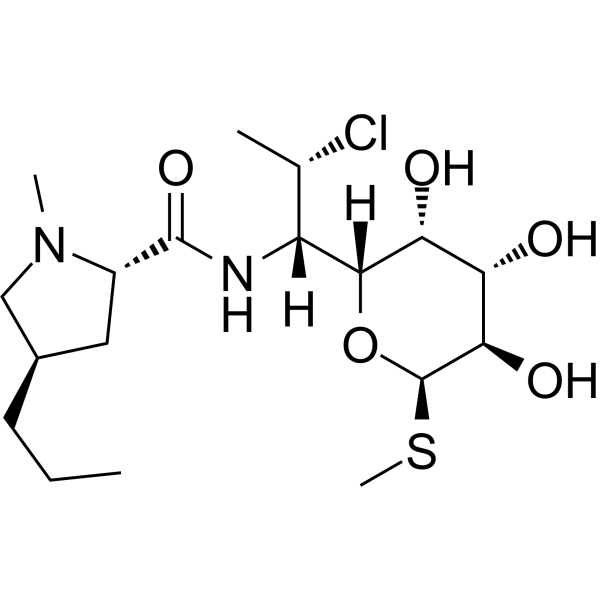
Clindamycin is an orally active and broad-spectrum bacteriostatic lincosamide antibiotic. Clindamycin can inhibit bacterial protein synthesis, possessing the ability to suppress the expression of virulence factors in Staphylococcus aureus at sub-inhibitory concentrations (sub-MICs). Clindamycin resistance results from enzymatic methylation of the antibiotic binding site in the 50S ribosomal subunit (23S rRNA). Clindamycin decreases the production of Panton-Valentine leucocidin (PVL), toxic-shock-staphylococcal toxin (TSST-1) or alpha-haemolysin (Hla). Clindamycin also can be used for researching malaria .
5
5 Cited Publications
Cat. No.: HY-B1064
CAS No.: 24729-96-2
Synonyms: clindamycin 2-phosphate; U-28508
Research Areas:  

Infection Cancer

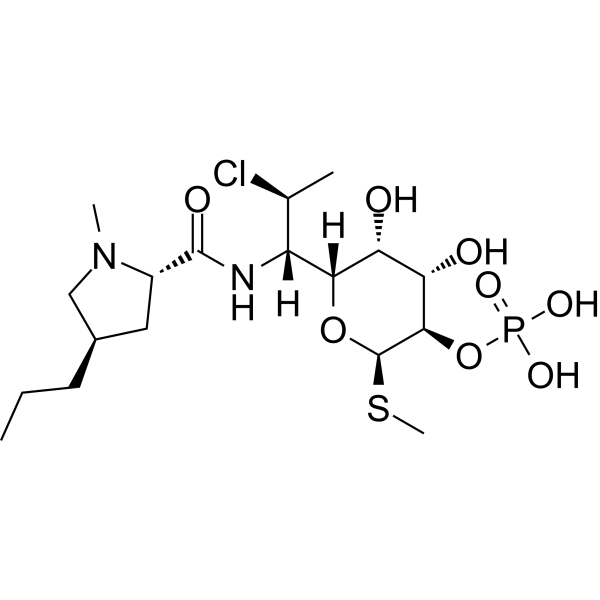
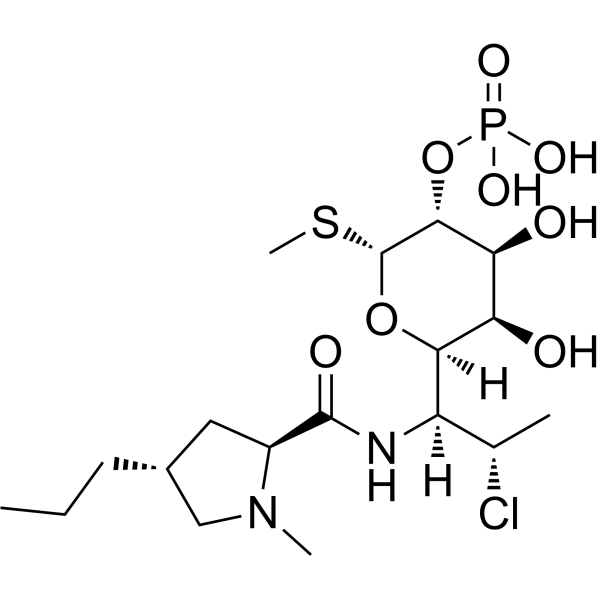
Clindamycin phosphate (Clindamycin 2-phosphate) is a broad-spectrum bacteriostatic lincosamide antibiotic. Clindamycin phosphate is the proagent of Clindamycin (HY-B1455) with no antimicrobial activity in vitro but can be rapidly converted in vivo to the active parent agent, Clindamycin, by phosphatase ester hydrolysis. Clindamycin phosphate can be used for researching acne and bacterial vaginosis . Clindamycin phosphate has no cytotoxicity. Combined with platelet rich fibrin (PRF), PRF-Clindamycin phosphate enhances antimicrobial properties .
Cat. No.: HY-B1454
CAS No.: 25507-04-4
Target:  

Bacterial Antibiotic

Research Areas:  

Infection

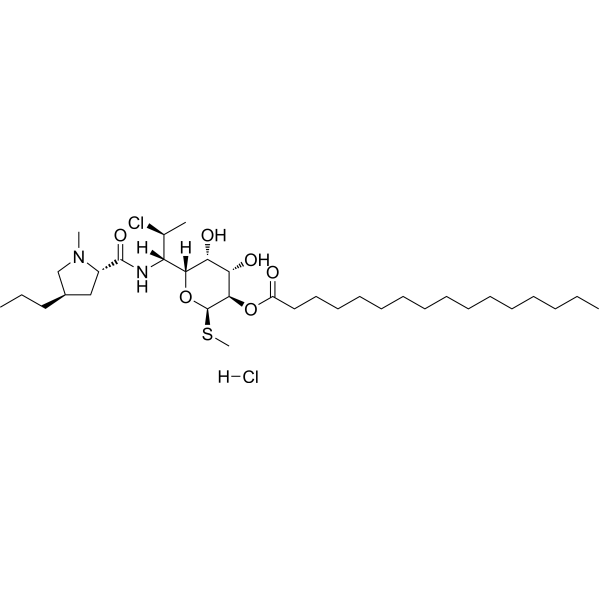
Clindamycin palmitate hydrochloride is a hydrochloride salt of the ester of clindamycin and palmitic acid and it is an antibacterial agent. Clindamycin palmitate hydrochloride is inactive in vitro, rapid in vivo hydrolysis converts this compound to the antibacterially active clindamycin .
Cat. No.: HY-N7118
CAS No.: 58207-19-5
Target:  

Bacterial Antibiotic

Research Areas:  

Infection Cancer

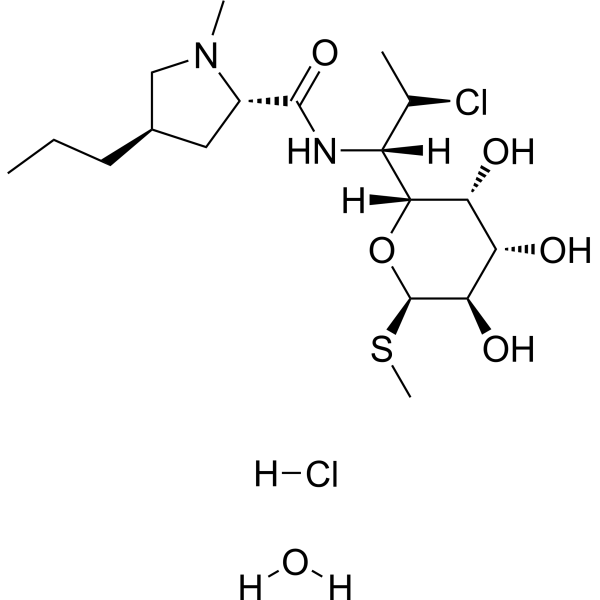
Clindamycin hydrochloride monohydrate is an oral protein synthesis inhibitory agent that has the ability to suppress the expression of virulence factors in Staphylococcus aureus at sub-inhibitory concentrations (sub-MICs). Clindamycin hydrochloride monohydrate resistance results from enzymatic methylation of the antibiotic binding site in the 50S ribosomal subunit (23S rRNA). Clindamycin hydrochloride monohydrate decreases the production of Panton-Valentine leucocidin (PVL), toxic-shock-staphylococcal toxin (TSST-1) or alpha-haemolysin (Hla) .
Cat. No.: HY-B1455S1
CAS No.: 2140264-63-5
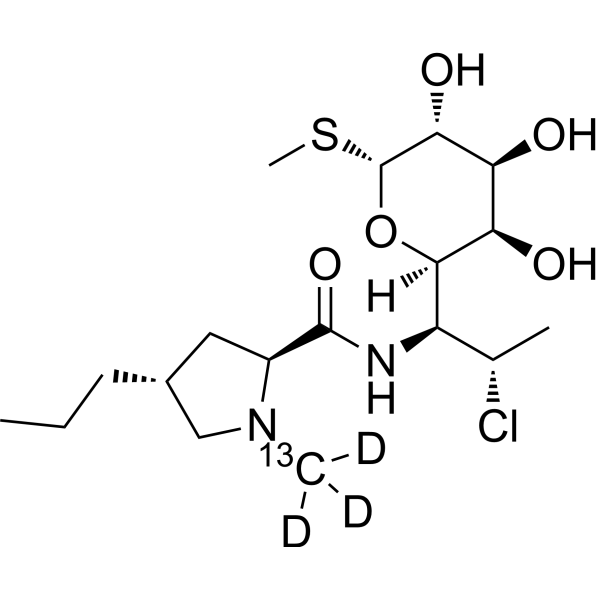
Clindamycin- 13C,d3 is the 13C- and deuterium labeled Clindamycin. Clindamycin is an orally active and broad-spectrum bacteriostatic lincosamide antibiotic. Clindamycin can inhibit bacterial protein synthesis, possessing the ability to suppress the expression of virulence factors in Staphylococcus aureus at sub-inhibitory concentrations (sub-MICs). Clindamycin resistance results from enzymatic methylation of the antibiotic binding site in the 50S ribosomal subunit (23S rRNA). Clindamycin decreases the production of Panton-Valentine leucocidin (PVL), toxic-shock-staphylococcal toxin (TSST-1) or alpha-haemolysin (Hla). Clindamycin also can be used for researching malaria .
Cat. No.: HY-B0408AR
CAS No.: 21462-39-5
Research Areas:  

Infection Cancer

Clindamycin (hydrochloride) (Standard) is the analytical standard of Clindamycin (hydrochloride). This product is intended for research and analytical applications. Clindamycin (hydrochloride) is a semisynthetic lincosamide antibiotic, which inhibits protein synthesis by acting on the 50S ribosomal.
Cat. No.: HY-128907
CAS No.: 1639793-13-7
Purity:  99.99%
Research Areas:  

Cancer

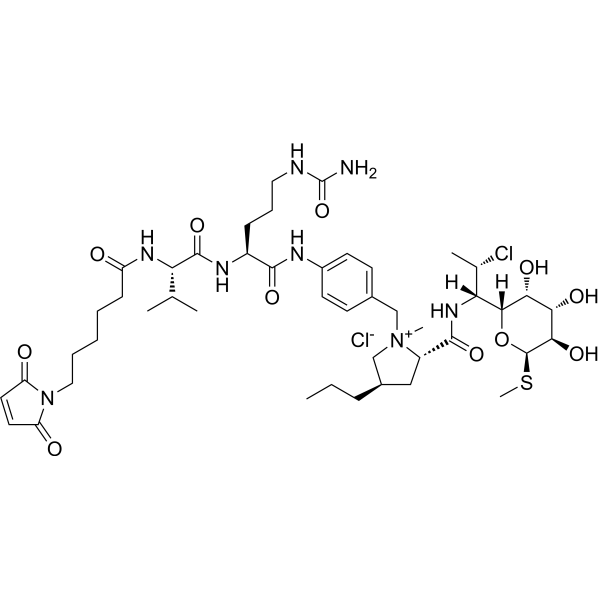
MC-Val-Cit-PAB-clindamycin is a agent-linker conjugate for ADC with potent antitumor activity by using clindamycin (a protein synthesis inhibitor), linked via the ADC linker MC-Val-Cit-PAB.
Cat. No.: HY-134914
CAS No.: 66508-53-0
Fosmidomycin is an orally active antibiotic, which exhibits antimalarial activity through inhibition of 1-deoxy-D-xylulose 5-phosphate reductoisomerase (DOXP reductoisomerase). Fosmidomycin inhibits P. falciparum strains 3D7, HB3, Dd2 and A2, with IC50s of 150, 71, 170 and 150 ng/mL, respectively. Fosmidomycin exhibits synergistic effect with Clindamycin (HY-B1455), and ameliorates malaria in mouse model .
Cat. No.: HY-W777995
CAS No.: 18323-43-8
Research Areas:  

Infection

Clindamycin B is a derivative of Clindamycin (HY-B1455) .
Cat. No.: HY-B1455S
CAS No.: 1356933-72-6
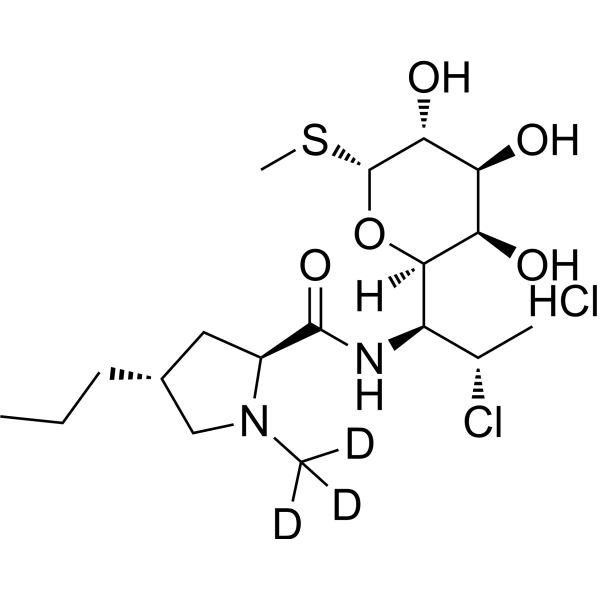
Clindamycin-d3 (hydrochloride) is the deuterium labeled Clindamycin. Clindamycin is an orally active and broad-spectrum bacteriostatic lincosamide antibiotic. Clindamycin can inhibit bacterial protein synthesis, possessing the ability to suppress the expression of virulence factors in Staphylococcus aureus at sub-inhibitory concentrations (sub-MICs). Clindamycin resistance results from enzymatic methylation of the antibiotic binding site in the 50S ribosomal subunit (23S rRNA). Clindamycin decreases the production of Panton-Valentine leucocidin (PVL), toxic-shock-staphylococcal toxin (TSST-1) or alpha-haemolysin (Hla). Clindamycin also can be used for researching malaria .
Cat. No.: HY-127059
CAS No.: 22431-46-5
Synonyms: U-25026A
Target:  

Antibiotic

Research Areas:  

Metabolic Disease

Clindamycin sulfoxide is an active metabolite of the antibiotic Clindamycin (HY-B1455). It is formed via S-oxidation of clindamycin primarily by the cytochrome P450 (CYP) isoform CYP3A4. Clindamycin sulfoxide inhibits the growth of P. prevotti, B. fragilis, and C. sordelli in vitro with MIC values of 2, 2, and 1 mg/L, respectively.
Cat. No.: HY-B1064A
CAS No.: 64023-51-4
Synonyms: clindamycin 2-phosphate hydrochloride; U-28508 hydrochloride
Research Areas:  

Infection Cancer

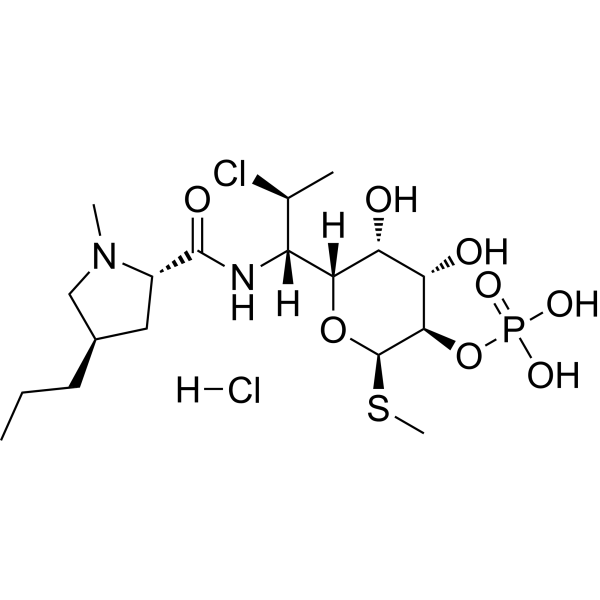
Clindamycin phosphate (Clindamycin 2-phosphate) hydrochloride is a broad-spectrum bacteriostatic lincosamide antibiotic. Clindamycin phosphate hydrochloride is the proagent of Clindamycin (HY-B1455) with no antimicrobial activity in vitro but can be rapidly converted in vivo to the active parent agent, Clindamycin, by phosphatase ester hydrolysis. Clindamycin phosphate hydrochloride can be used for researching acne and bacterial vaginosis .
Cat. No.: HY-B1064R
CAS No.: 24729-96-2
Synonyms: clindamycin 2-phosphate (Standard); U-28508 (Standard)
Research Areas:  

Infection

Clindamycin phosphate (Standard) is the analytical standard of Clindamycin phosphate. This product is intended for research and analytical applications. Clindamycin phosphate (Clindamycin 2-phosphate) is a broad-spectrum bacteriostatic lincosamide antibiotic. Clindamycin phosphate is the proagent of Clindamycin (HY-B1455) with no antimicrobial activity in vitro but can be rapidly converted in vivo to the active parent agent, Clindamycin, by phosphatase ester hydrolysis. Clindamycin phosphate can be used for researching acne and bacterial vaginosis .
Cat. No.: HY-B1454R
CAS No.: 25507-04-4
Research Areas:  

Infection

Clindamycin palmitate (hydrochloride) (Standard) is the analytical standard of Clindamycin palmitate (hydrochloride). This product is intended for research and analytical applications. Clindamycin palmitate hydrochloride is a hydrochloride salt of the ester of clindamycin and palmitic acid and it is an antibacterial agent. Clindamycin palmitate hydrochloride is inactive in vitro, rapid in vivo hydrolysis converts this compound to the antibacterially active clindamycin .
Cat. No.: HY-B1455R
CAS No.: 18323-44-9
Clindamycin (Standard) is the analytical standard of Clindamycin. This product is intended for research and analytical applications. Clindamycin is an orally active and broad-spectrum bacteriostatic lincosamide antibiotic. Clindamycin can inhibit bacterial protein synthesis, possessing the ability to suppress the expression of virulence factors in Staphylococcus aureus at sub-inhibitory concentrations (sub-MICs). Clindamycin resistance results from enzymatic methylation of the antibiotic binding site in the 50S ribosomal subunit (23S rRNA). Clindamycin decreases the production of Panton-Valentine leucocidin (PVL), toxic-shock-staphylococcal toxin (TSST-1) or alpha-haemolysin (Hla). Clindamycin also can be used for researching malaria .
Cat. No.: HY-163967
CAS No.: 1309048-48-3
Clindamycin 2,4-diphosphate is a related impurity of Clindamycin phosphate (HY-B1064), a prodrug of Clindamycin (HY-B1455). Clindamycin phosphate inhibits protein synthesis by targeting the bacterial ribosomal 50S subunit .
Cat. No.: HY-N7118R
CAS No.: 58207-19-5
Research Areas:  

Infection Cancer

Clindamycin (hydrochloride monohydrate) (Standard) is the analytical standard of Clindamycin (hydrochloride monohydrate). This product is intended for research and analytical applications. Clindamycin hydrochloride monohydrate is an oral protein synthesis inhibitory agent that has the ability to suppress the expression of virulence factors in Staphylococcus aureus at sub-inhibitory concentrations (sub-MICs). Clindamycin hydrochloride monohydrate resistance results from enzymatic methylation of the antibiotic binding site in the 50S ribosomal subunit (23S rRNA). Clindamycin hydrochloride monohydrate decreases the production of Panton-Valentine leucocidin (PVL), toxic-shock-staphylococcal toxin (TSST-1) or alpha-haemolysin (Hla) .
Cat. No.: HY-W749665
CAS No.: 2140264-64-6
Clindamycin Hydrochloride- 13C,d3 is the deuterium and 13C-labeled Clindamycin hydrochloride (HY-B0408A). Clindamycin hydrochloride is a semisynthetic lincosamide antibiotic, which inhibits protein synthesis by acting on the 50S ribosomal.
Cat. No.: HY-163973
CAS No.: 150787-99-8
Clindamycin 2,4-diphosphate is a biochemical assay reagent.

