



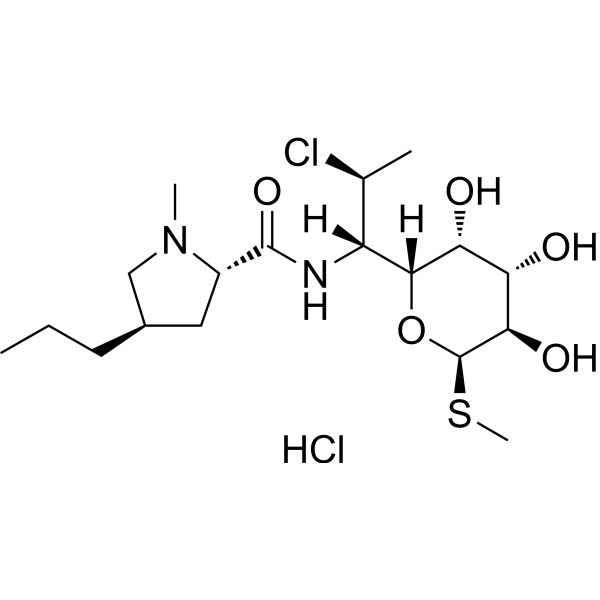
Clindamycin hydrochloride
Based on 17 publication(s) in Google Scholar
Clindamycin (hydrochloride) is a semisynthetic lincosamide antibiotic, which inhibits protein synthesis by acting on the 50S ribosomal.
Nur für Forschungszwecke. Wir verkaufen nicht an Patienten.
- Reinheit : 99.91%
- CAS. Nr.: 21462-39-5
- Formel: C18H34Cl2N2O5S
- Molecular Weight:461.44
-
Speicherung:
4°C, sealed storage, away from moisture
* In solvent : -80°C, 6 months; -20°C, 1 month (sealed storage, away from moisture)

To place orders, for customer services and technical support, please contact: MedChemExpress USA
Tel: 609-228-6898 E-mail: [email protected] [email protected]


-
 Biologische Aktivität
-
Chemical Information
-
Lösungsmittel & Löslichkeit
- Reinheit & Dokumentation
- Verweise
-
 Help & FAQs


-
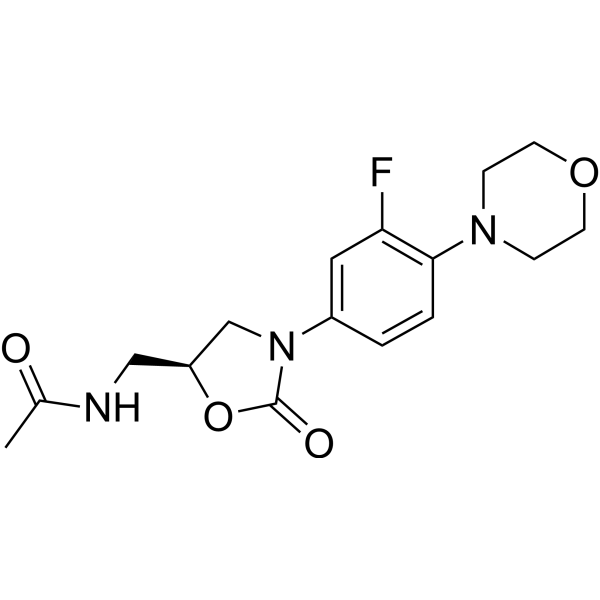
HY-10394
LinezolidAntibiotic -
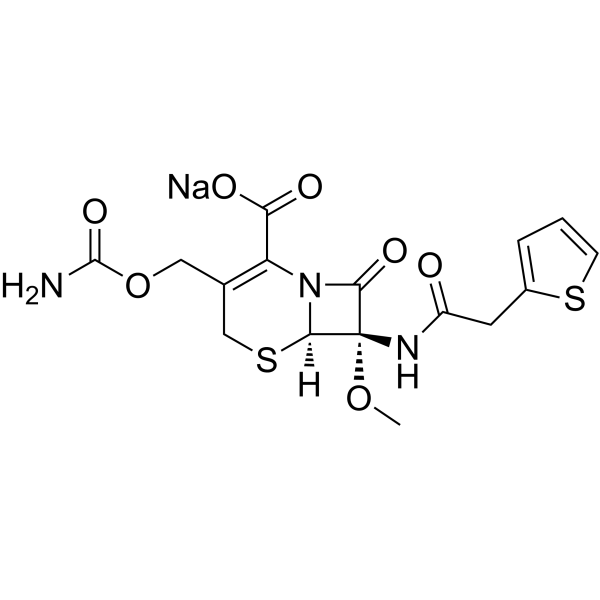
HY-B1117
Cefoxitin sodiumAntibiotic -
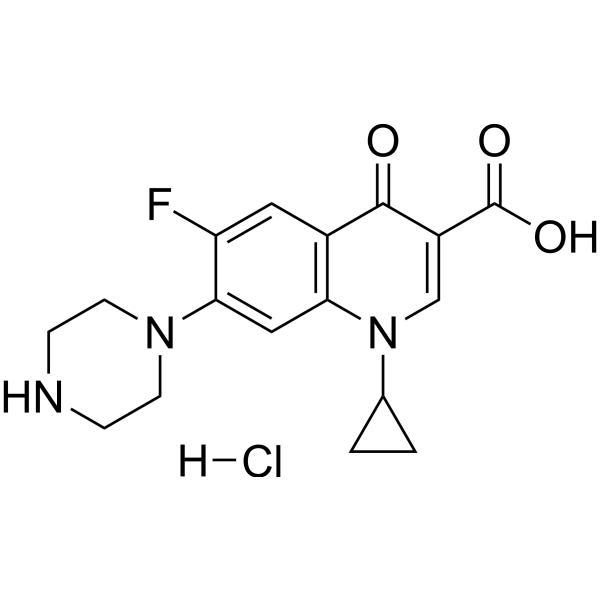
HY-B0356A
Ciprofloxacin monohydrochlorideTopoisomerase IV Inhibitor -
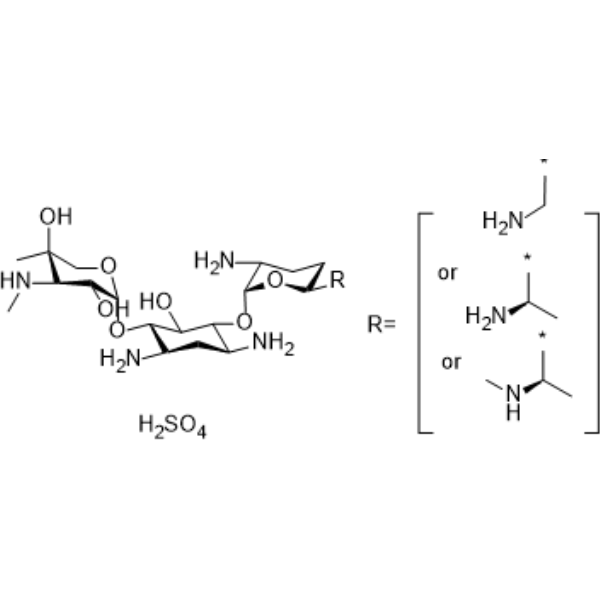
HY-A0276
Gentamicin sulfateAminoglycoside Antibiotic -
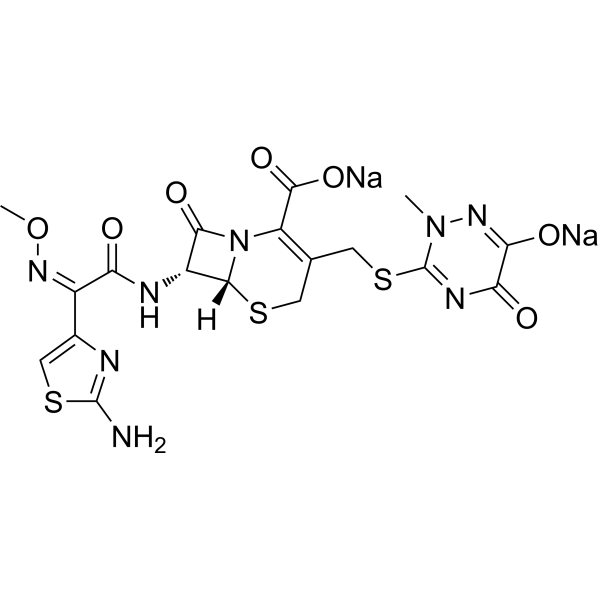
HY-B0712B
Ceftriaxone sodium saltAurora B inhibitor -
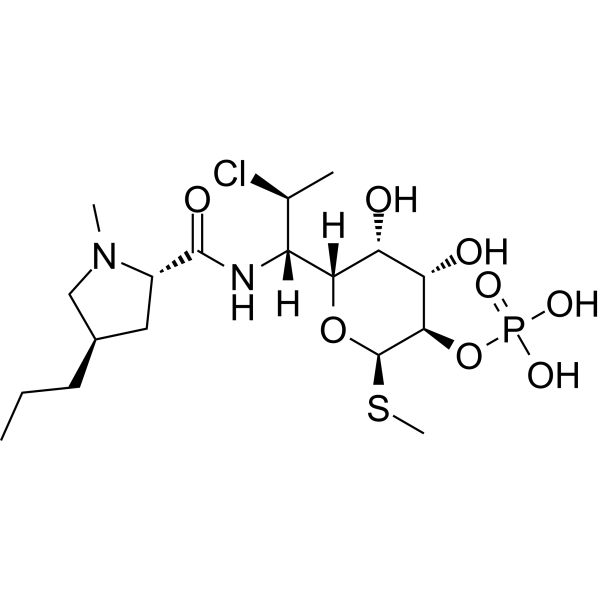
HY-B1064
Clindamycin phosphateLincosamide Antibiotic -
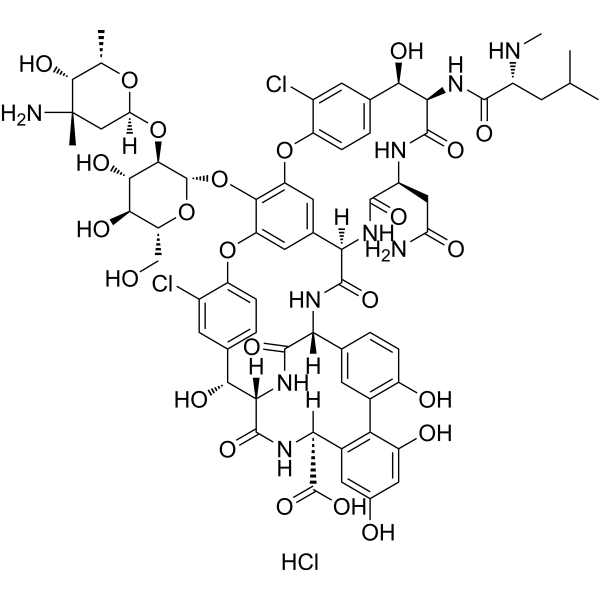
HY-17362
Vancomycin hydrochlorideAntibiotic -
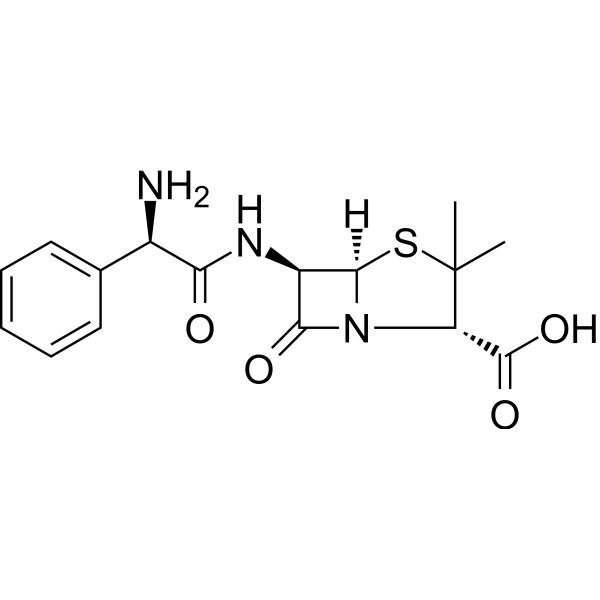
HY-B0522
AmpicillinBacterial Inhibitor -
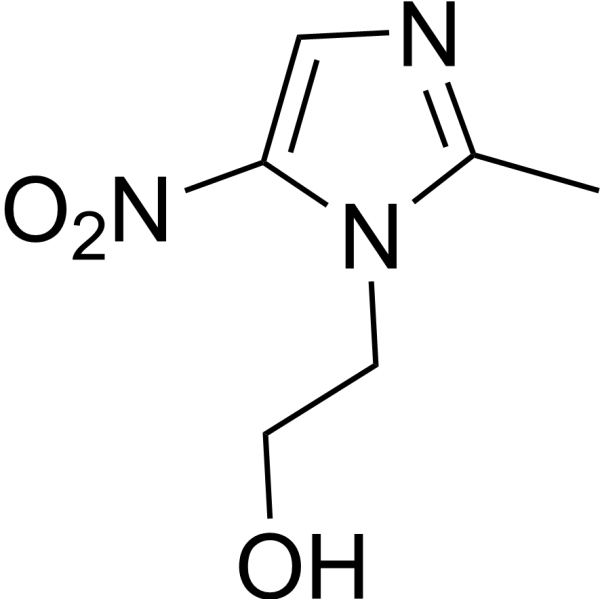
HY-B0318
MetronidazoleAntibiotic -
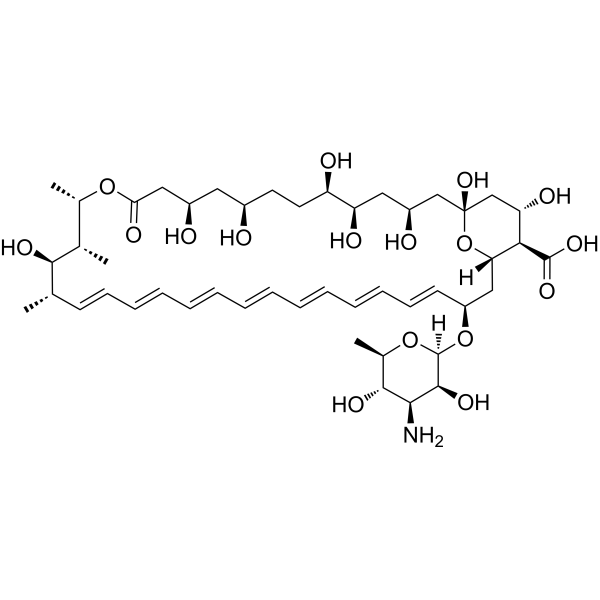
HY-B0221
Amphotericin BAntifungal Agent -
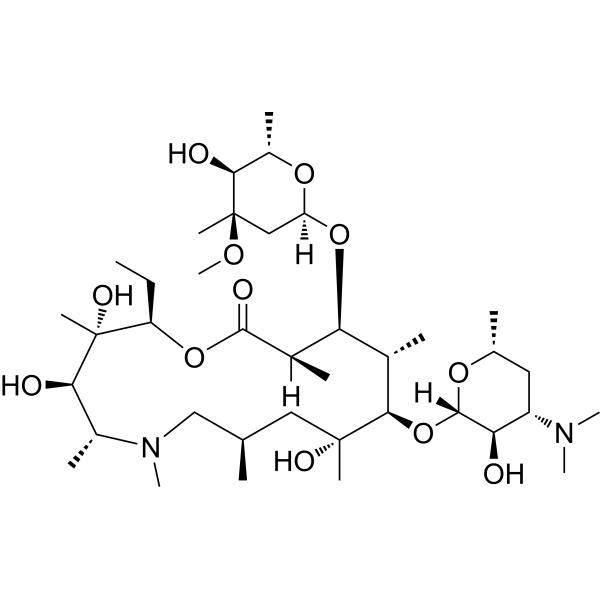
HY-17506
Azithromycin -
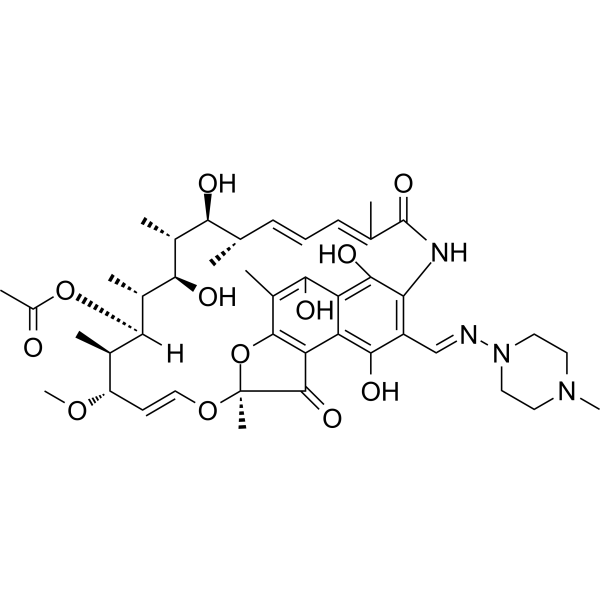
HY-B0272
RifampicinAntivirus Agent
Publications Citing Use of MedChemExpress (MCE) Clindamycin hydrochloride
More- Signal Transduct Target Ther. 2025 Dec 15;10(1):406. [Abstract]
- Acta Pharm Sin B. 2021 Sep;11(9):2850-2858. [Abstract]
- Water Res. 2023 Jul 15:240:120110. [Abstract]
- J Exp Med. 2026 Mar 2;223(3):e20241287. [Abstract]
- EBioMedicine. 2022 Apr;78:103943. [Abstract]
- ACS Environ Au. 2025 Aug 5;5(6):573-582. [Abstract]
- Anal Chem. 2025 Jun 3;97(21):11099-11109. [Abstract]
- ACS Omega. 2022 Mar 3;7(10):9004-9014. [Abstract]
- Microbiol Spectr. 2025 Oct 15:e0122125. [Abstract]
- Dermatol Clin. 2024 September 12.
- Tissue Cell. 2025 Apr:93:102759. [Abstract]
- Future Microbiol. 2025 Oct 13:1-10. [Abstract]
- Diagn Microbiol Infect Dis. 2026 Feb;114(2):117181. [Abstract]
- chemRxiv. 2026 Jul 2.
- bioRxiv. 2026 May 22:2026.05.21.726874. [Abstract]
- bioRxiv. 2024 May 10.
- bioRxiv. 2024 Jan 18.
 Customer Validation & Images

-
Bio/Physico-chemical Assay

-
Microbiological Assay

-
Others

-
Microbiological Assay

-
Microbiological Assay

Alle Antibiotic Isoform-spezifische Produkte anzeigen
More

Biologische Aktivität
Beschreibung
In Vitro
In Vivo
Clindamycin hydrochloride significantly reduces oral malodor from the dogs' baseline levels through 42 days. Clindamycin hydrochloride also results in significant reductions in dental plaque, dental calculus, and gingival bleeding in dogs[2].
Clindamycin hydrochloride (2.5 mg/Lb), after ultrasonic scaling, root planing, and polishing (USRP), has a significant effect on plaque and pocket depth measures of periodontal disease but not on gingivitis in canine[3].
Clindamycin hydrochloride results in complete remission ratio of 71.4% (15/21) in dogs with canine superficial bacterial pyoderma after treat within 14 to 28 days[4].
MedChemExpress (MCE) has not independently confirmed the accuracy of these methods. They are for reference only.
Clinical Trial
| NCT Number | Sponsor | Condition | Start Date |
Phase

|
|---|---|---|---|---|
| NCT01329991 | Plexxikon| | 2011-05 | PHASE1 |


Chemical Information
-
CAS. Nr. 21462-39-5
-
Appearance Solid
-
Molecular Weight 461.44
-
Formel C18H34Cl2N2O5S
-
Color White to off-white
-
SMILES
C[C@H](Cl)[C@@]([C@@]([C@@H]([C@H](O)[C@H]1O)O)([H])O[C@@H]1SC)([H])NC([C@@H]2C[C@@H](CCC)CN2C)=O.Cl
-
Versand
Room temperature in continental US; may vary elsewhere.
-
Speicherung
4°C, sealed storage, away from moisture
* In solvent : -80°C, 6 months; -20°C, 1 month (sealed storage, away from moisture)


Publications (17)
-
Journal Impact Factor
-
Most Recent
-
Signal Transduct Target Ther
Selective depletion of tumor-associated SAMHD1 enhances chemotherapeutic efficacy and antitumor immune responses. [Abstract]2025 Dec 15;10(1):406. PMID: 41392286 -
Acta Pharm Sin B
Repurposing carrimycin as an antiviral agent against human coronaviruses, including the currently pandemic SARS-CoV-2. [Abstract]2021 Sep;11(9):2850-2858. PMID: 33723501 -
Water Res
Quantifying community-wide antibiotic usage via urban water fingerprinting: Focus on contrasting resource settings in South Africa. [Abstract]2023 Jul 15:240:120110. PMID: 37247434
Clindamycin hydrochloride purchased from MedChemExpress. Usage Cited in: Water Res. 2023 Jul 15:240:120110. [Abstract]
It can be observed that both PNDIs and PNDPs for several AAs show clear seasonality with high usage in the wet (June-November) and low usage in the dry (December-May) season. This is especially pronounced in the case of sulfonamides and TMP-trimethoprim, macrolides (CLI-clindamycin and CLR-clarithromycin).
-
J Exp Med
2026 Mar 2;223(3):e20241287. PMID: 41400657 -
EBioMedicine
A novel inhibitor of monooxygenase reversed the activity of tetracyclines against tet(X3)/tet(X4)-positive bacteria. [Abstract]2022 Apr;78:103943. PMID: 35306337
Clindamycin hydrochloride purchased from MedChemExpress. Usage Cited in: EBioMedicine. 2022 Apr;78:103943. [Abstract]
Plumbagin, in combination with the nontetracycline antibiotics gentamycin, erythromycin, clindamycin or polymyxin E, had synergistic or additive effects on E. coli DH5α+pAM401-tet(X3).
Clindamycin hydrochloride purchased from MedChemExpress. Usage Cited in: EBioMedicine. 2022 Apr;78:103943. [Abstract]
Plumbagin, in combination with the nontetracycline antibiotics gentamycin, erythromycin, clindamycin or polymyxin E, had synergistic or additive effects on E. coli DH5α+pAM401-tet(X4).
-
ACS Environ Au
Machine Learning-Assisted Recognition of Environmental Sulfur-Containing Chemicals in Nontargeted Mass Spectrometry Analysis of Inadequate Mass Resolution. [Abstract]2025 Aug 5;5(6):573-582. PMID: 41277996
Clindamycin hydrochloride purchased from MedChemExpress. Usage Cited in: ACS Environ Au. 2025 Aug 5;5(6):573-582. [Abstract]
SulfurFinder and molecular networking were leveraged to putatively annotate feature #3482 as pirlimycin, which is structurally related to clindamycin with a modified cosine score of 0.83.
-
Anal Chem
Exposome-Scale Investigation of Cl-/Br-Containing Chemicals Using High-Resolution Mass Spectrometry, Multistage Machine Learning, and Cloud Computing. [Abstract]2025 Jun 3;97(21):11099-11109. PMID: 40401576 -
ACS Omega
Lapatinib Acts against Biofilm Formation and the Hemolytic Activity of Staphylococcus aureus. [Abstract]2022 Mar 3;7(10):9004-9014. PMID: 35309438 -
Microbiol Spectr
Montelukast treats Streptococcus pneumoniae-induced sepsis via antibacterial and anti-inflammatory activities. [Abstract]2025 Oct 15:e0122125. PMID: 41090944
Clindamycin hydrochloride purchased from MedChemExpress. Usage Cited in: Microbiol Spectr. 2025 Oct 15:e0122125. [Abstract]
Combinations with clindamycin (CLI) and azithromycin (AZM) showed limited or strain-dependent synergy, with most FICI values near or above 0.5.
-
-
Tissue Cell
EZH1-DNMT1 axis inhibits the expression of TFPI2 to promote osteogenic differentiation of periosteum-derived stem cells and accelerate fracture repair. [Abstract]2025 Apr:93:102759. PMID: 39892329 -
Future Microbiol
2025 Oct 13:1-10. PMID: 41082411 -
Diagn Microbiol Infect Dis
2026 Feb;114(2):117181. PMID: 41205476 -
-
bioRxiv
Exposure to Antibiotics Modifies the Immune Profiles of Bacterial Extracellular Vesicles from Common Vaginal Anaerobes. [Abstract]2026 May 22:2026.05.21.726874. PMID: 42239425 -
-


Lösungsmittel & Löslichkeit
In Vitro:
DMSO : ≥ 100 mg/mL (216.71 mM; Hygroscopic DMSO has a significant impact on the solubility of product, please use newly opened DMSO)
H2O : ≥ 100 mg/mL (216.71 mM)
* "≥" means soluble, but saturation unknown.
Please refer to the solubility information to select the appropriate solvent. Once prepared, please aliquot and store the solution to prevent product inactivation from repeated freeze-thaw cycles.
Storage method and period of stock solution: -80°C, 6 months; -20°C, 1 month (sealed storage, away from moisture). When stored at -80°C, please use it within 6 months. When stored at -20°C, please use it within 1 month.
* Note: If you choose water as the stock solution, please dilute it to the working solution, then filter and sterilize it with a 0.22 μm filter before use.
Please refer to the solubility information to select the appropriate solvent. Once prepared, please aliquot and store the solution to prevent product inactivation from repeated freeze-thaw cycles.
Storage method and period of stock solution: -80°C, 6 months; -20°C, 1 month (sealed storage, away from moisture). When stored at -80°C, please use it within 6 months. When stored at -20°C, please use it within 1 month.
* Note: If you choose water as the stock solution, please dilute it to the working solution, then filter and sterilize it with a 0.22 μm filter before use.
Konzentration (Stammlösung) × Volumen (Stammlösung) = Konzentration (Ziellösung) × Volumen (Ziellösung)
In Vivo:
Select the appropriate dissolution method based on your experimental animal and administration route.
- For the following dissolution methods, please ensure to first prepare a clear stock solution using an In Vitro approach and then sequentially add co-solvents:
- To ensure reliable experimental results, the clarified stock solution can be appropriately stored based on storage conditions. As for the working solution for In Vivo experiments, it is recommended to prepare freshly and use it on the same day.
- The percentages shown for the solvents indicate their volumetric ratio in the final prepared solution. If precipitation or phase separation occurs during preparation, heat and/or sonication can be used to aid dissolution.
Add each solvent one by one: 10% DMSO 40% PEG300 5% Tween-80 45% Saline
Solubility: ≥ 2.5 mg/mL (5.42 mM); Clear solution
This protocol yields a clear solution of ≥ 2.5 mg/mL (saturation unknown).
Taking 1 mL working solution as an example, add 100 μL DMSO stock solution (25.0 mg/mL) to 400 μL PEG300, and mix evenly; then add 50 μL Tween-80 and mix evenly; then add 450 μL Saline to adjust the volume to 1 mL.
Preparation of Saline: Dissolve 0.9 g sodium chloride in ddH₂O and dilute to 100 mL to obtain a clear Saline solution.
Add each solvent one by one: 10% DMSO 90% (20% SBE-β-CD in Saline)
Solubility: ≥ 2.5 mg/mL (5.42 mM); Clear solution
This protocol yields a clear solution of ≥ 2.5 mg/mL (saturation unknown).
Taking 1 mL working solution as an example, add 100 μL DMSO stock solution (25.0 mg/mL) to 900 μL 20% SBE-β-CD in Saline, and mix evenly.
Preparation of 20% SBE-β-CD in Saline (4°C, storage for one week): 2 g SBE-β-CD powder is dissolved in 10 mL Saline, completely dissolve until clear.
For the following dissolution methods, please prepare the working solution directly:
It is recommended to prepare fresh solutions and use them promptly within a short period of time.
The percentages shown for the solvents indicate their volumetric ratio in the final prepared solution. If precipitation or phase separation occurs during preparation, heat and/or sonication can be used to aid dissolution.
Add each solvent one by one: PBS
Solubility: 100 mg/mL (216.71 mM); Clear solution; Need ultrasonic
In Vivo Dissolution Calculator
Please enter the basic information of animal experiments:
-
-
-
-
Recommended: Prepare an additional quantity of animals to account for potential losses during experiments.
Working solution concentration: 0.22 mg/mL
This product has good water solubility, please refer to the measured solubility data in water/PBS/Saline for details.


Reinheit & Dokumentation
-
Data Sheet (280 KB)
-
SDS (393 KB)
- English - EN (393 KB)
- Français - FR (393 KB)
- Deutsch - DE (393 KB)
- Norwegian - NO (393 KB)
- Español - ES (393 KB)
- Swedish - SV (393 KB)
- Italian - IT (393 KB)
- Korean - KR (393 KB)
- Portuguese - PT (393 KB)
-
Handling Instructions (2659 KB)
Verweise
[1]. Batzias GC, et al. Clindamycin bioavailability and pharmacokinetics following oral administration of clindamycin hydrochloride capsules in dogs. Vet J. 2005 Nov;170(3):339-45. [Content Brief]
[2]. Warrick JM, et al. Effect of clindamycin hydrochloride on oral malodor, plaque, calculus, and gingivitis in dogs with periodontitis. Vet Ther. 2000 Winter;1(1):5-16. [Content Brief]
[3]. Nielsen D, et al. Effects of treatment with clindamycin hydrochloride on progression of canine periodontal disease after ultrasonic scaling. Vet Ther. 2000 Summer;1(3):150-8. [Content Brief]
[4]. Bloom PB, et al. Efficacy of once-daily clindamycin hydrochloride in the treatment of superficial bacterial pyoderma in dogs. J Am Anim Hosp Assoc. 2001 Nov-Dec;37(6):537-42. [Content Brief]


Complete Stock Solution Preparation Table
Please refer to the solubility information to select the appropriate solvent. Once prepared, please aliquot and store the solution to prevent product inactivation from repeated freeze-thaw cycles.
Storage method and period of stock solution: -80°C, 6 months; -20°C, 1 month (sealed storage, away from moisture). When stored at -80°C, please use it within 6 months. When stored at -20°C, please use it within 1 month.
| Optional Solvent | Concentration Solvent Mass | 1 mg | 5 mg | 10 mg | 25 mg |
|---|---|---|---|---|---|
| DMSO / H2O | 1 mM | 2.1671 mL | 10.8356 mL | 21.6713 mL | 54.1782 mL |
| 5 mM | 0.4334 mL | 2.1671 mL | 4.3343 mL | 10.8356 mL | |
| 10 mM | 0.2167 mL | 1.0836 mL | 2.1671 mL | 5.4178 mL | |
| 15 mM | 0.1445 mL | 0.7224 mL | 1.4448 mL | 3.6119 mL | |
| 20 mM | 0.1084 mL | 0.5418 mL | 1.0836 mL | 2.7089 mL | |
| 25 mM | 0.0867 mL | 0.4334 mL | 0.8669 mL | 2.1671 mL | |
| 30 mM | 0.0722 mL | 0.3612 mL | 0.7224 mL | 1.8059 mL | |
| 40 mM | 0.0542 mL | 0.2709 mL | 0.5418 mL | 1.3545 mL | |
| 50 mM | 0.0433 mL | 0.2167 mL | 0.4334 mL | 1.0836 mL | |
| 60 mM | 0.0361 mL | 0.1806 mL | 0.3612 mL | 0.9030 mL | |
| 80 mM | 0.0271 mL | 0.1354 mL | 0.2709 mL | 0.6772 mL | |
| 100 mM | 0.0217 mL | 0.1084 mL | 0.2167 mL | 0.5418 mL |
* Note: If you choose water as the stock solution, please dilute it to the working solution, then filter and sterilize it with a 0.22 μm filter before use.


Clindamycin hydrochloride Related Classifications
HY-B0408A Related Classifications
 Powered by Bioz