



L755507
Based on 2 publication(s) in Google Scholar
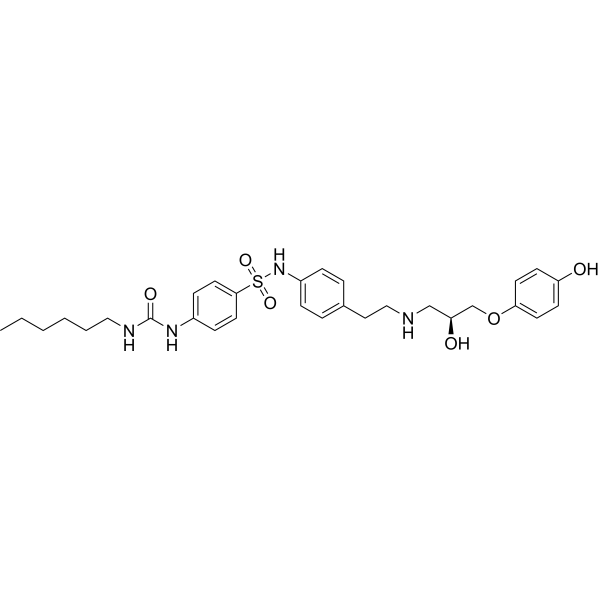
L755507 is a potent, selective agonist of β3-AR with an IC50 of 35 nM. L755507 enhances the homology-directed repair (HDR)-mediated genome editing.
For research use only. We do not sell to patients.
- Purity : 98.89%
- CAS No.: 159182-43-1
- Formula: C30H40N4O6S
- Molecular Weight:584.73
-
Storage:Powder -20°C, 3 years , 4°C, 2 years ; In solvent -80°C, 2 years , -20°C, 1 year

To place orders, for customer services and technical support, please contact: MedChemExpress USA
Tel: 609-228-6898 E-mail: [email protected] [email protected]


-
 Biological Activity
-
Chemical Information
-
Solvent & Solubility
- Protocols
- Purity & Documentation
- References
-
 Help & FAQs


-
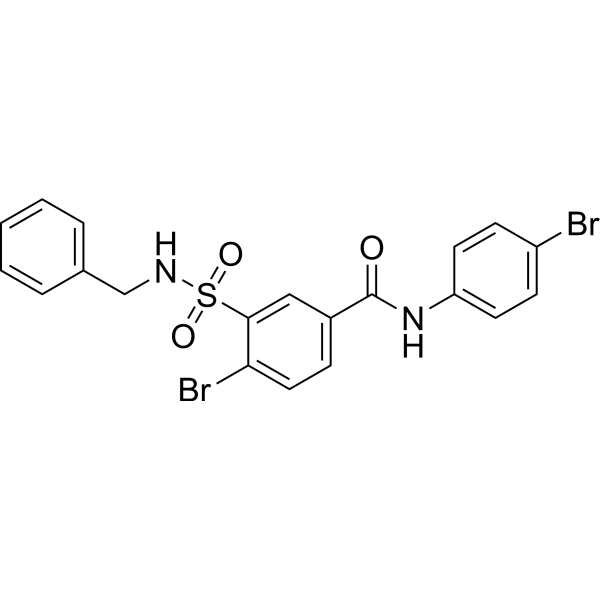
HY-19793
RS-1RAD51 Activator -
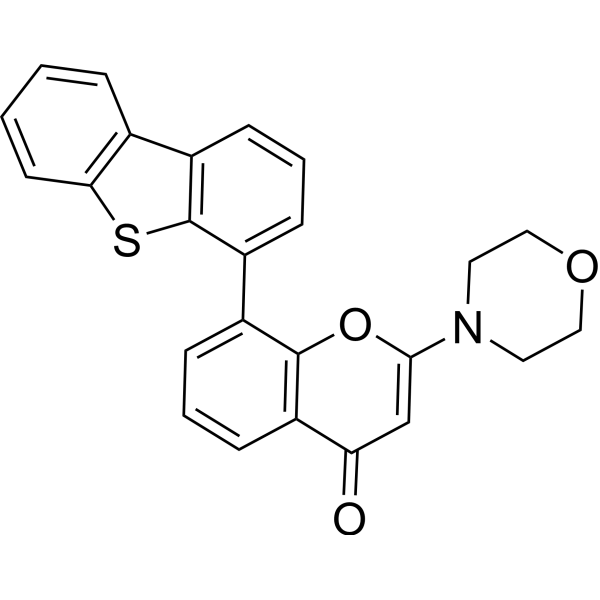
HY-11006
KU-57788DNA-PK Inhibitor -
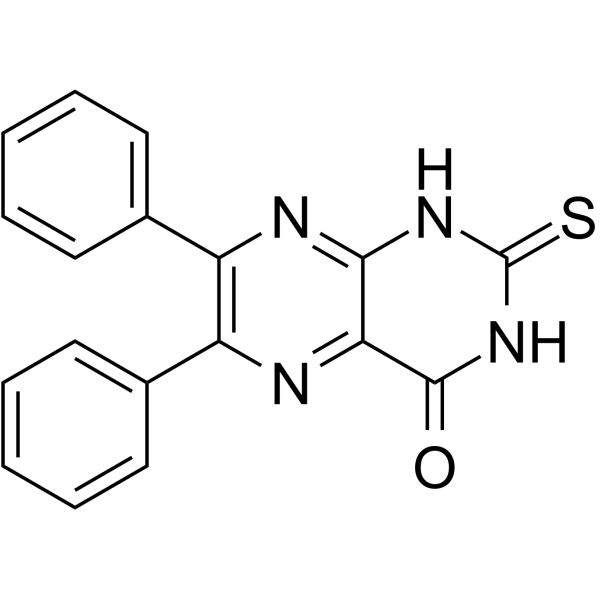
HY-107845
SCR7 pyrazineLigase IV Inhibitor/HDR Enhancer -
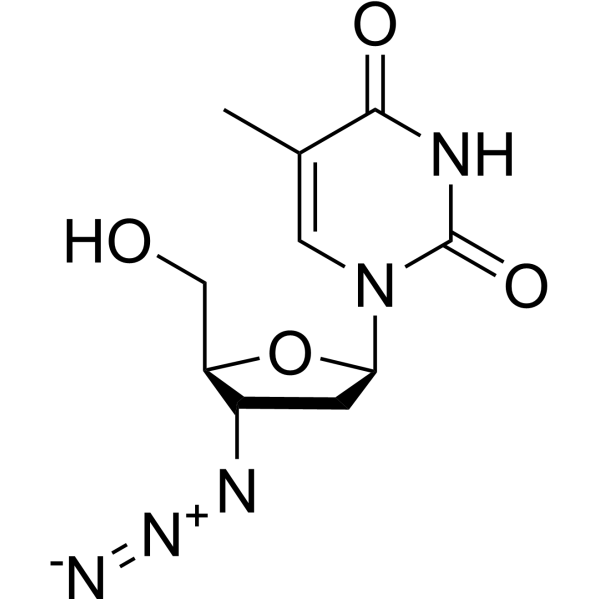
HY-17413
ZidovudineNucleoside Reverse Transcriptase Inhibitor -
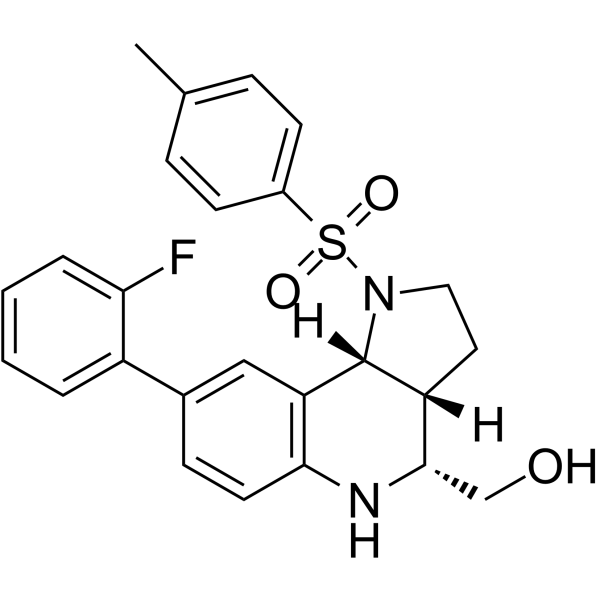
HY-136251
BRD0539SpCas9 Inhibitor -
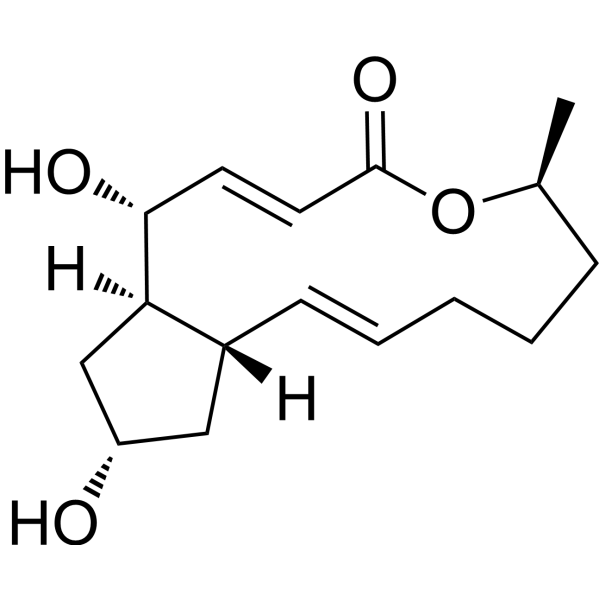
HY-16592
Brefeldin AProtein Transport Inhibitor -
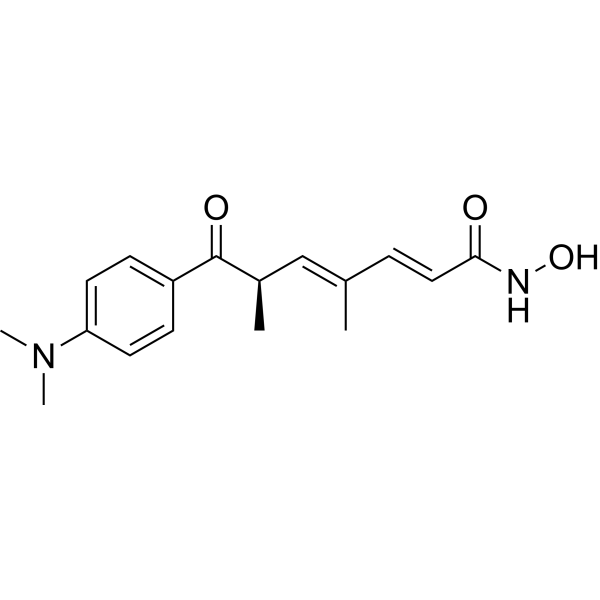
HY-15144
Trichostatin AHDAC Class I/II Inhibitor -
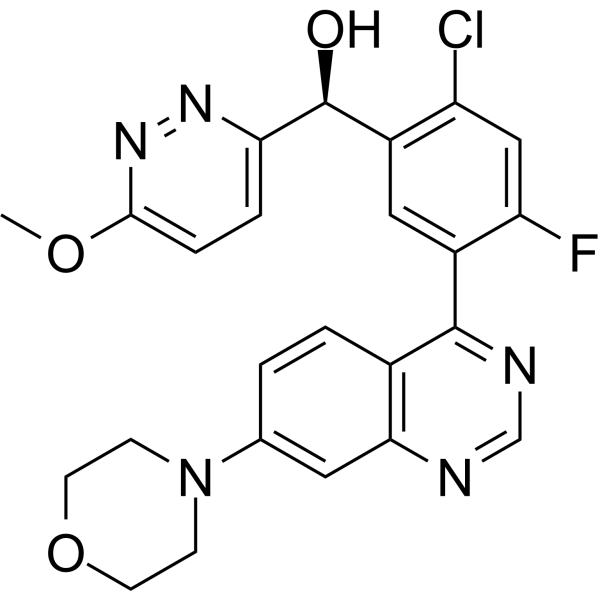
HY-101570
NedisertibDNA-PK Inhibitor -
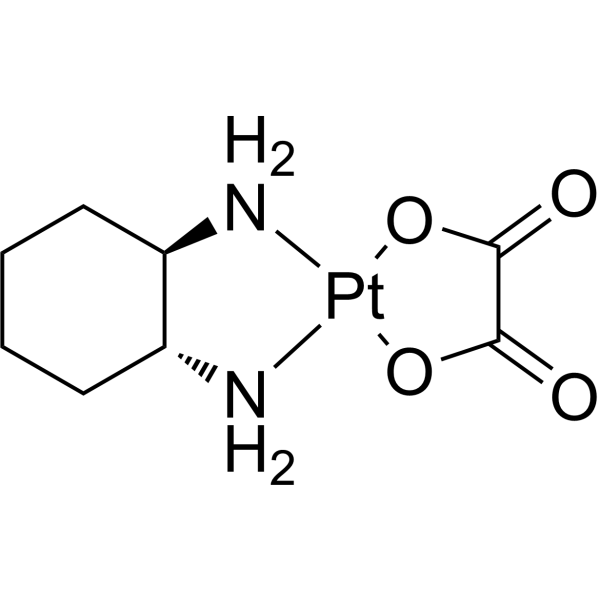
HY-17371
OxaliplatinDNA Synthesis Inhibitor -
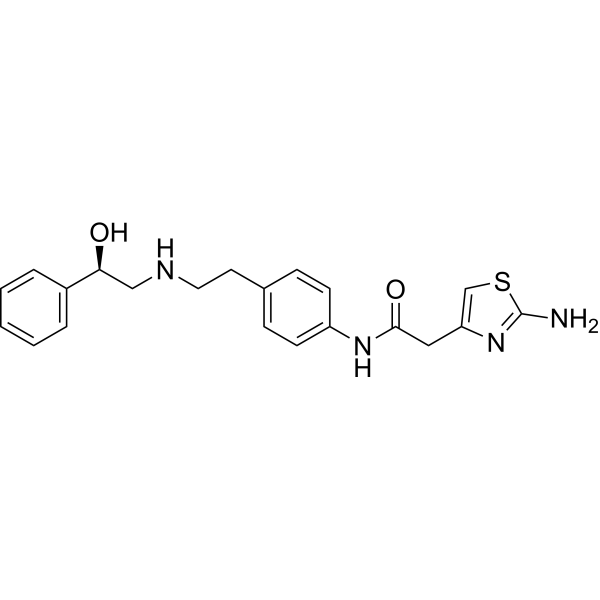
HY-14773
Mirabegronβ3-adrenoceptor Agonist -
![[Leu5]-Enkephalin](https://file.medchemexpress.com/product_pic/hy-p0288.gif)
HY-P0288
[Leu5]-EnkephalinEndogenous Metabolite -
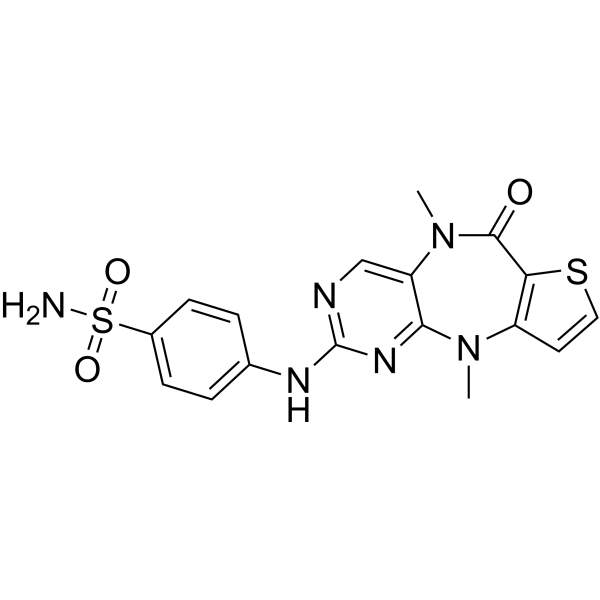
HY-100526
XMU-MP-1MST1/2 Inhibitor
Publications Citing Use of MedChemExpress (MCE) L755507
MoreAll Adrenergic Receptor Isoforms
More

Biological Activity
Description
IC50 & Target
IC50: 35 nM (β3-AR)[1]
Cellular Effect
|
Cell Line

|
Type | Value | Description | References |
|---|---|---|---|---|
| CHO | EC50 |
0.02 μM
Compound: L-755507
|
Increased cAMP levels of Chinese hamster ovary (CHO) cells expressing human beta 2 adrenergic receptors
Increased cAMP levels of Chinese hamster ovary (CHO) cells expressing human beta 2 adrenergic receptors
|
[PMID: 11311069] |
| CHO | EC50 |
0.33 μM
Compound: L-755507
|
In vitro activity to increase cAMP levels in Chinese hamster ovary (CHO) cells expressing the cloned human beta 1 Adrenergic receptor
In vitro activity to increase cAMP levels in Chinese hamster ovary (CHO) cells expressing the cloned human beta 1 Adrenergic receptor
|
[PMID: 11311069] |
| CHO | IC50 |
3 μM
Compound: 2, (L-755507)
|
Beta-2 adrenergic receptor binding affinity in CHO cells expressing cloned human receptor in the presence of 125 I-iodocyanopindolol
Beta-2 adrenergic receptor binding affinity in CHO cells expressing cloned human receptor in the presence of 125 I-iodocyanopindolol
|
[PMID: 9873681] |
In Vitro
L755507 causes a robust concentration-dependent increase in cAMP accumulation (pEC50 values of 8.5 and 12.3, respectively). Maximal cAMP accumulation with zinterol and L755507 is increased after pretreatment with pertussis toxin. In contrast to cAMP, zinterol, L755507 and L748337 increase phosphorylation of extracellular signal-regulated kinase 1/2 (Erk1/2) with very high potency (pEC50 values of 10.9, 11.7 and 11.6)[1]. L755507 and Scr7 do not reduce cell viability significantly. Scr7 does not affect cell cycle distribution in a range of 10 to 200 μM. L755507 significantly decreases the proportion of cells in the G2/M phase at 10 μM or 40 μM and increases the S-phase cells at 10 μM compare with the DMSO-treated cells[2].
MedChemExpress (MCE) has not independently confirmed the accuracy of these methods. They are for reference only.


Chemical Information
-
CAS No. 159182-43-1
-
Appearance Solid
-
Molecular Weight 584.73
-
Formula C30H40N4O6S
-
Color White to off-white
-
SMILES
O=S(C1=CC=C(NC(NCCCCCC)=O)C=C1)(NC2=CC=C(CCNC[C@H](O)COC3=CC=C(O)C=C3)C=C2)=O
-
Shipping
Room temperature in continental US; may vary elsewhere.
-
Storage
Powder -20°C 3 years 4°C 2 years In solvent -80°C 2 years -20°C 1 year


Publications (2)
-
Journal Impact Factor
-
Most Recent
-
Trends Biotechnol
Highly efficient prime editors for mammalian genome editing based on porcine retrovirus reverse transcriptase. [Abstract]2025 Aug 30:S0167-7799(25)00314-2. PMID: 40885667 -
Cell Commun Signal
Identification of novel SCD1 inhibitor alleviates nonalcoholic fatty liver disease: critical role of liver-adipose axis. [Abstract]2023 Sep 30;21(1):268. PMID: 37777801


Solvent & Solubility
In Vitro:
DMSO : ≥ 100 mg/mL (171.02 mM; Hygroscopic DMSO has a significant impact on the solubility of product, please use newly opened DMSO)
* "≥" means soluble, but saturation unknown.
Please refer to the solubility information to select the appropriate solvent. Once prepared, please aliquot and store the solution to prevent product inactivation from repeated freeze-thaw cycles.
Storage method and period of stock solution: -80°C, 2 years; -20°C, 1 year. When stored at -80°C, please use it within 2 years. When stored at -20°C, please use it within 1 year.
Please refer to the solubility information to select the appropriate solvent. Once prepared, please aliquot and store the solution to prevent product inactivation from repeated freeze-thaw cycles.
Storage method and period of stock solution: -80°C, 2 years; -20°C, 1 year. When stored at -80°C, please use it within 2 years. When stored at -20°C, please use it within 1 year.
Concentration (start) × Volume (start) = Concentration (final) × Volume (final)
In Vivo:
Select the appropriate dissolution method based on your experimental animal and administration route.
- For the following dissolution methods, please ensure to first prepare a clear stock solution using an In Vitro approach and then sequentially add co-solvents:
- To ensure reliable experimental results, the clarified stock solution can be appropriately stored based on storage conditions. As for the working solution for In Vivo experiments, it is recommended to prepare freshly and use it on the same day.
- The percentages shown for the solvents indicate their volumetric ratio in the final prepared solution. If precipitation or phase separation occurs during preparation, heat and/or sonication can be used to aid dissolution.
Add each solvent one by one: 10% DMSO 40% PEG300 5% Tween-80 45% Saline
Solubility: ≥ 2.5 mg/mL (4.28 mM); Clear solution
This protocol yields a clear solution of ≥ 2.5 mg/mL (saturation unknown).
Taking 1 mL working solution as an example, add 100 μL DMSO stock solution (25.0 mg/mL) to 400 μL PEG300, and mix evenly; then add 50 μL Tween-80 and mix evenly; then add 450 μL Saline to adjust the volume to 1 mL.
Preparation of Saline: Dissolve 0.9 g sodium chloride in ddH₂O and dilute to 100 mL to obtain a clear Saline solution.
Add each solvent one by one: 10% DMSO 90% (20% SBE-β-CD in Saline)
Solubility: ≥ 2.5 mg/mL (4.28 mM); Clear solution
This protocol yields a clear solution of ≥ 2.5 mg/mL (saturation unknown).
Taking 1 mL working solution as an example, add 100 μL DMSO stock solution (25.0 mg/mL) to 900 μL 20% SBE-β-CD in Saline, and mix evenly.
Preparation of 20% SBE-β-CD in Saline (4°C, storage for one week): 2 g SBE-β-CD powder is dissolved in 10 mL Saline, completely dissolve until clear.
In Vivo Dissolution Calculator
Please enter the basic information of animal experiments:
-
-
-
-
Recommended: Prepare an additional quantity of animals to account for potential losses during experiments.
Please enter your animal formula composition:
-
%DMSO +
Recommended: Keep the proportion of DMSO in working solution below 2% if your animal is weak.
-
%+
-
+%Tween-80 + +
-
%Saline +
The co-solvents required include: DMSO, . All of co-solvents are available by MedChemExpress (MCE). , Tween 80. All of co-solvents are available by MedChemExpress (MCE).
Working solution concentration: 0.22 mg/mL
Method for preparing stock solution: mg drug dissolved in μL DMSO. Stock solution concentration: mg/mL.
1. Take μL DMSO stock solution;
2. Add μL .
μL , mix evenly;
3. Then add μL Tween 80, mix evenly;
4. Then add μL
Please ensure that the stock solution in the first step is dissolved to a clear state, and add co-solvents in sequence. You can use ultrasonic heating (ultrasonic cleaner, recommended frequency 20-40 kHz), vortexing, etc. to assist dissolution.


Purity & Documentation
-
Data Sheet (271 KB)
-
SDS (251 KB)
- English - EN (251 KB)
- Français - FR (251 KB)
- Deutsch - DE (251 KB)
- Norwegian - NO (251 KB)
- Español - ES (251 KB)
- Swedish - SV (251 KB)
- Italian - IT (251 KB)
- Korean - KR (251 KB)
- Portuguese - PT (251 KB)
-
Handling Instructions (2659 KB)
References
[1]. Sato M, et al. The beta3-adrenoceptor agonist 4-[[(Hexylamino)carbonyl]amino]-N-[4-[2-[[(2S)-2-hydroxy-3-(4-hydroxyphenoxy)propyl]amino]ethyl]-phenyl]-benzenesulfonamide (L755507) and antagonist (S)-N-[4-[2-[[3-[3-(acetamidomethyl)phenoxy]-2-hydroxypropyl]amino]-ethyl]phenyl]benzenesulfonamide (L748337) activate different signaling pathways in Chinese hamster ovary-K1 cells stably expressing the human beta3-adrenoceptor. Mol Pharmacol. 2008 Nov;74(5):1417-28. [Content Brief]
[2]. Guoling Li, et al. Small molecules enhance CRISPR/Cas9-mediated homology-directed genome editing in primary cells. Sci Rep. 2017; 7: 8943. [Content Brief]
[3]. Murakami Y, et al. An effective double gene knock-in strategy using small-molecule L755507 in the medaka fish (Oryzias latipes). Genesis. 2022;60(1-2):e23465. [Content Brief]


Complete Stock Solution Preparation Table
Please refer to the solubility information to select the appropriate solvent. Once prepared, please aliquot and store the solution to prevent product inactivation from repeated freeze-thaw cycles.
Storage method and period of stock solution: -80°C, 2 years; -20°C, 1 year. When stored at -80°C, please use it within 2 years. When stored at -20°C, please use it within 1 year.
| Optional Solvent | Concentration Solvent Mass | 1 mg | 5 mg | 10 mg | 25 mg |
|---|---|---|---|---|---|
| DMSO | 1 mM | 1.7102 mL | 8.5510 mL | 17.1019 mL | 42.7548 mL |
| 5 mM | 0.3420 mL | 1.7102 mL | 3.4204 mL | 8.5510 mL | |
| 10 mM | 0.1710 mL | 0.8551 mL | 1.7102 mL | 4.2755 mL | |
| 15 mM | 0.1140 mL | 0.5701 mL | 1.1401 mL | 2.8503 mL | |
| 20 mM | 0.0855 mL | 0.4275 mL | 0.8551 mL | 2.1377 mL | |
| 25 mM | 0.0684 mL | 0.3420 mL | 0.6841 mL | 1.7102 mL | |
| 30 mM | 0.0570 mL | 0.2850 mL | 0.5701 mL | 1.4252 mL | |
| 40 mM | 0.0428 mL | 0.2138 mL | 0.4275 mL | 1.0689 mL | |
| 50 mM | 0.0342 mL | 0.1710 mL | 0.3420 mL | 0.8551 mL | |
| 60 mM | 0.0285 mL | 0.1425 mL | 0.2850 mL | 0.7126 mL | |
| 80 mM | 0.0214 mL | 0.1069 mL | 0.2138 mL | 0.5344 mL | |
| 100 mM | 0.0171 mL | 0.0855 mL | 0.1710 mL | 0.4275 mL |


L755507 Related Classifications
HY-19334 Related Classifications
 Powered by Bioz