



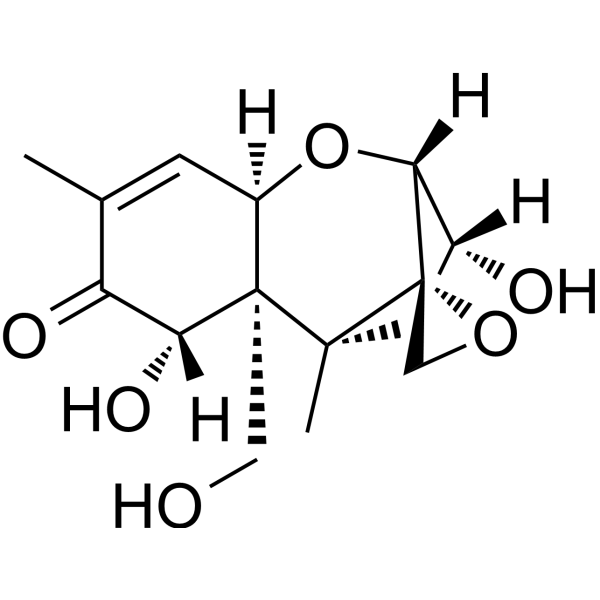
Deoxynivalenol
Based on 21 publication(s) in Google Scholar
Deoxynivalenol, an orally active mycotoxin of the trichothecenes family, crosses the intestinal mucosa by a paracellular pathway through the tight junctions. The Deoxynivalenol transport is not affected by P-glycoprotein (PgP) or multidrug resistance-associated proteins (MRPs) inhibitors.
For research use only. We do not sell to patients.
- Purity : 99.90%
- CAS No.: 51481-10-8
- Formula: C15H20O6
- Molecular Weight:296.32
-
Storage:Powder -20°C, 3 years ; In solvent -80°C, 6 months , -20°C, 1 month

To place orders, for customer services and technical support, please contact: MedChemExpress USA
Tel: 609-228-6898 E-mail: [email protected] [email protected]


-
 Biological Activity
-
Chemical Information
-
Solvent & Solubility
- Purity & Documentation
- References
-
 Help & FAQs


-
HY-N6719
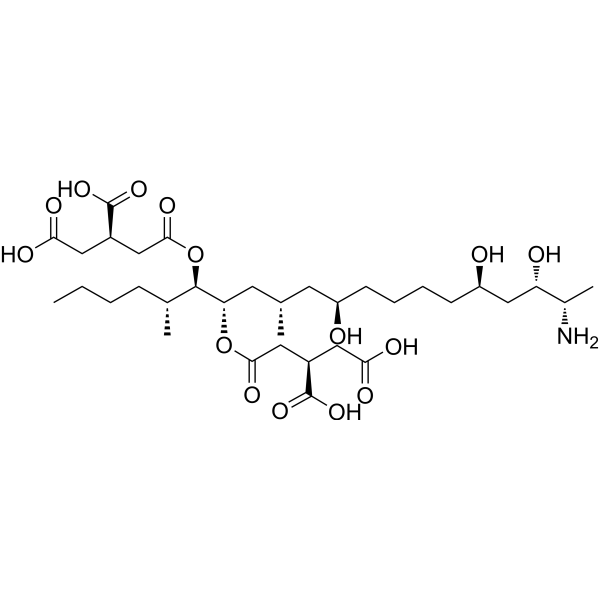
Fumonisin B1Sphingosine N-acyltransferase Inhibitor -
HY-103447
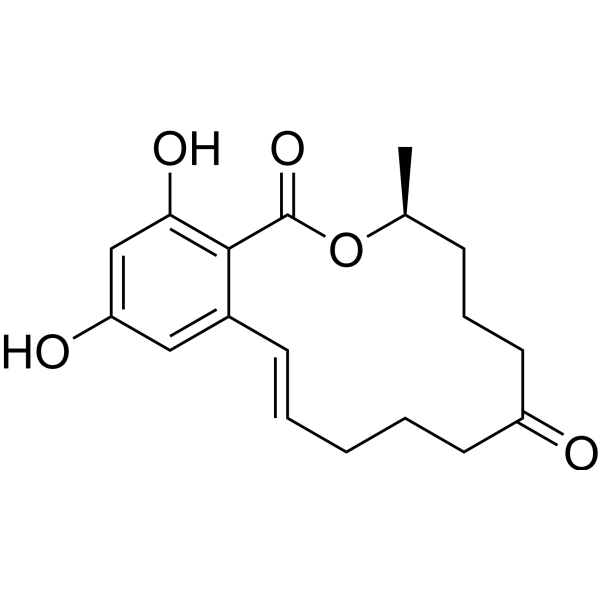
ZearalenoneMycotoxin Compound -
HY-100410
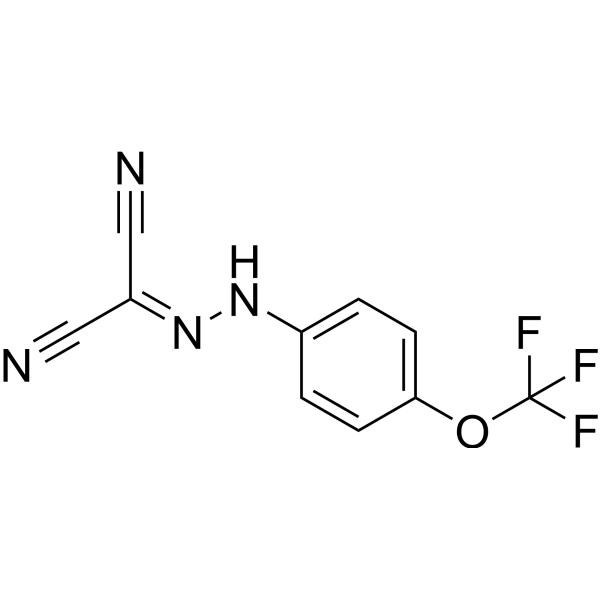
FCCPOXPHOS Uncoupler -
HY-15763
ErastinFerroptosis Inducer -
HY-B0015
PaclitaxelAntitumor Agent -
HY-B1756
RotenoneMitochondrial Complex I Inhibitor -
HY-13259
MG-132Proteasome Inhibitor -
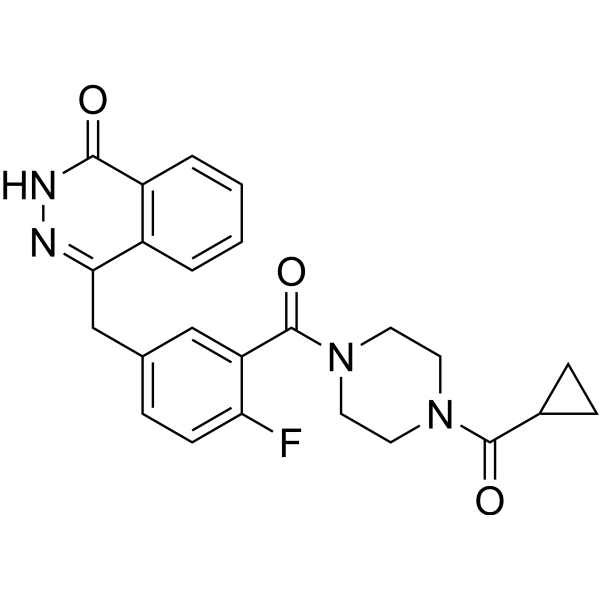
HY-10162
OlaparibPARP Inhibitor -
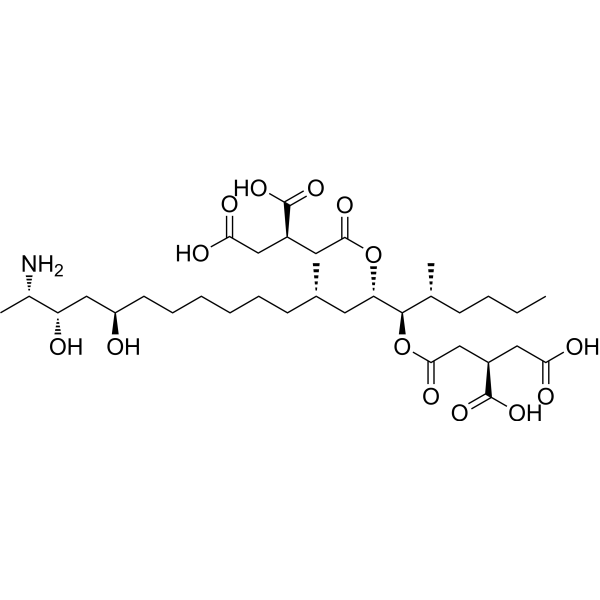
HY-N6723
Fumonisin B2Ceramide Synthase Inhibitor -
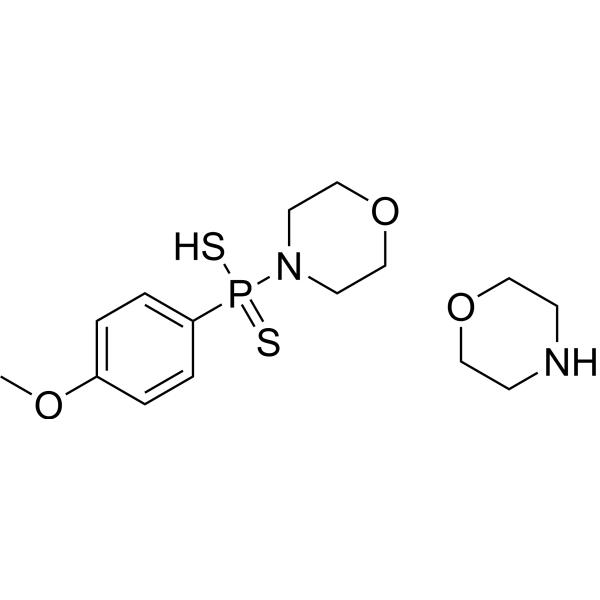
HY-107632
GYY4137H2S Donor -
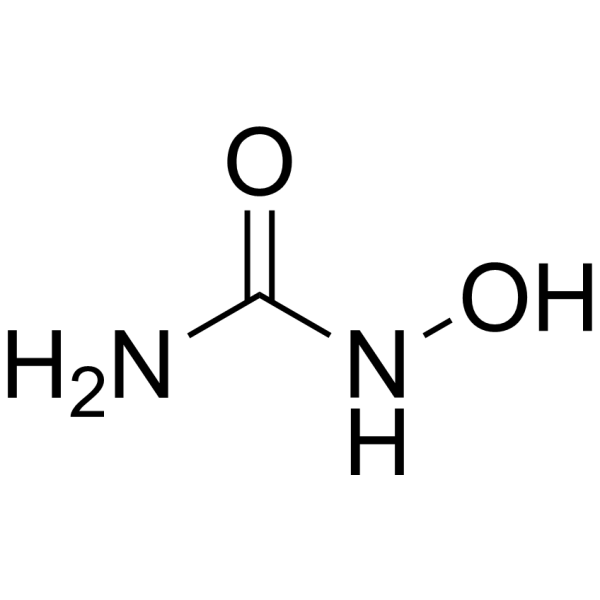
HY-B0313
HydroxyureaRNR Inhibitor
Publications Citing Use of MedChemExpress (MCE) Deoxynivalenol
More- Cell Commun Signal. 2025 Oct 3;23(1):417. [Abstract]
- J Hazard Mater. 2026 Aug 1:514:142890.
- Environ Int. 2025 Oct 28:205:109891. [Abstract]
- Free Radic Biol Med. 2026 Jun 27:S0891-5849(26)00902-0. [Abstract]
- Talanta. 2023 Jun 1:258:124388. [Abstract]
- Ecotoxicol Environ Saf. 2024 Nov 1:286:117243. [Abstract]
- Ecotoxicol Environ Saf. 2022 Dec 15:248:114276. [Abstract]
- Commun Biol. 2025 Nov 20;8(1):1626. [Abstract]
- Microchem J. 2025 Dec 11;220:116425.
- Toxicology. 2025 May:513:154084. [Abstract]
- Toxicology. 2024 Nov:508:153923. [Abstract]
- Toxicology. 2023 Aug 1:494:153589. [Abstract]
- Poult Sci. 2026 Mar 5;105(6):106740. [Abstract]
- Toxins (Basel). 2026 Aug 20;18(8):355.
- Toxins. 2024 Oct 9;16(10):432. [Abstract]
- Microb Pathog. 2026 Jul:216:108527. [Abstract]
- Biol Reprod. 2021 Aug 3;105(2):554-566. [Abstract]
- Toxicon. 2026 Dec 1:283:109281.
- Toxicon. 2025 Feb:255:108228. [Abstract]
- Vet Sci. 2024 Mar 30;11(4):156. [Abstract]
- SSRN. 2025 Dec 31.
 Customer Validation & Images

-
Cell Proliferation/Viability Assay
-
Histological Imaging/Staining
-
RT-PCR
-
WB
-
IF


Biological Activity
Description
Cellular Effect
|
Cell Line

|
Type | Value | Description | References |
|---|---|---|---|---|
| COLO 201 | IC50 |
86 μM
Compound: 2; DON
|
Antiproliferative activity against human COLO201 cells after 24 hrs by WST-1 assay
Antiproliferative activity against human COLO201 cells after 24 hrs by WST-1 assay
|
[PMID: 30797671] |
| K562 | EC50 |
1010 nM
Compound: DON
|
Cytotoxicity against human K562 cells by MTT assay
Cytotoxicity against human K562 cells by MTT assay
|
[PMID: 18327910] |
In Vitro
Deoxynivalenol (0-2 μg/mL, 24 h) provokes the phosphorylation of the mitogen-activated protein kinases (MAPKs) Erk1/2, p38 and SAPK/JNK in Caco-2 cells[1].
Deoxynivalenol (100-4000 ng/mL, 24-72 h) reduces the viability of IPEC-1 and IPEC-J2 cells after 48 h and 72 h incubation at the doses of 500-4000 ng/mL[2].
Deoxynivalenol (0-4000 ng/mL, 24-72 h) increases BrdU incorporation at 200 ng/mL and decreases BrdU incorporation at 2000-4000 ng/mL in IPEC-1 and IPEC-J2 cells[2].
MedChemExpress (MCE) has not independently confirmed the accuracy of these methods. They are for reference only.
-
Cell Line:IPEC-1 and IPEC-J2 cells
-
Concentration:100-4000 ng/mL
-
Incubation Time:24-72 h
-
Result:Reduced the cell count in a time and dose dependent.
Increased LDH signals in IPEC-1 after 48 h and 72 h incubation with 2000 ng/mL and in IPEC-J2 after 48 h incubation with 2000 ng/mL.
Reduced NR uptake in IPEC-1 and IPEC-J2 cells at the doses of 2000 ng/mL.
Decreased the MTT signal in IPEC-1 to 60% and 40% of the control after 48 h and 72 h at the doses of 2000 ng/mL.
Decreased the MTT signal in IPEC-J2 to 70% and 58% of the control after 48 h and 72 h at the doses of 2000 ng/mL.
-
Cell Line:Caco-2 cells
-
Concentration:0-10 μg/mL
-
Incubation Time:48 h
-
Result:Inhibited the proliferation of cells in a dose-dependent manner.
-
Cell Line:IPEC-1 and IPEC-J2 cells
-
Concentration:200-2000 ng/mL
-
Incubation Time:24-72 h
-
Result:Increased percentages of pre-G1, S and G2/M phases and decreased of the G0/G1 phase in response to 2000 ng/mL after 48 h in IPEC-1 cells.
Decreased the G0/G1 phase in IPEC-J2 cell at the doses of 2000 ng/mL after 48 h.
Increased the percentage of pre-G1 in IPEC-1 cells after 72 h.
Increased the G2/M phase in IPEC-1 and IPEC-J2 cells at the doses of 2000 ng/mL after 72 h.
-
Cell Line:IPEC-1 and IPEC-J2 cells
-
Concentration:200-2000 ng/mL
-
Incubation Time:6-72 h
-
Result:Increased the caspase 3 activity after 6 h, 8 h, 48 h and 72 h of incubation with 2000 ng/mL.
Reduced the caspase 3 activity to the control level after 24 h of incubation with 2000 ng/mL.
-
Cell Line:Caco-2 cells
-
Concentration:2 μg/mL
-
Incubation Time:5-240 min
-
Result:Increased the phosphorylation of Erk1/Erk2 during 5 min.
Increased the phosphorylation of p38 from 5 to 30 min.
-
Cell Line:IPEC-1 and IPEC-J2 cells
-
Concentration:200-2000 ng/mL
-
Incubation Time:48 h
-
Result:Reduced the protein level of ZO-1 at the doses of 2000 ng/mL.
In Vivo
Deoxynivalenol (0-5 mg/kg, i.g., daily, 14 days) causes abnormal sternum development in fetuses rats at a dose of 5 mg/kg[3].
Deoxynivalenol (10-1000 mg/kg; p.o., i.p.; once time) is estimated to be 78 mg/kg (p.o.) and 49 mg/kg (i.p.) of LD50 values in the B6C3F1 mouse[4].
Deoxynivalenol (2-20 mg/kg, p.o., daily, 4 weeks) increases in plasma in a dose-dependent manner and reduces weight gain in B6C3F1 mouse[5].
Pharmacokinetic Analysis in B6C3F1 Mice Model[5]
| Route | Dose (mg/kg) | Plasma T1/2α (min) | Plasma T1/2β (h) | Liver T1/2α (min) | Liver T1/2β (h) | Kidney T1/2α (min) | Kidney T1/2β (h) | Spleen T1/2α (min) | Spleen T1/2β (h) | Heart T1/2α (min) | Heart T1/2β (h) |
| p.o. | 25 | 20.4 | 11.8 | 22 | 19 | 47 | 20.9 | 29 | 9 | 41 | 12.3 |
MedChemExpress (MCE) has not independently confirmed the accuracy of these methods. They are for reference only.
-
Animal Model:Pregnant rats[3]
-
Dosage:0-5 mg/kg
-
Administration:i.g., daily, 14 days
-
Result:Reduced feed consumption and mean body weight gain in the 5 mg/kg group .
Reduced feed consumption in the 2.5 mg/kg group during 8-14 days.
Decreased the number of viable fetuses at 5 mg/kg.
Reduced fetal body weight and crown-rump length at 2.5 and 5 mg/kg.
Increased the incidence of runts and the average number of fetuses per litter with internal anomalies at 2.5 and 5 mg/kg.
Increased the incidence of misaligned and fused sternebrae at 5 mg/kg.
Increased the ratios of liver-to-body-weight and kidneys-to-body-weight.


Chemical Information
-
CAS No. 51481-10-8
-
Appearance Solid
-
Molecular Weight 296.32
-
Formula C15H20O6
-
Color White to off-white
-
SMILES
O=C(C(C)=C1)[C@@H](O)[C@@]2(CO)[C@]1([H])O[C@]3([H])[C@H](O)C[C@@]2(C)[C@@]34OC4
-
Synonyms
Vomitoxin
-
Structure Classification
-
Initial Source
Fusarium specie
-
Shipping
Room temperature in continental US; may vary elsewhere.
-
Storage
Powder -20°C 3 years In solvent -80°C 6 months -20°C 1 month


Publications (21)
-
Journal Impact Factor
-
Most Recent
-
Cell Commun Signal
Tubacin alleviate the reproductive toxicity of deoxynivalenol in mouse oocytes and zygotes via strengthening microtubule stability. [Abstract]2025 Oct 3;23(1):417. PMID: 41044645 -
-
Environ Int
Low dosage exposure of deoxynivalenol and copper synergistically enhanced the intestinal toxicity. [Abstract]2025 Oct 28:205:109891. PMID: 41172574
Deoxynivalenol purchased from MedChemExpress. Usage Cited in: Environ Int. 2025 Oct 28:205:109891. [Abstract]
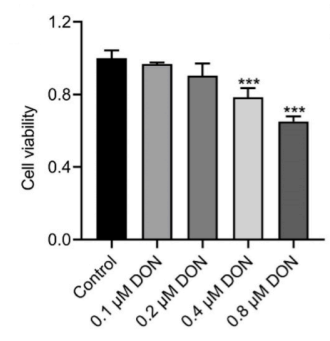
Deoxynivalenol (DON, 0.5-4 μM; 24 h) effects on cell viability of IPEC-J2 cells.
-
Free Radic Biol Med
Proteome-wide quantitative analysis of redox cysteine in porcine uterus reveals deoxynivalenol induced oxidative stress via protein hyperoxidation. [Abstract]2026 Jun 27:S0891-5849(26)00902-0. PMID: 42364855 -
Talanta
Nanobody-based magnetic chemiluminescence immunoassay for one-pot detection of ochratoxin A. [Abstract]2023 Jun 1:258:124388. PMID: 36921368 -
Ecotoxicol Environ Saf
2024 Nov 1:286:117243. PMID: 39447294
Deoxynivalenol purchased from MedChemExpress. Usage Cited in: Ecotoxicol Environ Saf. 2024 Nov 1:286:117243. [Abstract]
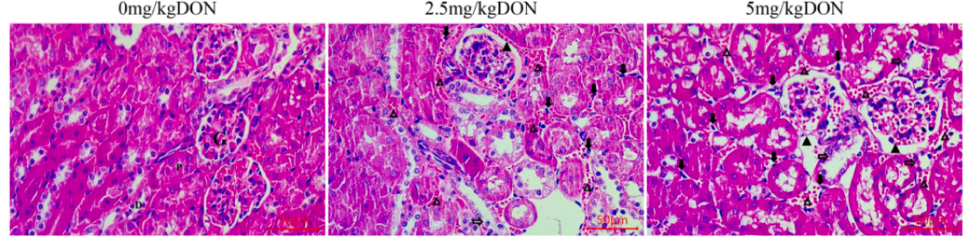
Histological characterizations in the kidney sections were evaluated. The results showed that compared with the control group, Deoxynivalenol (DON, 2.5-5 mg/kg; i.p.; single dose) treatment increased inflammatory cell infiltration, hemorrhage, tubular degeneration, and glomerular atrophy in the kidneys of mice. (magnification:×400, scale bar: 50 μm). G: glomerulus, P: proximal tubule, D: distal tubule; Hemorrhage (Δ), inflammatory cell infiltration (↓), tubular degradation (⇒), glomerular atrophy (▲).
Deoxynivalenol purchased from MedChemExpress. Usage Cited in: Ecotoxicol Environ Saf. 2024 Nov 1:286:117243. [Abstract]
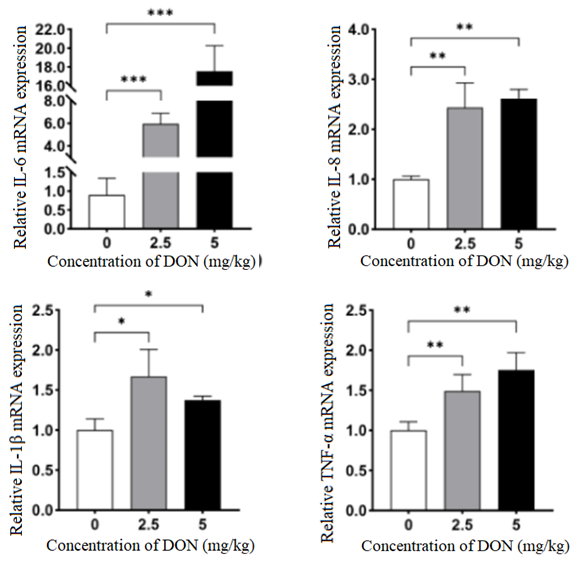
Deoxynivalenol (DON, 2.5–5 mg/kg; i.p., single dose) significantly upregulated the mRNA expression levels of the proinflammatory cytokines IL-6, IL-8, IL-1β, and TNF-α in mouse renal tissues.
Deoxynivalenol purchased from MedChemExpress. Usage Cited in: Ecotoxicol Environ Saf. 2024 Nov 1:286:117243. [Abstract]
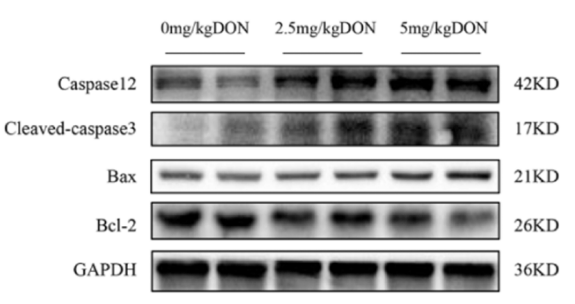
Protein expression levels of Caspase12, Cleaved-caspase3, Bax, and Bcl-2 were assessed in the kidneys of mice treated with Deoxynivalenol (DON, i.p.; single dose) at either 2.5 or 5 mg/kg BW for 3 hours.
-
Ecotoxicol Environ Saf
Dietary supplementation with selenium nanoparticles-enriched Lactobacillus casei ATCC 393 alleviates intestinal barrier dysfunction of mice exposed to deoxynivalenol by regulating endoplasmic reticulum stress and gut microbiota. [Abstract]2022 Dec 15:248:114276. PMID: 36371888
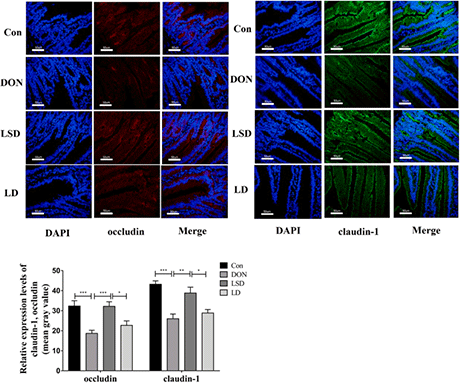
Deoxynivalenol purchased from MedChemExpress. Usage Cited in: Ecotoxicol Environ Saf. 2022 Dec 15:248:114276. [Abstract]
Deoxynivalenol (DON) exposure results in the decrease of the expression levels of occludin and claudin-1 in duodenum of mice.
-
Commun Biol
Deoxynivalenol induces ferroptosis via inhibiting glycolysis-H3K18la-STEAP3 axis to promote ovary damage in piglets. [Abstract]2025 Nov 20;8(1):1626. PMID: 41266595 -
-
Toxicology
NNMT is involved in deoxynivalenol-induced hepatocyte toxicity via promoting ferroptosis. [Abstract]2025 May:513:154084. PMID: 39983889 -
Toxicology
2024 Nov:508:153923. PMID: 39147090 -
Toxicology
2023 Aug 1:494:153589. PMID: 37419272 -
Poult Sci
Quercetin attenuates deoxynivalenol-induced muscle developmental disorders in broilers by modulating the PI3K/Akt/mTOR pathway and reducing apoptosis. [Abstract]2026 Mar 5;105(6):106740. PMID: 41850073 -
-
Toxins
Deoxynivalenol-Induced Spleen Toxicity in Mice: Inflammation, Endoplasmic Reticulum Stress, Macrophage Polarization, and the Dysregulation of LncRNA Expression. [Abstract]2024 Oct 9;16(10):432. PMID: 39453208 -
Microb Pathog
Nano-selenium alleviates the pyroptosis and inflammation of ST cells induced by deoxynivalenol via ROS/NF-κB/NLRP3 axis. [Abstract]2026 Jul:216:108527. PMID: 42070668 -
Biol Reprod
Melatonin alleviates deoxynivalenol-induced apoptosis of human granulosa cells by reducing mutually accentuated FOXO1 and ER stress‡. [Abstract]2021 Aug 3;105(2):554-566. PMID: 33907797 -
-
Toxicon
18beta-glycyrrhetinic acid alleviates deoxynivalenol-induced hepatotoxicity by inhibiting GPX4-dependent ferroptosis. [Abstract]2025 Feb:255:108228. PMID: 39798898 -
Vet Sci
The Alleviating Effect of Taxifolin on Deoxynivalenol-Induced Damage in Porcine Intestinal Epithelial Cells. [Abstract]2024 Mar 30;11(4):156. PMID: 38668423 -


Solvent & Solubility
In Vitro:
DMSO : 100 mg/mL (337.47 mM; Need ultrasonic; Hygroscopic DMSO has a significant impact on the solubility of product, please use newly opened DMSO)
Ethanol : 30 mg/mL (101.24 mM; Need ultrasonic and warming)
Please refer to the solubility information to select the appropriate solvent. Once prepared, please aliquot and store the solution to prevent product inactivation from repeated freeze-thaw cycles.
Storage method and period of stock solution: -80°C, 6 months; -20°C, 1 month. When stored at -80°C, please use it within 6 months. When stored at -20°C, please use it within 1 month.
Please refer to the solubility information to select the appropriate solvent. Once prepared, please aliquot and store the solution to prevent product inactivation from repeated freeze-thaw cycles.
Storage method and period of stock solution: -80°C, 6 months; -20°C, 1 month. When stored at -80°C, please use it within 6 months. When stored at -20°C, please use it within 1 month.
Concentration (start) × Volume (start) = Concentration (final) × Volume (final)
In Vivo:
Select the appropriate dissolution method based on your experimental animal and administration route.
- For the following dissolution methods, please ensure to first prepare a clear stock solution using an In Vitro approach and then sequentially add co-solvents:
- To ensure reliable experimental results, the clarified stock solution can be appropriately stored based on storage conditions. As for the working solution for In Vivo experiments, it is recommended to prepare freshly and use it on the same day.
- The percentages shown for the solvents indicate their volumetric ratio in the final prepared solution. If precipitation or phase separation occurs during preparation, heat and/or sonication can be used to aid dissolution.
Add each solvent one by one: 10% DMSO 40% PEG300 5% Tween-80 45% Saline
Solubility: ≥ 2.5 mg/mL (8.44 mM); Clear solution
This protocol yields a clear solution of ≥ 2.5 mg/mL (saturation unknown).
Taking 1 mL working solution as an example, add 100 μL DMSO stock solution (25.0 mg/mL) to 400 μL PEG300, and mix evenly; then add 50 μL Tween-80 and mix evenly; then add 450 μL Saline to adjust the volume to 1 mL.
Preparation of Saline: Dissolve 0.9 g sodium chloride in ddH₂O and dilute to 100 mL to obtain a clear Saline solution.
Add each solvent one by one: 10% DMSO 90% (20% SBE-β-CD in Saline)
Solubility: ≥ 2.5 mg/mL (8.44 mM); Clear solution
This protocol yields a clear solution of ≥ 2.5 mg/mL (saturation unknown).
Taking 1 mL working solution as an example, add 100 μL DMSO stock solution (25.0 mg/mL) to 900 μL 20% SBE-β-CD in Saline, and mix evenly.
Preparation of 20% SBE-β-CD in Saline (4°C, storage for one week): 2 g SBE-β-CD powder is dissolved in 10 mL Saline, completely dissolve until clear.
In Vivo Dissolution Calculator
Please enter the basic information of animal experiments:
-
-
-
-
Recommended: Prepare an additional quantity of animals to account for potential losses during experiments.
Please enter your animal formula composition:
-
%DMSO +
Recommended: Keep the proportion of DMSO in working solution below 2% if your animal is weak.
-
%+
-
+%Tween-80 + +
-
%Saline +
The co-solvents required include: DMSO, . All of co-solvents are available by MedChemExpress (MCE). , Tween 80. All of co-solvents are available by MedChemExpress (MCE).
Working solution concentration: 0.22 mg/mL
Method for preparing stock solution: mg drug dissolved in μL DMSO. Stock solution concentration: mg/mL.
1. Take μL DMSO stock solution;
2. Add μL .
μL , mix evenly;
3. Then add μL Tween 80, mix evenly;
4. Then add μL
Please ensure that the stock solution in the first step is dissolved to a clear state, and add co-solvents in sequence. You can use ultrasonic heating (ultrasonic cleaner, recommended frequency 20-40 kHz), vortexing, etc. to assist dissolution.


Purity & Documentation
-
Data Sheet (293 KB)
-
SDS (480 KB)
- English - EN (480 KB)
- Français - FR (480 KB)
- Deutsch - DE (480 KB)
- Norwegian - NO (480 KB)
- Español - ES (480 KB)
- Swedish - SV (480 KB)
- Italian - IT (480 KB)
- Korean - KR (480 KB)
- Portuguese - PT (480 KB)
-
Handling Instructions (2659 KB)
References
[1]. Sergent T, et al. Deoxynivalenol transport across human intestinal Caco-2 cells and its effects on cellularmetabolism at realistic intestinal concentrations. Toxicol Lett. 2006 Jul 1;164(2):167-76. [Content Brief]
[2]. Diesing AK, et al. Mycotoxin deoxynivalenol (DON) mediates biphasic cellular response in intestinal porcine epithelial cell lines IPEC-1 and IPEC-J2. Toxicol Lett. 2011 Jan 15;200(1-2):8-18. [Content Brief]
[3]. Collins TF, et al. Effects of deoxynivalenol (DON, vomitoxin) on in utero development in rats. Food Chem Toxicol. 2006 Jun;44(6):747-57. [Content Brief]
[4]. Forsell JH, et al. Comparison of acute toxicities of deoxynivalenol (vomitoxin) and 15-acetyldeoxynivalenol in the B6C3F1 mouse. Food Chem Toxicol. 1987 Feb;25(2):155-62. [Content Brief]
[5]. Pestka JJ, et al. Immunochemical assessment of deoxynivalenol tissue distribution following oral exposure in the mouse. Toxicol Lett. 2008 May 5;178(2):83-7. [Content Brief]


Complete Stock Solution Preparation Table
Please refer to the solubility information to select the appropriate solvent. Once prepared, please aliquot and store the solution to prevent product inactivation from repeated freeze-thaw cycles.
Storage method and period of stock solution: -80°C, 6 months; -20°C, 1 month. When stored at -80°C, please use it within 6 months. When stored at -20°C, please use it within 1 month.
| Optional Solvent | Concentration Solvent Mass | 1 mg | 5 mg | 10 mg | 25 mg |
|---|---|---|---|---|---|
| Ethanol / DMSO | 1 mM | 3.3747 mL | 16.8736 mL | 33.7473 mL | 84.3682 mL |
| 5 mM | 0.6749 mL | 3.3747 mL | 6.7495 mL | 16.8736 mL | |
| 10 mM | 0.3375 mL | 1.6874 mL | 3.3747 mL | 8.4368 mL | |
| 15 mM | 0.2250 mL | 1.1249 mL | 2.2498 mL | 5.6245 mL | |
| 20 mM | 0.1687 mL | 0.8437 mL | 1.6874 mL | 4.2184 mL | |
| 25 mM | 0.1350 mL | 0.6749 mL | 1.3499 mL | 3.3747 mL | |
| 30 mM | 0.1125 mL | 0.5625 mL | 1.1249 mL | 2.8123 mL | |
| 40 mM | 0.0844 mL | 0.4218 mL | 0.8437 mL | 2.1092 mL | |
| 50 mM | 0.0675 mL | 0.3375 mL | 0.6749 mL | 1.6874 mL | |
| 60 mM | 0.0562 mL | 0.2812 mL | 0.5625 mL | 1.4061 mL | |
| 80 mM | 0.0422 mL | 0.2109 mL | 0.4218 mL | 1.0546 mL | |
| 100 mM | 0.0337 mL | 0.1687 mL | 0.3375 mL | 0.8437 mL |


Deoxynivalenol Related Classifications
HY-N6684 Related Classifications
 Powered by Bioz