



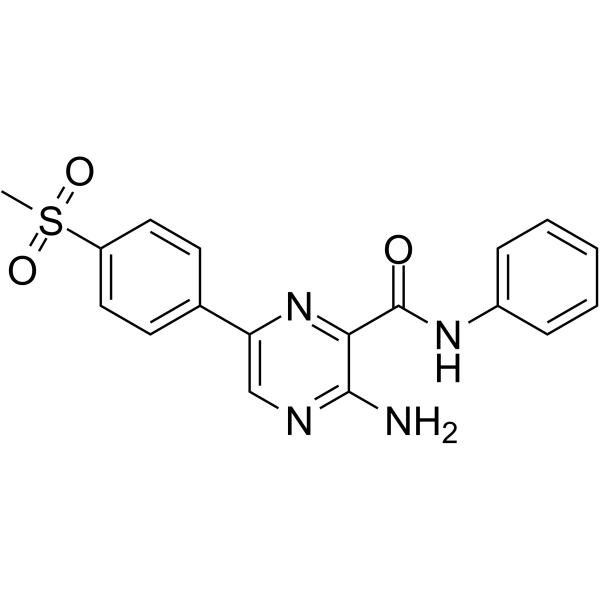
VE-821
Based on 58 publication(s) in Google Scholar
VE-821 is a potent ATP-competitive inhibitor of ATR with Ki/IC50 of 13 nM/26 nM.
For research use only. We do not sell to patients.
- Purity : 99.67%
- CAS No.: 1232410-49-9
- Formula: C18H16N4O3S
- Molecular Weight:368.41
-
Storage:Powder -20°C, 3 years , 4°C, 2 years ; In solvent -80°C, 1 year , -20°C, 6 months

To place orders, for customer services and technical support, please contact: MedChemExpress USA
Tel: 609-228-6898 E-mail: [email protected] [email protected]


-
 Biological Activity
-
Chemical Information
-
Solvent & Solubility
- Purity & Documentation
- References
-
 Help & FAQs


-
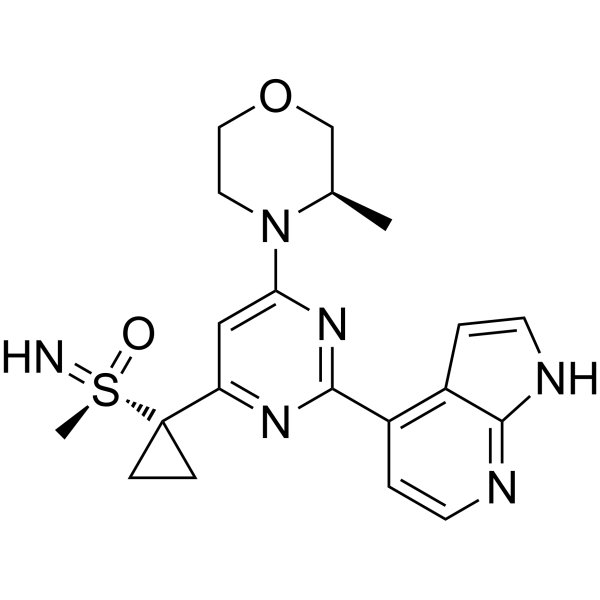
HY-19323
CeralasertibATR Inhibitor -
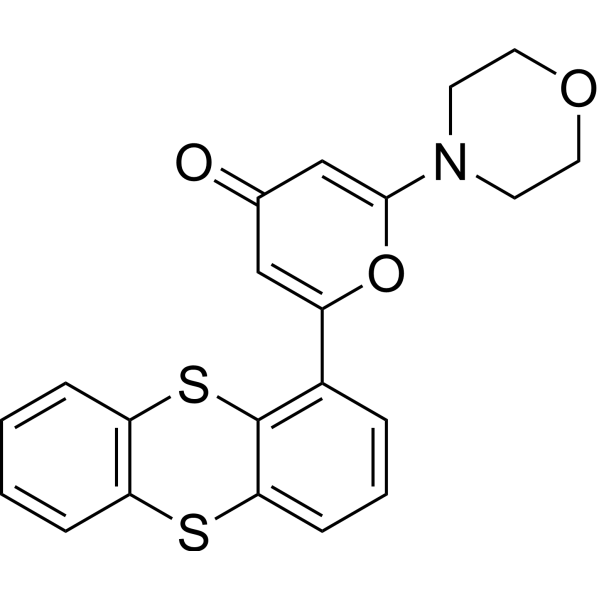
HY-12016
KU-55933ATM Inhibitor -
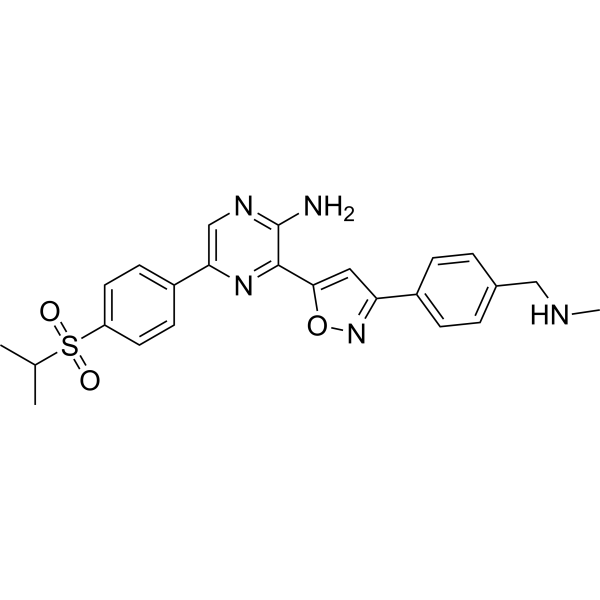
HY-13902
BerzosertibATR Inhibitor -
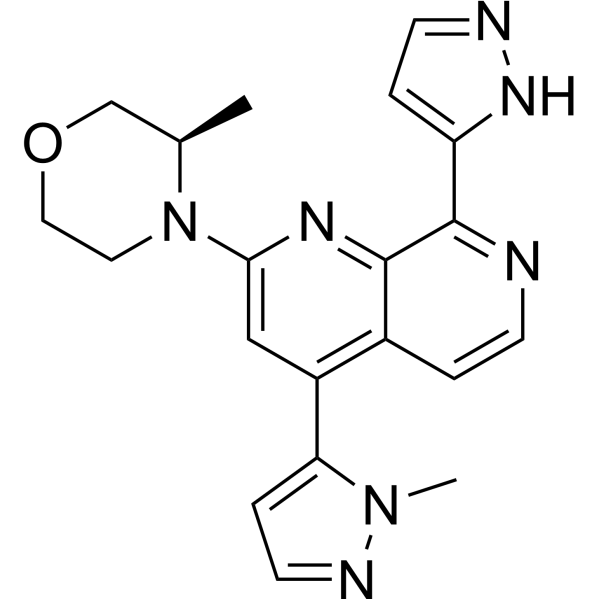
HY-101566
ElimusertibATR Inhibitor -
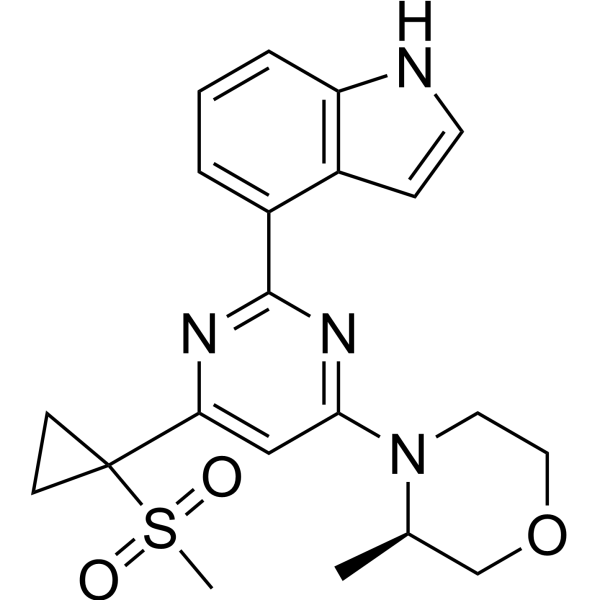
HY-15557
AZ20ATR Inhibitor -
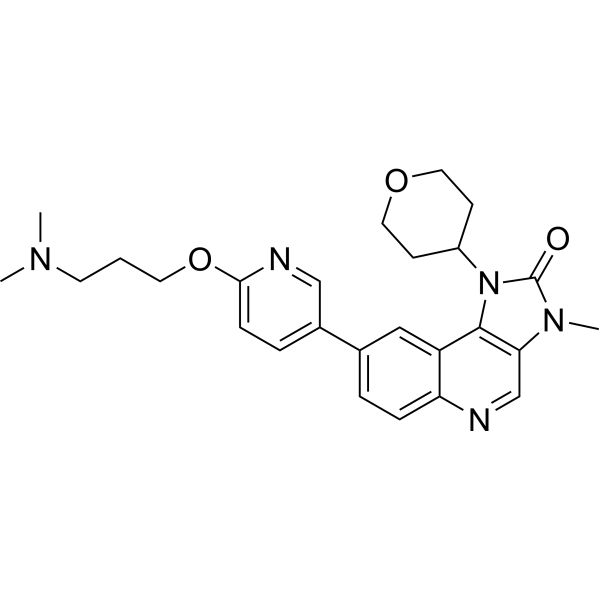
HY-100016
AZD0156ATM Inhibitor -
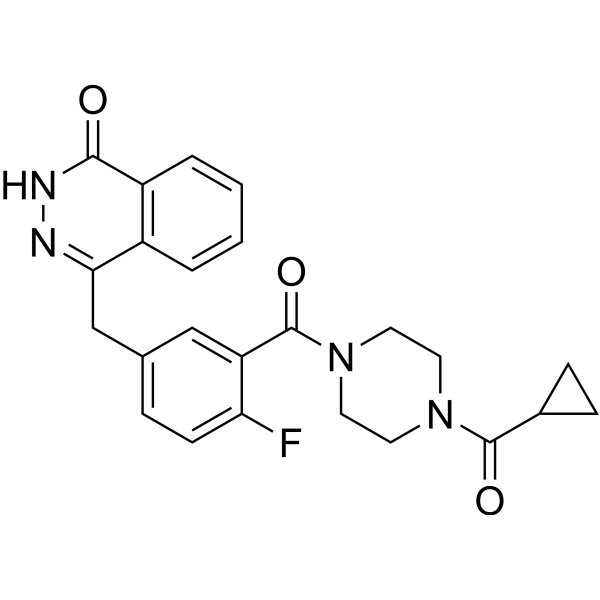
HY-10162
OlaparibPARP Inhibitor -
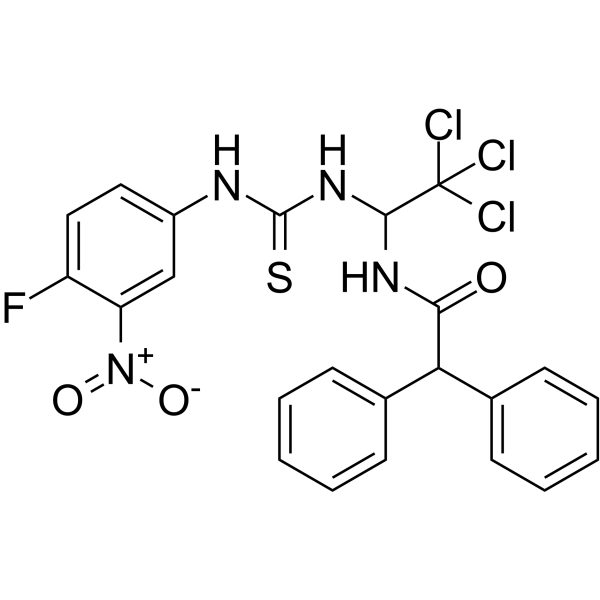
HY-15520
CGK733ATM/ATR Inhibitor -
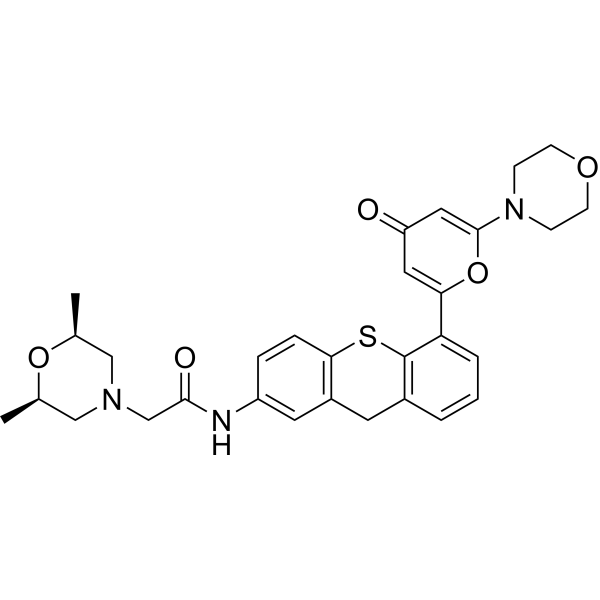
HY-12061
KU-60019ATM/ATR Inhibitor -
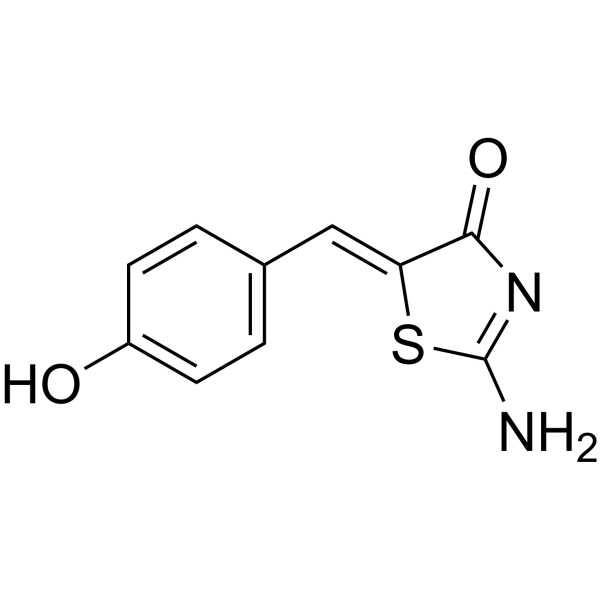
HY-19959
MirinMre11-Rad50-Nbs1 Complex Inhibitor -
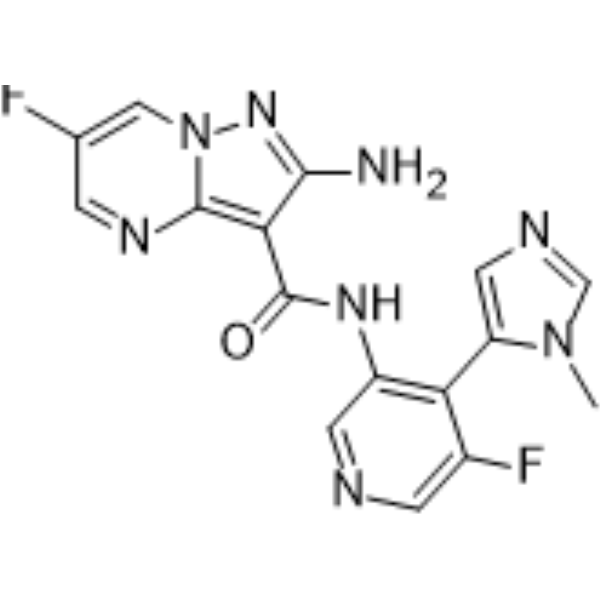
HY-111451
TuvusertibATR Inhibitor -
HY-109566
ElrelesertibATM Kinase Inhibitor
Publications Citing Use of MedChemExpress (MCE) VE-821
More- Science. 2026 Feb 26;391(6788):eadz3121. [Abstract]
- Cell. 2025 Jun 26;188(13):3405-3421.e27. [Abstract]
- Mol Cancer. 2024 Apr 29;23(1):86. [Abstract]
- Cell Res. 2026 Mar;36(3):219-232. [Abstract]
- Cancer Commun (Lond). 2025 Mar;45(3):218-244. [Abstract]
- Drug Resist Updat. 2026 Jan:84:101319. [Abstract]
- Nat Commun. 2026 Feb 12;17(1):1214. [Abstract]
- Nat Commun. 2018 Oct 8;9(1):4139. [Abstract]
- Mol Cell. 2026 Feb 19;86(4):674-692.e10. [Abstract]
- Mol Cell. 2022 Jun 2;82(11):2032-2049.e7. [Abstract]
- Nat Chem Biol. 2025 Aug;21(8):1182-1193. [Abstract]
- Sci Transl Med. 2018 Jul 18;10(450):eaaq1093. [Abstract]
- Nucleic Acids Res. 2025 Jul 8;53(13):gkaf626. [Abstract]
- Nucleic Acids Res. 2023 Feb 22;51(3):1154-1172. [Abstract]
- Nucleic Acids Res. 2020 Sep 18;48(16):9109-9123. [Abstract]
- Cell Death Dis. 2025 Mar 19;16(1):187. [Abstract]
- Cancer Lett. 2026 May 1:645:218384. [Abstract]
- Cancer Lett. 2024 Oct 10:602:217214. [Abstract]
- Hemasphere. 2024 Oct 8;8(10):e70016. [Abstract]
- Cell Death Discov. 2024 Mar 11;10(1):130. [Abstract]
- Environ Int. 2026 Sep:215:110483.
- Oncogene. 2016 Sep 8;35(36):4689-97. [Abstract]
- EMBO J. 2023 Mar 15;42(6):e112094. [Abstract]
- EMBO Mol Med. 2023 Mar 8;15(3):e16235. [Abstract]
- Cell Rep. 2025 Nov 25;44(11):116516. [Abstract]
- Cell Syst. 2020 Jan 22;10(1):66-81.e11. [Abstract]
- J Med Chem. 2023 Sep 14;66(17):12284-12303. [Abstract]
- Mol Cancer Ther. 2026 Jul 15:10.1158/1535-7163.MCT-26-0182.
- Eur J Med Chem. 2017 Feb 15:127:691-702. [Abstract]
- Biochem Pharmacol. 2021 Aug:190:114648. [Abstract]
- J Cell Biol. 2026 Sep 7;225(9):e202605024.
- J Cell Biol. 2021 Jan 4;220(1):e202003148. [Abstract]
- Cell Biol Toxicol. 2023 Jun;39(3):795-811. [Abstract]
- Int J Mol Sci. 2022 Jul 6;23(14):7506. [Abstract]
- J Mol Med (Berl). 2019 Aug;97(8):1183-1193. [Abstract]
- Sci Rep. 2019 Oct 10;9(1):14597. [Abstract]
- Sci Rep. 2019 Jun 4;9(1):8255. [Abstract]
- Mol Oncol. 2024 Sep;18(9):2179-2195. [Abstract]
- Front Public Health. 2021 May 28:9:675095. [Abstract]
- Life. 2021 Jun 14;11(6):560. [Abstract]
- PLoS Genet. 2019 Feb 4;15(2):e1007925. [Abstract]
- Vet Res. 2026 Jan 30;57(1):24. [Abstract]
- Front Oncol. 2017 May 19:7:98. [Abstract]
- J Cancer Res Clin Oncol. 2023 Sep;149(11):8605-8617. [Abstract]
- DNA Repair. 2021 May:101:103076. [Abstract]
- DNA Repair. 2016 Apr:40:35-46. [Abstract]
- DNA Repair. 2014 Sep;21:131-9. [Abstract]
- PLoS One. 2026 Mar 6;21(3):e0344101. [Abstract]
- Mol Cell Biol. 2015 Nov 16;36(3):394-406. [Abstract]
- Radiat Res. 2021 May 1;195(5):412-426. [Abstract]
- bioRxiv. 2025 Oct 21:2025.10.21.683728. [Abstract]
- bioRxiv. 2025 February 22.
- bioRxiv. 2024 Mar 29.
- Research Square Print. 2023 Feb.
- Research Square Preprint. 2022 Jul.
- Research Square Preprint. 2021 May.
- Sahlgrenska Academy. University of Gothenburg. 2016 Mar.
- Gerhard Mercator Universität Duisburg. 2013 Jun.
 Customer Validation & Images

-
Cell Proliferation/Viability Assay
-
Cell Proliferation/Viability Assay
-
WB
-
WB
-
WB


Biological Activity
Description
IC50 & Target
[1]|
ATR 13 nM (Ki) |
ATM 16 μM (Ki) |
DNA-PK 2.2 μM (Ki) |
PI3Kγ 3.9 μM (Ki) |
Cellular Effect
|
Cell Line

|
Type | Value | Description | References |
|---|---|---|---|---|
| K562 | ED50 |
448.883 μM
Compound: 7; VE-821
|
Cytotoxicity against human K562 cells assessed as decrease in cell viability after 24 hrs by cell titer-glo luminescence assay
Cytotoxicity against human K562 cells assessed as decrease in cell viability after 24 hrs by cell titer-glo luminescence assay
|
[PMID: 27177826] |
| K562 | ED50 |
71 μM
Compound: 7; VE-821
|
Cytotoxicity against human K562 cells assessed as decrease in cell viability after 48 hrs by cell titer-glo luminescence assay
Cytotoxicity against human K562 cells assessed as decrease in cell viability after 48 hrs by cell titer-glo luminescence assay
|
[PMID: 27177826] |
In Vitro
VE-821 shows excellent selectivity for ATR with minimal cross-reactivity against the related PIKKs ATM, DNA-PK, mTOR and PI3Kγ (Kis of 16 μM, 2.2 μM, >1 μM and 3.9 μM, respectively) and against a large panel of unrelated protein kinases[1]. VE-821 (compound 27) also inhibits ATM and DNA-PK wirh IC50 of >8 μM, and 4.4 μM, respectively[2]. VE-821 significantly enhances the sensitivity of PSN-1, MiaPaCa-2 and primary PancM pancreatic cancer cells to radiation and Gemcitabine under both normoxic and hypoxic conditions. ATR inhibition by VE-821 leads to inhibition of radiation-induced G2/M arrest in cancer cells. In both PSN-1 and MiaPaCa-2 cells, 1 μM VE-821 inhibits phosphorylation of Chk1 (Ser 345) after treatment with Gemcitabine (100 nM), radiation (6 Gy) or both, at 2 h post-irradiation[3].
MedChemExpress (MCE) has not independently confirmed the accuracy of these methods. They are for reference only.


Chemical Information
-
CAS No. 1232410-49-9
-
Appearance Solid
-
Molecular Weight 368.41
-
Formula C18H16N4O3S
-
Color Light green to green
-
SMILES
O=C(NC1=CC=CC=C1)C2=NC(C3=CC=C(C=C3)S(=O)(C)=O)=CN=C2N
-
Shipping
Room temperature in continental US; may vary elsewhere.
-
Storage
Powder -20°C 3 years 4°C 2 years In solvent -80°C 1 year -20°C 6 months


Publications (58)
-
Journal Impact Factor
-
Most Recent
-
Science
Different repair pathways support intact or truncated insertions by R2 retrotransposon protein. [Abstract]2026 Feb 26;391(6788):eadz3121. PMID: 41231928 -
Cell
Extrachromosomal DNA replication and maintenance couple with DNA damage pathway in tumors. [Abstract]2025 Jun 26;188(13):3405-3421.e27. PMID: 40300601 -
Mol Cancer
2024 Apr 29;23(1):86. PMID: 38685067 -
Cell Res
2026 Mar;36(3):219-232. PMID: 41634384 -
Cancer Commun (Lond)
Radiotherapy-resistant prostate cancer cells escape immune checkpoint blockade through the senescence-related ataxia telangiectasia and Rad3-related protein. [Abstract]2025 Mar;45(3):218-244. PMID: 39698847 -
Drug Resist Updat
ZBP1 antagonizes MRE11-mediated DNA end resection and confers synthetic lethality to PARP inhibition in ovarian cancer. [Abstract]2026 Jan:84:101319. PMID: 41192279 -
Nat Commun
Human iPSC-based Modeling of Pulmonary Fibrosis Reveals p300/CBP Inhibition Suppresses Alveolar Transitional Cell State. [Abstract]2026 Feb 12;17(1):1214. PMID: 41680175 -
Nat Commun
ATR/Chk1 signaling induces autophagy through sumoylated RhoB-mediated lysosomal translocation of TSC2 after DNA damage. [Abstract]2018 Oct 8;9(1):4139. PMID: 30297842 -
Mol Cell
HSPA1A and DNAJB1 regulate NELF condensate dynamics to safeguard transcriptional recovery under heat stress. [Abstract]2026 Feb 19;86(4):674-692.e10. PMID: 41653920 -
Mol Cell
Cytoplasmic PARP1 links the genome instability to the inhibition of antiviral immunity through PARylating cGAS. [Abstract]2022 Jun 2;82(11):2032-2049.e7. PMID: 35460603 -
Nat Chem Biol
2025 Aug;21(8):1182-1193. PMID: 39809895 -
Sci Transl Med
PP2A inhibition is a druggable MEK inhibitor resistance mechanism in KRAS-mutant lung cancer cells. [Abstract]2018 Jul 18;10(450):eaaq1093. PMID: 30021885 -
Nucleic Acids Res
BTG3-dependent VCP/p97 nuclear translocation is required for efficient repair of UV-induced DNA lesions. [Abstract]2025 Jul 8;53(13):gkaf626. PMID: 40626560 -
Nucleic Acids Res
Phosphorylation of TRF2 promotes its interaction with TIN2 and regulates DNA damage response at telomeres. [Abstract]2023 Feb 22;51(3):1154-1172. PMID: 36651296 -
Nucleic Acids Res
NRF2 preserves genomic integrity by facilitating ATR activation and G2 cell cycle arrest. [Abstract]2020 Sep 18;48(16):9109-9123. PMID: 32729622 -
Cell Death Dis
2025 Mar 19;16(1):187. PMID: 40108134 -
Cancer Lett
GPI inactivation mediates pentose phosphate pathway flux switch-on inducing temozolomide resistance in glioma stem cell. [Abstract]2026 May 1:645:218384. PMID: 41763452 -
Cancer Lett
Inhibition of PRMT5 moderately suppresses prostate cancer growth in vivo but enhances its response to immunotherapy. [Abstract]2024 Oct 10:602:217214. PMID: 39218291 -
Hemasphere
Combined inhibition of CTPS1 and ATR is a metabolic vulnerability in p53-deficient myeloma cells. [Abstract]2024 Oct 8;8(10):e70016. PMID: 39380841 -
Cell Death Discov
Protein expression of nucleolar protein 12 in the retina and its implication in protection of retina from UV irradiation damage. [Abstract]2024 Mar 11;10(1):130. PMID: 38467618 -
-
Oncogene
BET bromodomain inhibitors synergize with ATR inhibitors to induce DNA damage, apoptosis, senescence-associated secretory pathway and ER stress in Myc-induced lymphoma cells. [Abstract]2016 Sep 8;35(36):4689-97. PMID: 26804177
VE-821 purchased from MedChemExpress. Usage Cited in: Oncogene. 2016 Sep 8;35(36):4689-97. [Abstract]
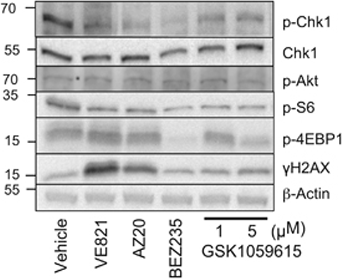
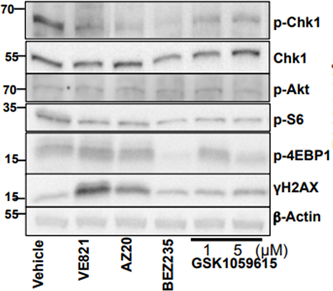
Western blotting analysis of lysates from λ820 cells treated with vehicle (0.1% DMSO), 10 μM of the ATR inhibitor VE-821, 1 μM of ATR inhibitor AZ20, 1 μM PI3K/mTOR inhibitor NVP-BEZ235 or indicated concentrations of PI3K/mTOR inhibitor GSK1059615.
-
EMBO J
DNA-PKcs and ATM modulate mitochondrial ADP-ATP exchange as an oxidative stress checkpoint mechanism. [Abstract]2023 Mar 15;42(6):e112094. PMID: 36727301 -
EMBO Mol Med
Thioparib inhibits homologous recombination repair, activates the type I IFN response, and overcomes olaparib resistance. [Abstract]2023 Mar 8;15(3):e16235. PMID: 36652375 -
Cell Rep
Feedforward miR-181d degradation modulates population variance of methyl-guanine methyl transferase and temozolomide resistance. [Abstract]2025 Nov 25;44(11):116516. PMID: 41217933 -
Cell Syst
Torin2 Exploits Replication and Checkpoint Vulnerabilities to Cause Death of PI3K-Activated Triple-Negative Breast Cancer Cells. [Abstract]2020 Jan 22;10(1):66-81.e11. PMID: 31812693 -
J Med Chem
YCH1899, a Highly Effective Phthalazin-1(2 H)-one Derivative That Overcomes Resistance to Prior PARP Inhibitors. [Abstract]2023 Sep 14;66(17):12284-12303. PMID: 37605459 -
-
Eur J Med Chem
New approach of delivering cytotoxic drugs towards CAIX expressing cells: A concept of dual-target drugs. [Abstract]2017 Feb 15:127:691-702. PMID: 27823879
VE-821 purchased from MedChemExpress. Usage Cited in: Eur J Med Chem. 2017 Feb 15:127:691-702. [Abstract]
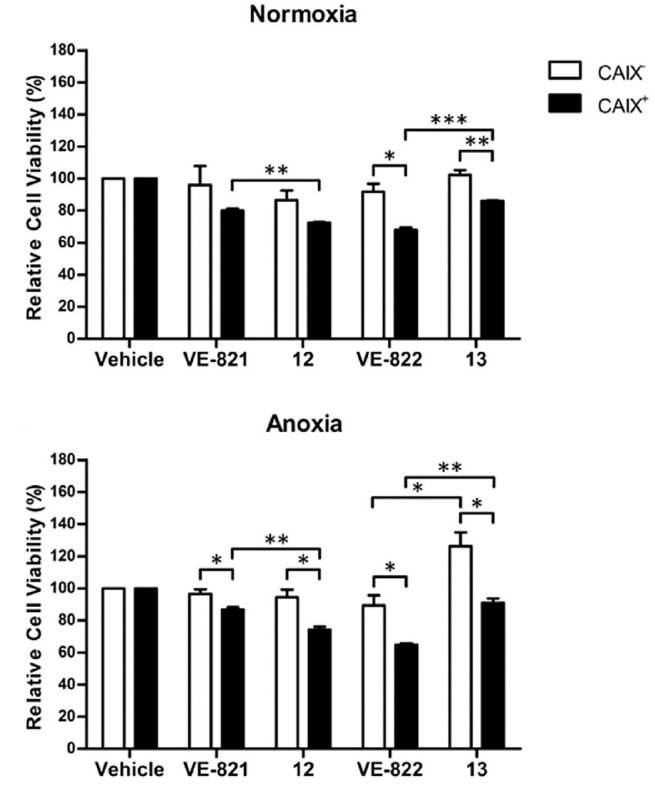
Relative cell viability (%) in MDCK CAIX- and CAIX+ cells exposed to ATR inhibitors (VE-821 and VE-822) or the CAIXi conjugated derivatives in combination with radiation during normoxia (21% O2) and anoxia (≤0.02% O2). Normoxic cells are irradiated with 2 Gy and anoxic cells with 4 Gy to induce similar effects on cell viability. Cells were exposed to 500 nM VE-821 and 12, and to 50 nM VE-822 and 13.
-
Biochem Pharmacol
Inhibition of Pim-2 kinase by LT-171-861 promotes DNA damage and exhibits enhanced lethal effects with PARP inhibitor in multiple myeloma. [Abstract]2021 Aug:190:114648. PMID: 34111425 -
-
J Cell Biol
SLX4-XPF mediates DNA damage responses to replication stress induced by DNA-protein interactions. [Abstract]2021 Jan 4;220(1):e202003148. PMID: 33347546 -
Cell Biol Toxicol
Exploring the ATR-CHK1 pathway in the response of doxorubicin-induced DNA damages in acute lymphoblastic leukemia cells. [Abstract]2023 Jun;39(3):795-811. PMID: 34519926 -
Int J Mol Sci
ATR Contributes More Than ATM in Intra-S-Phase Checkpoint Activation after IR, and DNA-PKcs Facilitates Recovery: Evidence for Modular Integration of ATM/ATR/DNA-PKcs Functions. [Abstract]2022 Jul 6;23(14):7506. PMID: 35886852 -
J Mol Med (Berl)
2019 Aug;97(8):1183-1193. PMID: 31201471 -
Sci Rep
DNA-PKcs and ATM epistatically suppress DNA end resection and hyperactivation of ATR-dependent G2-checkpoint in S-phase irradiated cells. [Abstract]2019 Oct 10;9(1):14597. PMID: 31601897 -
Sci Rep
Radiation-dose-dependent functional synergisms between ATM, ATR and DNA-PKcs in checkpoint control and resection in G2-phase. [Abstract]2019 Jun 4;9(1):8255. PMID: 31164689 -
Mol Oncol
The one-carbon metabolic enzyme MTHFD2 promotes resection and homologous recombination after ionizing radiation. [Abstract]2024 Sep;18(9):2179-2195. PMID: 38533616 -
Front Public Health
G2/M Checkpoint Abrogation With Selective Inhibitors Results in Increased Chromatid Breaks and Radiosensitization of 82-6 hTERT and RPE Human Cells. [Abstract]2021 May 28:9:675095. PMID: 34123995 -
Life
Strong Shift to ATR-Dependent Regulation of the G2-Checkpoint after Exposure to High-LET Radiation. [Abstract]2021 Jun 14;11(6):560. PMID: 34198619 -
PLoS Genet
Strand break-induced replication fork collapse leads to C-circles, C-overhangs and telomeric recombination. [Abstract]2019 Feb 4;15(2):e1007925. PMID: 30716077 -
Vet Res
Activation of the ATM-Chk2 DNA damage response pathway by Newcastle disease virus enhances viral replication. [Abstract]2026 Jan 30;57(1):24. PMID: 41618459 -
Front Oncol
Targeting Ongoing DNA Damage in Multiple Myeloma: Effects of DNA Damage Response Inhibitors on Plasma Cell Survival. [Abstract]2017 May 19:7:98. PMID: 28580318
VE-821 purchased from MedChemExpress. Usage Cited in: Front Oncol. 2017 May 19:7:98. [Abstract]
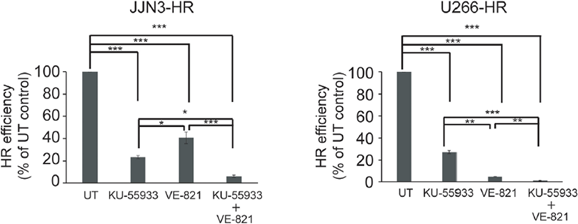
ATM inhibition by treatment with KU-55933 (10 µM) strongly reduces HR efficiency in JJN3-HR and U266-HR, although cells are still able to perform HR to some extent.
-
J Cancer Res Clin Oncol
Synergistic anticancer activity of combined ATR and ribonucleotide reductase inhibition in Ewing's sarcoma cells. [Abstract]2023 Sep;149(11):8605-8617. PMID: 37097390 -
DNA Repair
Proficiency in homologous recombination repair is prerequisite for activation of G2-checkpoint at low radiation doses. [Abstract]2021 May:101:103076. PMID: 33640756 -
DNA Repair
DNA damage response (DDR) pathway engagement in cisplatin radiosensitization of non-small cell lung cancer. [Abstract]2016 Apr:40:35-46. PMID: 26991853
VE-821 purchased from MedChemExpress. Usage Cited in: DNA Repair. 2016 Apr:40:35-46. [Abstract]
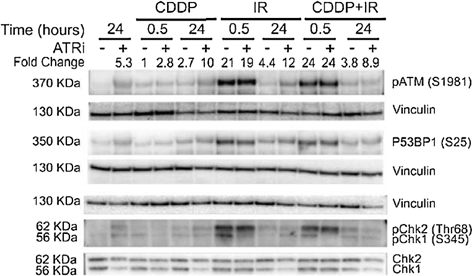
Impact of ATR inhibition on DNA damage response, γ-H2Ax foci formation and cytotoxicity: A representative immunoblot with vinculin used as a loading control(A) shows the impact of ATR inhibition (VE-821) on the early (0.5 h) and late (24 h) DDR to the indicated treatments in H460 cells. pATM fold change shown above the immunoblot (A).
-
DNA Repair
DNA-PK phosphorylation of RPA32 Ser4/Ser8 regulates replication stress checkpoint activation, fork restart, homologous recombination and mitotic catastrophe. [Abstract]2014 Sep;21:131-9. PMID: 24819595 -
PLoS One
Differential modulation of haematopoietic and oxidative injury by PARP-1 and ATR kinase inhibition in a murine model of acute irradiation. [Abstract]2026 Mar 6;21(3):e0344101. PMID: 41790832 -
Mol Cell Biol
UV Damage-Induced Phosphorylation of HBO1 Triggers CRL4DDB2-Mediated Degradation To Regulate Cell Proliferation. [Abstract]2015 Nov 16;36(3):394-406. PMID: 26572825 -
Radiat Res
Nucleoside Analogs Radiosensitize G0 Cells by Activating DNA End Resection and Alternative End-Joining. [Abstract]2021 May 1;195(5):412-426. PMID: 33755161 -
bioRxiv
Loss of CFIm activates YAP/TAZ and connects mRNA cleavage and polyadenylation inhibition to BRCAness. [Abstract]2025 Oct 21:2025.10.21.683728. PMID: 41278918 -
-
-
-
-
-
VE-821 purchased from MedChemExpress. Usage Cited in: Sahlgrenska Academy. University of Gothenburg. 2016 Mar.
ATRi (VE821) reduces the phosphorylation of CHK1, but not of 4EBP1 or S6, validating our hypothesis.
-


Solvent & Solubility
In Vitro:
DMSO : 50 mg/mL (135.72 mM; Need ultrasonic; Hygroscopic DMSO has a significant impact on the solubility of product, please use newly opened DMSO)
H2O : < 0.1 mg/mL (insoluble)
Please refer to the solubility information to select the appropriate solvent. Once prepared, please aliquot and store the solution to prevent product inactivation from repeated freeze-thaw cycles.
Storage method and period of stock solution: -80°C, 1 year; -20°C, 6 months. When stored at -80°C, please use it within 1 year. When stored at -20°C, please use it within 6 months.
Please refer to the solubility information to select the appropriate solvent. Once prepared, please aliquot and store the solution to prevent product inactivation from repeated freeze-thaw cycles.
Storage method and period of stock solution: -80°C, 1 year; -20°C, 6 months. When stored at -80°C, please use it within 1 year. When stored at -20°C, please use it within 6 months.
Concentration (start) × Volume (start) = Concentration (final) × Volume (final)
In Vivo:
The following protocol is derived from the literature and is for reference only. It is recommended to first try a small sample.
In Vivo Dissolution Calculator
Please enter the basic information of animal experiments:
-
-
-
-
Recommended: Prepare an additional quantity of animals to account for potential losses during experiments.
Working solution concentration: 0.22 mg/mL


Purity & Documentation
-
Data Sheet (277 KB)
-
SDS (393 KB)
- English - EN (393 KB)
- Français - FR (393 KB)
- Deutsch - DE (393 KB)
- Norwegian - NO (393 KB)
- Español - ES (393 KB)
- Swedish - SV (393 KB)
- Italian - IT (393 KB)
- Korean - KR (393 KB)
- Portuguese - PT (393 KB)
-
Handling Instructions (2659 KB)
References
[1]. Reaper PM, et al. Selective killing of ATM- or p53-deficient cancer cells through inhibition of ATR. Nat Chem Biol. 2011 Apr 13;7(7):428-30. [Content Brief]
[2]. Charrier JD, et al. Discovery of potent and selective inhibitors of ataxia telangiectasia mutated and Rad3 related (ATR) protein kinase as potential anticancer agents. J Med Chem. 2011 Apr 14;54(7):2320-30. [Content Brief]
[3]. Prevo R, et al. The novel ATR inhibitor VE-821 increases sensitivity of pancreatic cancer cells to radiation and chemotherapy. Cancer Biol Ther. 2012 Sep;13(11):1072-81. [Content Brief]
[4]. Muralidharan SV, et al. BET bromodomain inhibitors synergize with ATR inhibitors to induce DNA damage, apoptosis, senescence-associated secretory pathway and ER stress in Myc-induced lymphoma cells. Oncogene. 2016 Sep 8;35(36):4689-97. [Content Brief]


Complete Stock Solution Preparation Table
Please refer to the solubility information to select the appropriate solvent. Once prepared, please aliquot and store the solution to prevent product inactivation from repeated freeze-thaw cycles.
Storage method and period of stock solution: -80°C, 1 year; -20°C, 6 months. When stored at -80°C, please use it within 1 year. When stored at -20°C, please use it within 6 months.
| Optional Solvent | Concentration Solvent Mass | 1 mg | 5 mg | 10 mg | 25 mg |
|---|---|---|---|---|---|
| DMSO | 1 mM | 2.7144 mL | 13.5718 mL | 27.1437 mL | 67.8592 mL |
| 5 mM | 0.5429 mL | 2.7144 mL | 5.4287 mL | 13.5718 mL | |
| 10 mM | 0.2714 mL | 1.3572 mL | 2.7144 mL | 6.7859 mL | |
| 15 mM | 0.1810 mL | 0.9048 mL | 1.8096 mL | 4.5239 mL | |
| 20 mM | 0.1357 mL | 0.6786 mL | 1.3572 mL | 3.3930 mL | |
| 25 mM | 0.1086 mL | 0.5429 mL | 1.0857 mL | 2.7144 mL | |
| 30 mM | 0.0905 mL | 0.4524 mL | 0.9048 mL | 2.2620 mL | |
| 40 mM | 0.0679 mL | 0.3393 mL | 0.6786 mL | 1.6965 mL | |
| 50 mM | 0.0543 mL | 0.2714 mL | 0.5429 mL | 1.3572 mL | |
| 60 mM | 0.0452 mL | 0.2262 mL | 0.4524 mL | 1.1310 mL | |
| 80 mM | 0.0339 mL | 0.1696 mL | 0.3393 mL | 0.8482 mL | |
| 100 mM | 0.0271 mL | 0.1357 mL | 0.2714 mL | 0.6786 mL |


VE-821 Related Classifications
HY-14731 Related Classifications
 Powered by Bioz