



AF-353
Based on 1 publication(s) in Google Scholar
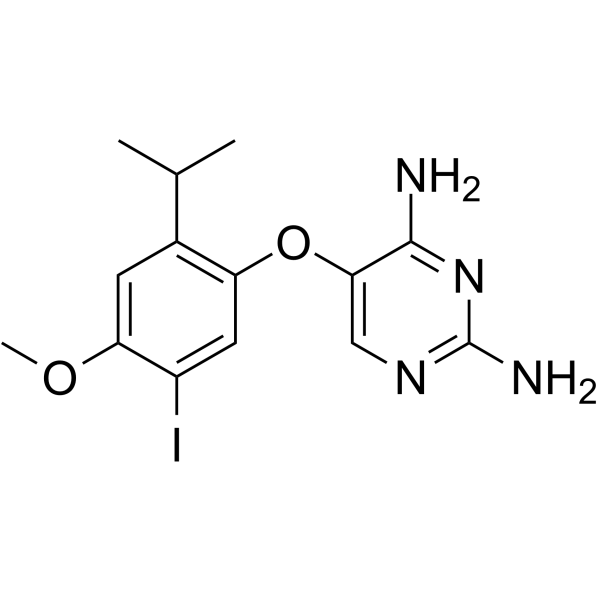
AF-353 (Ro-4) is a potent, selective and orally bioavailable P2X3/P2X2/3 receptor antagonist, with a pIC50 of 8.0 for both human and rat P2X3, and with a pIC50 of 7.3 for human P2X2/3.
Para uso exclusivo en investigación. No vendemos a pacientes.
- Pureza : 99.43%
- No. CAS: 865305-30-2
- Fòrmula: C14H17IN4O2
- Peso molecular:400.21
-
Almacenamiento:Powder -20°C, 3 years , 4°C, 2 years ; In solvent -80°C, 2 years , -20°C, 1 year

To place orders, for customer services and technical support, please contact: MedChemExpress USA
Tel: 609-228-6898 E-mail: [email protected] [email protected]


-
 Actividad biológica
-
Chemical Information
-
Solvente y solubilidad
- Pureza y Documentación
- Referencias
-
 Help & FAQs


-
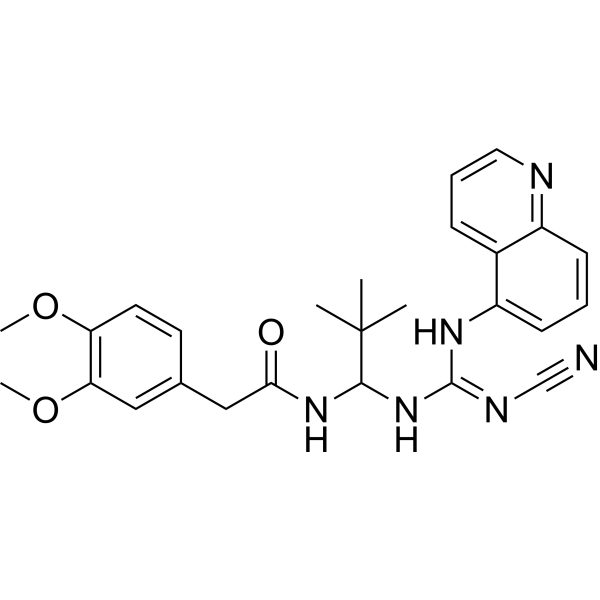
HY-50697
A-740003P2X Receptor Antagonist -
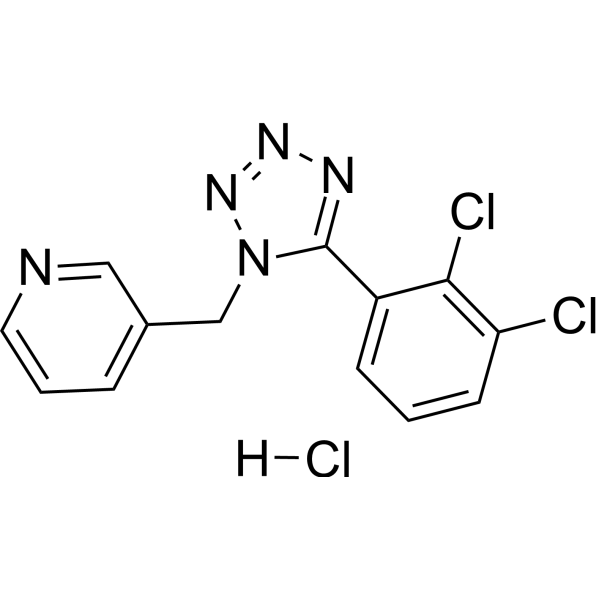
HY-15488A
A 438079 hydrochlorideP2X7 Receptor Antagonist -
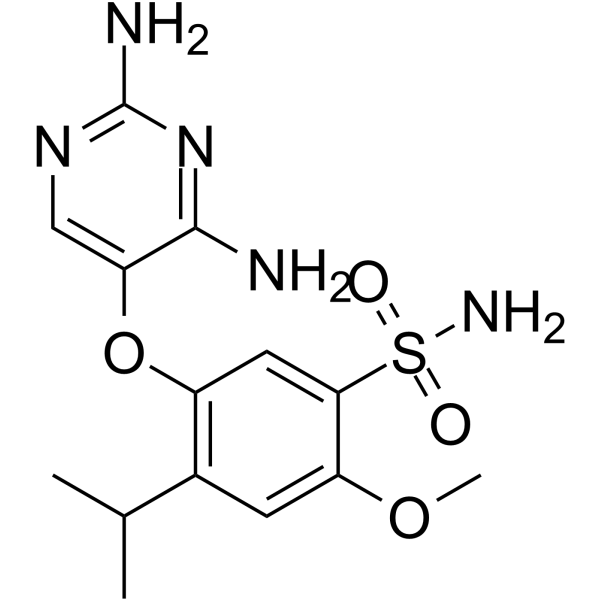
HY-101588
GefapixantP2X3 Antagonist -
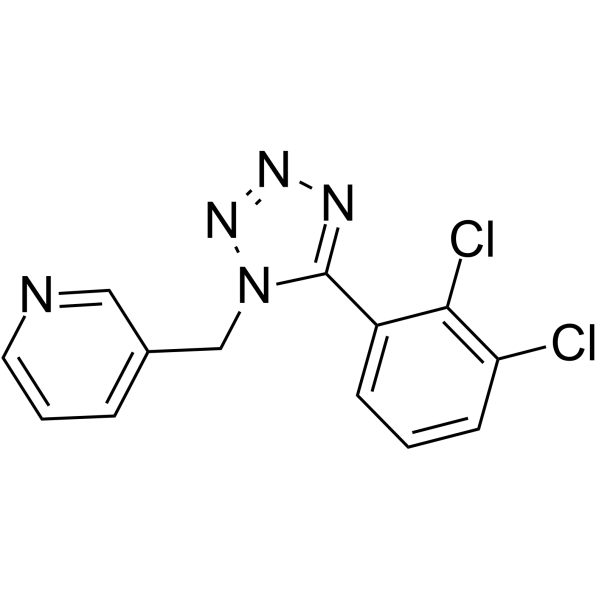
HY-15488
A 438079P2X Receptor Antagonist -
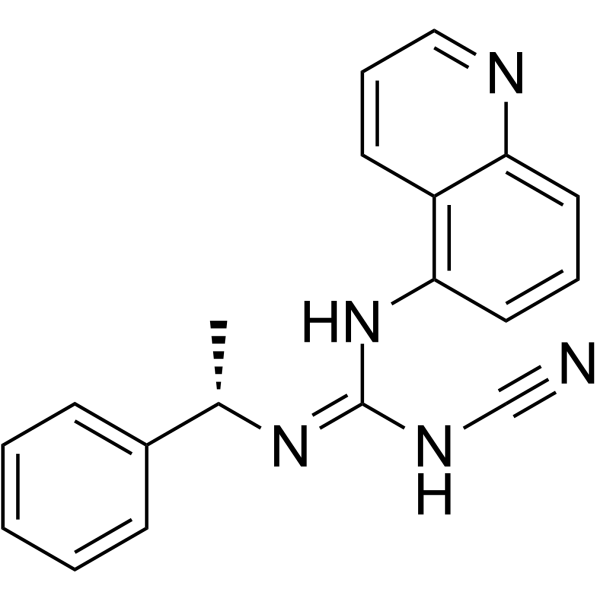
HY-100483
A-804598P2X7 Antagonist -
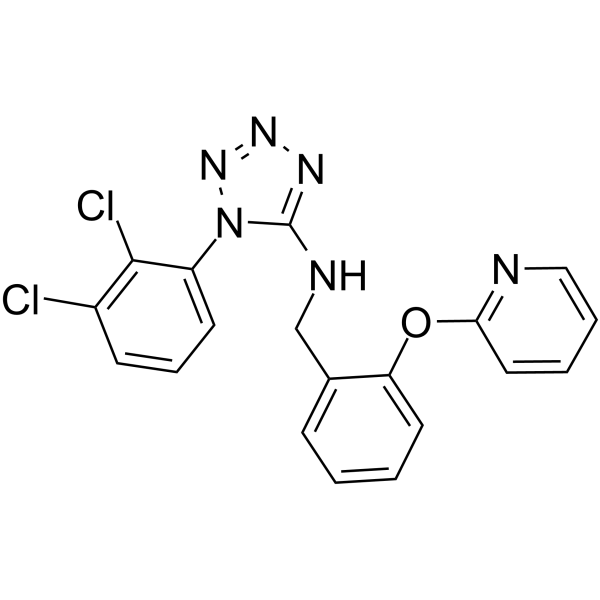
HY-13954
A 839977P2X7 Antagonist -
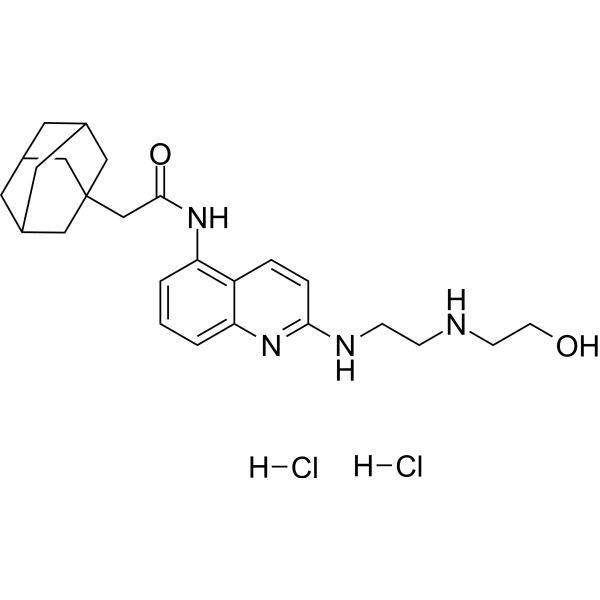
HY-108669
AZ10606120 dihydrochlorideP2X Receptor Antagonist -
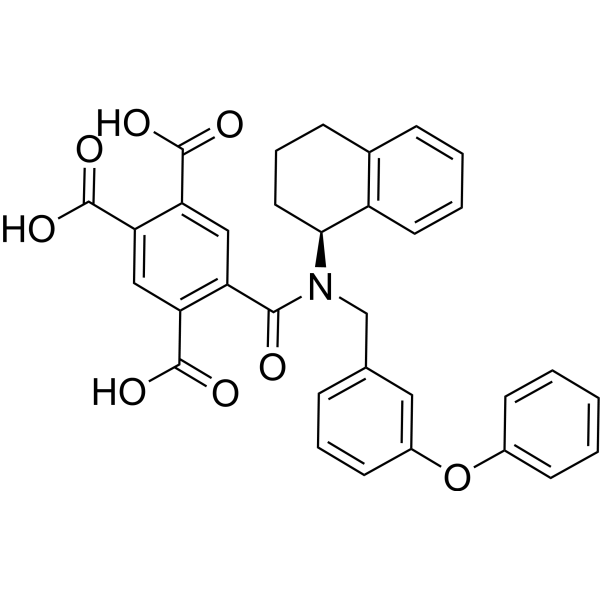
HY-15568
A-317491P2X3/P2X2/3 Antagonist -

HY-14483R
AF-353 (Standard)P2X Receptor Antagonist -
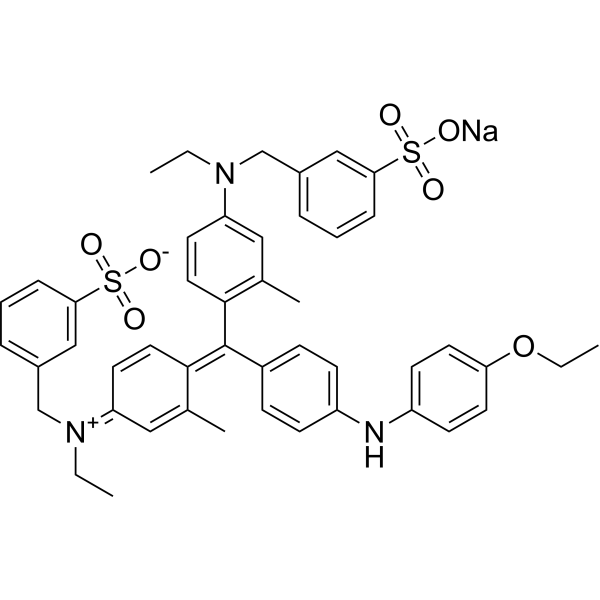
HY-D0014
Brilliant blue G-250Dye/P2×7R Antagonist -
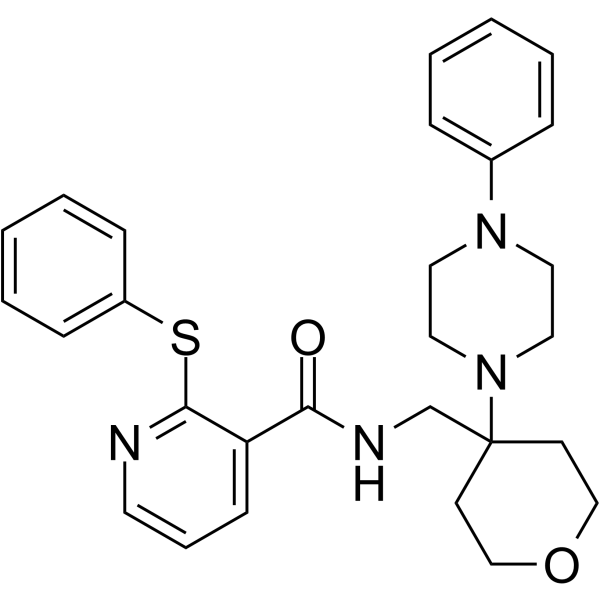
HY-101418
JNJ-47965567P2X7 Antagonist -
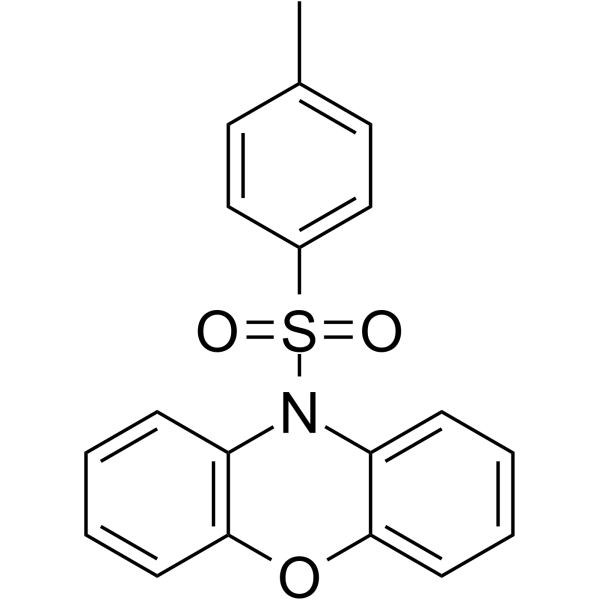
HY-101910
PSB-12062P2X4 antagonist
Publications Citing Use of MedChemExpress (MCE) AF-353
MoreVer todos los productos específicos de isoformas P2X Receptor
More

Actividad biológica
Descripciòn
IC50 & Target
|
P2X3 Receptor |
Cellular Effect
|
Cell Line

|
Type | Value | Description | References |
|---|---|---|---|---|
| CHO | IC50 |
13 nM
Compound: RO-4
|
Antagonist activity at rat P2X3 receptor expressed in CHO cells by FLIPR
Antagonist activity at rat P2X3 receptor expressed in CHO cells by FLIPR
|
[PMID: 19231178] |
In Vitro
AF-353 (Ro-4) is a highly potent inhibitor of α,β-meATP-evoked intracellular calcium flux in cell lines expressing recombinant rat and human P2X3 and human P2X2/3 channels[1].
AF-353 (Ro-4) also blocks human P2X2/3 channel function with marginally reduced potency with a p50 of 7.3[1].
MedChemExpress (MCE) has not independently confirmed the accuracy of these methods. They are for reference only.
In Vivo
AF-353 (Ro-4) (10 mg/kg, 20 mg/kg; i.v.; for 4-6 hours) inhibits the purinergic response in both normal and spinal cord-injured (SCI) rats[2].
AF-353 (Ro-4) (10 mg/kg, 20 mg/kg; i.v.; for 4-6 hours) also reduces the inter-contractile interval in normal but not in SCI rats; however, the frequency of non-voiding (NVC) in SCI rats is significantly reduced[2].
MedChemExpress (MCE) has not independently confirmed the accuracy of these methods. They are for reference only.
-
Animal Model:Female Sprague-Dawley rats (250–300 g) bearing SCI[2]
-
Dosage:10 mg/kg, 20 mg/kg
-
Administration:Intravenous injection; interval of 90 minutes, for 4 hours to 6 hours
-
Result:Significantly reduced purinergic response in both normal and SCI rats.


Chemical Information
-
No. CAS 865305-30-2
-
Appearance Solid
-
Peso molecular 400.21
-
Fòrmula C14H17IN4O2
-
Color Light brown to brown
-
SMILES
CC(C)C1=C(OC2=CN=C(N)N=C2N)C=C(I)C(OC)=C1
-
Synonyms
Ro-4
-
Envío
Room temperature in continental US; may vary elsewhere.
-
Almacenamiento
Powder -20°C 3 years 4°C 2 years In solvent -80°C 2 years -20°C 1 year


Publications (1)
-
Journal Impact Factor
-
Most Recent
-
Neuropharmacology
P2X receptor- and postsynaptic NMDA receptor-mediated long-lasting facilitation of inhibitory synapses in the rat insular cortex. [Abstract]2024 Mar 1:245:109817. PMID: 38104767


Solvente y solubilidad
In Vitro:
DMSO : 83.33 mg/mL (208.22 mM; ultrasonic and warming and heat to 60°C; Hygroscopic DMSO has a significant impact on the solubility of product, please use newly opened DMSO)
Please refer to the solubility information to select the appropriate solvent. Once prepared, please aliquot and store the solution to prevent product inactivation from repeated freeze-thaw cycles.
Storage method and period of stock solution: -80°C, 2 years; -20°C, 1 year. When stored at -80°C, please use it within 2 years. When stored at -20°C, please use it within 1 year.
Please refer to the solubility information to select the appropriate solvent. Once prepared, please aliquot and store the solution to prevent product inactivation from repeated freeze-thaw cycles.
Storage method and period of stock solution: -80°C, 2 years; -20°C, 1 year. When stored at -80°C, please use it within 2 years. When stored at -20°C, please use it within 1 year.
Concentration (start) × Volume (start) = Concentration (final) × Volume (final)
In Vivo:
Select the appropriate dissolution method based on your experimental animal and administration route.
- For the following dissolution methods, please ensure to first prepare a clear stock solution using an In Vitro approach and then sequentially add co-solvents:
- To ensure reliable experimental results, the clarified stock solution can be appropriately stored based on storage conditions. As for the working solution for In Vivo experiments, it is recommended to prepare freshly and use it on the same day.
- The percentages shown for the solvents indicate their volumetric ratio in the final prepared solution. If precipitation or phase separation occurs during preparation, heat and/or sonication can be used to aid dissolution.
Add each solvent one by one: 10% DMSO 40% PEG300 5% Tween-80 45% Saline
Solubility: ≥ 2.5 mg/mL (6.25 mM); Clear solution
This protocol yields a clear solution of ≥ 2.5 mg/mL (saturation unknown).
Taking 1 mL working solution as an example, add 100 μL DMSO stock solution (25.0 mg/mL) to 400 μL PEG300, and mix evenly; then add 50 μL Tween-80 and mix evenly; then add 450 μL Saline to adjust the volume to 1 mL.
Preparation of Saline: Dissolve 0.9 g sodium chloride in ddH₂O and dilute to 100 mL to obtain a clear Saline solution.
Add each solvent one by one: 10% DMSO 90% (20% SBE-β-CD in Saline)
Solubility: ≥ 2.5 mg/mL (6.25 mM); Clear solution
This protocol yields a clear solution of ≥ 2.5 mg/mL (saturation unknown).
Taking 1 mL working solution as an example, add 100 μL DMSO stock solution (25.0 mg/mL) to 900 μL 20% SBE-β-CD in Saline, and mix evenly.
Preparation of 20% SBE-β-CD in Saline (4°C, storage for one week): 2 g SBE-β-CD powder is dissolved in 10 mL Saline, completely dissolve until clear.
In Vivo Dissolution Calculator
Please enter the basic information of animal experiments:
-
-
-
-
Recommended: Prepare an additional quantity of animals to account for potential losses during experiments.
Please enter your animal formula composition:
-
%DMSO +
Recommended: Keep the proportion of DMSO in working solution below 2% if your animal is weak.
-
%+
-
+%Tween-80 + +
-
%Saline +
The co-solvents required include: DMSO, . All of co-solvents are available by MedChemExpress (MCE). , Tween 80. All of co-solvents are available by MedChemExpress (MCE).
Working solution concentration: 0.22 mg/mL
Method for preparing stock solution: mg drug dissolved in μL DMSO. Stock solution concentration: mg/mL.
1. Take μL DMSO stock solution;
2. Add μL .
μL , mix evenly;
3. Then add μL Tween 80, mix evenly;
4. Then add μL
Please ensure that the stock solution in the first step is dissolved to a clear state, and add co-solvents in sequence. You can use ultrasonic heating (ultrasonic cleaner, recommended frequency 20-40 kHz), vortexing, etc. to assist dissolution.


Pureza y Documentación
-
Ficha de datos (275 KB)
-
SDS (396 KB)
- English - EN (396 KB)
- Français - FR (396 KB)
- Deutsch - DE (396 KB)
- Norwegian - NO (396 KB)
- Español - ES (396 KB)
- Swedish - SV (396 KB)
- Italian - IT (396 KB)
- Korean - KR (396 KB)
- Portuguese - PT (396 KB)
-
Instrucciones de manejo (2659 KB)
Referencias
[1]. Gever JR, et al. AF-353, a novel, potent and orally bioavailable P2X3/P2X2/3 receptor antagonist. Br J Pharmacol. 2010 Jul;160(6):1387-1398. [Content Brief]
[2]. Munoz A, et al. Modulation of bladder afferent signals in normal and spinal cord-injured rats by purinergic P2X3 and P2X2/3receptors. BJU Int. 2012 Oct;110(8 Pt B):E409-414. [Content Brief]


Complete Stock Solution Preparation Table
Please refer to the solubility information to select the appropriate solvent. Once prepared, please aliquot and store the solution to prevent product inactivation from repeated freeze-thaw cycles.
Storage method and period of stock solution: -80°C, 2 years; -20°C, 1 year. When stored at -80°C, please use it within 2 years. When stored at -20°C, please use it within 1 year.
| Optional Solvent | Concentration Solvent Mass | 1 mg | 5 mg | 10 mg | 25 mg |
|---|---|---|---|---|---|
| DMSO | 1 mM | 2.4987 mL | 12.4934 mL | 24.9869 mL | 62.4672 mL |
| 5 mM | 0.4997 mL | 2.4987 mL | 4.9974 mL | 12.4934 mL | |
| 10 mM | 0.2499 mL | 1.2493 mL | 2.4987 mL | 6.2467 mL | |
| 15 mM | 0.1666 mL | 0.8329 mL | 1.6658 mL | 4.1645 mL | |
| 20 mM | 0.1249 mL | 0.6247 mL | 1.2493 mL | 3.1234 mL | |
| 25 mM | 0.0999 mL | 0.4997 mL | 0.9995 mL | 2.4987 mL | |
| 30 mM | 0.0833 mL | 0.4164 mL | 0.8329 mL | 2.0822 mL | |
| 40 mM | 0.0625 mL | 0.3123 mL | 0.6247 mL | 1.5617 mL | |
| 50 mM | 0.0500 mL | 0.2499 mL | 0.4997 mL | 1.2493 mL | |
| 60 mM | 0.0416 mL | 0.2082 mL | 0.4164 mL | 1.0411 mL | |
| 80 mM | 0.0312 mL | 0.1562 mL | 0.3123 mL | 0.7808 mL | |
| 100 mM | 0.0250 mL | 0.1249 mL | 0.2499 mL | 0.6247 mL |


AF-353 Related Classifications
HY-14483 Related Classifications
 Powered by Bioz