



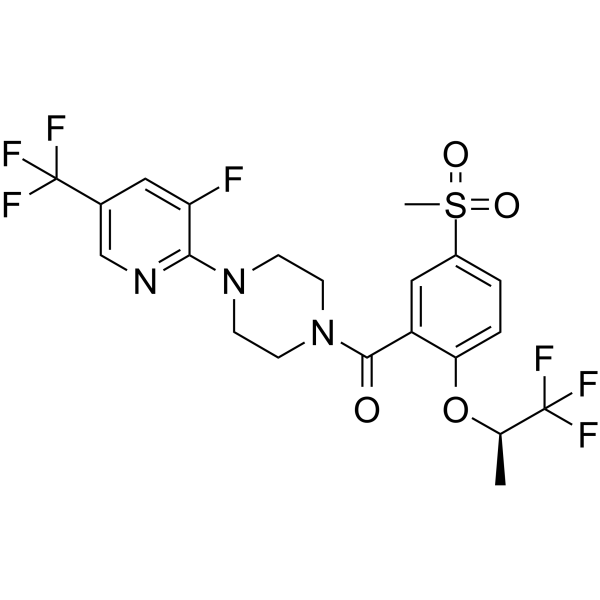
Bitopertin (R enantiomer)
Bitopertin R enantiomer (RG1678 R enantiomer; RO4917838 R enantiomer) is the R-enantiomer of Bitopertin. Bitopertin is a potent, noncompetitive glycine reuptake inhibitor, inhibits glycine uptake at human GlyT1 with a concentration exhibiting IC50 of 25 nM.
For research use only. We do not sell to patients.
- Purity : 95.68%
- CAS No.: 845614-12-2
- Formula: C21H20F7N3O4S
- Molecular Weight:543.46
-
Storage:Powder -20°C, 3 years , 4°C, 2 years ; In solvent -80°C, 2 years , -20°C, 1 year

To place orders, for customer services and technical support, please contact: MedChemExpress USA
Tel: 609-228-6898 E-mail: [email protected] [email protected]


-
 Biological Activity
-
Chemical Information
- Purity & Documentation
- References
-
 Help & FAQs


-
HY-10809
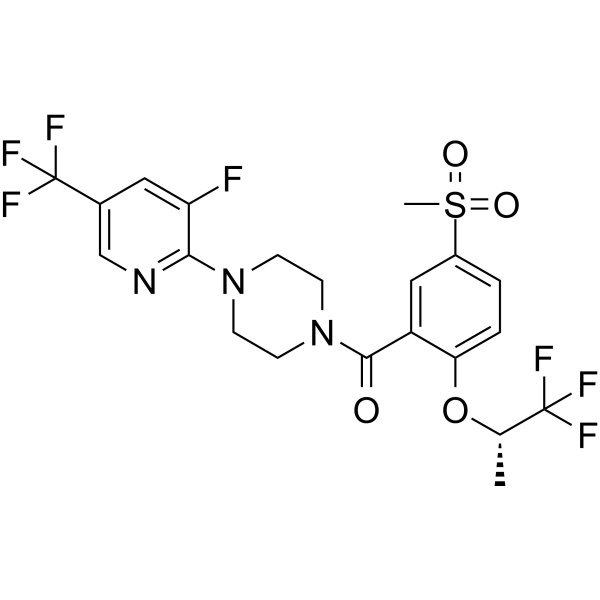
Bitopertin -

HY-10809R
Bitopertin (Standard) -
HY-100416A
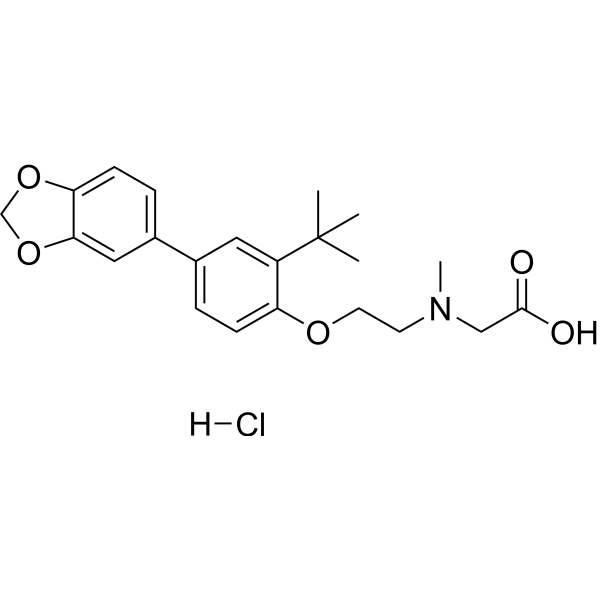
LY2365109 hydrochlorideGlyT1 Inhibitor -
HY-18723
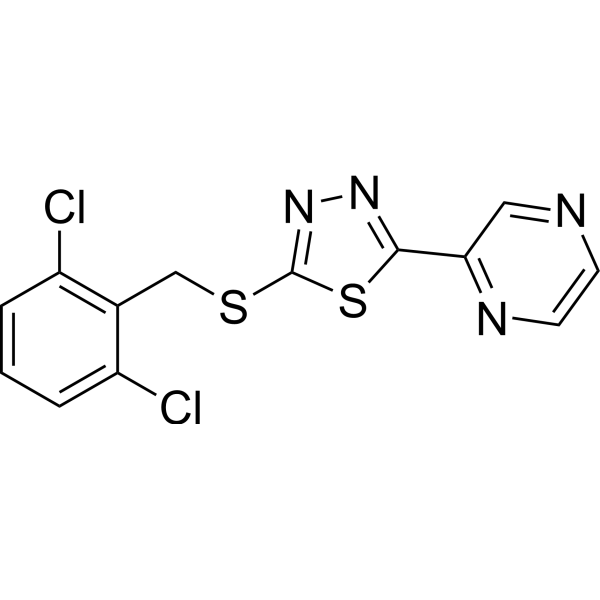
Yoda 1Piezo1 Agonist -
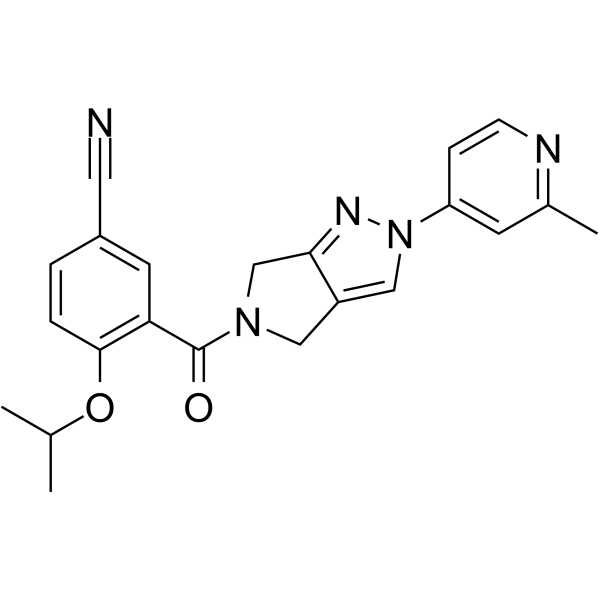
HY-112432
GlyT1 Inhibitor 1 -
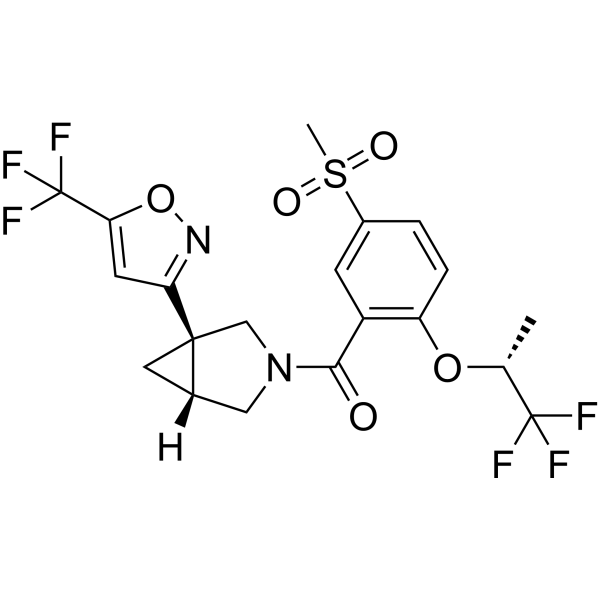
HY-138935
IclepertinGlyT1 Inhibitor -
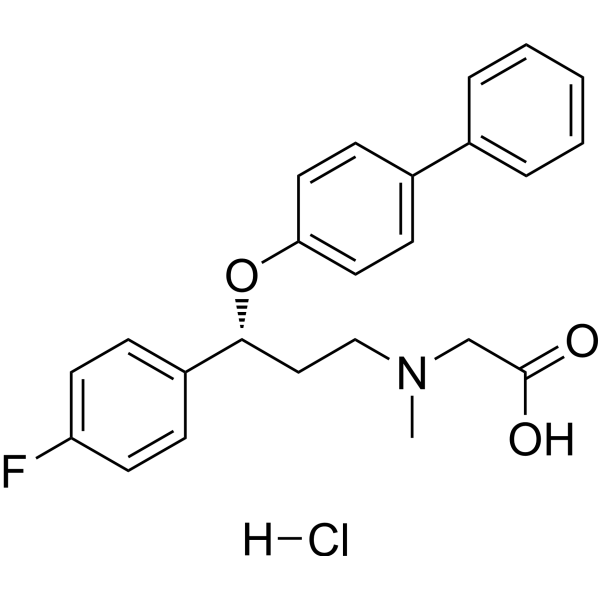
HY-10711A
ALX-5407 hydrochlorideGlyT1 Inhibitor -
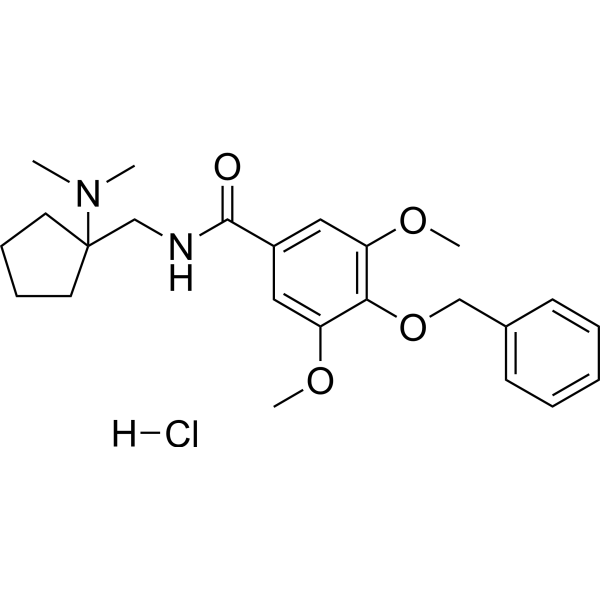
HY-107527
Org 25543 hydrochlorideGlyT2 Inhibitor -
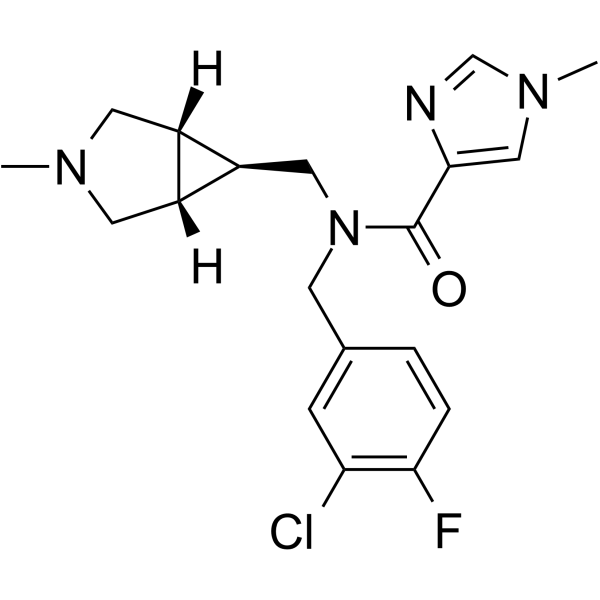
HY-10716A
PF-03463275GlyT1 Inhibitor -
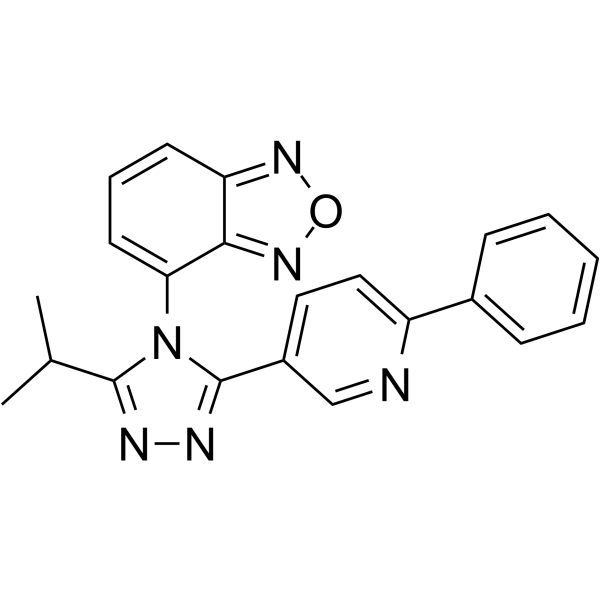
HY-110176
ASP2535GlyT1 Inhibitor -
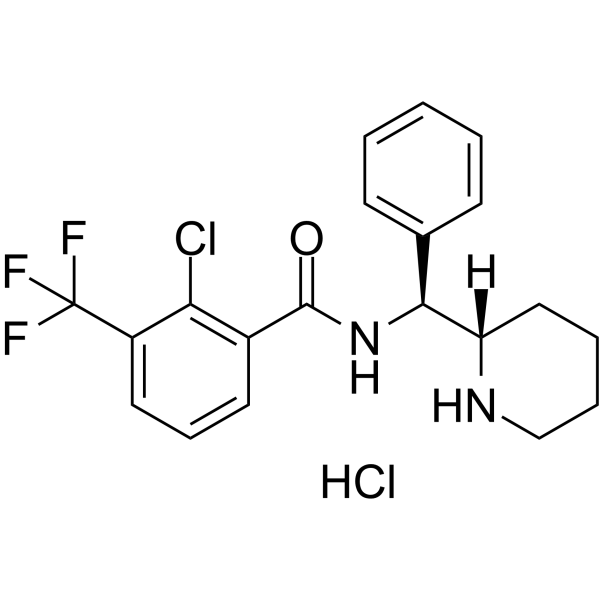
HY-10715
SSR504734GlyT1 Inhibitor -
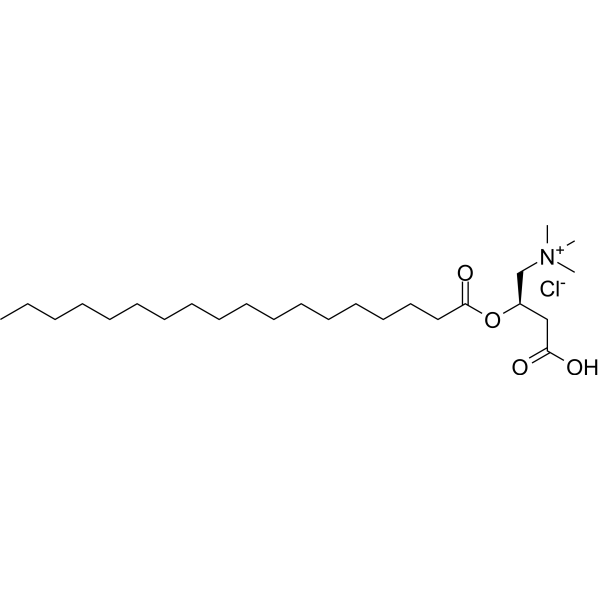
HY-130466
Stearoyl-L-carnitine chlorideEndogenous Metabolite


Biological Activity
Description
IC50 & Target
IC50: 25 nM (GlyT1)[1]
Cellular Effect
|
Cell Line

|
Type | Value | Description | References |
|---|---|---|---|---|
| CHO | EC50 |
>30 μM
Compound: 54
|
Inhibition of human GlyT2 expressed in CHO cells assessed as inhibition of [3H]glycine uptake by liquid scintillation counting
Inhibition of human GlyT2 expressed in CHO cells assessed as inhibition of [3H]glycine uptake by liquid scintillation counting
|
[PMID: 20491477] |
| CHO | EC50 |
0.04 μM
Compound: 54
|
Inhibition of human GlyT1b expressed in CHO cells assessed as inhibition of [3H]glycine uptake by liquid scintillation counting
Inhibition of human GlyT1b expressed in CHO cells assessed as inhibition of [3H]glycine uptake by liquid scintillation counting
|
[PMID: 20491477] |
| CHO | IC50 |
20 μM
Compound: 54
|
Inhibition of human ERG expressed in CHO cells by patch clamp assay
Inhibition of human ERG expressed in CHO cells by patch clamp assay
|
[PMID: 20491477] |
In Vitro
Bitopertin (RG1678) competitively blocks [3H]ORG24598 binding sites at human GlyT1b in membranes from Chinese hamster ovary cells. Bitopertin potently inhibits [3H]glycine uptake in cells stably expressing hGlyT1b and mGlyT1b, with IC50 values of 25±2 nM and 22±5 nM, respectively (n=6). Conversely, Bitopertin has no effect on hGlyT2-mediated glycine uptake up to 30 μM concentration. Bitopertin has high affinity for the recombinant hGlyT1b transporter. Under equilibrium conditions (1 h at room temperature), Bitopertin displaces [3H]ORG24598 binding with a Ki of 8.1 nM. In hippocampal CA1 pyramidal cells, Bitopertin enhances NMDA-dependent long-term potentiation at 100 nM but not at 300 nM[1]. Additional profiling revealed that Bitopertin (RG1678) has an excellent selectivity profile against the GlyT2 isoform (IC50>30 μM) and toward a panel of 86 targets including transmembrane and soluble receptors, enzymes, ion channels, and monoamine transporters (<41% inhibition at 10 μM is measured for all targets)[2].
MedChemExpress (MCE) has not independently confirmed the accuracy of these methods. They are for reference only.
In Vivo
MedChemExpress (MCE) has not independently confirmed the accuracy of these methods. They are for reference only.


Chemical Information
-
CAS No. 845614-12-2
-
Appearance Solid
-
Molecular Weight 543.46
-
Formula C21H20F7N3O4S
-
Color White to off-white
-
SMILES
FC1=CC(C(F)(F)F)=CN=C1N2CCN(C(C3=CC(S(=O)(C)=O)=CC=C3O[C@@H](C(F)(F)F)C)=O)CC2
-
Synonyms
RG1678 (R enantiomer); RO4917838 (R enantiomer)
-
Shipping
Room temperature in continental US; may vary elsewhere.
-
Storage
Powder -20°C 3 years 4°C 2 years In solvent -80°C 2 years -20°C 1 year


Purity & Documentation
-
Data Sheet (280 KB)
-
SDS (252 KB)
- English - EN (252 KB)
- Français - FR (252 KB)
- Deutsch - DE (252 KB)
- Norwegian - NO (252 KB)
- Español - ES (252 KB)
- Swedish - SV (252 KB)
- Italian - IT (252 KB)
- Korean - KR (252 KB)
- Portuguese - PT (252 KB)
-
Handling Instructions (2659 KB)
References
[1]. Alberati D, et al. Glycine reuptake inhibitor RG1678: A pharmacologic characterization of an investigational agent for the treatment of schizophrenia. Neuropharmacology. 2012 Feb;62(2):1152-61. [Content Brief]
[2]. Pinard E, et al. Selective GlyT1 Inhibitors: Discovery of [4-(3-Fluoro-5-trifluoromethylpyridin-2-yl)piperazin-1-yl][5-methanesulfonyl-2-((S)-2,2,2-trifluoro-1-methylethoxy)phenyl]methanone (RG1678), a Promising Novel Medicine To Treat Schizophrenia. J Me [Content Brief]
[3]. Alberati, Daniela; Moreau, Jean-Luc; Lengyel, Judith et al. Glycine reuptake inhibitor RG1678: A pharmacologic characterization of an investigational agent for the treatment of schizophrenia. Neuropharmacology (2012), 62(2), 1152-1161. [Content Brief]
[4]. Hofmann C, Banken L, Hahn M et al. Evaluation of the Effects of Bitopertin (RG1678) on Cardiac Repolarization: A Thorough Corrected QT Study in Healthy Male Volunteers. Clin Ther. 2012 Oct;34(10):2061-71. [Content Brief]
[5]. Martin-Facklam M, Pizzagalli F, Zhou Y et al. Glycine Transporter Type 1 Occupancy by Bitopertin: a Positron Emission Tomography Study in Healthy Volunteers. Neuropsychopharmacology. 2012 Nov 7. doi: 10.1038/npp.2012.212. [Epub ahead of print] [Content Brief]

Calculators
Concentration (start) × Volume (start) = Concentration (final) × Volume (final)


Bitopertin (R enantiomer) Related Classifications
HY-10809A Related Classifications
 Powered by Bioz