



Futibatinib
Based on 10 publication(s) in Google Scholar
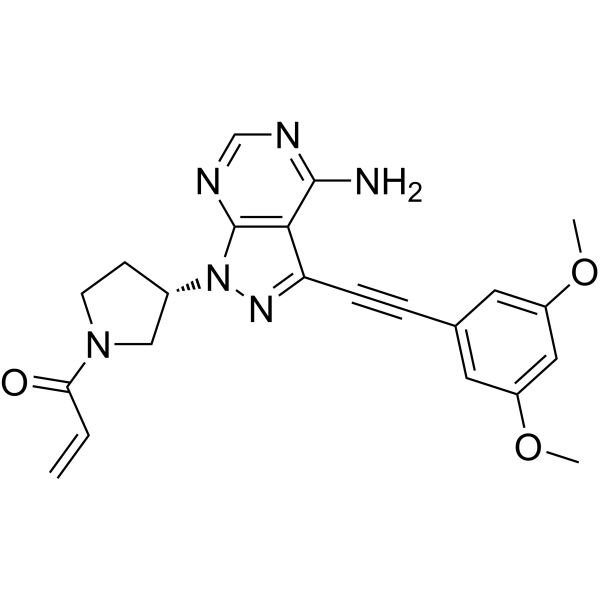
Futibatinib (TAS-120) is an orally bioavailable, highly selective, and irreversible FGFR inhibitor, with IC50s of 3.9, 1.3, 1.6, and 8.3 nM for FGFR 1-4, respectively. Futibatinib inhibits mutant and wild-type FGFR2 with similar IC50s (wild-type FGFR2=0.9 nM; V5651=1-3 nM; N550H=3.6 nM; E566G=2.4 nM).
연구목적의 판매만을 진행합니다. 환자를 대상으로 한 판매는 하지 않습니다.
- Purity : 99.90%
- CAS No.: 1448169-71-8
- 화학식: C22H22N6O3
- 분자량:418.45
-
보관:Powder -20°C, 3 years , 4°C, 2 years ; In solvent -80°C, 1 year , -20°C, 6 months

To place orders, for customer services and technical support, please contact: MedChemExpress USA
Tel: 609-228-6898 E-mail: [email protected] [email protected]


-
 Biological Activity
-
Chemical Information
-
용액&용해도
- 순도&문서
- References
-
 Help & FAQs


-
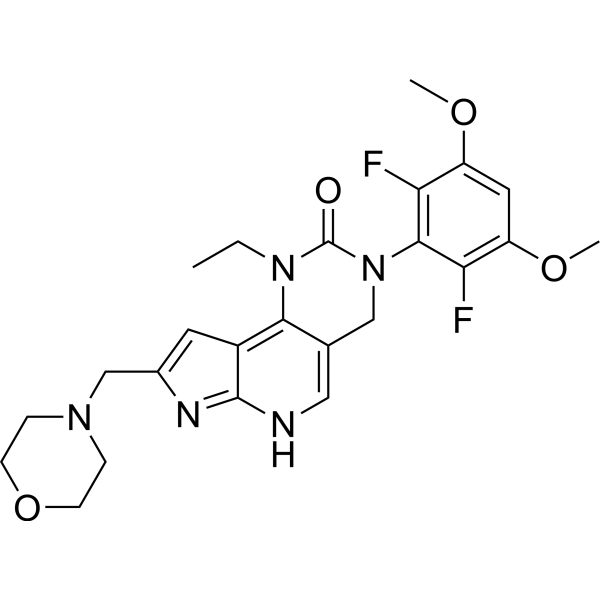
HY-109099
PemigatinibFGFR Inhibitor -
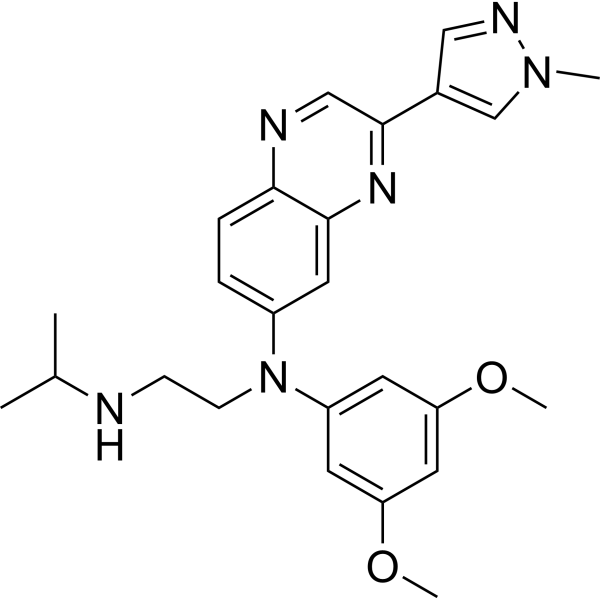
HY-18708
ErdafitinibFGFR Inhibitor -
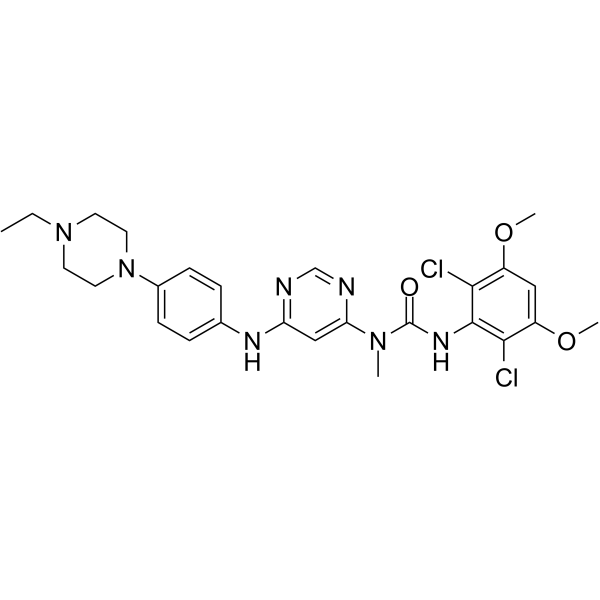
HY-13311
InfigratinibFGFR Inhibitor -
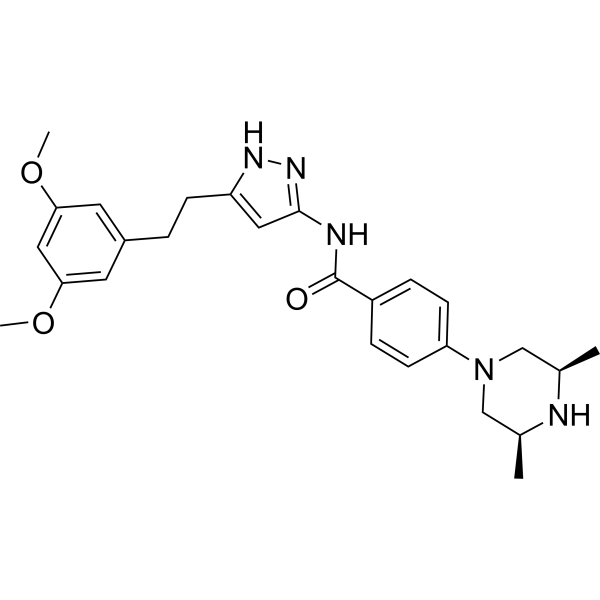
HY-13330
FexagratinibFGFR Inhibitor -
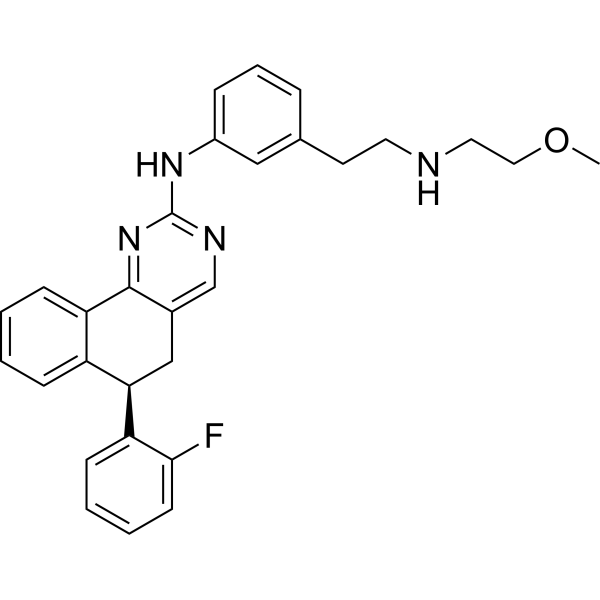
HY-19981
Derazantinib -
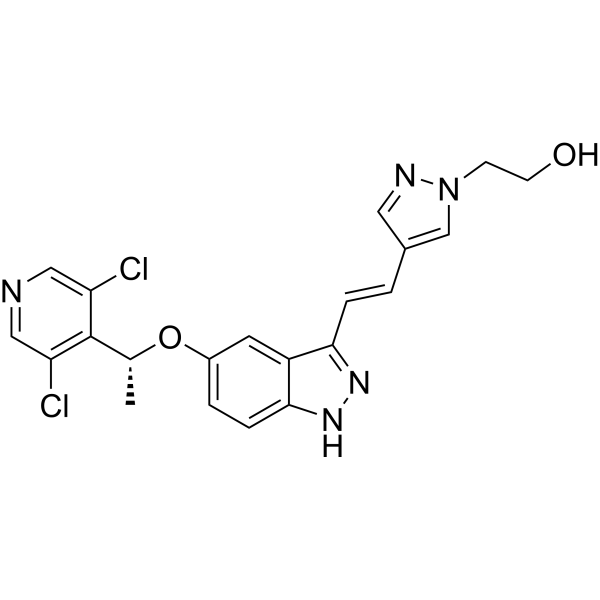
HY-13304
LY2874455FGFR Inhibitor -
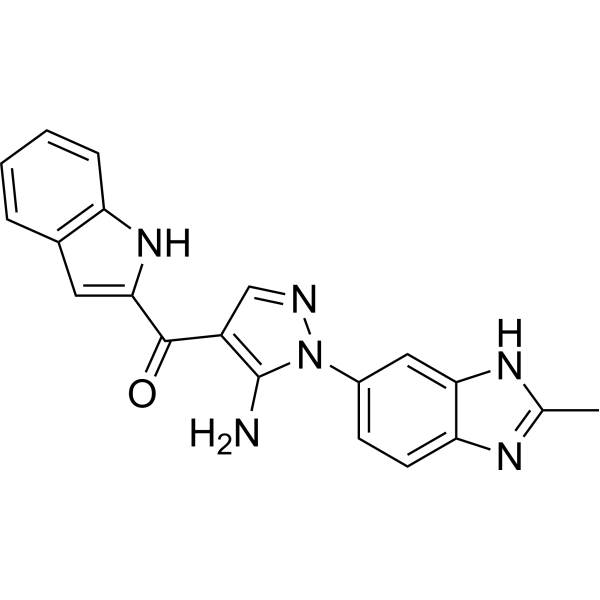
HY-19957
Zoligratinib -
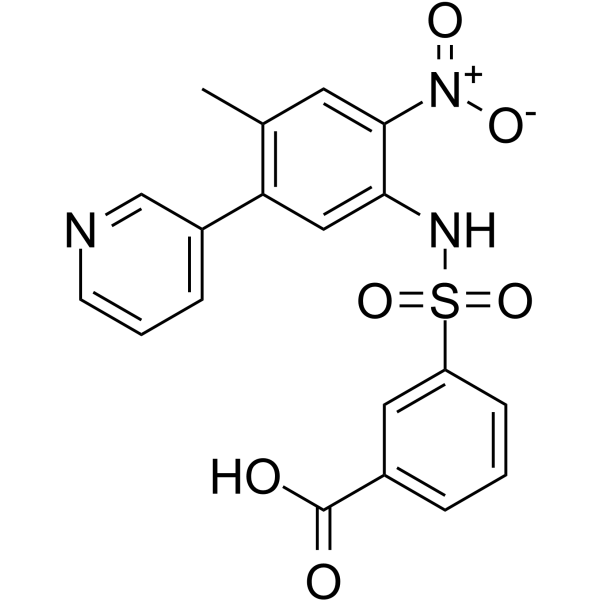
HY-17601
Alofanib -
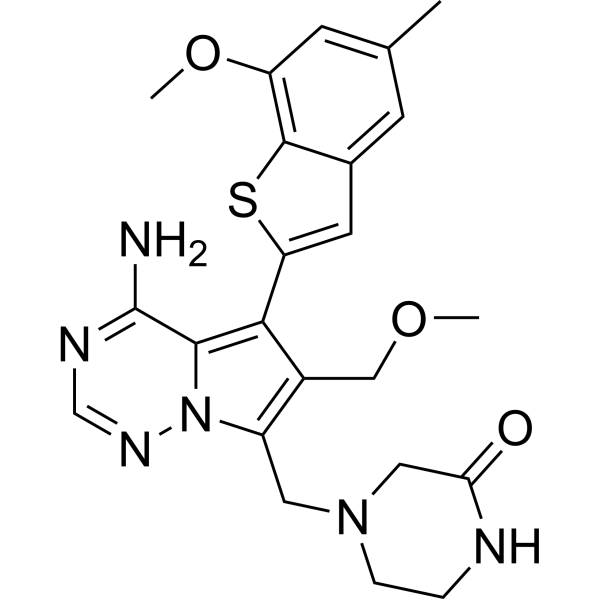
HY-100019
RogaratinibFGFR1-4 Inhibitor -
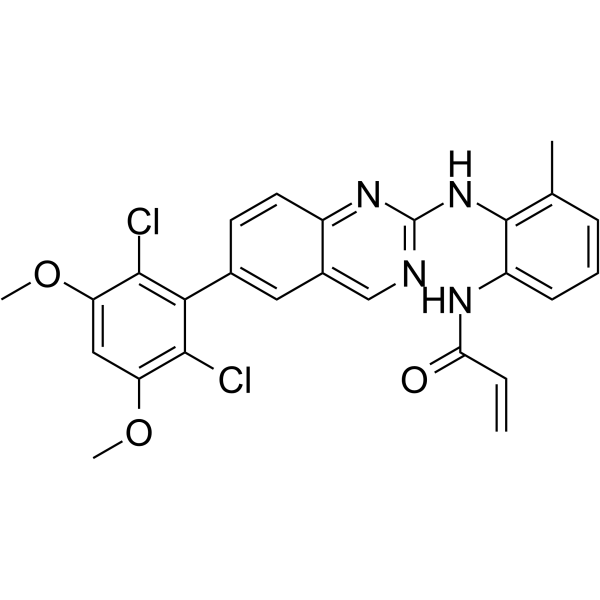
HY-12823
BLU9931FGFR4 Inhibitor -
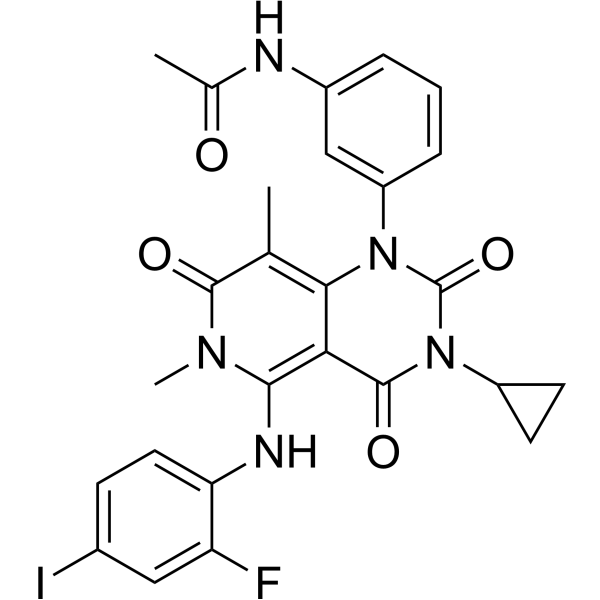
HY-10999
TrametinibMEK Inhibitor -
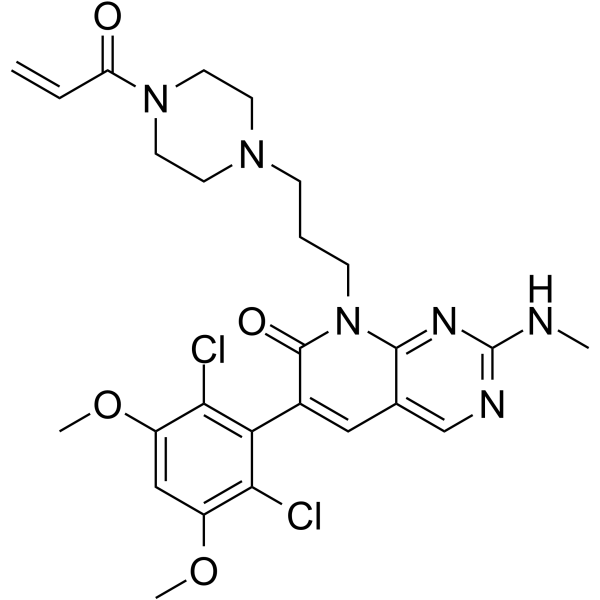
HY-101768
PRN1371FGFR Inhibitor
Publications Citing Use of MedChemExpress (MCE) Futibatinib
More- Cell. 2026 Jun 11;189(12):3701-3718.e30. [Abstract]
- Cancer Res. 2025 Dec 29. [Abstract]
- Proc Natl Acad Sci U S A. 2024 Feb 6;121(6):e2317756121. [Abstract]
- Dev Cell. 2025 Jan 6;60(1):51-61.e4. [Abstract]
- JHEP Rep. 2026 Jul 21:101964.
- J Pharm Biomed Anal. 2026 Feb 15:269:117253. [Abstract]
- J Pharm Biomed Anal. 2022 May 30;214:114731. [Abstract]
- bioRxiv. 2026 Sep 25.
- bioRxiv. 2025 Nov 18.
- University of Auckland. 2025.
 Customer Validation & Images

-
Bio/Physico-chemical Assay
-
WB
-
In Vivo Efficacy Study
-
Bio/Physico-chemical Assay
-
Bio/Physico-chemical Assay


Biological Activity
제품 설명
IC50 & Target
[3]|
FGFR1 3.9 nM (IC50) |
FGFR2 1.3 nM (IC50) |
FGFR3 1.6 nM (IC50) |
FGFR4 8.3 nM (IC50) |
wild-type FGFR2 0.3 nM (IC50) |
FGFR2 V5651 1-3 nM (IC50) |
FGFR2 N550H 3.6 nM (IC50) |
FGFR2 E566G 2.4 nM (IC50) |
Cellular Effect
|
Cell Line

|
Type | Value | Description | References |
|---|---|---|---|---|
| Huh-7 | IC50 |
>10 μM
Compound: TAS-120
|
Antiproliferative activity against human Huh-7 cells assessed as inhibition of cell growth measured after 96 hrs by CCK-8 assay
Antiproliferative activity against human Huh-7 cells assessed as inhibition of cell growth measured after 96 hrs by CCK-8 assay
|
[PMID: 34129329] |
| NCI-H1581 | IC50 |
0.007 μM
Compound: TAS-120
|
Antiproliferative activity against human NCI-H1581 cells expressing FGFR1 assessed as inhibition of cell growth measured after 96 hrs by CCK-8 assay
Antiproliferative activity against human NCI-H1581 cells expressing FGFR1 assessed as inhibition of cell growth measured after 96 hrs by CCK-8 assay
|
[PMID: 34129329] |
| NCI-H460 | IC50 |
>10 μM
Compound: TAS-120
|
Antiproliferative activity against human NCI-H460 cells assessed as inhibition of cell growth measured after 96 hrs by CCK-8 assay
Antiproliferative activity against human NCI-H460 cells assessed as inhibition of cell growth measured after 96 hrs by CCK-8 assay
|
[PMID: 34129329] |
| RT-112 | IC50 |
19.6 nM
Compound: Futibatinib
|
Antiproliferative activity against human RT-112 cells expressing FGFR3 assessed as inhibition of cell growth incubated for 5 days by Cell-titer glo assay
Antiproliferative activity against human RT-112 cells expressing FGFR3 assessed as inhibition of cell growth incubated for 5 days by Cell-titer glo assay
|
[PMID: 38267212] |
| RT-112 | IC50 |
390 nM
Compound: Futibatinib
|
Antiproliferative activity against human RT-112 cells expressing FGFR3 V555M mutant assessed as inhibition of cell growth incubated for 5 days by Cell-titer glo assay
Antiproliferative activity against human RT-112 cells expressing FGFR3 V555M mutant assessed as inhibition of cell growth incubated for 5 days by Cell-titer glo assay
|
[PMID: 38267212] |
| RT-112 | IC50 |
6.7 nM
Compound: Futibatinib
|
Antiproliferative activity against human RT-112 cells assessed as inhibition of cell growth incubated for 5 days by Cell-titer glo assay
Antiproliferative activity against human RT-112 cells assessed as inhibition of cell growth incubated for 5 days by Cell-titer glo assay
|
[PMID: 38267212] |
| RT-112 | IC50 |
73.4 nM
Compound: Futibatinib
|
Antiproliferative activity against human RT-112 cells expressing FGFR3 N540K mutant assessed as inhibition of cell growth incubated for 5 days by Cell-titer glo assay
Antiproliferative activity against human RT-112 cells expressing FGFR3 N540K mutant assessed as inhibition of cell growth incubated for 5 days by Cell-titer glo assay
|
[PMID: 38267212] |
| RT-112 | IC50 |
74.3 nM
Compound: Futibatinib
|
Antiproliferative activity against human RT-112 cells expressing FGFR3 K650M mutant assessed as inhibition of cell growth incubated for 5 days by Cell-titer glo assay
Antiproliferative activity against human RT-112 cells expressing FGFR3 K650M mutant assessed as inhibition of cell growth incubated for 5 days by Cell-titer glo assay
|
[PMID: 38267212] |
| SK-HEP1 | IC50 |
0.152 μM
Compound: TAS-120
|
Antiproliferative activity against human SK-HEP1 cells expressing FGFR4 assessed as inhibition of cell growth measured after 96 hrs by CCK-8 assay
Antiproliferative activity against human SK-HEP1 cells expressing FGFR4 assessed as inhibition of cell growth measured after 96 hrs by CCK-8 assay
|
[PMID: 34129329] |
| SNU1 | IC50 |
>5000 nM
Compound: 5; TAS-120
|
Cytotoxicity against human SNU1 cells assessed as inhibition of cell growth measured after 72 hrs by cell titer glo assay
Cytotoxicity against human SNU1 cells assessed as inhibition of cell growth measured after 72 hrs by cell titer glo assay
|
[PMID: 37077386] |
| SNU-16 | IC50 |
0.004 μM
Compound: TAS-120
|
Antiproliferative activity against human SNU-16 cells expressing FGFR2 assessed as inhibition of cell growth measured after 96 hrs by CCK-8 assay
Antiproliferative activity against human SNU-16 cells expressing FGFR2 assessed as inhibition of cell growth measured after 96 hrs by CCK-8 assay
|
[PMID: 34129329] |
| SNU-16 | IC50 |
3.7 nM
Compound: 5; TAS-120
|
Cytotoxicity against human SNU-16 cells assessed as inhibition of cell growth measured after 72 hrs by cell titer glo assay
Cytotoxicity against human SNU-16 cells assessed as inhibition of cell growth measured after 72 hrs by cell titer glo assay
|
[PMID: 37077386] |
| SNU-16 | IC50 |
4.7 nM
Compound: Futibatinib
|
Antiproliferative activity against human SNU-16 cells assessed as inhibition of cell growth incubated for 5 days by Cell-titer glo assay
Antiproliferative activity against human SNU-16 cells assessed as inhibition of cell growth incubated for 5 days by Cell-titer glo assay
|
[PMID: 38267212] |
In Vitro
In Vivo
MedChemExpress (MCE) has not independently confirmed the accuracy of these methods. They are for reference only.
Clinical Trial
| NCT Number | Sponsor | Condition | Start Date |
Phase
|
|---|---|---|---|---|
| NCT01329991 | Plexxikon| | 2011-05 | PHASE1 |


Chemical Information
-
CAS No. 1448169-71-8
-
Appearance Solid
-
분자량 418.45
-
화학식 C22H22N6O3
-
Color White to yellow
-
SMILES
O=C(C=C)N(C1)CC[C@@H]1N(N=C2C#CC3=CC(OC)=CC(OC)=C3)C4=C2C(N)=NC=N4
-
Synonyms
TAS-120
-
선적
Room temperature in continental US; may vary elsewhere.
-
보관
Powder -20°C 3 years 4°C 2 years In solvent -80°C 1 year -20°C 6 months


Publications (10)
-
Journal Impact Factor
-
Most Recent
-
Cell
2026 Jun 11;189(12):3701-3718.e30. PMID: 41923644 -
Cancer Res
2025 Dec 29. PMID: 41460723 -
Proc Natl Acad Sci U S A
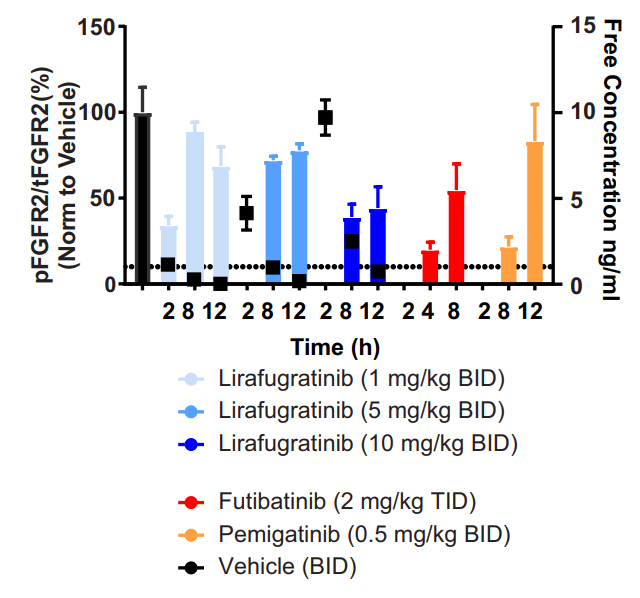
Discovery of lirafugratinib (RLY-4008), a highly selective irreversible small-molecule inhibitor of FGFR2. [Abstract]2024 Feb 6;121(6):e2317756121. PMID: 38300868
Futibatinib purchased from MedChemExpress. Usage Cited in: Proc Natl Acad Sci U S A. 2024 Feb 6;121(6):e2317756121. [Abstract]
Dose-dependent inhibition of FGFR2 in the FGFR2-amplified SNU-16 gastric cancer xenograft model. Female BALB/c mice were given twice daily oral doses of 1, 5, or 10 mg/kg Lirafugratinib. Lirafugratinib was compared with clinically relevant doses of Futibatinib (2 mg/kg, TID, oral) and Pemigatinib. Tumor tissue was collected at a designated time point on day four after the last dose. Tumor lysates were analyzed by HTRF analysis of pFGFR2 (Y653/654) and total FGFR2 (tFGFR2).
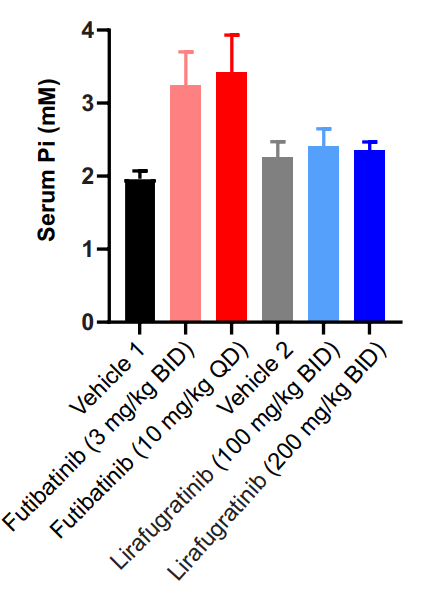
Futibatinib purchased from MedChemExpress. Usage Cited in: Proc Natl Acad Sci U S A. 2024 Feb 6;121(6):e2317756121. [Abstract]
Lirafugratinib spares FGFR1-driven hyperphosphatemia in vivo. Following 14 d of dosing Futibatinib (3 mg/kg, BID; 10 mg/kg, QD; oral) and Lirafugratinib to Sprague Dawley rats at the indicated doses and schedules, blood was collected from all animals for serum phosphate analysis (n = 5/group).
-
Dev Cell
2025 Jan 6;60(1):51-61.e4. PMID: 39413782 -
-
J Pharm Biomed Anal
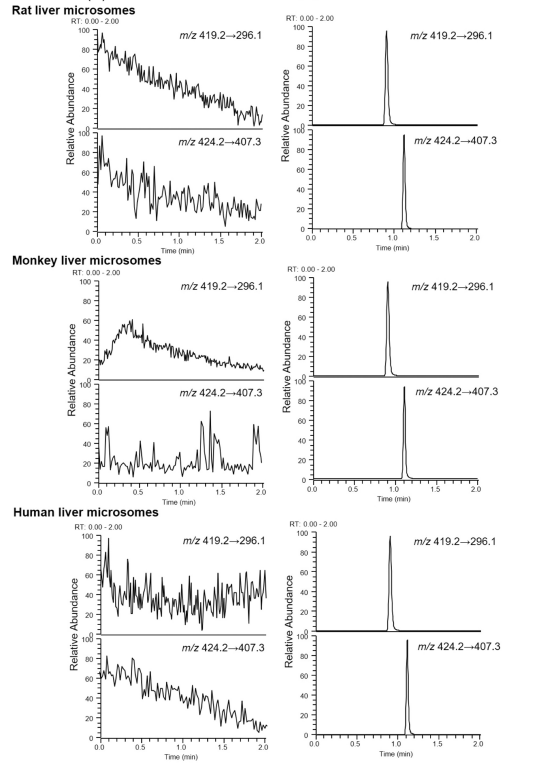
Metabolic stability assessment and metabolite profiling of gunagratinib, a novel FGFR inhibitor, in rat, monkey and human liver microsomes by an integrated analysis method based on HPLC-MS/MS and HPLC-Orbitrap-HRMS. [Abstract]2026 Feb 15:269:117253. PMID: 41241972
Futibatinib purchased from MedChemExpress. Usage Cited in: J Pharm Biomed Anal. 2026 Feb 15:269:117253. [Abstract]
Representative SRM chromatograms of blank liver microsomes and a 60-min microsomal incubation sample. Gunagratinib (RT = 1.18 min) was monitored at m/z 424.2→407.3, and Futibatinib (IS; RT = 0.88 min) at m/z 419.2→296.1.
-
J Pharm Biomed Anal
Quantification of the irreversible fibroblast growth factor receptor inhibitor futibatinib by UPLC-MS/MS: Application to the metabolic stability assay in human liver microsomes for the estimation of its in vitro hepatic intrinsic clearance. [Abstract]2022 May 30;214:114731. PMID: 35325798
Futibatinib purchased from MedChemExpress. Usage Cited in: J Pharm Biomed Anal. 2022 May 30;214:114731. [Abstract]
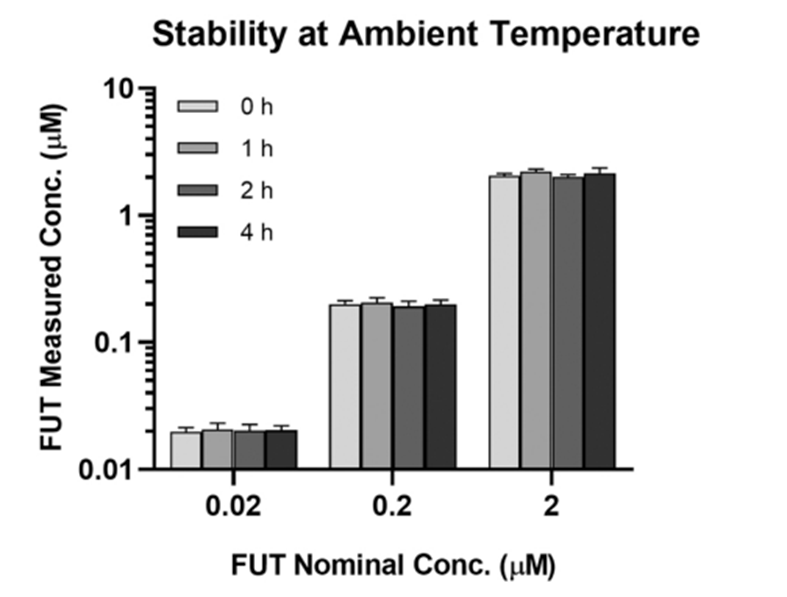
QC samples were stored at room temperature (~24 ℃) for 0, 1, 2 and 4 hours before analysis to assess the stability of the Futibatinib (0.02-2 μM).
Futibatinib purchased from MedChemExpress. Usage Cited in: J Pharm Biomed Anal. 2022 May 30;214:114731. [Abstract]
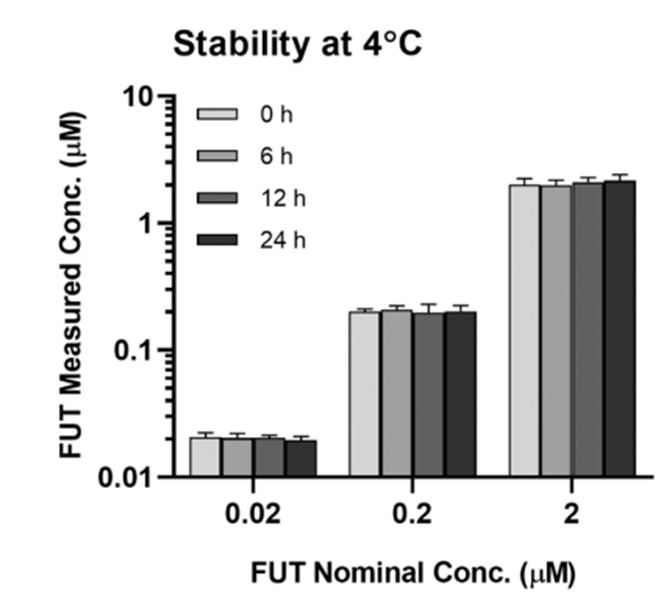
QC samples were stored at autosampler temperature (4 ℃) for 0, 6, 12, and 24 hours prior to analysis to assess the stability of the Futibatinib (0.02-2 μM).
-
-
-


용액&용해도
In Vitro:
DMSO : ≥ 29 mg/mL (69.30 mM; Hygroscopic DMSO has a significant impact on the solubility of product, please use newly opened DMSO)
* "≥" means soluble, but saturation unknown.
Please refer to the solubility information to select the appropriate solvent. Once prepared, please aliquot and store the solution to prevent product inactivation from repeated freeze-thaw cycles.
Storage method and period of stock solution: -80°C, 1 year; -20°C, 6 months. When stored at -80°C, please use it within 1 year. When stored at -20°C, please use it within 6 months.
Please refer to the solubility information to select the appropriate solvent. Once prepared, please aliquot and store the solution to prevent product inactivation from repeated freeze-thaw cycles.
Storage method and period of stock solution: -80°C, 1 year; -20°C, 6 months. When stored at -80°C, please use it within 1 year. When stored at -20°C, please use it within 6 months.
Concentration (start) × Volume (start) = Concentration (final) × Volume (final)
In Vivo:
Select the appropriate dissolution method based on your experimental animal and administration route.
- For the following dissolution methods, please ensure to first prepare a clear stock solution using an In Vitro approach and then sequentially add co-solvents:
- To ensure reliable experimental results, the clarified stock solution can be appropriately stored based on storage conditions. As for the working solution for In Vivo experiments, it is recommended to prepare freshly and use it on the same day.
- The percentages shown for the solvents indicate their volumetric ratio in the final prepared solution. If precipitation or phase separation occurs during preparation, heat and/or sonication can be used to aid dissolution.
Add each solvent one by one: 10% DMSO 40% PEG300 5% Tween-80 45% Saline
Solubility: 2.08 mg/mL (4.97 mM); Suspended solution; Need ultrasonic
This protocol yields a suspended solution of 2.08 mg/mL. Suspended solution can be used for oral and intraperitoneal injection.
Taking 1 mL working solution as an example, add 100 μL DMSO stock solution (20.8 mg/mL) to 400 μL PEG300, and mix evenly; then add 50 μL Tween-80 and mix evenly; then add 450 μL Saline to adjust the volume to 1 mL.
Preparation of Saline: Dissolve 0.9 g sodium chloride in ddH₂O and dilute to 100 mL to obtain a clear Saline solution.
Add each solvent one by one: 10% DMSO 90% (20% SBE-β-CD in Saline)
Solubility: 2.08 mg/mL (4.97 mM); Suspended solution; Need ultrasonic
This protocol yields a suspended solution of 2.08 mg/mL. Suspended solution can be used for oral and intraperitoneal injection.
Taking 1 mL working solution as an example, add 100 μL DMSO stock solution (20.8 mg/mL) to 900 μL 20% SBE-β-CD in Saline, and mix evenly.
Preparation of 20% SBE-β-CD in Saline (4°C, storage for one week): 2 g SBE-β-CD powder is dissolved in 10 mL Saline, completely dissolve until clear.
In Vivo Dissolution Calculator
Please enter the basic information of animal experiments:
-
-
-
-
Recommended: Prepare an additional quantity of animals to account for potential losses during experiments.
Please enter your animal formula composition:
-
%DMSO +
Recommended: Keep the proportion of DMSO in working solution below 2% if your animal is weak.
-
%+
-
+%Tween-80 + +
-
%Saline +
The co-solvents required include: DMSO, . All of co-solvents are available by MedChemExpress (MCE). , Tween 80. All of co-solvents are available by MedChemExpress (MCE).
Working solution concentration: 0.22 mg/mL
Method for preparing stock solution: mg drug dissolved in μL DMSO. Stock solution concentration: mg/mL.
1. Take μL DMSO stock solution;
2. Add μL .
μL , mix evenly;
3. Then add μL Tween 80, mix evenly;
4. Then add μL
Please ensure that the stock solution in the first step is dissolved to a clear state, and add co-solvents in sequence. You can use ultrasonic heating (ultrasonic cleaner, recommended frequency 20-40 kHz), vortexing, etc. to assist dissolution.


순도&문서
-
Data Sheet (281 KB)
-
SDS (396 KB)
- English - EN (396 KB)
- Français - FR (396 KB)
- Deutsch - DE (396 KB)
- Norwegian - NO (396 KB)
- Español - ES (396 KB)
- Swedish - SV (396 KB)
- Italian - IT (396 KB)
- Korean - KR (396 KB)
- Portuguese - PT (396 KB)
-
Handling Instructions (2659 KB)
References
[1]. Goyal L, et al. TAS-120 Overcomes Resistance to ATP-Competitive FGFR Inhibitors in Patients with FGFR2 Fusion-Positive Intrahepatic Cholangiocarcinoma. Cancer Discov. 2019 Aug;9(8):1064-1079. [Content Brief]
[2]. Kalyukina M, et al. TAS-120 Cancer Target Binding: Defining Reactivity and Revealing the First Fibroblast Growth Factor Receptor 1 (FGFR1) Irreversible Structure. ChemMedChem. 2019 Feb 19;14(4):494-500. [Content Brief]
[3]. Lamarca A, et al. Molecular targeted therapies: Ready for "prime time" in biliary tract cancer [published online ahead of print, 2020 Mar 12]. J Hepatol. 2020;S0168-8278(20)30165-3. [Content Brief]


Complete Stock Solution Preparation Table
Please refer to the solubility information to select the appropriate solvent. Once prepared, please aliquot and store the solution to prevent product inactivation from repeated freeze-thaw cycles.
Storage method and period of stock solution: -80°C, 1 year; -20°C, 6 months. When stored at -80°C, please use it within 1 year. When stored at -20°C, please use it within 6 months.
| Optional Solvent | Concentration Solvent Mass | 1 mg | 5 mg | 10 mg | 25 mg |
|---|---|---|---|---|---|
| DMSO | 1 mM | 2.3898 mL | 11.9489 mL | 23.8977 mL | 59.7443 mL |
| 5 mM | 0.4780 mL | 2.3898 mL | 4.7795 mL | 11.9489 mL | |
| 10 mM | 0.2390 mL | 1.1949 mL | 2.3898 mL | 5.9744 mL | |
| 15 mM | 0.1593 mL | 0.7966 mL | 1.5932 mL | 3.9830 mL | |
| 20 mM | 0.1195 mL | 0.5974 mL | 1.1949 mL | 2.9872 mL | |
| 25 mM | 0.0956 mL | 0.4780 mL | 0.9559 mL | 2.3898 mL | |
| 30 mM | 0.0797 mL | 0.3983 mL | 0.7966 mL | 1.9915 mL | |
| 40 mM | 0.0597 mL | 0.2987 mL | 0.5974 mL | 1.4936 mL | |
| 50 mM | 0.0478 mL | 0.2390 mL | 0.4780 mL | 1.1949 mL | |
| 60 mM | 0.0398 mL | 0.1991 mL | 0.3983 mL | 0.9957 mL |


Futibatinib Related Classifications
HY-100818 Related Classifications
 Powered by Bioz