
6 Results for "

ME 1206-d3

" in MedChemExpress (MCE) Product Catalog:
Products (6)

6 Results for "ME 1206-d3" in MCE Product Catalog:

1
1 Cited Publications
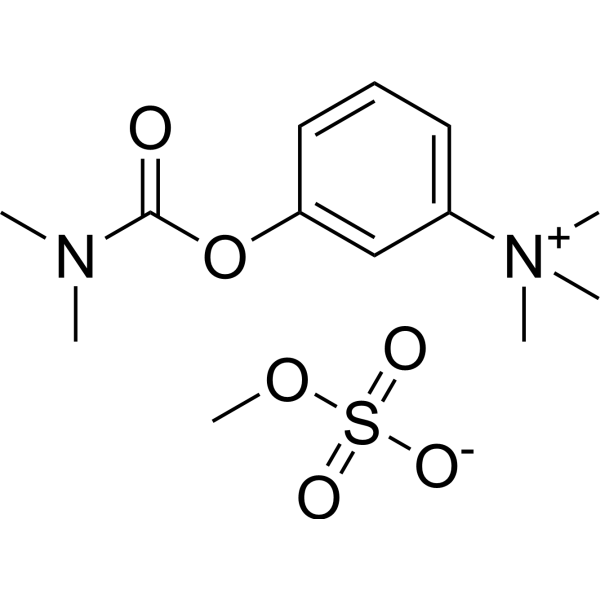
Cat. No.: HY-B1206
CAS No.: 51-60-5
Target:  

Cholinesterase (ChE)

Research Areas:  

Infection Neurological Disease

Neostigmine methyl sulfate is an AchE inhibitor. Neostigmine methyl sulfate increases endogenous acetylcholine levels, mediates antinociceptive effects, and alleviates heat-induced pain. Neostigmine methyl sulfate can be used in studies related to postoperative pain and sepsis .
1
1 Cited Publications
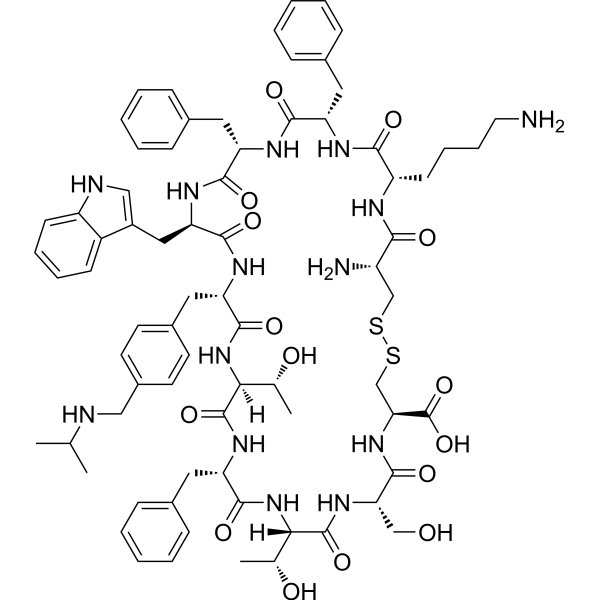
Cat. No.: HY-P1206
CAS No.: 174688-78-9
Target:  

Somatostatin Receptor

Research Areas:  

Neurological Disease

CH 275 is a peptide analog of somatostatin and binds preferably to somatostatin receptor 1 (sst1) with a Ki of 52 nM . CH 275 acts as a potent and selective sst1 agonist (IC50=30.9 nM) and also displays IC50 values of 345 nM, >1 μM, >10 μM, >10 μM for human sst3, sst4, sst2 and sst5, respectively . CH 275 can be used for the research of alzheimer’s disease .
Cat. No.: HY-B1206R
CAS No.: 51-60-5
Neostigmine (methyl sulfate) (Standard) is the analytical standard of Neostigmine (methyl sulfate). This product is intended for research and analytical applications. 0
Cat. No.: HY-W740028
Synonyms: ME 1206-d3
Cefditoren-d3 (sodium) (ME 1206-d3) is deuterium labeled Cefditoren (sodium). Cefditoren sodium (ME 1206) is a broad-spectrum, third-generation, oral cephalosporin antibacterial with enhanced stability against many common β lactamases. Cefditoren sodium has activity against Gram-negative organisms and Gram-positive organisms. Cefditoren sodium can be used in the research of infection diseases such as acute exacerbations of chronic bronchitis, community-acquired pneumonia (CAP), streptococcal pharyngitis/tonsillitis, or uncomplicated skin and skin structure infections .
Cat. No.: HY-D1206
CAS No.: 37340-54-8
Hide powder Azure is a multifunctional dye. Dyes are important tools in biological experiments. They can help researchers observe and analyze cell structures, track biomolecules, evaluate cell functions, distinguish cell types, detect biomolecules, study tissue pathology and monitor microorganisms. Their applications range from basic scientific research to clinical A wide range of diagnostics. Dyes are also widely used in traditional fields such as textile dyeing, as well as in emerging fields such as functional textile processing, food pigments and dye-sensitized solar cells.
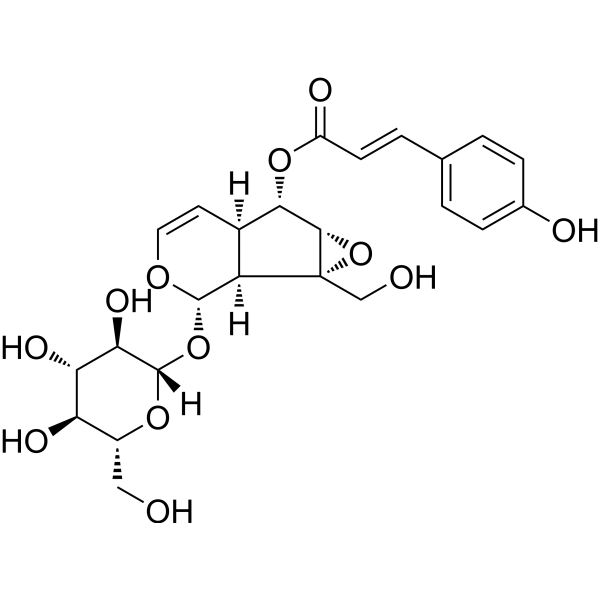
Cat. No.: HY-N1206
CAS No.: 72514-90-0
Synonyms: 6-O-(E)-p-Coumaroylcatalpol
Specioside is a novel iridoid glycoside extracted from Catalpa speciosa Warder (Bignoniaceae) .

