4 Results for "

Styrene Glycol

" in MedChemExpress (MCE) Product Catalog:
Products (4)

4 Results for "Styrene Glycol" in MCE Product Catalog:

Cat. No.: HY-114362
CAS No.: 1309573-60-1
Purity:  ≥99.0%
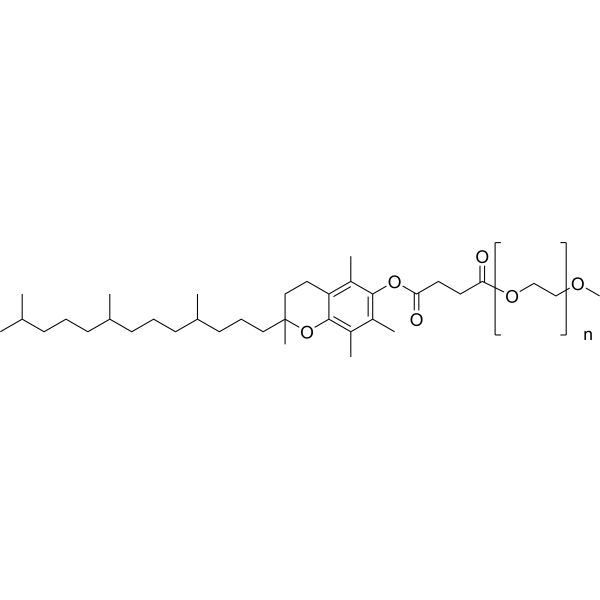
Synonyms: TPGS-750-M
Research Areas:  

Others

DL-alpha-Tocopherol methoxypolyethylene glycol succinate (TPGS-750-M) is an amphiphile, acts as a surfactant. DL-alpha-Tocopherol methoxypolyethylene glycol succinate has a positive effect on Suzuki-Miyaura cross coupling. DL-alpha-Tocopherol methoxypolyethylene glycol succinate increases the styrene titer. DL-alpha-Tocopherol methoxypolyethylene glycol succinate is used in the stability test of NPYM-modified drugs in biological fluids .
loading...
    loading...
Cat. No.: HY-W015788
CAS No.: 93-56-1
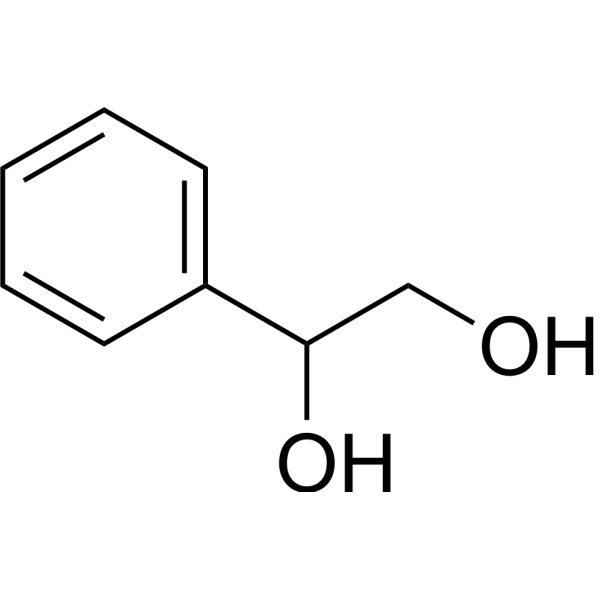
Synonyms: Styrene Glycol
1-Phenylethane-1,2-diol (Styrene Glycol) is a benzyl diol compound, which is the major metabolite of Styrene. 1-Phenylethane-1,2-diol can be oxidized to hydroxyl ketone (2-hydroxy-1-phenylethan-1-one) selectively with variety of catalysts, including organocatalysts, metal complexes, non-noble metal oxides, bimetallics .
loading...
    loading...
Cat. No.: HY-W014815
CAS No.: 223463-14-7
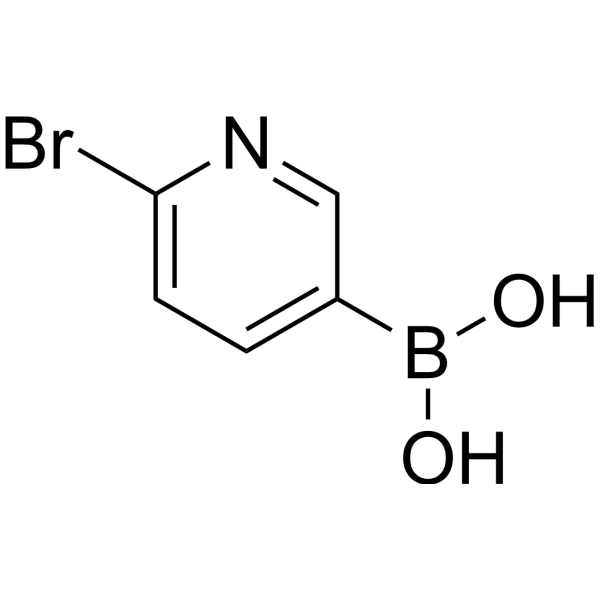
Synonyms: 2-Bromopyridine-5-boronic acid
Research Areas:  

Others

BPBA (2-Bromopyridine-5-boronic acid) is a derivatization reagent derived from Boric acid (HY-Y0314) with enhanced ionization efficiency in positive-mode electrospray ionization mass spectrometry. BPBA forms boronate ester derivatives with vicinal diols. It enables rapid, catalyst-free labeling operations, improves the detection sensitivity of liquid chromatography/mass spectrometry, and reduces false positive errors .
loading...
    loading...
Cat. No.: HY-W015788R
CAS No.: 93-56-1
Synonyms: Styrene Glycol (Standard)
1-Phenylethane-1,2-diol (Standard) is the analytical standard of 1-Phenylethane-1,2-diol. This product is intended for research and analytical applications. 1-Phenylethane-1,2-diol (Styrene Glycol) is a benzyl diol compound, which is the major metabolite of Styrene. 1-Phenylethane-1,2-diol can be oxidized to hydroxyl ketone (2-hydroxy-1-phenylethan-1-one) selectively with variety of catalysts, including organocatalysts, metal complexes, non-noble metal oxides, bimetallics[1][2][3].
loading...
    loading...

