4 Results for "

anoikis

" in MedChemExpress (MCE) Product Catalog:
Products (4)

4 Results for "anoikis" in MCE Product Catalog:

3
3 Cited Publications
Cat. No.: HY-15673
CAS No.: 1374996-60-7
Purity:  99.75%
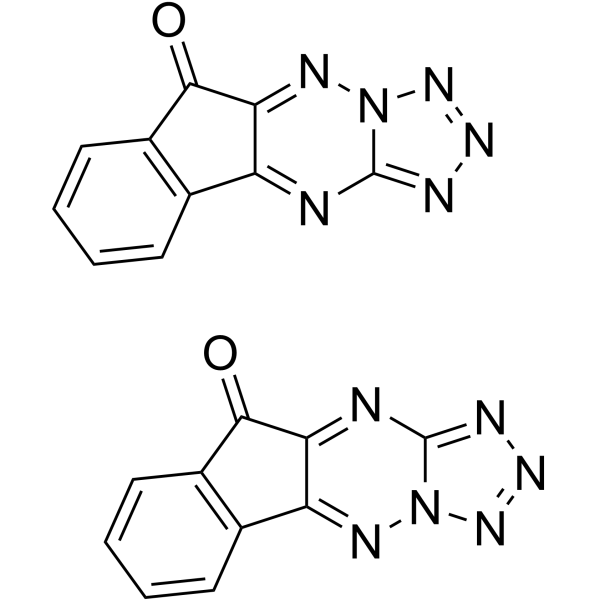
KP372-1 is an Akt inhibitor that inhibits proliferation and induces apoptosis and anoikis. KP372-1 is also an NQO1 redox cycling agent that causes DNA damage (including DNA breakage) by generating ROS. KP372-1 can be used in cancer research (such as head and neck squamous cell carcinoma (HNSCC) and pancreatic cancer) .
Cat. No.: HY-117738
CAS No.: 143651-45-0
Purity:  95.79%
Benarthin is an orally active Pyroglutamyl peptidase inhibitor, THY1 inhibitor (with a Kd value of 5.13e-08 M) and competitive PGP-1 inhibitor (Ki = 1.2 µM). Benarthin is isolated from the culture broth of Streptomyces xanthophaeus MJ244-SF1. Benarthin disrupts the THY1-SFRP1 interaction, inhibits the activation of the GSK3α/β-β-catenin pathway, and reduces the upregulation of FASLG. Benarthin attenuates urothelial anoikis and reduces cell Apoptosis. Benarthin possesses iron-chelating activity. Benarthin maintains urothelial barrier integrity and blocks the pathological cascade of renal interstitial fibroblasts induced by HAP stimulation. Benarthin can be used in studies related to kidney stones .
Cat. No.: HY-N4189
CAS No.: 17278-28-3
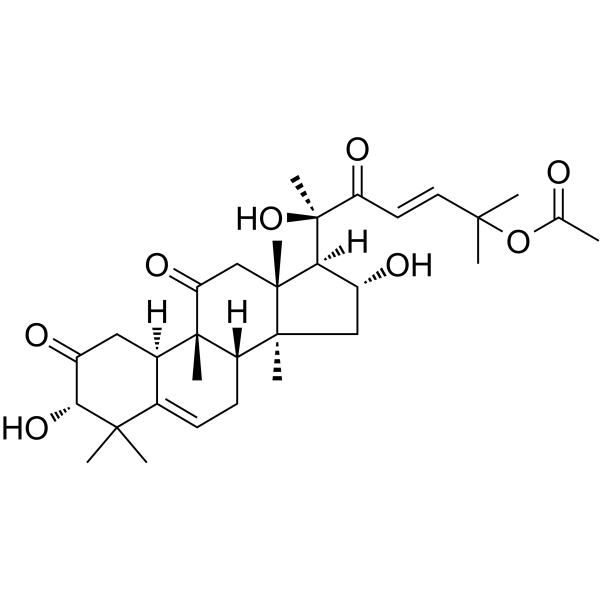
Isocucurbitacin B is a natural terpenoid compound found in Pedicellus Melo. Isocucurbitacin B can inhibit the PI3K/AKT, MAPK, and STAT3 signaling pathways and downregulate CAV1 expression. Isocucurbitacin B can inhbit cancer cell proliferation, migration and invision. Isocucurbitacin B can induce apoptosis and cause G2/M phase arrest. Isocucurbitacin B can decrease intracellular cholesterol and PH levels and increase intracellular calcium levels. Isocucurbitacin B can be used for the research of cancer, such as glioma [1][2].

Cat. No.: HY-N18312
CAS No.: 101508-50-3
Crepidatin is a bibenzyl compound that can be isolated from the stems of Dendrobium loddigesii. Crepidatin promotes anoikis of lung cancer cells. Crepidatin inhibits the anchorage-independent growth of human lung cancer cells. Crepidatin can be used in lung cancer-related research .

