4 Results for "

bc1 Complex-IN-1

" in MedChemExpress (MCE) Product Catalog:
Products (4)

4 Results for "bc1 Complex-IN-1" in MCE Product Catalog:

Cat. No.: HY-169987
CAS No.: 2883052-97-7
Target:  

Fungal

Research Areas:  

Infection

bc1 Complex-IN-1 (compound 12g) is a potent bc1 complex inhibitor. bc1 Complex-IN-1 shows fungicidal properties against Cucumber downy mildew (CDM) [1].
loading...
    loading...
Cat. No.: HY-13832R
CAS No.: 95233-18-4
Synonyms: Atavaquone (Standard)
Atovaquone (Standard) is the analytical standard of Atovaquone. This product is intended for research and analytical applications. Atovaquone (Atavaquone) is a potent, selective and orally active inhibitor of the parasite’s mitochondrial cytochrome bc1 complex. Atovaquone is against human and  P. falciparum cytochrome bc1 activity with IC50 values of 460 nM and 2.0 nM, respectively. Atovaquone is an antimalarial agent and has the potential for the investigation of neumocystis pneumonia, toxoplasmosis, malaria, and babesia [1] .
loading...
    loading...
Cat. No.: HY-13832S2
CAS No.: 1329792-63-3
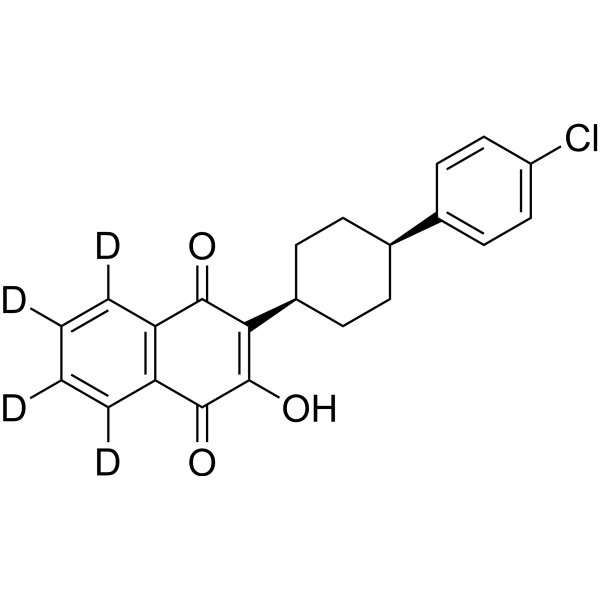
Synonyms: Atavaquone-d5
Atovaquone-d5 is the deuterium labeled Atovaquone. Atovaquone (Atavaquone) is a potent, selective and orally active inhibitor of the parasite’s mitochondrial cytochrome?bc1?complex. Atovaquone is against human and ?P. falciparum?cytochrome?bc1?activity with IC50 values of 460 nM and 2.0 nM, respectively. Atovaquone is an antimalarial agent and has the potential for the investigation of neumocystis pneumonia, toxoplasmosis, malaria, and babesia [1] .
loading...
    loading...
Cat. No.: HY-13832S3
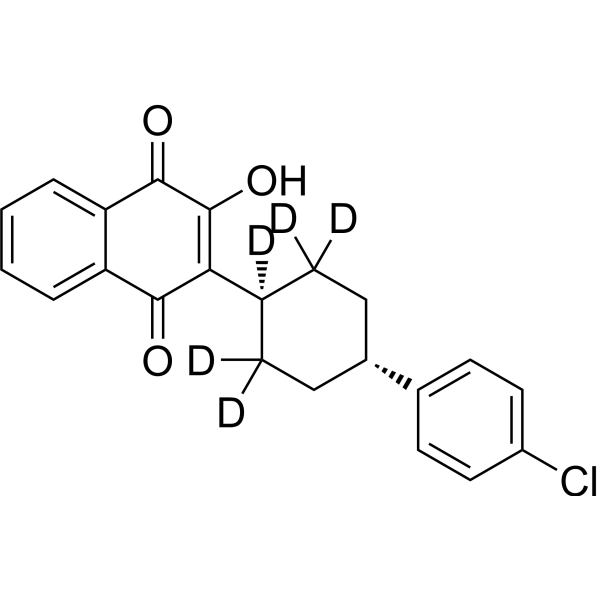
Synonyms: cis-Atavaquone-d4
cis-Atovaquone-d4 is deuterium labeled Atovaquone. Atovaquone (Atavaquone) is a potent, selective and orally active inhibitor of the parasite’s mitochondrial cytochrome bc1 complex. Atovaquone is against human and  P. falciparum cytochrome bc1 activity with IC50 values of 460 nM and 2.0 nM, respectively. Atovaquone is an antimalarial agent and has the potential for the investigation of neumocystis pneumonia, toxoplasmosis, malaria, and babesia[1][2].
loading...
    loading...

