



LANCL2
LANCL2 (lanthionine synthetase C-like 2) is a broadly expressed immunometabolic signaling protein that regulates inflammatory and metabolic responses through ligand-dependent intracellular signaling mechanisms[1]. Mechanistically, LANCL2 functions as a receptor and signaling mediator for abscisic acid (ABA), promoting cAMP-dependent pathways, calcium signaling, and downstream immunoregulatory responses that influence cellular metabolism and immune activation[2][3]. Activation of the LANCL2 pathway is linked to PPARγ-mediated transcriptional programs, regulation of inflammatory cytokine production, and enhancement of regulatory immune cell responses, thereby connecting metabolic control with immune homeostasis[1][4]. In disease models, LANCL2 signaling suppresses intestinal inflammation, supports regulatory macrophage and T-cell differentiation, and ameliorates experimental colitis through modulation of TNF-α, IFN-γ, IL-10, and related immune pathways[4][5]. LANCL2 has also been implicated in adipogenesis and insulin-sensitizing processes, highlighting its relevance to chronic metabolic disorders and diabetes-associated inflammation[1]. Compared with the structurally related isoform LANCL1, which has been characterized primarily through structural and glutathione-binding studies, LANCL2 is distinguished by its established role in ABA-dependent signaling and immunometabolic regulation[2][6]. For experimental applications, small-molecule LANCL2 agonists including NSC61610, BT-11, and related compounds have been used to investigate anti-inflammatory mechanisms and therapeutic responses in inflammatory bowel disease and other immune-mediated disease models[3][5].
References:
- [1]. Dutta D, et al. Lanthionine synthetase C-like protein 2 (LanCL2) is important for adipogenic differentiation. J Lipid Res. 2018 Aug;59(8):1433-1445. [Content Brief]
- [2]. Wikipedia.
- [3]. Parkinson EI, et al. Requirements for mammalian carboxylesterase inhibition by substituted ethane-1,2-diones. Bioorg Med Chem. 2011 Aug 1;19(15):4635-43. [Content Brief]
- [4]. Leber A, et al. Modeling the Role of Lanthionine Synthetase C-Like 2 (LANCL2) in the Modulation of Immune Responses to Helicobacter pylori Infection. PLoS One. 2016 Dec 9;11(12):e0167440. [Content Brief]
- [5]. Carbo A, et al. An N,N-Bis(benzimidazolylpicolinoyl)piperazine (BT-11): A Novel Lanthionine Synthetase C-Like 2-Based Therapeutic for Inflammatory Bowel Disease. J Med Chem. 2016 Nov 23;59(22):10113-10126. [Content Brief]
- [6]. Wu F, et al. Role of specific microRNAs for endothelial function and angiogenesis. Biochem Biophys Res Commun. 2009 Sep 4;386(4):549-53. [Content Brief]
-
LANCL2 Related Products (6)
Related Products (6)

-
Abscisic acid
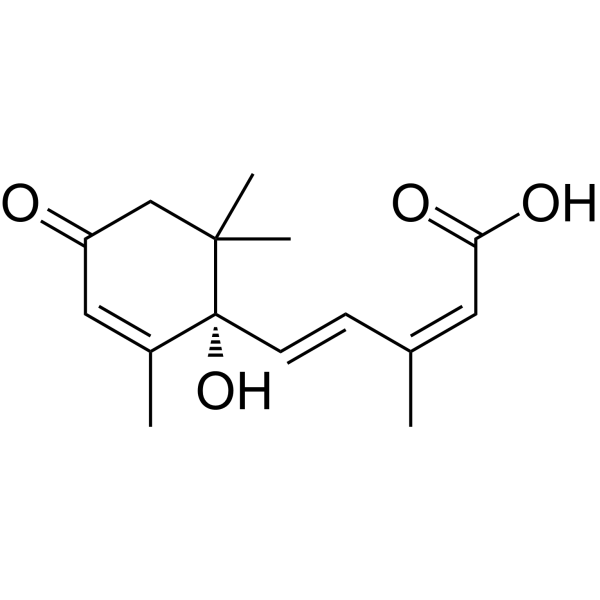 0 ImagesSynonyms: (S)-(+)-Abscisic acid; ABAAbscisic acid ((S)-(+)-Abscisic acid), an orally active phytohormone in fruits and vegetables, is an endogenously produced mammalian hormone. Abscisic acid is a growth inhibitor and can regulate many aspects of plant growth and development. Abscisic acid inhibits proton pump (H+-ATPase) and leads to the plasma membrane depolarization in a Ca2+-dependent manner. Abscisic acid, a LANCL2 natural ligand, is a potent insulin-sensitizing compound and has the potential for pre-diabetes, type 2 diabetes and metabolic syndrome.
-
Omilancor
 0 ImagesSynonyms: BT-11Omilancor (BT-11) is an orally active lanthionine synthetase cyclase-like receptor 2 (LANCL2) activator. Omilancor can be used for the study of psoriasis, inflammatory bowel disease (IBD), and Crohn's disease (CD).
-
Abscisic acid-d6
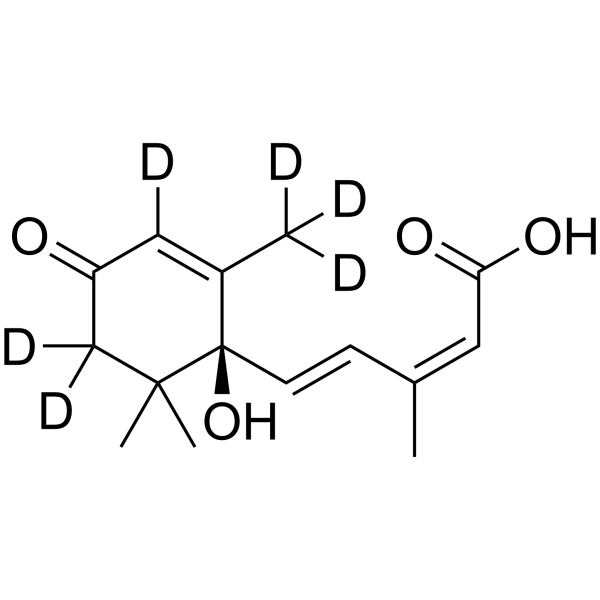 0 ImagesSynonyms: (S)-(+)-Abscisic acid-d6; ABA-d6Abscisic acid-d6 is deuterium labeled Abscisic acid. Abscisic acid inhibits proton pump (H+-ATPase).
-
Abscisic acid (Standard)
 0 ImagesSynonyms: (S)-(+)-Abscisic acid (Standard); ABA (Standard)Abscisic acid (Standard) is the analytical standard of Abscisic acid. This product is intended for research and analytical applications. Abscisic acid ((S)-(+)-Abscisic acid), an orally active phytohormone in fruits and vegetables, is an endogenously produced mammalian hormone. Abscisic acid is a growth inhibitor and can regulate many aspects of plant growth and development. Abscisic acid inhibits proton pump (H+-ATPase) and leads to the plasma membrane depolarization in a Ca2+-dependent manner. Abscisic acid, a LANCL2 natural ligand, is a potent insulin-sensitizing compound and has the potential for pre-diabetes, type 2 diabetes and metabolic syndrome.
-
SPH7050
 0 ImagesCat. No.: HY-189377SPH7050 is an orally active LANCL2 agonist with a Kd of 3.73 μM. SPH7050 inhibits PGE2 production. SPH7050 attenuates the disease activity index and colonic inflammation in TNBS-induced colitis in mice. SPH7050 can be used for research on inflammatory bowel disease.
-
Omilancor (Standard)
 0 ImagesCat. No.: HY-102013RCAS No.: 1912399-75-7Synonyms: BT-11 (Standard)Omilancor (Standard) is the analytical standard of Omilancor. This product is intended for research and analytical applications. BT-11 is an orally available LANCL2 binding compound for treating inflammatory bowel disease.



