



CLDN2
CLDN2 (claudin-2) encodes a tight junction transmembrane protein that forms cation-selective and water-permeable paracellular channels in epithelial tissues, particularly within kidney proximal tubules and the gastrointestinal tract, where it regulates epithelial permeability and ion homeostasis[1][2]. Mechanistically, CLDN2 functions as a pore-forming claudin that contributes to Na+, water, and Ca2+ transport, and its expression is controlled by multiple signaling pathways and transcriptional regulators that coordinate tight junction remodeling and epithelial barrier function[1][3]. In disease settings, CLDN2 expression is frequently dysregulated in inflammation, fibrosis, and cancer, and altered CLDN2 abundance correlates with changes in paracellular permeability, epithelial barrier integrity, and cellular behaviors including proliferation and migration[1][4]. In inflammatory bowel disease, CLDN2 is strongly expressed in inflamed crypt epithelium and is associated with disrupted barrier properties, supporting its use as an experimental marker of epithelial leakiness and inflammatory remodeling[4]. Compared with barrier-forming claudin family members such as CLDN3 and CLDN4, CLDN2 primarily generates a selective paracellular channel rather than a sealing barrier, making it a functionally distinct isoform within tight junction complexes[4][6]. Experimental studies using knockout, overexpression, and RNA interference approaches have demonstrated that CLDN2 directly regulates epithelial transport properties and intestinal calcium absorption, providing valuable models for investigating epithelial physiology and disease-associated barrier dysfunction[1][3].
References:
- [1]. Venugopal S, et al. Claudin-2: Roles beyond Permeability Functions. Int J Mol Sci. 2019 Nov 12;20(22):5655. [Content Brief]
- [2]. Kumar MS, et al. Suppression of non-small cell lung tumor development by the let-7 microRNA family. Proc Natl Acad Sci U S A. 2008 Mar 11;105(10):3903-8. [Content Brief]
- [3]. Fujita H, et al. Tight junction proteins claudin-2 and -12 are critical for vitamin D-dependent Ca2+ absorption between enterocytes. Mol Biol Cell. 2008 May;19(5):1912-21. [Content Brief]
- [4]. Evans DM, et al. A major quantitative trait locus for CD4-CD8 ratio is located on chromosome 11. Genes Immun. 2004 Nov;5(7):548-52. [Content Brief]
All Product Categories
-
CLDN2 Related Products (1)
Related Products (1)

-
Xylobiose
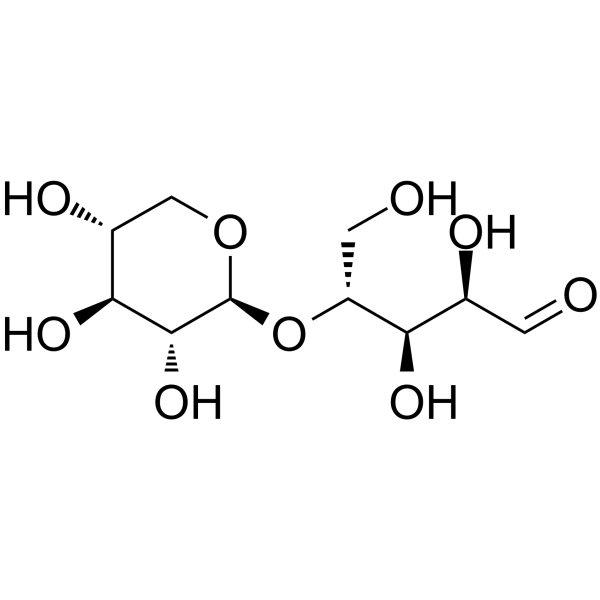 0 ImagesXylobiose (1,4-β-D-Xylobiose; 1,4-D-Xylobiose) is an orally active Claudin 2/CLDN2 inhibitor and HSP27 inducer. Xylobiose works by regulating intestinal barrier function and glucose and lipid metabolism-related signaling pathways. Xylobiose inhibits CLDN2 expression to reduce intestinal permeability, induces HSP27 to enhance cell protection, and regulates the miR-122a/miR-33a axis to inhibit liver lipid synthesis and improve insulin resistance. Xylobiose can strengthen intestinal barrier integrity, reduce blood sugar and blood lipid levels, and reduce oxidative stress and inflammatory response. Xylobiose can be used in the study of type 2 diabetes and metabolic syndrome.



