



RNase A
Ribonuclease A (RNase A) is a secreted enzyme with a conserved catalytic triad that cleaves RNA molecules[1][2]. Mechanistically, RNase A and its vertebrate homologs contribute to host defence by degrading microbial nucleic acids and modulating immune responses[3][4][5]. RNase A family members are widely expressed in tissues involved in immunity, including liver, lung, pancreas, mammary gland, and epithelial surfaces, supporting their role in mucosal and systemic defence[6][5]. Compared with related isoforms such as RNase6, RNase A exhibits a single active site, whereas RNase6 contains dual catalytic centers that enhance polymeric substrate cleavage[1][2]. In disease models, RNase A homologs demonstrate antimicrobial activity against intracellular pathogens and influence autophagy pathways in infected macrophages[4]. For experimental applications, RNase P, a structurally distinct endoribonuclease, has been exploited to specifically cleave target RNAs, illustrating the utility of RNases as molecular tools for gene expression modulation[7][8]. Overall, RNase A and its superfamily members integrate catalytic RNA cleavage with immunomodulatory functions, distinguishing them from structurally related isoforms and enabling diverse research applications in infection and host-response studies.
References:
- [1]. Gupta SK, et al. Abundance of RNase4 and RNase5 mRNA and protein in host defence related tissues and secretions in cattle. Biochem Biophys Rep. 2016 Sep 23;8:261-267. [Content Brief]
- [2]. Gupta SK, et al. The mammalian secreted RNases: mechanisms of action in host defence. Innate Immun. 2013;19(1):86-97.
- [3]. Lu L, et al. Human Antimicrobial RNases Inhibit Intracellular Bacterial Growth and Induce Autophagy in Mycobacteria-Infected Macrophages. Front Immunol. 2019 Jul 2;10:1500. [Content Brief]
- [4]. Gopalan V, et al. RNase P: variations and uses. J Biol Chem. 2002 Mar 1;277(9):6759-62. [Content Brief]
- [5]. Drainas D. Antibiotics and RNase P. Antibiotics (Basel). 2016 May 6;5(2):15. doi: 10.3390/antibiotics5020015. PMID: 27164152; PMCID: PMC4929430. et al. Antibiotics and RNase P. Antibiotics (Basel). 2016 May 6;5(2):15. [Content Brief]
- [6]. Prats-Ejarque G, et al. Characterization of an RNase with two catalytic centers. Human RNase6 catalytic and phosphate-binding site arrangement favors the endonuclease cleavage of polymeric substrates. Biochim Biophys Acta Gen Subj. 2019 Jan;1863(1):105-117. [Content Brief]
- [7]. Gupta SK. The role of cows' milk RNases in host defence. Doctoral thesis, University of Otago. 2013.
- [8]. Pulido D, et al. Insights into the Antimicrobial Mechanism of Action of Human RNase6: Structural Determinants for Bacterial Cell Agglutination and Membrane Permeation. Int J Mol Sci. 2016 Apr 13;17(4):552. [Content Brief]
All Product Categories
-
RNase A Related Products (1)
Related Products (1)

-
3'-O-Acetylthymidine
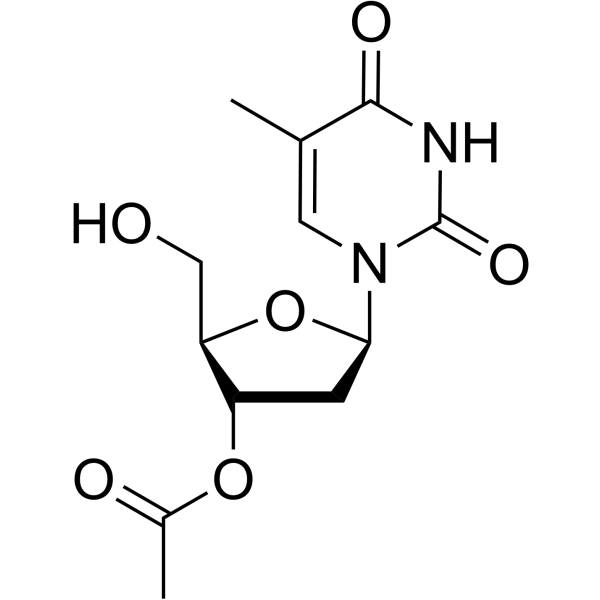 0 ImagesCat. No.: HY-N8525CAS No.: 21090-30-23'-O-Acetylthymidine, a purine nucleoside analog, is an inhibitor of ribonuclease A.



