



Aprutumab

Based on 1 Customer Validation
Aprutumab (BAY 1179470) is a fully human fibroblast growth factor receptor 2 (FGFR2)-specific monoclonal antibody. Aprutumab induces FGFR2 endocytosis and degradation in cancer cells expressing FGFR2. Aprutumab serves as the targeted monoclonal antibody component of the antibody-drug conjugate BAY 1187982 (HY-141600) and mediates the endocytosis of the antibody-drug conjugate into FGFR2-positive cells. Aprutumab can be used for the research of FGFR2-positive solid tumors, including studies on gastric cancer and triple-negative breast cancer.
For research use only. We do not sell to patients.
- Purity : 99.00%
- CAS No.: 1634620-63-5
- Molecular Weight:144.6 kDa
-
Storage:
Please store the product under the recommended conditions in the Certificate of Analysis.


To place orders, for customer services and technical support, please contact: MedChemExpress USA
Tel: 609-228-6898 E-mail: [email protected] [email protected]


-
 Biological Activity
-
Chemical Information
- Protocols
- Purity & Documentation
- References
-
 Help & FAQs


-

HY-P99384
VofatamabAnti-FGFR3 mAb -

HY-P99010
BemarituzumabAnti-FGFR2b Antibody -

HY-138298A
Trastuzumab deruxtecanHER2 ADC -

HY-P99045
SacituzumabAnti-TROP-2 Antibody -

HY-P99041
PanitumumabAnti-EGFR Monoclonal Antibody -
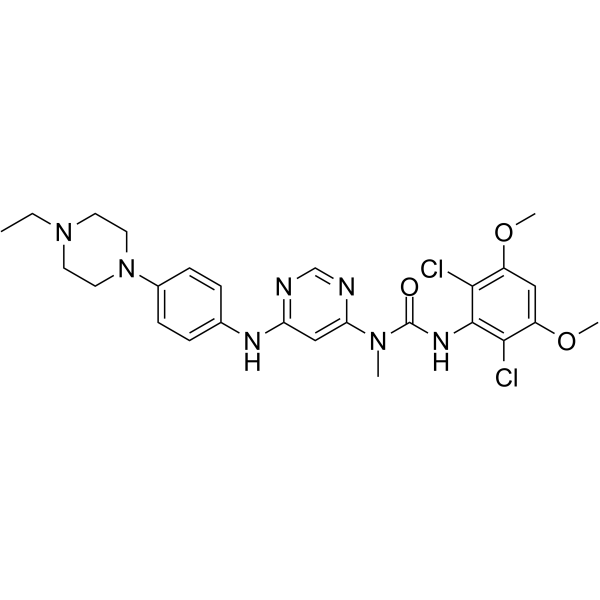
HY-13311
InfigratinibFGFR Inhibitor -
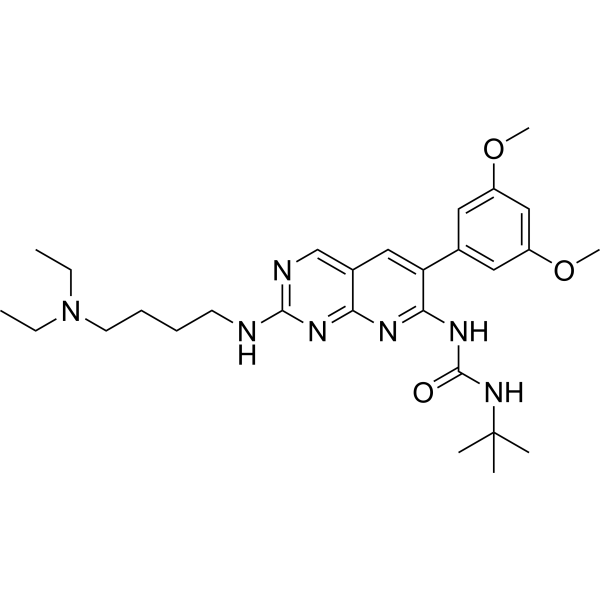
HY-10321
PD173074FGFR1 Inhibitor -
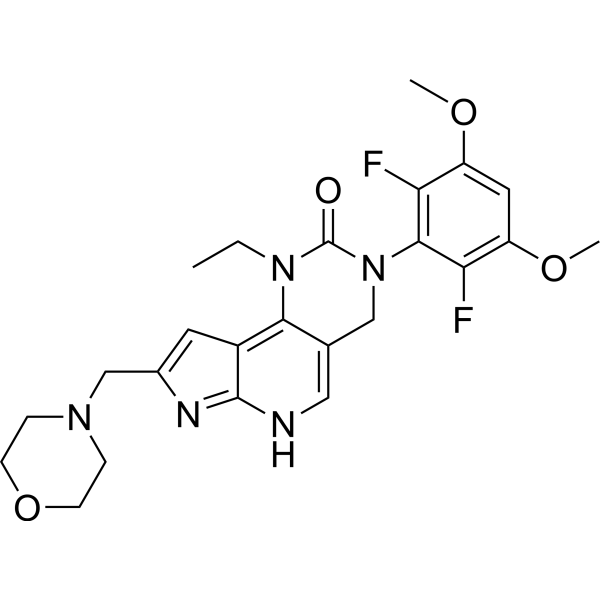
HY-109099
PemigatinibFGFR Inhibitor -
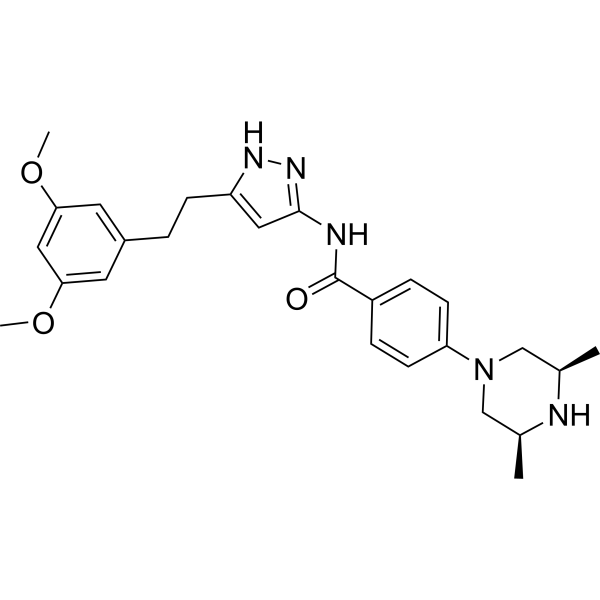
HY-13330
FexagratinibFGFR Inhibitor -
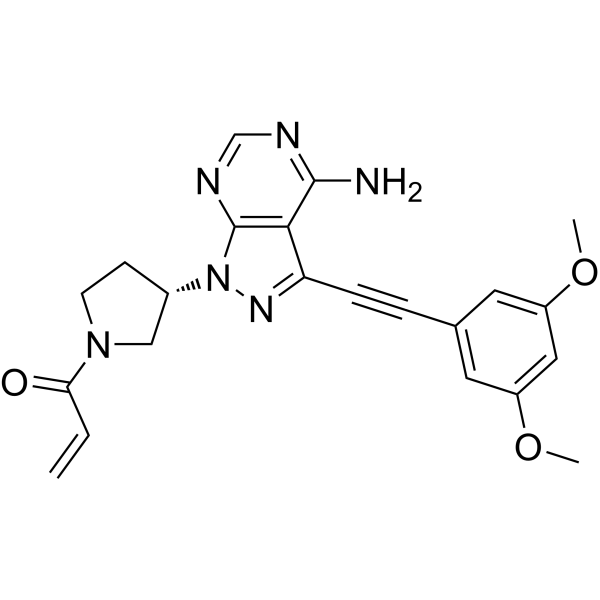
HY-100818
FutibatinibFGFR Inhibitor -
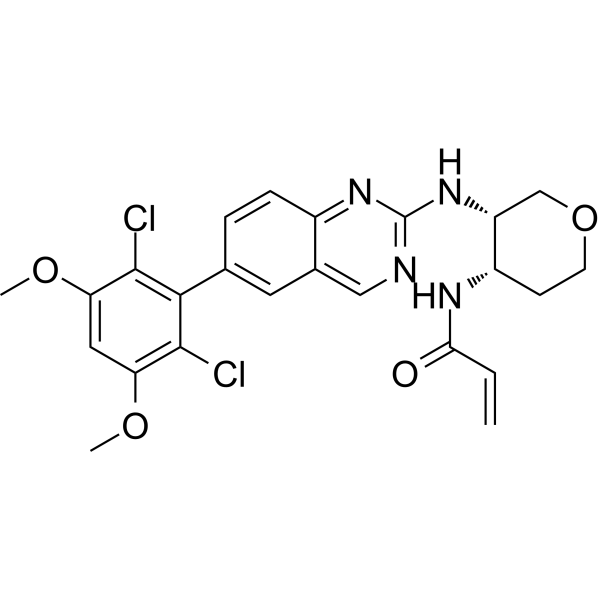
HY-100492
FisogatinibFGFR4 Inhibitor -
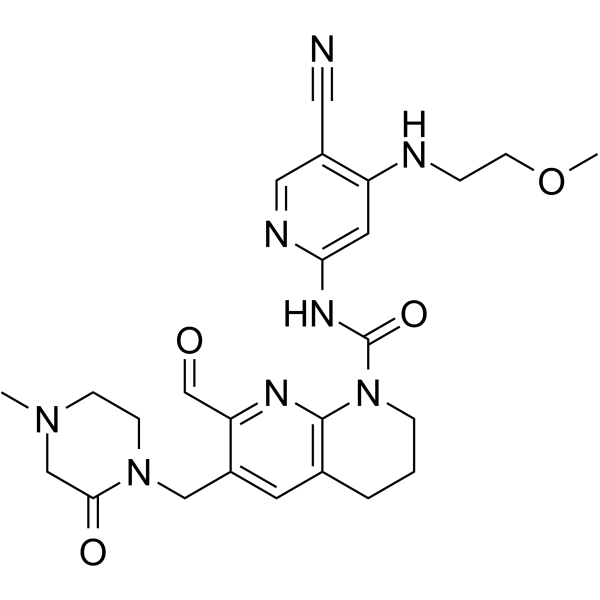
HY-101568
RoblitinibFGFR4 Inhibitor


Biological Activity
Description
Isotype
Human IgG1 lambda2
Recommend Isotype Controls
Species Reactivity
Human
IC50 & Target
|
FGFR2-IIIb |
FGFR2-IIIc |
In Vitro
Aprutumab specifically binds to human FGFR2 protein with a Kd value of 75 nM[1].
Aprutumab binds to FGFR2 proteins from multiple non-human species (mouse, rat, dog, pig, rhesus monkey) with an EC50 of 0.25-0.35 nM[1].
Aprutumab (5-24 h) specifically induces FGFR2 internalization in FGFR2-positive SUM-52PE and SNU-16 cancer cells, but exerts no such effect in FGFR2-negative MDA-MB-231 cells[1].
Aprutumab (10 μg/mL; 5 h) reduces FGFR2 expression on the surface of SNU-16 gastric cancer cells, confirming antibody-induced endocytosis[1].
Aprutumab (6 h) colocalizes with early endosome (Rab7) and lysosome (LAMP1) markers in approximately 60% of viable SUM-52PE cells, indicating that it is transported to lysosomes for degradation[1].
After conjugation to form BAY 1187982, Aprutumab retains its binding affinity for the FGFR2 antigen, with an EC50 of 0.29 nM[1].
MedChemExpress (MCE) has not independently confirmed the accuracy of these methods. They are for reference only. Further protocols information, click here.
Clinical Trial
| NCT Number | Sponsor | Condition | Start Date |
Phase

|
|---|---|---|---|---|
| NCT01329991 | Plexxikon| | 2011-05 | PHASE1 |
Gene ID
Accession
Conjugated
Unconjugated
Reconsititution
The product can be reconstituted/diluted with sterile PBS or saline.
Format
-
Human IgG1 lambda
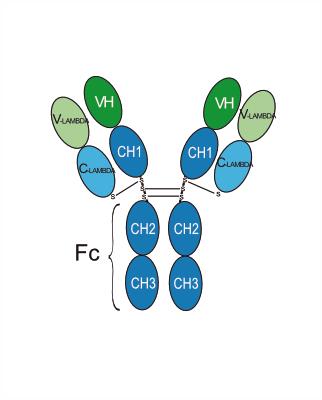
Application
ELISA, FACS, Functional assay
Verified Bioactivity
-
 Loaded Aprutumab on AHC2 biosensor, can bind FGFR-2 alpha (IIIc) Protein, Human (Biotinylated, HEK293, His-Avi, HY-P78131) with an affinity constant of 1.819E-08 M as determined in BLI assay.


Chemical Information
-
CAS No. 1634620-63-5
-
Appearance Liquid
-
Molecular Weight 144.6 kDa
-
Color Colorless to light yellow
-
SMILES
[Aprutumab]
-
Synonyms
BAY 1179470
-
Shipping
Shipping with dry ice.
-
Formulation
Please refer to the lot-specific COA for specific buffer information.
-
Storage
Please store the product under the recommended conditions in the Certificate of Analysis.

Protocols
-
Breast Cancer Modeling
Breast cancer is a heterogeneous cancer, and it has been distinguished into four subtypes: luminal A, luminal B, HER2-positive and basal-like. Molecular mutations, epigenetic alterations, hormone exposure and immune microenvironment are related to the progression of breast cancer.


Purity & Documentation
-
Data Sheet (258 KB)
-
SDS (251 KB)
- English - EN (251 KB)
- Français - FR (251 KB)
- Deutsch - DE (251 KB)
- Norwegian - NO (251 KB)
- Español - ES (251 KB)
- Swedish - SV (251 KB)
- Italian - IT (251 KB)
- Korean - KR (251 KB)
- Portuguese - PT (251 KB)
-
Inhibitory Antibodies User Guide (603 KB)
References

Calculators
Concentration (start) × Volume (start) = Concentration (final) × Volume (final)


Aprutumab Related Classifications
HY-P99007 Related Classifications
 Powered by Bioz