



Propranolol-d7 (ring-d7)

Based on 1 Customer Validation
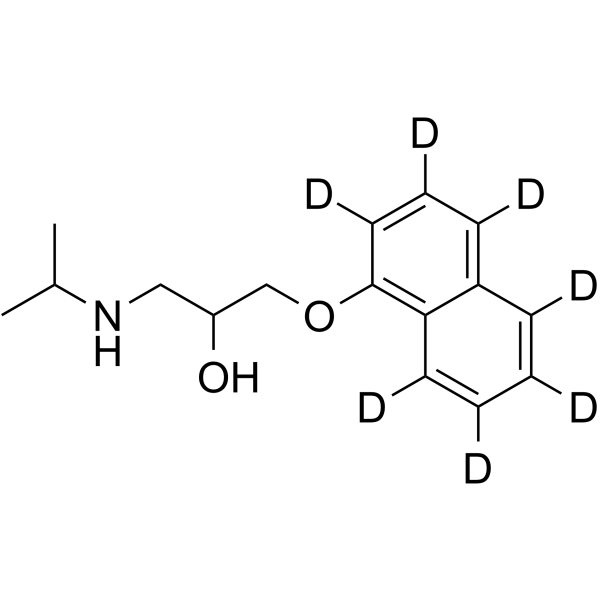
Propranolol-d7 (ring-d7) is the deuterium labeled Propranolol hydrochloride. Propranolol hydrochloride is a nonselective β-adrenergic receptor (βAR) antagonist, has high affinity for the β1AR and β2AR with Ki values of 1.8 nM and 0.8 nM, respectively. Propranolol hydrochloride inhibits [3H]-DHA binding to rat brain membrane preparation with an IC50 of 12 nM. Propranolol hydrochloride is used for study of hypertension, pheochromocytoma, myocardial infarction, cardiac arrhythmias, angina pectoris, and hypertrophic cardiomyopathy.
Nur für Forschungszwecke. Wir verkaufen nicht an Patienten.
- Reinheit : 99.71%
- CAS. Nr.: 344298-99-3
- Formel: C16H14D7NO2
- Molecular Weight:266.39
-
Speicherung:Powder -20°C, 3 years , 4°C, 2 years ; In solvent -80°C, 6 months , -20°C, 1 month

To place orders, for customer services and technical support, please contact: MedChemExpress USA
Tel: 609-228-6898 E-mail: [email protected] [email protected]


-
 Biologische Aktivität
-
Chemical Information
-
Lösungsmittel & Löslichkeit
- Protokoll
- Reinheit & Dokumentation
- Verweise
-
 Help & FAQs


-
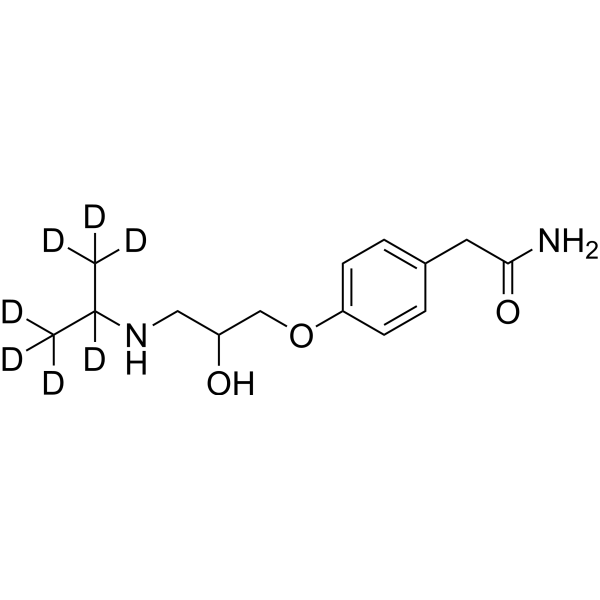
HY-17498S
Atenolol-d7Stable Isotope -
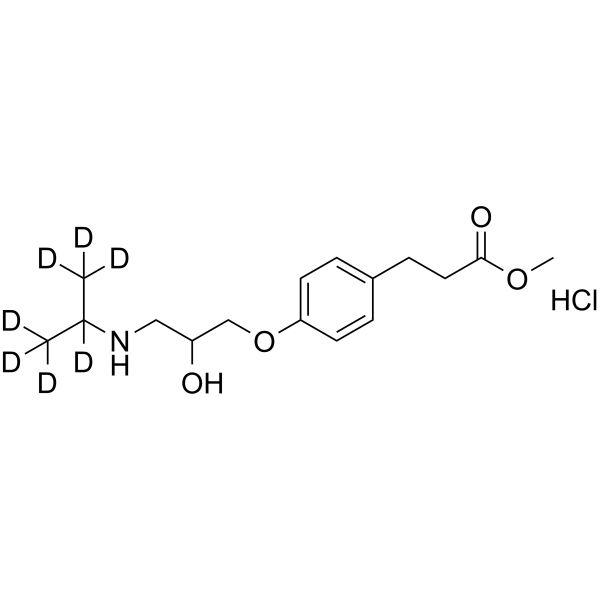
HY-B1392S
Esmolol-d7 hydrochlorideStable Isotope -
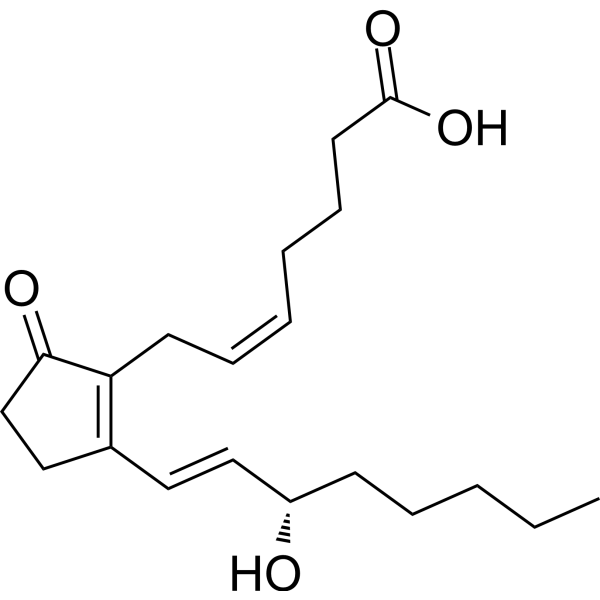
HY-113042
Prostaglandin B2Prostaglandin -
HY-B0098BS
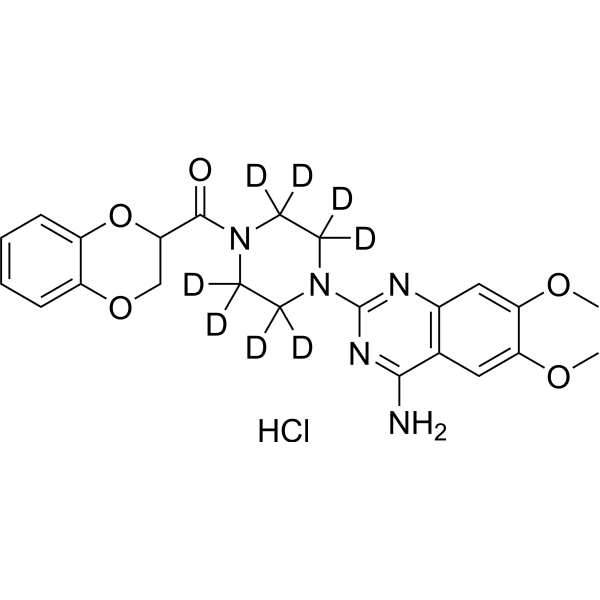
Doxazosin-d8 hydrochlorideStable Isotope -
HY-129831
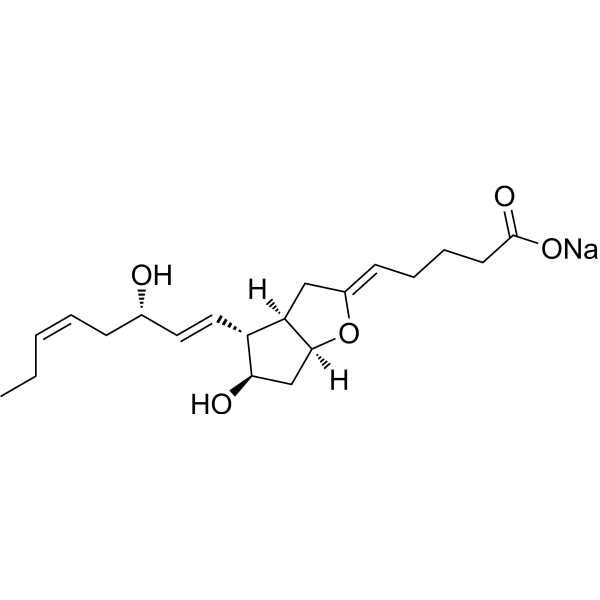
Prostaglandin I3 sodiumPlatelet Aggregation Inhibitor -
HY-122499
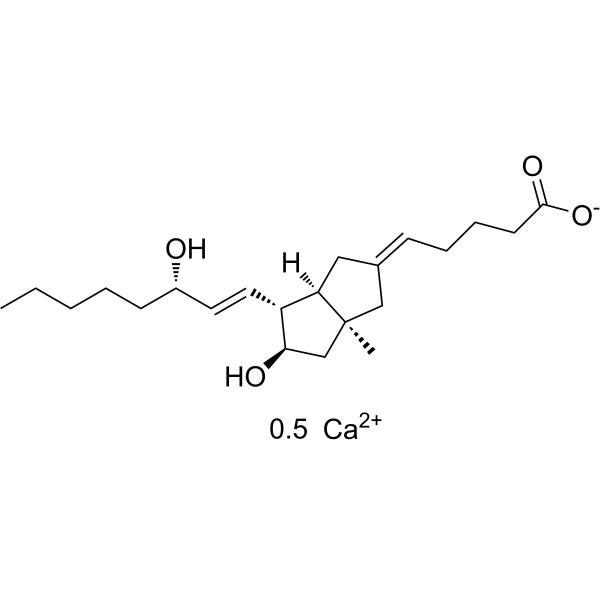
Ciprostene calciumProstacyclin Analogue -
HY-17416AS
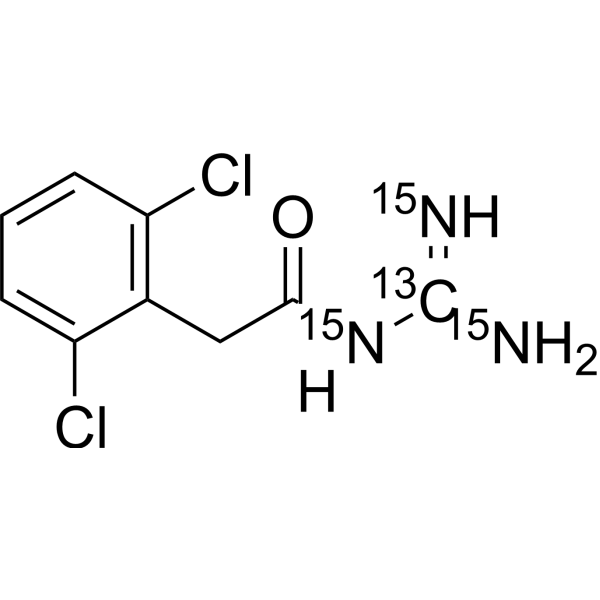
Guanfacine-13C,15N3Stable Isotope
Alle Adrenergic Receptor Isoform-spezifische Produkte anzeigen
More

Biologische Aktivität
Beschreibung
In Vitro
Stable heavy isotopes of hydrogen, carbon, and other elements have been incorporated into drug molecules, largely as tracers for quantitation during the drug development process. Deuteration has gained attention because of its potential to affect the pharmacokinetic and metabolic profiles of drugs[1].
MedChemExpress (MCE) has not independently confirmed the accuracy of these methods. They are for reference only.
Anwendung
1. This compound can be used as a tracer
2. This compound can be used as an internal standard for quantitative analysis by NMR, GC-MS, or LC-MS.


Chemical Information
-
CAS. Nr. 344298-99-3
-
Unlabeled CAS 318-98-9
-
Appearance Solid
-
Molecular Weight 266.39
-
Formel C16H14D7NO2
-
Color Off-white to light yellow
-
SMILES
OC(COC1=C2C([2H])=C([2H])C([2H])=C([2H])C2=C([2H])C([2H])=C1[2H])CNC(C)C
-
Versand
Room temperature in continental US; may vary elsewhere.
-
Speicherung
Powder -20°C 3 years 4°C 2 years In solvent -80°C 6 months -20°C 1 month


Lösungsmittel & Löslichkeit
In Vitro:
DMF : ≥ 50 mg/mL (187.69 mM)
Ethanol : ≥ 30 mg/mL (112.62 mM)
DMSO : ≥ 30 mg/mL (112.62 mM; Hygroscopic DMSO has a significant impact on the solubility of product, please use newly opened DMSO)
* "≥" means soluble, but saturation unknown.
Please refer to the solubility information to select the appropriate solvent. Once prepared, please aliquot and store the solution to prevent product inactivation from repeated freeze-thaw cycles.
Storage method and period of stock solution: -80°C, 6 months; -20°C, 1 month. When stored at -80°C, please use it within 6 months. When stored at -20°C, please use it within 1 month.
Please refer to the solubility information to select the appropriate solvent. Once prepared, please aliquot and store the solution to prevent product inactivation from repeated freeze-thaw cycles.
Storage method and period of stock solution: -80°C, 6 months; -20°C, 1 month. When stored at -80°C, please use it within 6 months. When stored at -20°C, please use it within 1 month.
Konzentration (Stammlösung) × Volumen (Stammlösung) = Konzentration (Ziellösung) × Volumen (Ziellösung)
In Vivo:
Select the appropriate dissolution method based on your experimental animal and administration route.
- For the following dissolution methods, please ensure to first prepare a clear stock solution using an In Vitro approach and then sequentially add co-solvents:
- To ensure reliable experimental results, the clarified stock solution can be appropriately stored based on storage conditions. As for the working solution for In Vivo experiments, it is recommended to prepare freshly and use it on the same day.
- The percentages shown for the solvents indicate their volumetric ratio in the final prepared solution. If precipitation or phase separation occurs during preparation, heat and/or sonication can be used to aid dissolution.
Add each solvent one by one: 10% DMSO 40% PEG300 5% Tween-80 45% Saline
Solubility: ≥ 1.25 mg/mL (4.69 mM); Clear solution
This protocol yields a clear solution of ≥ 1.25 mg/mL (saturation unknown).
Taking 1 mL working solution as an example, add 100 μL DMSO stock solution (12.5 mg/mL) to 400 μL PEG300, and mix evenly; then add 50 μL Tween-80 and mix evenly; then add 450 μL Saline to adjust the volume to 1 mL.
Preparation of Saline: Dissolve 0.9 g sodium chloride in ddH₂O and dilute to 100 mL to obtain a clear Saline solution.
Add each solvent one by one: 10% DMSO 90% (20% SBE-β-CD in Saline)
Solubility: ≥ 1.25 mg/mL (4.69 mM); Clear solution
This protocol yields a clear solution of ≥ 1.25 mg/mL (saturation unknown).
Taking 1 mL working solution as an example, add 100 μL DMSO stock solution (12.5 mg/mL) to 900 μL 20% SBE-β-CD in Saline, and mix evenly.
Preparation of 20% SBE-β-CD in Saline (4°C, storage for one week): 2 g SBE-β-CD powder is dissolved in 10 mL Saline, completely dissolve until clear.
In Vivo Dissolution Calculator
Please enter the basic information of animal experiments:
-
-
-
-
Recommended: Prepare an additional quantity of animals to account for potential losses during experiments.
Please enter your animal formula composition:
-
%DMSO +
Recommended: Keep the proportion of DMSO in working solution below 2% if your animal is weak.
-
%+
-
+%Tween-80 + +
-
%Saline +
The co-solvents required include: DMSO, . All of co-solvents are available by MedChemExpress (MCE). , Tween 80. All of co-solvents are available by MedChemExpress (MCE).
Working solution concentration: 0.22 mg/mL
Method for preparing stock solution: mg drug dissolved in μL DMSO. Stock solution concentration: mg/mL.
1. Take μL DMSO stock solution;
2. Add μL .
μL , mix evenly;
3. Then add μL Tween 80, mix evenly;
4. Then add μL
Please ensure that the stock solution in the first step is dissolved to a clear state, and add co-solvents in sequence. You can use ultrasonic heating (ultrasonic cleaner, recommended frequency 20-40 kHz), vortexing, etc. to assist dissolution.


Reinheit & Dokumentation
-
Data Sheet (275 KB)
-
SDS (806 KB)
- English - EN (806 KB)
- Français - FR (806 KB)
- Deutsch - DE (806 KB)
- Norwegian - NO (806 KB)
- Español - ES (806 KB)
- Swedish - SV (806 KB)
- Italian - IT (806 KB)
- Korean - KR (806 KB)
- Portuguese - PT (806 KB)
-
Handling Instructions (2659 KB)
Verweise
[1]. Russak EM, et al. Impact of Deuterium Substitution on the Pharmacokinetics of Pharmaceuticals. Ann Pharmacother. 2019;53(2):211-216. [Content Brief]
[2]. Galandrin S, et al. Distinct signaling profiles of beta1 and beta2 adrenergic receptor ligands toward adenylyl cyclase and mitogen-activated protein kinase reveals the pluridimensionality of efficacy. Mol Pharmacol. 2006 Nov;70(5):1575-84. Epub 2006 Aug 1 [Content Brief]
[3]. Briley M, et al. Evidence against beta-adrenoceptor blocking activity of diltiazem, a drug with calcium antagonist properties. Br J Pharmacol. 1980 Aug;69(4):669-73. [Content Brief]
[4]. Al-Majed AA, et al. Propranolol. Profiles Drug Subst Excip Relat Methodol. 2017;42:287-338. [Content Brief]
[5]. Munabi NC, et al. Propranolol Targets Hemangioma Stem Cells via cAMP and Mitogen-Activated Protein Kinase Regulation. Stem Cells Transl Med. 2016 Jan;5(1):45-55. [Content Brief]


Complete Stock Solution Preparation Table
Please refer to the solubility information to select the appropriate solvent. Once prepared, please aliquot and store the solution to prevent product inactivation from repeated freeze-thaw cycles.
Storage method and period of stock solution: -80°C, 6 months; -20°C, 1 month. When stored at -80°C, please use it within 6 months. When stored at -20°C, please use it within 1 month.
| Optional Solvent | Concentration Solvent Mass | 1 mg | 5 mg | 10 mg | 25 mg |
|---|---|---|---|---|---|
| Ethanol / DMSO / DMF | 1 mM | 3.7539 mL | 18.7695 mL | 37.5389 mL | 93.8474 mL |
| 5 mM | 0.7508 mL | 3.7539 mL | 7.5078 mL | 18.7695 mL | |
| 10 mM | 0.3754 mL | 1.8769 mL | 3.7539 mL | 9.3847 mL | |
| 15 mM | 0.2503 mL | 1.2513 mL | 2.5026 mL | 6.2565 mL | |
| 20 mM | 0.1877 mL | 0.9385 mL | 1.8769 mL | 4.6924 mL | |
| 25 mM | 0.1502 mL | 0.7508 mL | 1.5016 mL | 3.7539 mL | |
| 30 mM | 0.1251 mL | 0.6256 mL | 1.2513 mL | 3.1282 mL | |
| 40 mM | 0.0938 mL | 0.4692 mL | 0.9385 mL | 2.3462 mL | |
| 50 mM | 0.0751 mL | 0.3754 mL | 0.7508 mL | 1.8769 mL | |
| 60 mM | 0.0626 mL | 0.3128 mL | 0.6256 mL | 1.5641 mL | |
| 80 mM | 0.0469 mL | 0.2346 mL | 0.4692 mL | 1.1731 mL | |
| 100 mM | 0.0375 mL | 0.1877 mL | 0.3754 mL | 0.9385 mL |


Propranolol-d7 (ring-d7) Related Classifications
HY-B0573S1 Related Classifications
 Powered by Bioz