



TCS 1102
Based on 1 publication(s) in Google Scholar
TCS 1102 is a potent, dual orexin receptor antagonist, with Ki values of 0.2 nM and 3 nM for OX2 and OX1 receptors, respectively. TCS 1102 demonstrates excellent blood-brain barrier penetrability and moderate bioavailability in rats.
Nos produits utilisent uniquement pour la recherche. Nous ne vendons pas aux patients.
- Pureté : 99.73%
- CAS No.: 916141-36-1
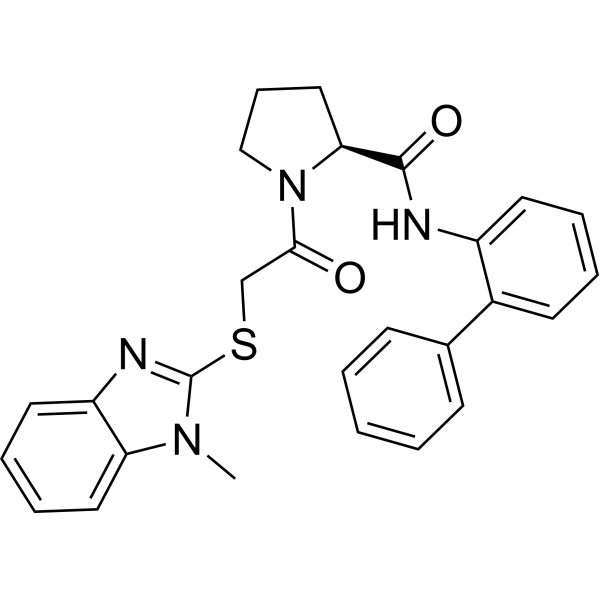
- Formule: C27H26N4O2S
- Masse moléculaire:470.59
-
Stockage:Powder -20°C, 3 years , 4°C, 2 years ; In solvent -80°C, 2 years , -20°C, 1 year

To place orders, for customer services and technical support, please contact: MedChemExpress USA
Tel: 609-228-6898 E-mail: [email protected] [email protected]


-
 Activité biologique
-
Chemical Information
-
Solvant et solubilité
- Protocole
- Pureté et documentation
- Références
-
 Help & FAQs


-
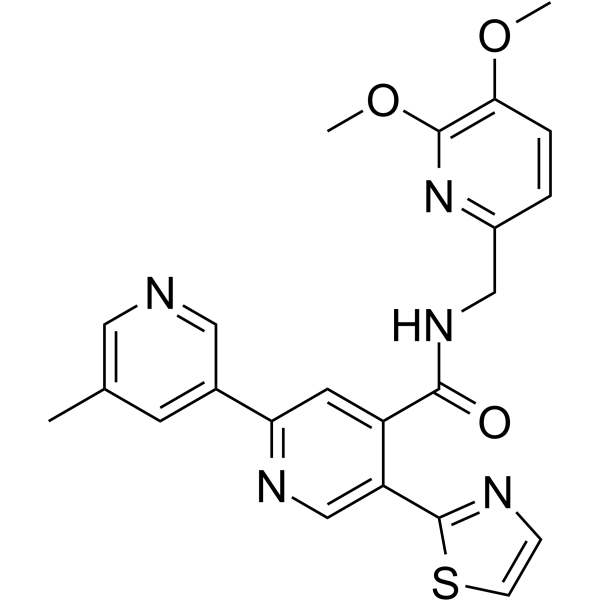
HY-12301
MK-3697OX2R Antagonist -
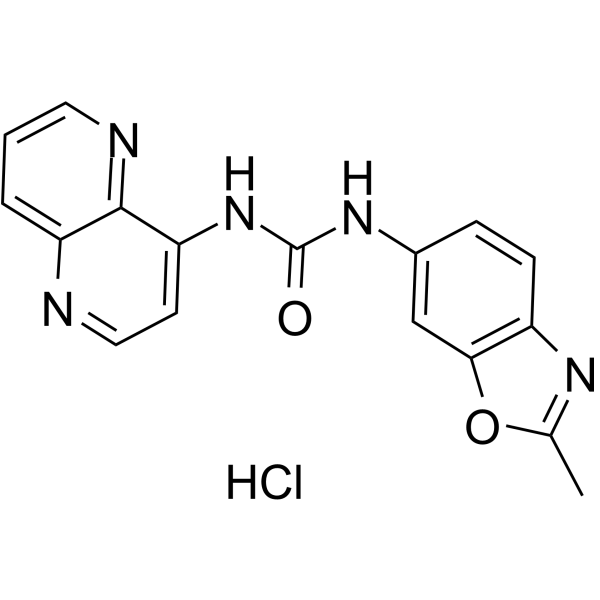
HY-10895
SB-334867OX1 Receptor Antagonist -
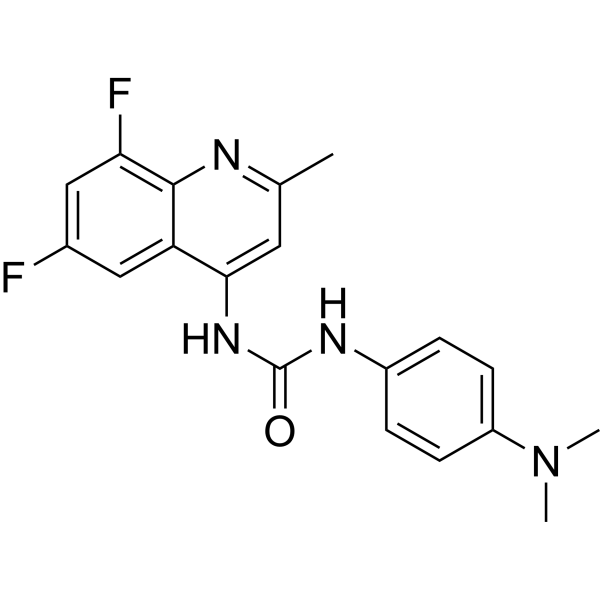
HY-70068
SB-408124OX1 Receptor Antagonist -
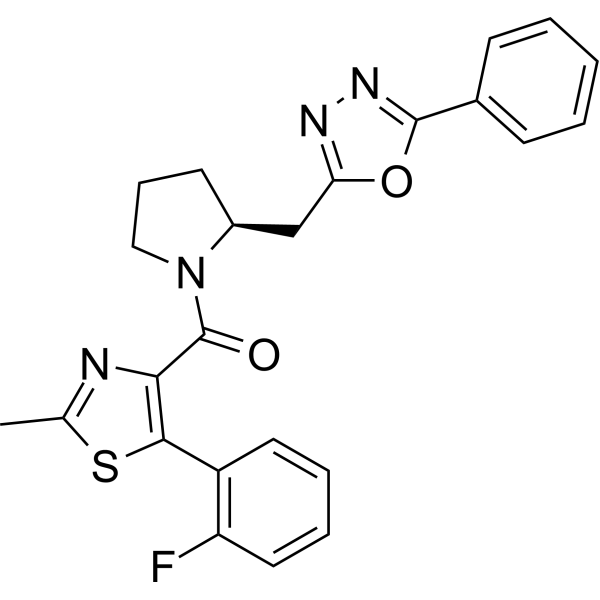
HY-10898
SB-674042OX1 Receptor Antagonist -
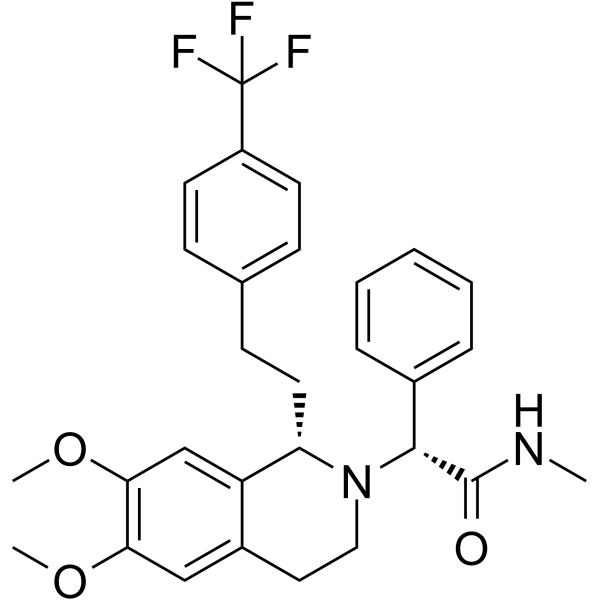
HY-10805
AlmorexantOrexin Receptor Antagonist -
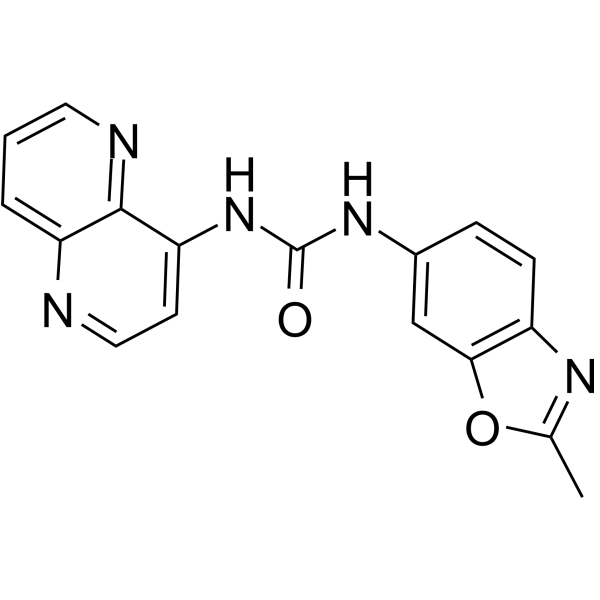
HY-10895A
SB-334867 free baseOX1 Antagonist -
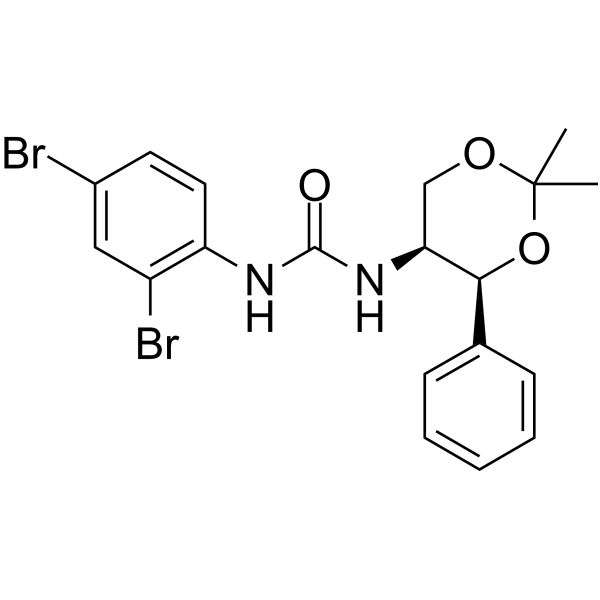
HY-10896
JNJ-10397049OX2R Antagonist -
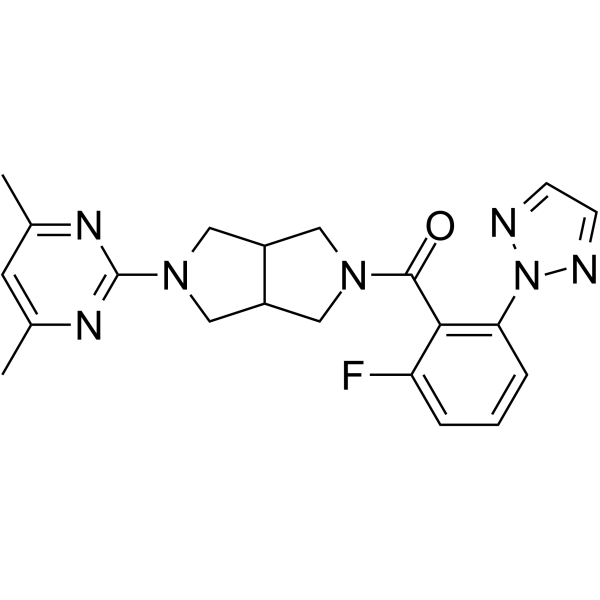
HY-109012
SeltorexantOrexin-2 Receptor Antagonist -
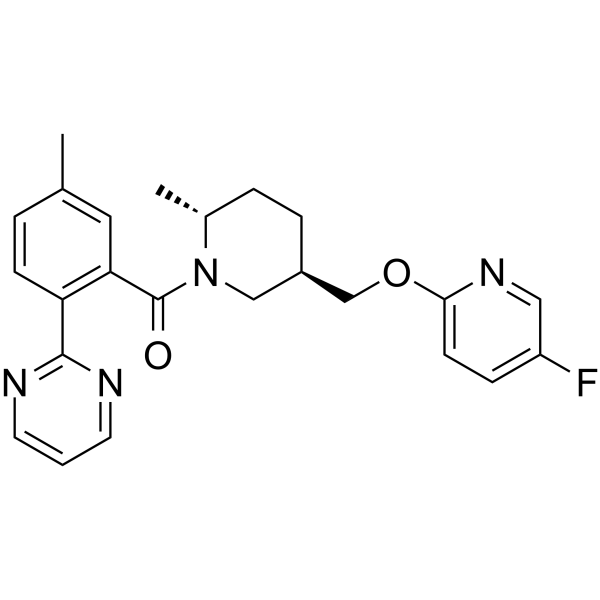
HY-15653
FilorexantOX Receptor Antagonist -
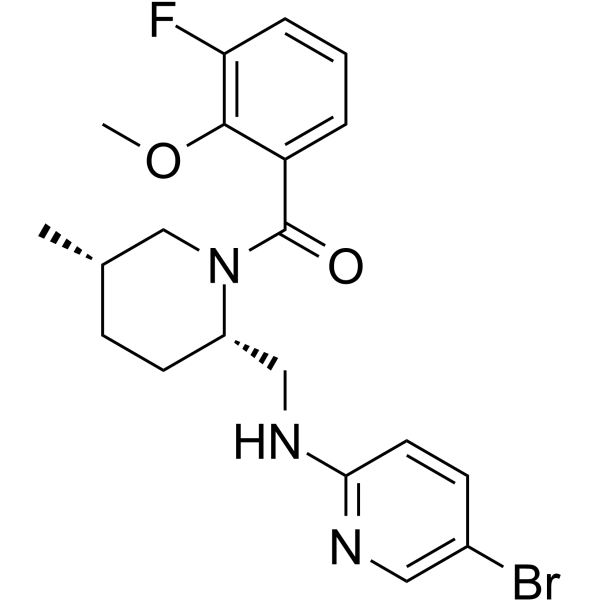
HY-101534
GSK1059865OX1 Antagonist -
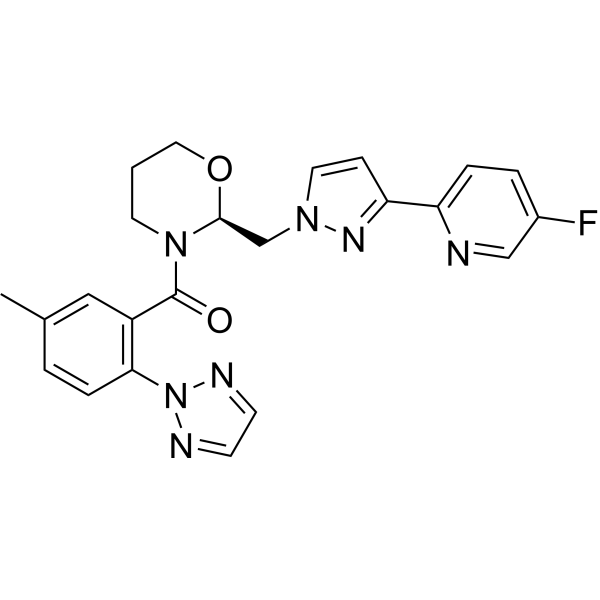
HY-139559
VornorexantOX1R/OX2R Antagonist -
HY-133898
DanavorextonOrexin Receptor Agonist
Publications Citing Use of MedChemExpress (MCE) TCS 1102
MoreVoir tous les produits spécifiques à Isoform Orexin Receptor (OX Receptor)
More

Activité biologique
Description
IC50 & Target
[1]|
OX1 Receptor 3 nM (Ki) |
OX2 Receptor 0.2 nM (Ki) |
In Vitro
TCS 1102 (10 μM) inhibits Ca2+ responses to Orexin A (human, rat, mouse) (HY-106224) and Yan 7874 (an Orexin receptor agonist) in CHO-hOX2 cells[2].
MedChemExpress (MCE) has not independently confirmed the accuracy of these methods. They are for reference only.
In Vivo
TCS-1102 (10 and 20 mg/kg; i.p.; single dose) decreases fear and anxiety in rats after exposure to footshock. Furthermore, TCS-1102 (10 mg/kg; i.p.; single dose) also shows anxiolytic effects for high responders (HR) rat when tested in the elevated T-maze[3].
PK of TCS 1102 in Rat (100 mg/kg; i.p.; measured at 30 min)[1]
| CL (mL/min/kg) | T1/2 (h) | F (%) | Brain/plasma/CSF (nM) |
| 3.7 | 0.3 | 11 | 2370/3500/43 |
MedChemExpress (MCE) has not independently confirmed the accuracy of these methods. They are for reference only.
-
Animal Model:Male Sprague–Dawley rats (130-160 g)[3]
-
Dosage:10 and 20 mg/kg
-
Administration:Intraperitoneal injection; 30 min before received the footshocks
-
Result:Decreased fear and anxiety in rats 14 days after exposure to footshock.


Chemical Information
-
CAS No. 916141-36-1
-
Appearance Solid
-
Masse moléculaire 470.59
-
Formule C27H26N4O2S
-
Color White to yellow
-
SMILES
O=C([C@H]1N(C(CSC2=NC3=CC=CC=C3N2C)=O)CCC1)NC4=CC=CC=C4C5=CC=CC=C5
-
Livraison
Room temperature in continental US; may vary elsewhere.
-
Stockage
Powder -20°C 3 years 4°C 2 years In solvent -80°C 2 years -20°C 1 year


Publications (1)
-
Journal Impact Factor
-
Most Recent
-
bioRxiv
Prioritizing Neuroactive Ligands Using Motif-Guided Virtual Discovery and Zebrafish Profiling. [Abstract]2026 Jan 16:2026.01.15.699747. PMID: 41648545


Solvant et solubilité
In Vitro:
DMSO : ≥ 100 mg/mL (212.50 mM; Hygroscopic DMSO has a significant impact on the solubility of product, please use newly opened DMSO)
* "≥" means soluble, but saturation unknown.
Please refer to the solubility information to select the appropriate solvent. Once prepared, please aliquot and store the solution to prevent product inactivation from repeated freeze-thaw cycles.
Storage method and period of stock solution: -80°C, 2 years; -20°C, 1 year. When stored at -80°C, please use it within 2 years. When stored at -20°C, please use it within 1 year.
Please refer to the solubility information to select the appropriate solvent. Once prepared, please aliquot and store the solution to prevent product inactivation from repeated freeze-thaw cycles.
Storage method and period of stock solution: -80°C, 2 years; -20°C, 1 year. When stored at -80°C, please use it within 2 years. When stored at -20°C, please use it within 1 year.
Concentration (start) × Volume (start) = Concentration (final) × Volume (final)
In Vivo:
Select the appropriate dissolution method based on your experimental animal and administration route.
- For the following dissolution methods, please ensure to first prepare a clear stock solution using an In Vitro approach and then sequentially add co-solvents:
- To ensure reliable experimental results, the clarified stock solution can be appropriately stored based on storage conditions. As for the working solution for In Vivo experiments, it is recommended to prepare freshly and use it on the same day.
- The percentages shown for the solvents indicate their volumetric ratio in the final prepared solution. If precipitation or phase separation occurs during preparation, heat and/or sonication can be used to aid dissolution.
Add each solvent one by one: 10% DMSO 40% PEG300 5% Tween-80 45% Saline
Solubility: ≥ 2.5 mg/mL (5.31 mM); Clear solution
This protocol yields a clear solution of ≥ 2.5 mg/mL (saturation unknown).
Taking 1 mL working solution as an example, add 100 μL DMSO stock solution (25.0 mg/mL) to 400 μL PEG300, and mix evenly; then add 50 μL Tween-80 and mix evenly; then add 450 μL Saline to adjust the volume to 1 mL.
Preparation of Saline: Dissolve 0.9 g sodium chloride in ddH₂O and dilute to 100 mL to obtain a clear Saline solution.
In Vivo Dissolution Calculator
Please enter the basic information of animal experiments:
-
-
-
-
Recommended: Prepare an additional quantity of animals to account for potential losses during experiments.
Please enter your animal formula composition:
-
%DMSO +
Recommended: Keep the proportion of DMSO in working solution below 2% if your animal is weak.
-
%+
-
+%Tween-80 + +
-
%Saline +
The co-solvents required include: DMSO, . All of co-solvents are available by MedChemExpress (MCE). , Tween 80. All of co-solvents are available by MedChemExpress (MCE).
Working solution concentration: 0.22 mg/mL
Method for preparing stock solution: mg drug dissolved in μL DMSO. Stock solution concentration: mg/mL.
1. Take μL DMSO stock solution;
2. Add μL .
μL , mix evenly;
3. Then add μL Tween 80, mix evenly;
4. Then add μL
Please ensure that the stock solution in the first step is dissolved to a clear state, and add co-solvents in sequence. You can use ultrasonic heating (ultrasonic cleaner, recommended frequency 20-40 kHz), vortexing, etc. to assist dissolution.


Pureté et documentation
-
Fiche technique (281 KB)
-
SDS (393 KB)
- English - EN (393 KB)
- Français - FR (393 KB)
- Deutsch - DE (393 KB)
- Norwegian - NO (393 KB)
- Español - ES (393 KB)
- Swedish - SV (393 KB)
- Italian - IT (393 KB)
- Korean - KR (393 KB)
- Portuguese - PT (393 KB)
-
Instruction de manipulation (2659 KB)
Références
[1]. Bergman JM, et al. Proline bis-amides as potent dual orexin receptor antagonists. Bioorg Med Chem Lett. 2008 Feb 15;18(4):1425-30. [Content Brief]
[2]. Turku A, et al. Orexin receptor agonist Yan 7874 is a weak agonist of orexin/hypocretin receptors and shows orexin receptor-independent cytotoxicity. PLoS One. 2017 Jun 2;12(6):e0178526. [Content Brief]
[3]. Chen X, et al. Orexins (hypocretins) contribute to fear and avoidance in rats exposed to a single episode of footshocks. Brain Struct Funct. 2013 Aug 18. [Content Brief]


Complete Stock Solution Preparation Table
Please refer to the solubility information to select the appropriate solvent. Once prepared, please aliquot and store the solution to prevent product inactivation from repeated freeze-thaw cycles.
Storage method and period of stock solution: -80°C, 2 years; -20°C, 1 year. When stored at -80°C, please use it within 2 years. When stored at -20°C, please use it within 1 year.
| Optional Solvent | Concentration Solvent Mass | 1 mg | 5 mg | 10 mg | 25 mg |
|---|---|---|---|---|---|
| DMSO | 1 mM | 2.1250 mL | 10.6250 mL | 21.2499 mL | 53.1248 mL |
| 5 mM | 0.4250 mL | 2.1250 mL | 4.2500 mL | 10.6250 mL | |
| 10 mM | 0.2125 mL | 1.0625 mL | 2.1250 mL | 5.3125 mL | |
| 15 mM | 0.1417 mL | 0.7083 mL | 1.4167 mL | 3.5417 mL | |
| 20 mM | 0.1062 mL | 0.5312 mL | 1.0625 mL | 2.6562 mL | |
| 25 mM | 0.0850 mL | 0.4250 mL | 0.8500 mL | 2.1250 mL | |
| 30 mM | 0.0708 mL | 0.3542 mL | 0.7083 mL | 1.7708 mL | |
| 40 mM | 0.0531 mL | 0.2656 mL | 0.5312 mL | 1.3281 mL | |
| 50 mM | 0.0425 mL | 0.2125 mL | 0.4250 mL | 1.0625 mL | |
| 60 mM | 0.0354 mL | 0.1771 mL | 0.3542 mL | 0.8854 mL | |
| 80 mM | 0.0266 mL | 0.1328 mL | 0.2656 mL | 0.6641 mL | |
| 100 mM | 0.0212 mL | 0.1062 mL | 0.2125 mL | 0.5312 mL |


TCS 1102 Related Classifications
HY-10900 Related Classifications
 Powered by Bioz