4 Results for "

Polymerizable

" in MedChemExpress (MCE) Product Catalog:
Products (4)

4 Results for "Polymerizable" in MCE Product Catalog:

1
1 Cited Publications
Art. -Nr.: HY-W017330
CAS. Nr.: 760-93-0
Forschungsgebiete:  

Others

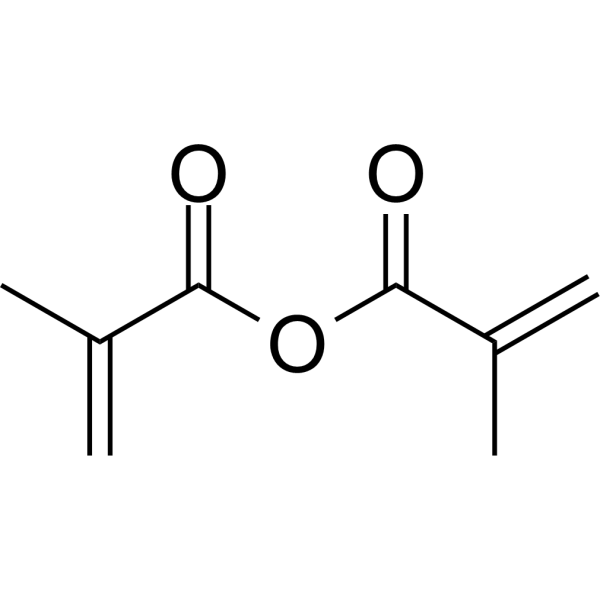
Methacrylic anhydride is a typical polymerizable 1,6-diolefin. Methacrylic anhydride can form a soluble csyclopolymer by free-radical initiation. Methacrylic anhydride can spontaneously polymerize through the vinyl group and justifies the use of 2-6-di-tert-butyl4-methylphenol as an inhibitor .
loading...
    loading...
Art. -Nr.: HY-116544
CAS. Nr.: 133978-15-1
Reinheit:  ≥98.0%
Forschungsgebiete:  

Others

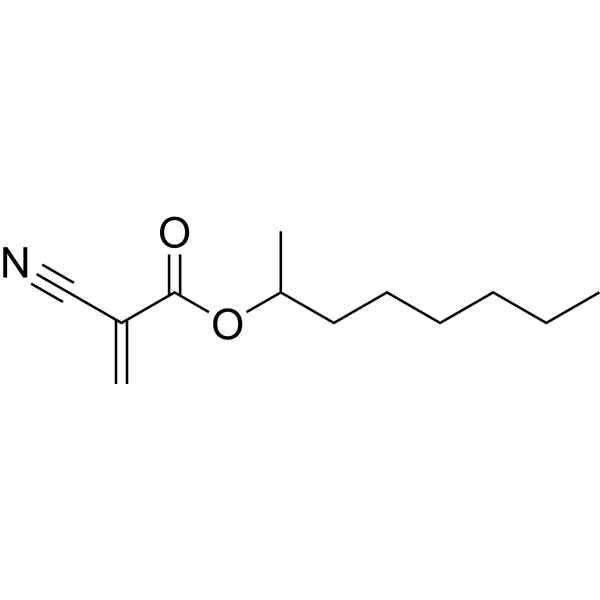
Octan-2-yl 2-cyanoacrylate is an alkyl cyanoacrylate monomer, base-sensitive monofunctional 1,1-disubstituted electron-deficient olefin, polymerizable and copolymerizable monomer. Octan-2-yl 2-cyanoacrylate undergoes homopolymerization via nucleophilic initiation with pyridine as initiator. Octan-2-yl 2-cyanoacrylate forms true copolymers with ethyl 2-cyanoacrylate via nucleophilic initiation with pyridine as initiator .
loading...
    loading...
Art. -Nr.: HY-101530B
CAS. Nr.: 171286-89-8
Synonyms: PEG 40 stearate
Forschungsgebiete:  

Others

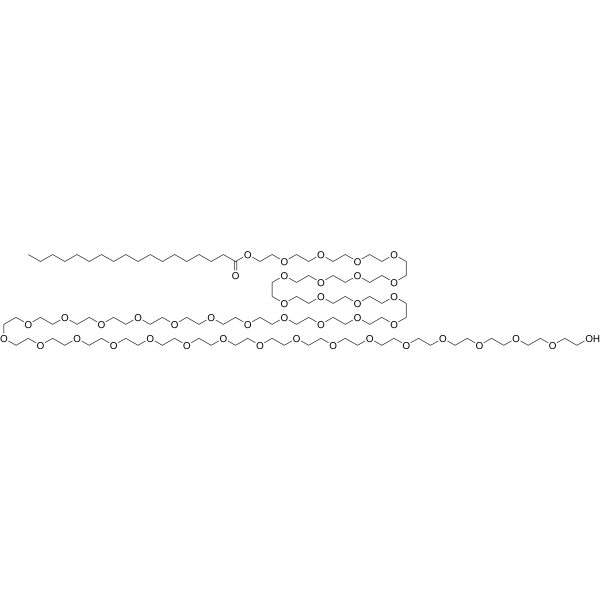
Polyoxyl 40 stearate (PEG 40 stearate) is a nonionic surfactant formed by the esterification of stearic acid with polyethylene glycol (PEG) containing approximately 40 ethoxy units, it is widely used in pharmaceutical preparations, nanodrug carriers, emulsification systems and biomedical materials. Polyoxyl 40 stearate can serve as a matrix component of solid lipid nanoparticles to achieve controlled release of encapsulated antifungal drugs; it can also act as a base material for solid lipid nanoparticles for vaginal administration, and polymerizable groups can be introduced via modification with acryloyl chloride .
loading...
    loading...
Art. -Nr.: HY-117007
CAS. Nr.: 106-91-2
Forschungsgebiete:  

Others

Glycidyl methacrylate is a bifunctional monomer containing both a polymerizable methacrylate double bond and a reactive epoxy group. Glycidyl methacrylate can be introduced into polymer backbones via free radical polymerization, and its epoxy group undergoes ring-opening reactions with nucleophilic groups such as amines, carboxylic acids and thiols, thus being used for the preparation of functional polymers, surface-grafted materials and crosslinkable biomaterials. Glycidyl methacrylate is applicable to research related to polymer chemistry, biomaterials, surface modification and drug delivery materials .
loading...
    loading...

