



Vicasinabin

Based on 1 Customer Validation
Vicasinabin (RG7774) is an orally active, selective, and full CB2R agonist, with EC50 values of 2.81 nM and 2.60 nM for human CB2R and mouse CB2R, respectively. Vicasinabin inhibits inflammation, reduces leukocyte adhesion and decreases vascular permeability by selectively activating CB2R. Vicasinabin can be used in the researches for diabetic retinopathy, uveitis and laser-induced choroidal neovascularization.
Nos produits utilisent uniquement pour la recherche. Nous ne vendons pas aux patients.
- Pureté : 98.32%
- CAS No.: 1433361-02-4
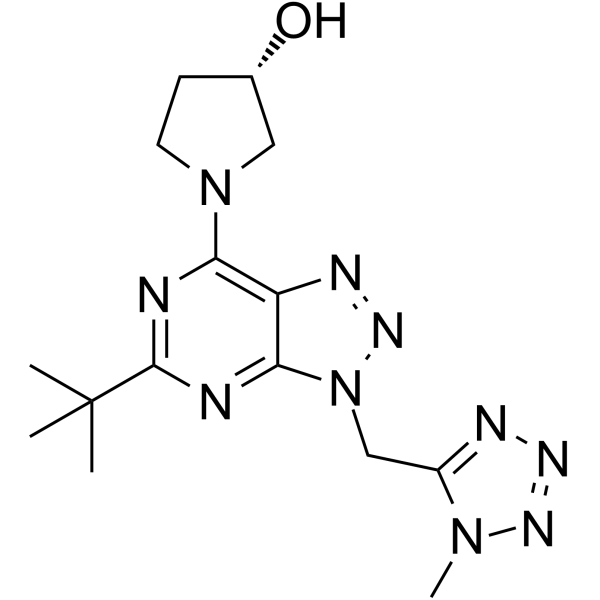
- Formule: C15H22N10O
- Masse moléculaire:358.40
-
Stockage:Powder -20°C, 3 years ; In solvent -80°C, 6 months , -20°C, 1 month

To place orders, for customer services and technical support, please contact: MedChemExpress USA
Tel: 609-228-6898 E-mail: [email protected] [email protected]


-
 Activité biologique
-
Chemical Information
-
Solvant et solubilité
- Protocole
- Pureté et documentation
- Références
-
 Help & FAQs


-
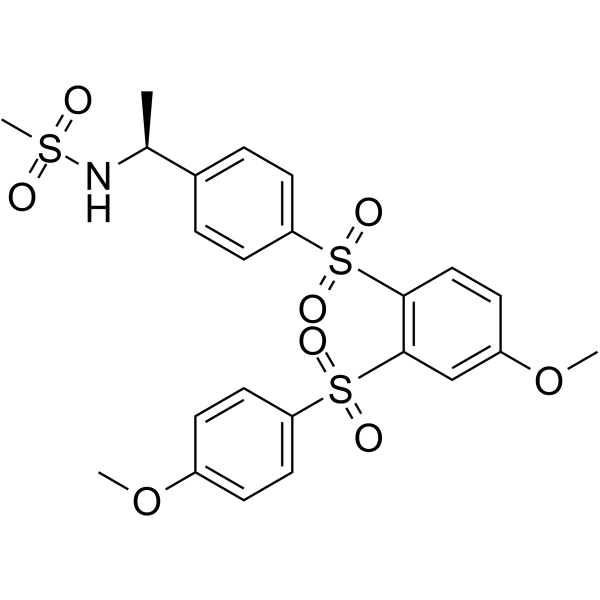
HY-121852
SCH 336CB2 Agonist -
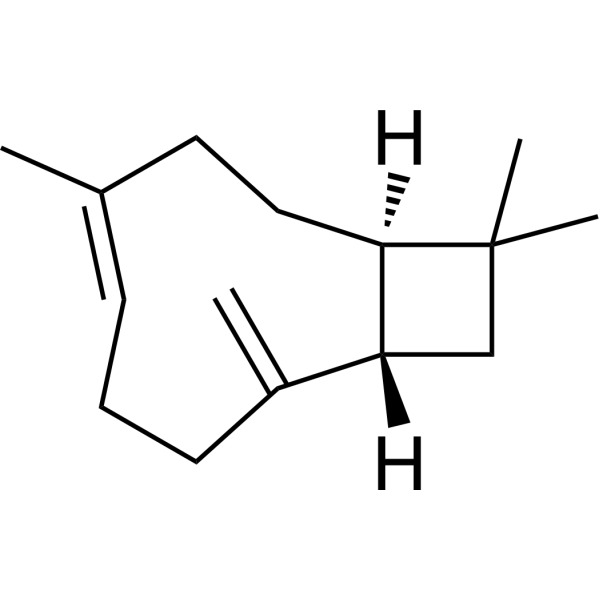
HY-N1415
β-CaryophylleneCannabinoid Receptor Agonist -
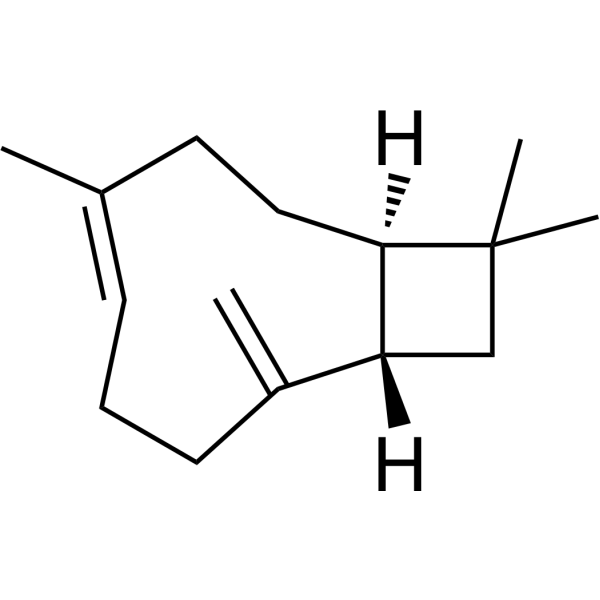
HY-N1415R
β-Caryophyllene (Standard) -
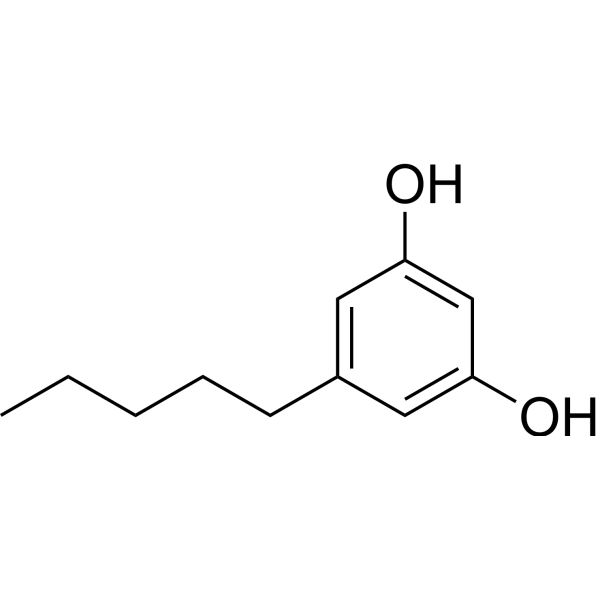
HY-W008364
Olivetol -
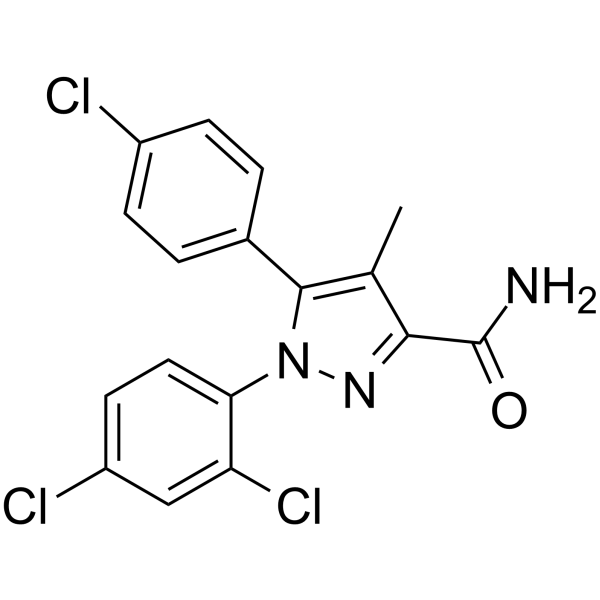
HY-116649
CB1 antagonist 2CB1R Antagonist -
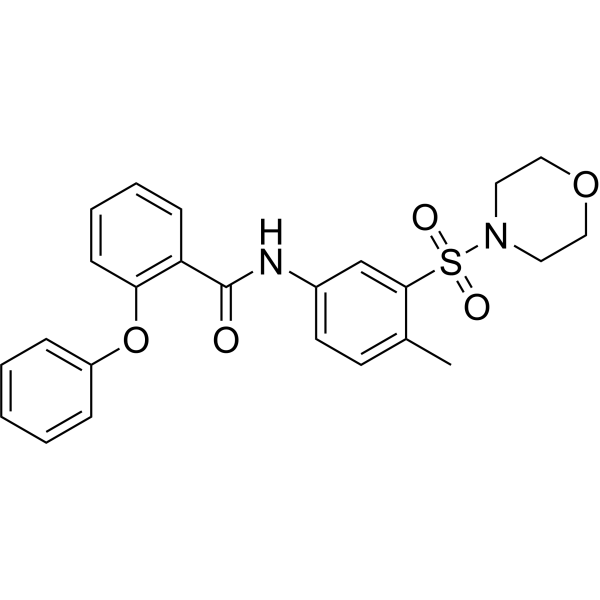
HY-148137
CB1 agonist 1CB1 Agonist -
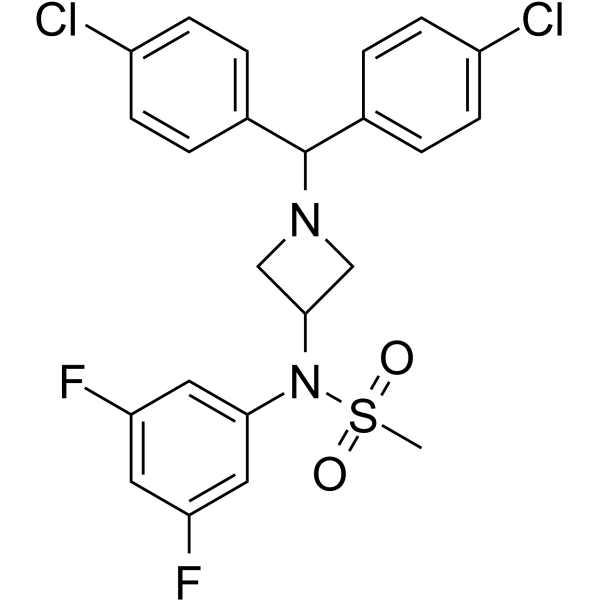
HY-14788
DrinabantCB1 Antagonist -
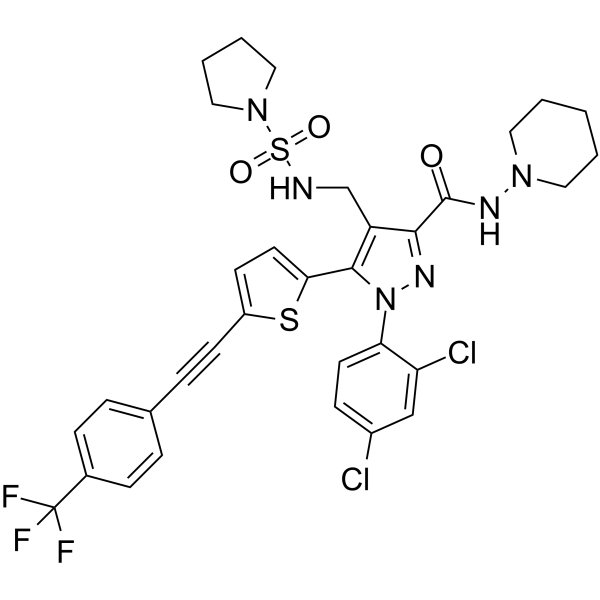
HY-12790
BPRCB1184CB1 Antagonist -
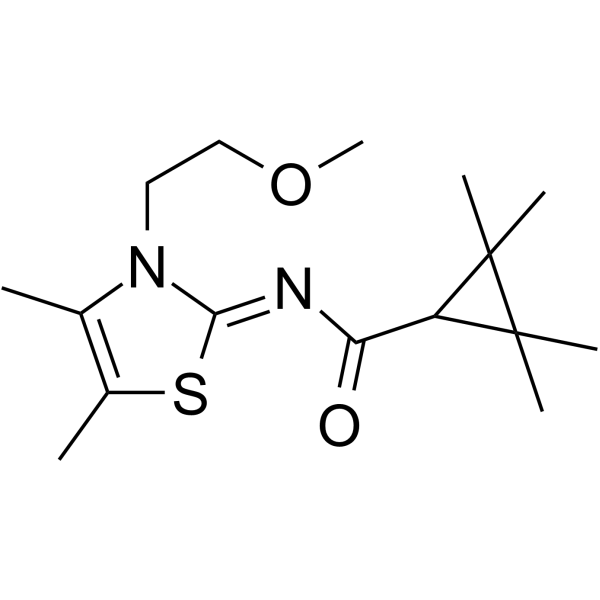
HY-12761
A-836339CB2 receptor Agonist -
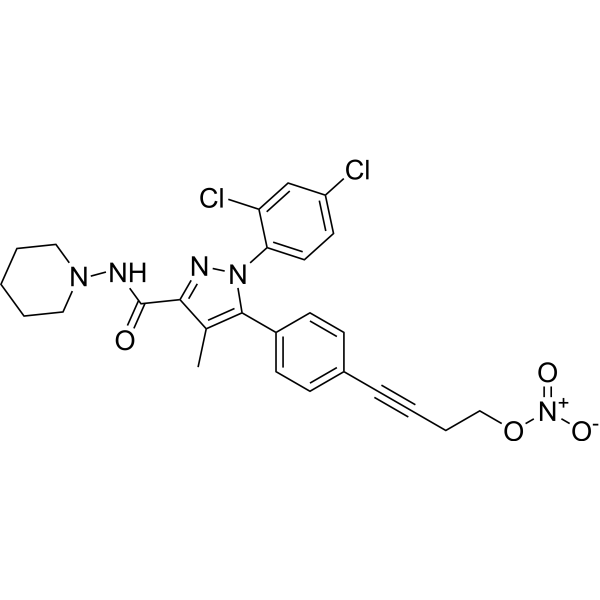
HY-120423
AM-6538Cannabinoid Antagonist -

HY-113421
Linoleoyl ethanolamideFatty Acid Ethanolamide -
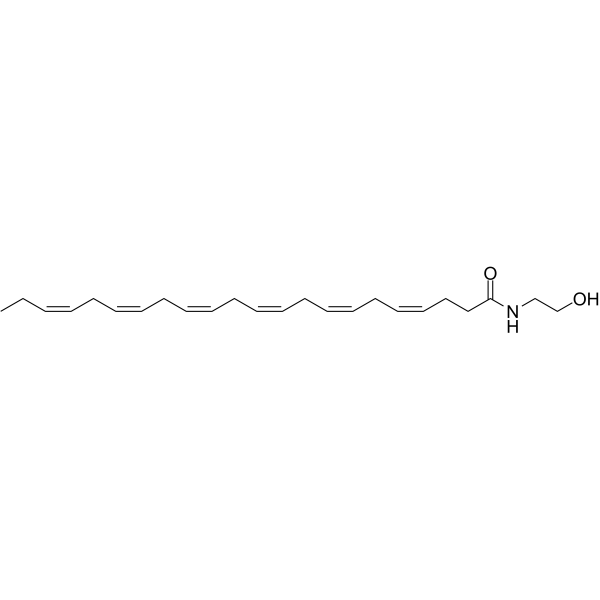
HY-100197
SynaptamideaGPCR Ligand


Activité biologique
Description
IC50 & Target
[2]|
hCB2-R 2.81 nM (EC50) |
In Vitro
Vicasinabin is a full agonist for recombinant human and mouse CB2R in CHO cells (EC50s: 2.81 nM and 2.60 nM, respectively), with no effect on human CB1R[2].
MedChemExpress (MCE) has not independently confirmed the accuracy of these methods. They are for reference only.
In Vivo
Vicasinabin (10 mg/kg; p.o.; 5 weeks) decreases retinal vascular permeability by 73% in STZ (HY-13753)-induced diabetic rats[2].
Vicasinabin (0.01-10 mg/kg; p.o.; treatment begins 1 day prior to laser injury and continues daily until day 7) reduces lesion area with an ED50 of 0.32 mg/kg and inhibits microglia migration in laser-induced CNV rats[2].
MedChemExpress (MCE) has not independently confirmed the accuracy of these methods. They are for reference only.
Essai clinique
| NCT Number | Sponsor | Condition | Start Date |
Phase

|
|---|---|---|---|---|
| NCT01329991 | Plexxikon| | 2011-05 | PHASE1 |


Chemical Information
-
CAS No. 1433361-02-4
-
Appearance Solid
-
Masse moléculaire 358.40
-
Formule C15H22N10O
-
Color White to off-white
-
SMILES
CC(C)(C)C1=NC(N2CC[C@@H](C2)O)=C(N=N3)C(N3CC4=NN=NN4C)=N1
-
Synonyms
RG7774
-
Livraison
Room temperature in continental US; may vary elsewhere.
-
Stockage
Powder -20°C 3 years In solvent -80°C 6 months -20°C 1 month


Solvant et solubilité
In Vitro:
DMSO : 125 mg/mL (348.77 mM; Need ultrasonic; Hygroscopic DMSO has a significant impact on the solubility of product, please use newly opened DMSO)
Please refer to the solubility information to select the appropriate solvent. Once prepared, please aliquot and store the solution to prevent product inactivation from repeated freeze-thaw cycles.
Storage method and period of stock solution: -80°C, 6 months; -20°C, 1 month. When stored at -80°C, please use it within 6 months. When stored at -20°C, please use it within 1 month.
Please refer to the solubility information to select the appropriate solvent. Once prepared, please aliquot and store the solution to prevent product inactivation from repeated freeze-thaw cycles.
Storage method and period of stock solution: -80°C, 6 months; -20°C, 1 month. When stored at -80°C, please use it within 6 months. When stored at -20°C, please use it within 1 month.
Concentration (start) × Volume (start) = Concentration (final) × Volume (final)
In Vivo:
Select the appropriate dissolution method based on your experimental animal and administration route.
- For the following dissolution methods, please ensure to first prepare a clear stock solution using an In Vitro approach and then sequentially add co-solvents:
- To ensure reliable experimental results, the clarified stock solution can be appropriately stored based on storage conditions. As for the working solution for In Vivo experiments, it is recommended to prepare freshly and use it on the same day.
- The percentages shown for the solvents indicate their volumetric ratio in the final prepared solution. If precipitation or phase separation occurs during preparation, heat and/or sonication can be used to aid dissolution.
Add each solvent one by one: 10% DMSO 40% PEG300 5% Tween-80 45% Saline
Solubility: ≥ 2.08 mg/mL (5.80 mM); Clear solution
This protocol yields a clear solution of ≥ 2.08 mg/mL (saturation unknown).
Taking 1 mL working solution as an example, add 100 μL DMSO stock solution (20.8 mg/mL) to 400 μL PEG300, and mix evenly; then add 50 μL Tween-80 and mix evenly; then add 450 μL Saline to adjust the volume to 1 mL.
Preparation of Saline: Dissolve 0.9 g sodium chloride in ddH₂O and dilute to 100 mL to obtain a clear Saline solution.
Add each solvent one by one: 10% DMSO 90% (20% SBE-β-CD in Saline)
Solubility: ≥ 2.08 mg/mL (5.80 mM); Clear solution
This protocol yields a clear solution of ≥ 2.08 mg/mL (saturation unknown).
Taking 1 mL working solution as an example, add 100 μL DMSO stock solution (20.8 mg/mL) to 900 μL 20% SBE-β-CD in Saline, and mix evenly.
Preparation of 20% SBE-β-CD in Saline (4°C, storage for one week): 2 g SBE-β-CD powder is dissolved in 10 mL Saline, completely dissolve until clear.
In Vivo Dissolution Calculator
Please enter the basic information of animal experiments:
-
-
-
-
Recommended: Prepare an additional quantity of animals to account for potential losses during experiments.
Please enter your animal formula composition:
-
%DMSO +
Recommended: Keep the proportion of DMSO in working solution below 2% if your animal is weak.
-
%+
-
+%Tween-80 + +
-
%Saline +
The co-solvents required include: DMSO, . All of co-solvents are available by MedChemExpress (MCE). , Tween 80. All of co-solvents are available by MedChemExpress (MCE).
Working solution concentration: 0.22 mg/mL
Method for preparing stock solution: mg drug dissolved in μL DMSO. Stock solution concentration: mg/mL.
1. Take μL DMSO stock solution;
2. Add μL .
μL , mix evenly;
3. Then add μL Tween 80, mix evenly;
4. Then add μL
Please ensure that the stock solution in the first step is dissolved to a clear state, and add co-solvents in sequence. You can use ultrasonic heating (ultrasonic cleaner, recommended frequency 20-40 kHz), vortexing, etc. to assist dissolution.


Pureté et documentation
-
Fiche technique (276 KB)
-
SDS (252 KB)
- English - EN (252 KB)
- Français - FR (252 KB)
- Deutsch - DE (252 KB)
- Norwegian - NO (252 KB)
- Español - ES (252 KB)
- Swedish - SV (252 KB)
- Italian - IT (252 KB)
- Korean - KR (252 KB)
- Portuguese - PT (252 KB)
-
Instruction de manipulation (2659 KB)
Références
[1]. Jean-Michel Adam, et al. Novel [1,2,3]triazolo[4,5-d]pyrimidine derivatives. Patent US20130116236A1.
[2]. Grether U, et al. RG7774 (Vicasinabin), an orally bioavailable cannabinoid receptor 2 (CB2R) agonist, decreases retinal vascular permeability, leukocyte adhesion, and ocular inflammation in animal models. Front Pharmacol. 2024 Jul 12;15:1426446. [Content Brief]


Complete Stock Solution Preparation Table
Please refer to the solubility information to select the appropriate solvent. Once prepared, please aliquot and store the solution to prevent product inactivation from repeated freeze-thaw cycles.
Storage method and period of stock solution: -80°C, 6 months; -20°C, 1 month. When stored at -80°C, please use it within 6 months. When stored at -20°C, please use it within 1 month.
| Optional Solvent | Concentration Solvent Mass | 1 mg | 5 mg | 10 mg | 25 mg |
|---|---|---|---|---|---|
| DMSO | 1 mM | 2.7902 mL | 13.9509 mL | 27.9018 mL | 69.7545 mL |
| 5 mM | 0.5580 mL | 2.7902 mL | 5.5804 mL | 13.9509 mL | |
| 10 mM | 0.2790 mL | 1.3951 mL | 2.7902 mL | 6.9754 mL | |
| 15 mM | 0.1860 mL | 0.9301 mL | 1.8601 mL | 4.6503 mL | |
| 20 mM | 0.1395 mL | 0.6975 mL | 1.3951 mL | 3.4877 mL | |
| 25 mM | 0.1116 mL | 0.5580 mL | 1.1161 mL | 2.7902 mL | |
| 30 mM | 0.0930 mL | 0.4650 mL | 0.9301 mL | 2.3251 mL | |
| 40 mM | 0.0698 mL | 0.3488 mL | 0.6975 mL | 1.7439 mL | |
| 50 mM | 0.0558 mL | 0.2790 mL | 0.5580 mL | 1.3951 mL | |
| 60 mM | 0.0465 mL | 0.2325 mL | 0.4650 mL | 1.1626 mL | |
| 80 mM | 0.0349 mL | 0.1744 mL | 0.3488 mL | 0.8719 mL | |
| 100 mM | 0.0279 mL | 0.1395 mL | 0.2790 mL | 0.6975 mL |


Vicasinabin Related Classifications
HY-145604 Related Classifications
 Powered by Bioz
Keywords