



Ligustroflavone
Based on 2 publication(s) in Google Scholar
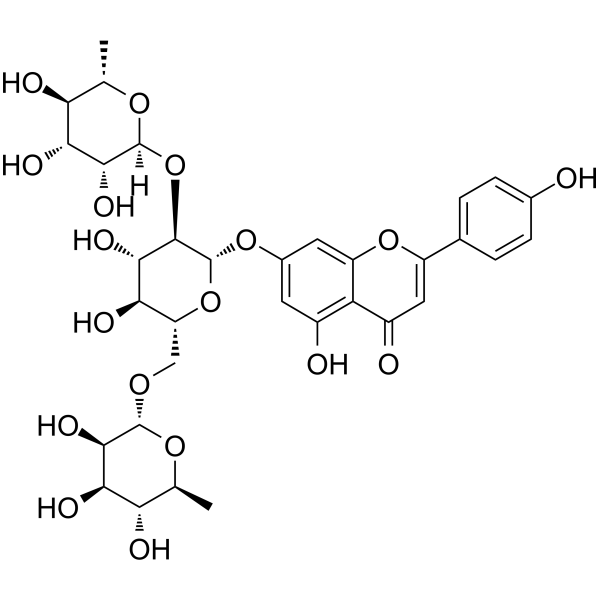
Ligustroflavone is an orally active flavonoid compound. Ligustroflavone can be extracted from Ligustrum lucidum. Ligustroflavone antagonizes the calcium-sensing receptor (CaSR), inhibits the RIPK1/RIPK3/MLKL pathway, and downregulates TGF-β/Smad signaling. Ligustroflavone regulates calcium metabolism, protects bone tissue, reduces cerebral ischemic injury, and inhibits liver fibrosis. Ligustroflavone can be used in the study of diabetic osteoporosis, ischemic stroke, and liver fibrosis.
Para uso exclusivo en investigación. No vendemos a pacientes.
- Pureza : 99.90%
- No. CAS: 260413-62-5
- Fòrmula: C33H40O18
- Peso molecular:724.66
-
Almacenamiento:
4°C, protect from light
* In solvent : -80°C, 6 months; -20°C, 1 month (protect from light)

To place orders, for customer services and technical support, please contact: MedChemExpress USA
Tel: 609-228-6898 E-mail: [email protected] [email protected]


-
 Actividad biológica
-
Chemical Information
-
Solvente y solubilidad
- Protocolo
- Pureza y Documentación
- Referencias
-
 Help & FAQs


-
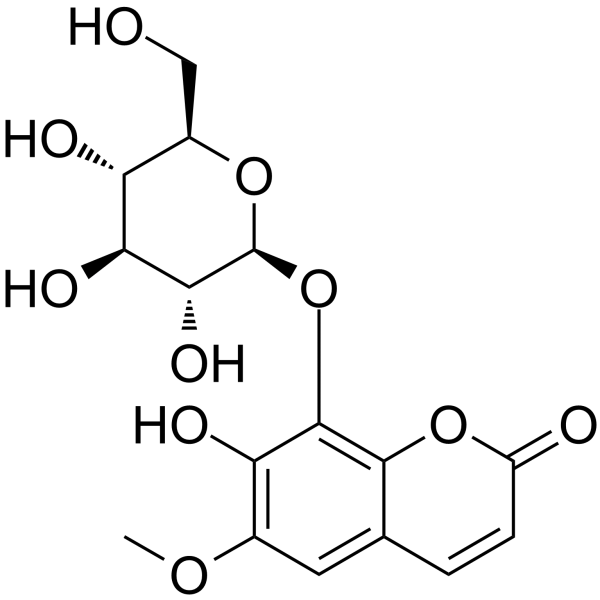
HY-N0579
FraxinPDE Inhibitor -
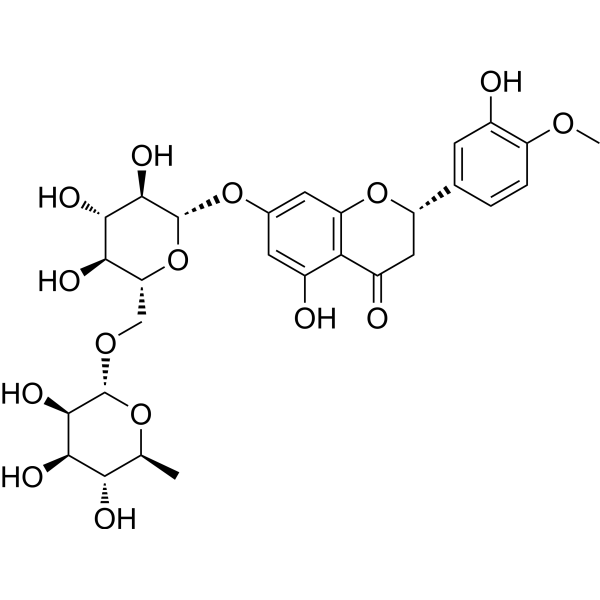
HY-15337
HesperidinAntioxidant -
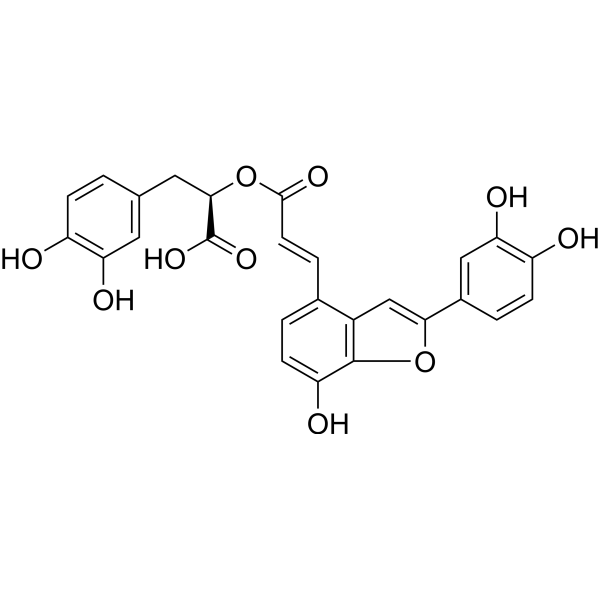
HY-N0319
Salvianolic acid CCytochrome Inhibitor -
HY-139201A
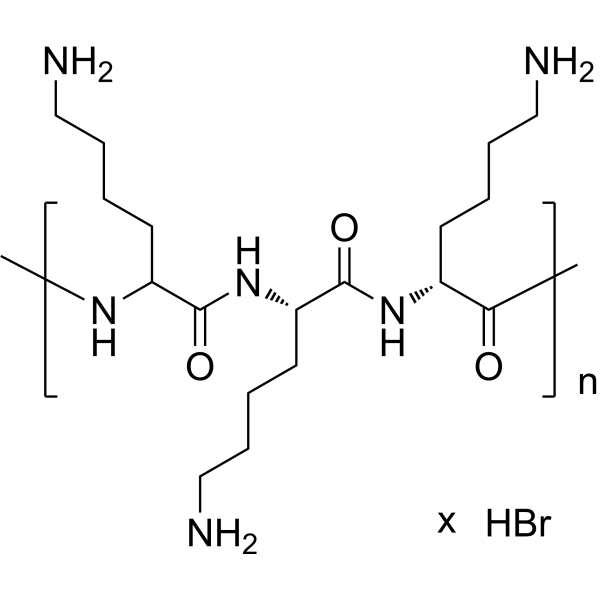
Poly-D-lysine hydrobromide (MW 70000-150000)CaSR Agonist -

HY-N0546R
Ligustroflavone (Standard)Standard Of Ligustroflavone -
HY-17397
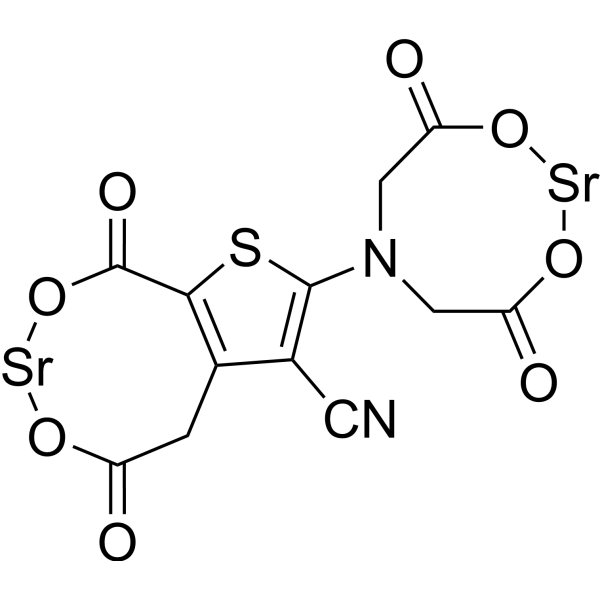
Strontium RanelateAntiosteoporotic Agent -
HY-P1955A
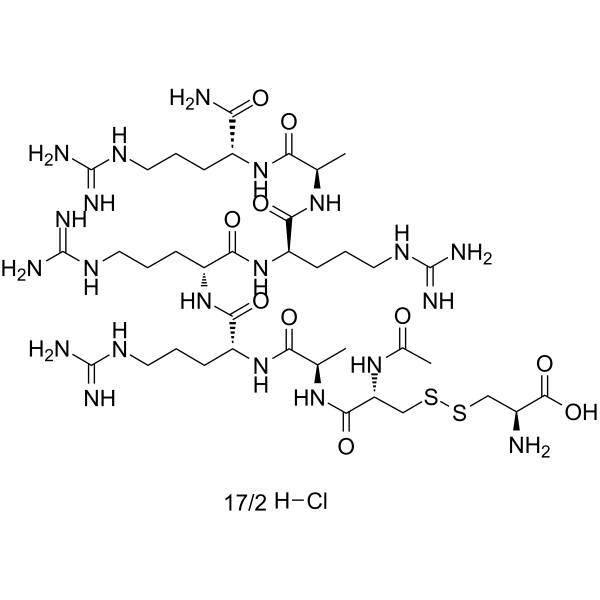
Etelcalcetide hydrochlorideCaSR Activator -
HY-70037
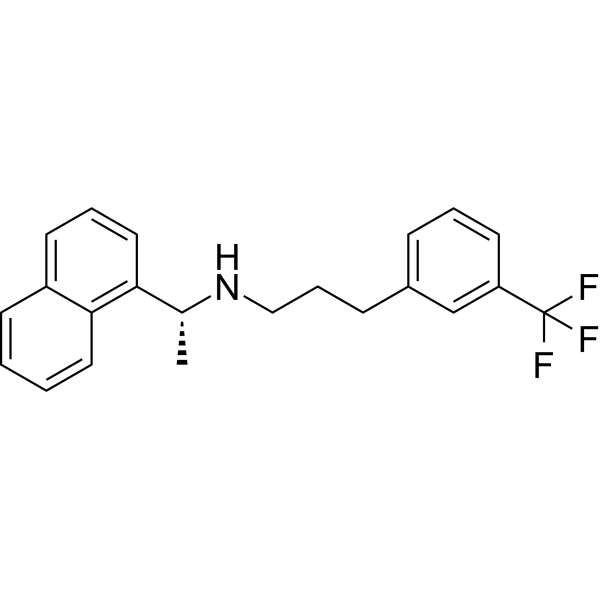
CinacalcetCaSR Agonist -
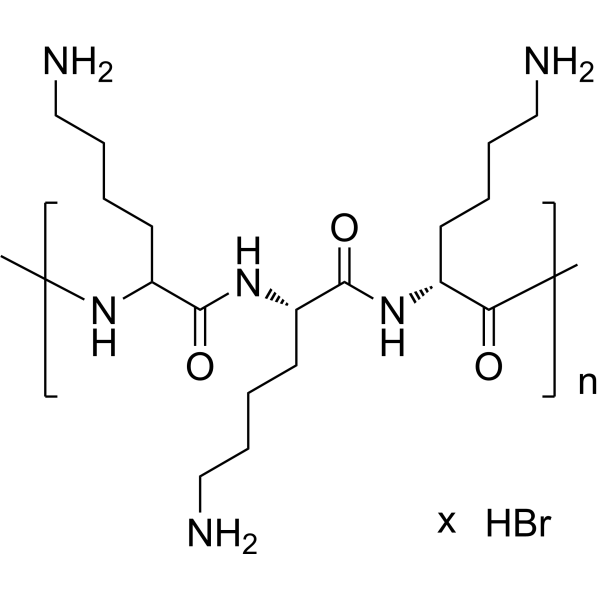
HY-139201
Poly-D-lysine hydrobromide (MW 30000-70000)CaSR Agonist -
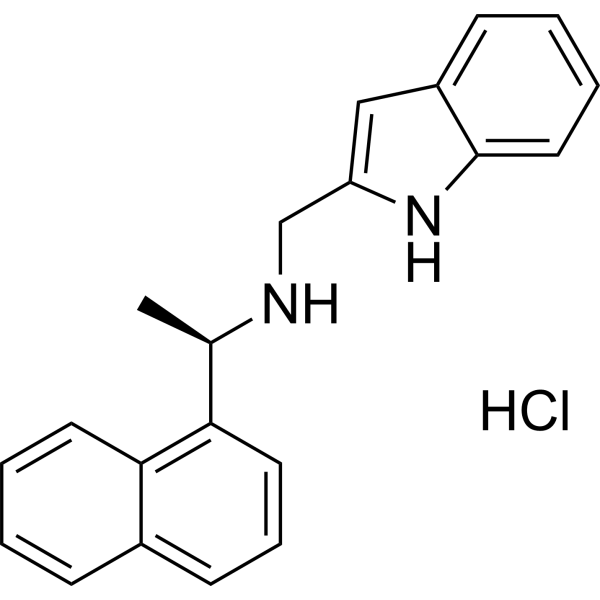
HY-122819
Calindol hydrochlorideCaSR PAM -
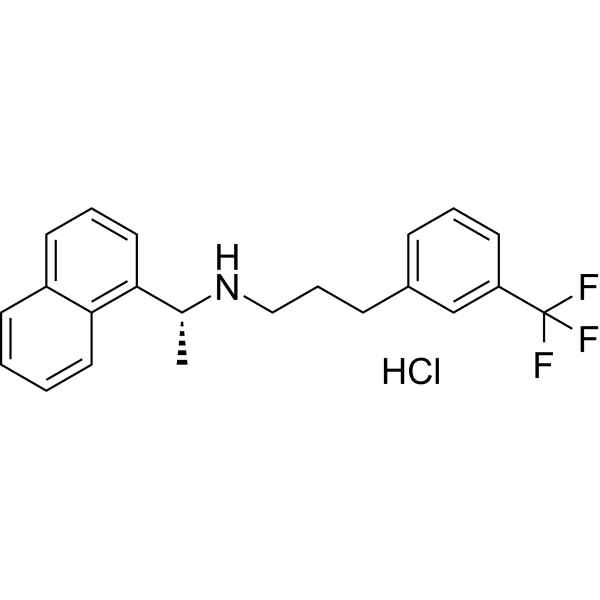
HY-70037A
Cinacalcet hydrochlorideCaSR Agonist -

HY-139201B
Poly-D-lysine hydrobromide (MW 84000)CaSR Agonist
Publications Citing Use of MedChemExpress (MCE) Ligustroflavone
More

Actividad biológica
Descripciòn
|
RIPK1 |
RIPK3 |
In Vitro
Ligustroflavone (0.1 nM-0.1 mM; 2-24 h) increases PTH release in primary rat parathyroid gland cells in a dose- and time-dependent manner[1].
Ligustroflavone (25 μM) shows protective effects against hypoxia injury in PC12 cells, reducing LDH release[2].
Ligustroflavone (25 μM; 24 h) reduces α-SMA and COL 1A1 expression in TGF-β₁-stimulated human hepatic stellate LX-2 cells[3].
MedChemExpress (MCE) has not independently confirmed the accuracy of these methods. They are for reference only. Further protocols information, click here.
In Vivo
Ligustroflavone (30 mg/kg; i.g.; 15 min before ischemia) reduces necroptosis in rat brain after ischemic stroke through inhibiting RIPK1/RIPK3/MLKL pathway[2].
Ligustroflavone (5-20 mg/kg; i.p.; 3 times/week; 6 weeks) ameliorates CCl4 (HY-Y0298)-induced liver fibrosis in mice by reducing collagen deposition and inhibiting TGF-β/Smad signaling[3].
MedChemExpress (MCE) has not independently confirmed the accuracy of these methods. They are for reference only.
-
Animal Model:male Sprague-Dawley rats (250-300 g); MCAO-induced ischemic stroke model[2]
-
Dosage:30 mg/kg
-
Administration:Oral gavage (i.g.); 15 min before ischemia
-
Result:Improved neurological deficit scores, reduced cerebral infarct volume, and suppressed necroptosis-associated proteins RIPK3, MLKL, and p-MLKL in the brain.


Chemical Information
-
No. CAS 260413-62-5
-
Appearance Solid
-
Peso molecular 724.66
-
Fòrmula C33H40O18
-
Color Light yellow to yellow
-
SMILES
O=C(C=C(C1=CC=C(O)C=C1)OC2=CC(O[C@H](O[C@H](CO[C@H](O[C@@H](C)[C@H](O)[C@H]3O)[C@@H]3O)[C@@H](O)[C@@H]4O)[C@@H]4O[C@@](O[C@@H](C)[C@H](O)[C@H]5O)([H])[C@@H]5O)=C6)C2=C6O
-
Synonyms
Nuezhenoside
-
Structure Classification
-
Initial Source
-
Envío
Room temperature in continental US; may vary elsewhere.
-
Almacenamiento
4°C, protect from light
* In solvent : -80°C, 6 months; -20°C, 1 month (protect from light)


Publications (2)
-
Journal Impact Factor
-
Most Recent
-
Food Chem
Effects of sun drying combined with baking processes on the flavor quality of Chongqing Tuocha raw tea. [Abstract]2025 Dec 30:497:146992. PMID: 41285060 -
Food Chem
Flavonoid-mediated metabolic underpinning quality variation in red bud-sport pear mutants. [Abstract]2025 Oct 15:489:144992. PMID: 40466530


Solvente y solubilidad
In Vitro:
DMSO : 125 mg/mL (172.49 mM; Need ultrasonic; Hygroscopic DMSO has a significant impact on the solubility of product, please use newly opened DMSO)
Please refer to the solubility information to select the appropriate solvent. Once prepared, please aliquot and store the solution to prevent product inactivation from repeated freeze-thaw cycles.
Storage method and period of stock solution: -80°C, 6 months; -20°C, 1 month (protect from light). When stored at -80°C, please use it within 6 months. When stored at -20°C, please use it within 1 month.
Please refer to the solubility information to select the appropriate solvent. Once prepared, please aliquot and store the solution to prevent product inactivation from repeated freeze-thaw cycles.
Storage method and period of stock solution: -80°C, 6 months; -20°C, 1 month (protect from light). When stored at -80°C, please use it within 6 months. When stored at -20°C, please use it within 1 month.
Concentration (start) × Volume (start) = Concentration (final) × Volume (final)
In Vivo:
Select the appropriate dissolution method based on your experimental animal and administration route.
- For the following dissolution methods, please ensure to first prepare a clear stock solution using an In Vitro approach and then sequentially add co-solvents:
- To ensure reliable experimental results, the clarified stock solution can be appropriately stored based on storage conditions. As for the working solution for In Vivo experiments, it is recommended to prepare freshly and use it on the same day.
- The percentages shown for the solvents indicate their volumetric ratio in the final prepared solution. If precipitation or phase separation occurs during preparation, heat and/or sonication can be used to aid dissolution.
Add each solvent one by one: 10% DMSO 40% PEG300 5% Tween-80 45% Saline
Solubility: ≥ 2.08 mg/mL (2.87 mM); Clear solution
This protocol yields a clear solution of ≥ 2.08 mg/mL (saturation unknown).
Taking 1 mL working solution as an example, add 100 μL DMSO stock solution (20.8 mg/mL) to 400 μL PEG300, and mix evenly; then add 50 μL Tween-80 and mix evenly; then add 450 μL Saline to adjust the volume to 1 mL.
Preparation of Saline: Dissolve 0.9 g sodium chloride in ddH₂O and dilute to 100 mL to obtain a clear Saline solution.
Add each solvent one by one: 10% DMSO 90% (20% SBE-β-CD in Saline)
Solubility: ≥ 2.08 mg/mL (2.87 mM); Clear solution
This protocol yields a clear solution of ≥ 2.08 mg/mL (saturation unknown).
Taking 1 mL working solution as an example, add 100 μL DMSO stock solution (20.8 mg/mL) to 900 μL 20% SBE-β-CD in Saline, and mix evenly.
Preparation of 20% SBE-β-CD in Saline (4°C, storage for one week): 2 g SBE-β-CD powder is dissolved in 10 mL Saline, completely dissolve until clear.
In Vivo Dissolution Calculator
Please enter the basic information of animal experiments:
-
-
-
-
Recommended: Prepare an additional quantity of animals to account for potential losses during experiments.
Please enter your animal formula composition:
-
%DMSO +
Recommended: Keep the proportion of DMSO in working solution below 2% if your animal is weak.
-
%+
-
+%Tween-80 + +
-
%Saline +
The co-solvents required include: DMSO, . All of co-solvents are available by MedChemExpress (MCE). , Tween 80. All of co-solvents are available by MedChemExpress (MCE).
Working solution concentration: 0.22 mg/mL
Method for preparing stock solution: mg drug dissolved in μL DMSO. Stock solution concentration: mg/mL. * In solvent : -80°C, 6 months; -20°C, 1 month (protect from light)
1. Take μL DMSO stock solution;
2. Add μL .
μL , mix evenly;
3. Then add μL Tween 80, mix evenly;
4. Then add μL
Please ensure that the stock solution in the first step is dissolved to a clear state, and add co-solvents in sequence. You can use ultrasonic heating (ultrasonic cleaner, recommended frequency 20-40 kHz), vortexing, etc. to assist dissolution.

Protocolo
-
Fibrosis/Collagen Morphometry
Fibrosis and collagen morphometry is based on the quantitative visualization of fibrillar collagen deposition in tissue sections using histochemical stains such as Sirius Red (Picrosirius Red) or Masson's trichrome, followed by image-based or polarization-enhanced analysis to estimate collagen proportional area as a surrogate of extracellular matrix accumulation during fibrotic remodeling. Sirius Red combined with polarized light microscopy enhances detection of collagen fibers due to birefringence properties, enabling more specific visualization of collagen type I and III fibrils compared to conventional bright-field histology, while whole-section or region-restricted digital morphometry reduces field-selection bias in fibrosis assessment. Alternative quantitative approaches include second harmonic generation (SHG) and two-photon excited fluorescence microscopy, which enable label-free detection of fibrillar collagen and have been validated against histological staining and biochemica
-
Collagen: Sirius Red Staining
Sirius Red or picrosirius red staining is a histochemical method for visualizing collagen-rich extracellular matrix in tissue sections, and collagen fibers are detected as red-stained structures under bright-field microscopy with enhanced birefringence under polarized light. Picrosirius red is useful for assessing total collagen organization, distribution, and fibrosis burden, but polarized color should not be interpreted as a definitive collagen type I versus type III readout because color is affected by fiber orientation, thickness, and packing.
-
Connective Tissue: Masson's Trichrome/Collagen Trichrome Staining
Masson’s Trichrome (collagen/trichrome staining) is a histological technique that differentially stains tissue compartments using sequential acidic dyes to distinguish collagen from muscle and cytoplasmic components based on dye affinity and tissue permeability differences, enabling visualization of fibrosis and connective tissue architecture in histological sections. The classical formulation typically uses Weigert's iron hematoxylin for nuclear staining, Biebrich scarlet-acid fuchsin for cytoplasm and muscle, and aniline blue (or light green variants) for collagen, producing a characteristic blue/green collagen signal contrasted against red cytoplasm and dark nuclei. The staining principle relies on selective displacement of smaller dye molecules by larger anionic dyes in collagen-rich regions under controlled acidified conditions, which enhances collagen-specific dye retention. This property makes the method widely used for fibrosis assessment in organs such as heart, liver, lung, a
-
Liver Histomorphometry
Liver histomorphometry is a quantitative histological approach used to measure structural alterations in hepatic tissue, including parenchymal loss, steatosis, fibrosis, and vascular remodeling, by combining stained tissue section analysis with stereological or computerized image-based measurements. Classical morphometric frameworks quantify volume fractions of liver compartments and fibrotic regions using systematic sampling and image analysis, enabling objective comparison of pathological changes across experimental groups. These approaches are widely applied in liver cirrhosis and fibrosis studies to reduce subjectivity in histological scoring and improve reproducibility of tissue evaluation. Recent methodological advances integrate automated image analysis and radiomics-based extraction of histological features from standard liver stains (e. g. , H&E and fibrotic stains), enabling quantitative correlation between morphometric features and fibrosis stages in non-alcoholic fatty live


Pureza y Documentación
-
Ficha de datos (281 KB)
-
SDS (393 KB)
- English - EN (393 KB)
- Français - FR (393 KB)
- Deutsch - DE (393 KB)
- Norwegian - NO (393 KB)
- Español - ES (393 KB)
- Swedish - SV (393 KB)
- Italian - IT (393 KB)
- Korean - KR (393 KB)
- Portuguese - PT (393 KB)
-
Instrucciones de manejo (2659 KB)
Referencias
[1]. Feng R, et al. Protective Effects of Ligustroflavone, an Active Compound from Ligustrum lucidum, on Diabetes-Induced Osteoporosis in Mice: A Potential Candidate as Calcium-Sensing Receptor Antagonist. Am J Chin Med. 2019;47(2):457-476. [Content Brief]
[2]. Zhang YY, et al. Ligustroflavone reduces necroptosis in rat brain after ischemic stroke through targeting RIPK1/RIPK3/MLKL pathway. Naunyn Schmiedebergs Arch Pharmacol. 2019 Sep;392(9):1085-1095. [Content Brief]
[3]. Kang R, et al. Ligustroflavone ameliorates CCl4-induced liver fibrosis through down-regulating the TGF-β/Smad signaling pathway. Chin J Nat Med. 2021 Mar;19(3):170-180. [Content Brief]


Complete Stock Solution Preparation Table
Please refer to the solubility information to select the appropriate solvent. Once prepared, please aliquot and store the solution to prevent product inactivation from repeated freeze-thaw cycles.
Storage method and period of stock solution: -80°C, 6 months; -20°C, 1 month (protect from light). When stored at -80°C, please use it within 6 months. When stored at -20°C, please use it within 1 month.
| Optional Solvent | Concentration Solvent Mass | 1 mg | 5 mg | 10 mg | 25 mg |
|---|---|---|---|---|---|
| DMSO | 1 mM | 1.3800 mL | 6.8998 mL | 13.7996 mL | 34.4989 mL |
| 5 mM | 0.2760 mL | 1.3800 mL | 2.7599 mL | 6.8998 mL | |
| 10 mM | 0.1380 mL | 0.6900 mL | 1.3800 mL | 3.4499 mL | |
| 15 mM | 0.0920 mL | 0.4600 mL | 0.9200 mL | 2.2999 mL | |
| 20 mM | 0.0690 mL | 0.3450 mL | 0.6900 mL | 1.7249 mL | |
| 25 mM | 0.0552 mL | 0.2760 mL | 0.5520 mL | 1.3800 mL | |
| 30 mM | 0.0460 mL | 0.2300 mL | 0.4600 mL | 1.1500 mL | |
| 40 mM | 0.0345 mL | 0.1725 mL | 0.3450 mL | 0.8625 mL | |
| 50 mM | 0.0276 mL | 0.1380 mL | 0.2760 mL | 0.6900 mL | |
| 60 mM | 0.0230 mL | 0.1150 mL | 0.2300 mL | 0.5750 mL | |
| 80 mM | 0.0172 mL | 0.0862 mL | 0.1725 mL | 0.4312 mL | |
| 100 mM | 0.0138 mL | 0.0690 mL | 0.1380 mL | 0.3450 mL |


Ligustroflavone Related Classifications
HY-N0546 Related Classifications
 Powered by Bioz