



αLβ2
αLβ2 integrin (LFA-1; CD11a/CD18) is a leukocyte-restricted β2 integrin formed by the association of the αL (ITGAL) and β2 (ITGB2) subunits, and it functions as a central mediator of leukocyte intercellular adhesion and immune cell communication[1]. Through binding to intercellular adhesion molecules (ICAM-1, ICAM-2, and ICAM-3), αLβ2 regulates leukocyte arrest, transendothelial migration, and lymphocyte costimulatory signaling during immune responses[1][7]. Mechanistically, αLβ2 activity is controlled by coordinated inside-out and outside-in signaling that modulates integrin affinity and avidity, thereby linking extracellular ligand recognition to intracellular signaling pathways governing leukocyte activation and migration[2][3]. In disease settings, impaired β2 integrin function causes leukocyte adhesion deficiency type I (LAD-I), a primary immunodeficiency characterized by defective leukocyte trafficking and recurrent infections, highlighting the essential role of αLβ2 in host defense[4][5]. αLβ2 has also been implicated in inflammatory and autoimmune pathologies because persistent LFA-1/ICAM interactions promote leukocyte recruitment and inflammatory responses within affected tissues[7]. Compared with related β2 integrins such as αMβ2 (Mac-1) and αXβ2 (CR4), αLβ2 is distinguished by its broad expression on leukocyte populations and its prominent role in ICAM-dependent cell-cell adhesion and immunological synapse formation[1][6]. For experimental applications, antibodies and small-molecule inhibitors targeting the LFA-1/ICAM-1 interaction have been widely used to investigate leukocyte adhesion mechanisms and integrin-mediated immune regulation[7].
References:
- [1]. αLβ2 gene information from NCBI.
- [2]. Bouti P, et al. β2 Integrin Signaling Cascade in Neutrophils: More Than a Single Function. Front Immunol. 2021 Feb 18;11:619925. [Content Brief]
- [3]. Bednarczyk M, et al. β2 Integrins-Multi-Functional Leukocyte Receptors in Health and Disease. Int J Mol Sci. 2020 Feb 19;21(4):1402. [Content Brief]
- [4]. Fekadu J, et al. Understanding the Role of LFA-1 in Leukocyte Adhesion Deficiency Type I (LAD I): Moving towards Inflammation? Int J Mol Sci. 2022 Mar 25;23(7):3578. [Content Brief]
- [5]. Hogg N, et al. A novel leukocyte adhesion deficiency caused by expressed but nonfunctional beta2 integrins Mac-1 and LFA-1. J Clin Invest. 1999 Jan;103(1):97-106. [Content Brief]
- [6]. Delibaş D, et al. Cardiac Echinococcosis: Rare and Challenging Presentations-A Case Series. J Clin Ultrasound. 2026 Jun 8. [Content Brief]
- [7]. Ostermann G, et al. JAM-1 is a ligand of the β2 integrin LFA-1 involved in transendothelial migration of leukocytes. Nat Immunol. 2002;3(2):151-8. [Content Brief]
All Product Categories
-
αLβ2 Related Products (2)
Related Products (2)

-
Lifitegrast
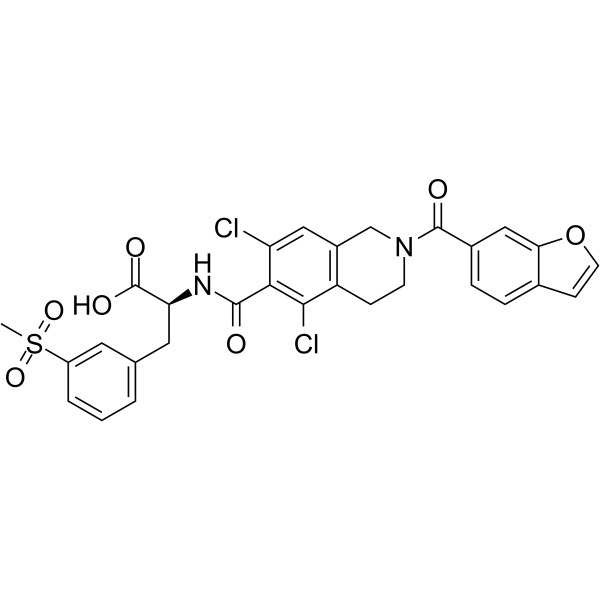 0 ImagesSynonyms: SAR 1118; SHP-606Lifitegrast (SAR 1118) is a potent integrin antagonist. Lifitegrast blocks the binding of intercellular adhesion molecule 1 (ICAM-1) to lymphocyte function-associated antigen 1 (LFA-1), interrupting the T cell-mediated inflammatory cycle. Lifitegrast inhibits Jurkat T cell attachment to ICAM-1 with an IC50 of 2.98 nM. Lifitegrast can be used for researching dry eye disease.
-
Lifitegrast sodium
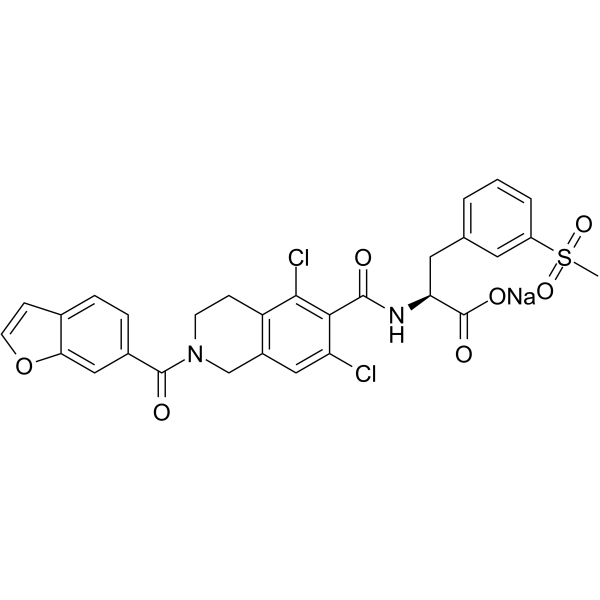 0 ImagesSynonyms: SAR 1118 sodium; SHP-606 sodiumLifitegrast (SAR 1118) sodium is a potent integrin antagonist. Lifitegrast sodium blocks the binding of intercellular adhesion molecule 1 (ICAM-1) to lymphocyte function-associated antigen 1 (LFA-1), interrupting the T cell-mediated inflammatory cycle. Lifitegrast sodium inhibits Jurkat T cell attachment to ICAM-1 with an IC50 of 2.98 nM. Lifitegrast sodium can be used for researching dry eye disease.



