



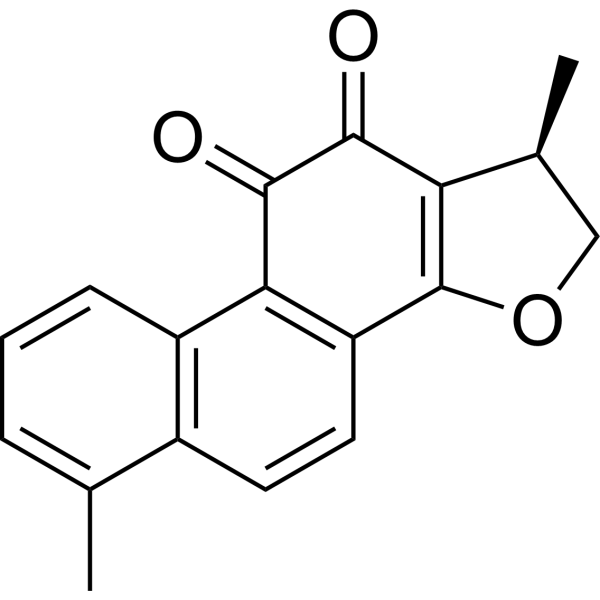
Dihydrotanshinone I
Based on 14 publication(s) in Google Scholar
Dihydrotanshinone I is a natural compound extracted from Salvia miltiorrhiza Bunge which has been widely used for treating cardiovascular diseases. Dihydrotanshinone I exhibits entry-blocking effect for MERS-CoV.
商品は「研究用試薬」です。人や動物の医療用・臨床診断用・食品用の製品ではありません。
研究用途以外に使用した場合、当社は一切の責任を負いかねます。
- 純度: 99.57%
- CAS 番号: 87205-99-0
- 分子式: C18H14O3
- 分子量:278.30
-
保管条件:Powder -20°C, 3 years , 4°C, 2 years ; In solvent -80°C, 1 year , -20°C, 6 months


-
 生物活性
生物活性
-
化学情報
-
溶剤 & 溶解度
- プロトコル
- 純度とドキュメンテーション
- 参考文献
-
 Help & FAQs
-


Anti-Infection Compound Library
HY-L002
-
Natural Product Library
HY-L021
-
Antiviral Compound Library
HY-L027
-
Anti-Aging Compound Library
HY-L034
-
Covalent Screening Library
HY-L036
-
Oxygen Sensing Compound Library
HY-L045
-
Anti-Cardiovascular Disease Compound Library
HY-L046
-
Traditional Chinese Medicine Active Compound Library
HY-L065
-
Antiviral Traditional Chinese Medicine Active Compound Library
HY-L113
-
Plant-Sourced Natural Product Library
HY-L115
-
Cysteine Targeted Covalent Library
HY-L153
-
Bioactive Compound Library Max
HY-L181
-
Covalent Screening Library Plus
HY-L036P
-
Natural Product Library Plus
HY-L021P
-
Natural Product and Natural Product-Like Compound Library
HY-L021M
-
Bioactive Compound Library
HY-L001
-
PBCRBS Traditional Chinese Medicine Compound Library
HY-L193
-
RO5 Drug-like Natural Product Library
HY-L200
-
High-Throughput Bioactive Compound Library
HY-L205
-
High-Throughput Natural Product Library
HY-L206
-
Diarrhea-Related Traditional Chinese Medicine Active Compound Library
HY-L224
-
Mongolian Medicine Compound Library
HY-L238
-
Quinones Library
HY-L243
-
Natural Product Diversity Scaffold Library
HY-L245
-
Mass Spectrometry Natural Product Library
HY-L262


MedChemExpress(MCE)の使用を引用している文献 Dihydrotanshinone I
More- Nucleic Acids Res. 2021 Jan 8;49(D1):D1113-D1121. [Abstract]
- Rare Metals. 2025 Sep 29.
- Phytomedicine. 2025 Oct 8:148:157389. [Abstract]
- Phytomedicine. 2025 Jun 18:145:157005. [Abstract]
- Phytomedicine. 2024 Jul:129:155661. [Abstract]
- Phytother Res. 2025 Aug;39(8):3762-3783. [Abstract]
- Phytother Res. 2025 Mar;39(3):1531-1548. [Abstract]
- Cell Mol Life Sci. 2021 Feb;78(4):1817-1835. [Abstract]
- Chin Med. 2026 Mar 4;21(1):76. [Abstract]
- Bioeng Transl Med. 2025 Sep 15;10(6):e70074. [Abstract]
- Eur J Pharmacol. 2025 Feb 12:177378. [Abstract]
- Vet Microbiol. 2026 May:316:110992. [Abstract]
- Toxicol In Vitro. 2024 Oct 18:105955. [Abstract]
- SSRN. 2023 Nov 30.
 Customer Validation & Images

-
Cell Proliferation/Viability Assay
-
Cell Imaging/Staining
-
WB
-
RT-PCR
-
In Vivo Efficacy Study


生物活性
|
Cell Line

|
Type | Value | Description | References |
|---|---|---|---|---|
| AGS | IC50 |
>50 μM
Compound: 4, dihydrotanshinone i
|
Viability of human AGS cells under normoxic conditions after 24 hrs by MTT assay
Viability of human AGS cells under normoxic conditions after 24 hrs by MTT assay
|
[PMID: 17583950] |
| AGS | IC50 |
2.05 μM
Compound: 4, dihydrotanshinone i
|
Inhibition of HIF1 activation in human AGS cells assessed as inhibition of hypoxia-induced luciferase expression after 16 hrs by reporter assay
Inhibition of HIF1 activation in human AGS cells assessed as inhibition of hypoxia-induced luciferase expression after 16 hrs by reporter assay
|
[PMID: 17583950] |
| AGS | IC50 |
47.7 μM
Compound: 4, dihydrotanshinone i
|
Viability of human AGS cells under hypoxic conditions after 24 hrs by MTT assay
Viability of human AGS cells under hypoxic conditions after 24 hrs by MTT assay
|
[PMID: 17583950] |
| Hep 3B2 | EC50 |
5.5 μM
Compound: 2
|
Cytotoxicity against human Hep3B cells deficient in p53 gene by MTT assay
Cytotoxicity against human Hep3B cells deficient in p53 gene by MTT assay
|
[PMID: 20455578] |
| Hep 3B2 | IC50 |
>50 μM
Compound: 4, dihydrotanshinone i
|
Viability of human Hep3B cells under hypoxic conditions after 24 hrs by MTT assay
Viability of human Hep3B cells under hypoxic conditions after 24 hrs by MTT assay
|
[PMID: 17583950] |
| Hep 3B2 | IC50 |
>50 μM
Compound: 4, dihydrotanshinone i
|
Viability of human Hep3B cells under normoxic conditions after 24 hrs by MTT assay
Viability of human Hep3B cells under normoxic conditions after 24 hrs by MTT assay
|
[PMID: 17583950] |
| Hep 3B2 | IC50 |
2.29 μM
Compound: 4, dihydrotanshinone i
|
Inhibition of HIF1 activation in human Hep3B cells assessed as inhibition of hypoxia-induced luciferase expression after 16 hrs by reporter assay
Inhibition of HIF1 activation in human Hep3B cells assessed as inhibition of hypoxia-induced luciferase expression after 16 hrs by reporter assay
|
[PMID: 17583950] |
| Hep 3B2 | IC50 |
3.2 μM
Compound: 4, dihydrotanshinone i
|
Inhibition of hypoxia-induced HIF1alpha accumulation in Hep3B cells
Inhibition of hypoxia-induced HIF1alpha accumulation in Hep3B cells
|
[PMID: 17583950] |
| HepG2 | EC50 |
2.5 μM
Compound: 2
|
Cytotoxicity against human HepG2 cells expressing wild type p53 gene by MTT assay
Cytotoxicity against human HepG2 cells expressing wild type p53 gene by MTT assay
|
[PMID: 20455578] |
| HepG2 | EC50 |
4.7 μM
Compound: 2
|
Cytotoxicity against doxorubicin resistant human HepG2 cells expressing wild type p53 gene by MTT assay
Cytotoxicity against doxorubicin resistant human HepG2 cells expressing wild type p53 gene by MTT assay
|
[PMID: 20455578] |
| MCF7 | IC50 |
3.73 μM
Compound: 1
|
Cytotoxicity against human MCF7 cells assessed as decrease in cell viability after 72 hrs by OZBlue assay
Cytotoxicity against human MCF7 cells assessed as decrease in cell viability after 72 hrs by OZBlue assay
|
[PMID: 29313684] |
| MDA-MB-231 | IC50 |
8.99 μM
Compound: 1
|
Cytotoxicity against human MDA-MB-231 cells assessed as decrease in cell viability after 72 hrs by OZBlue assay
Cytotoxicity against human MDA-MB-231 cells assessed as decrease in cell viability after 72 hrs by OZBlue assay
|
[PMID: 29313684] |
| PANC-1 | IC50 |
2.91 μM
Compound: 1
|
Cytotoxicity against human PANC1 cells assessed as decrease in cell viability after 72 hrs by OZBlue assay
Cytotoxicity against human PANC1 cells assessed as decrease in cell viability after 72 hrs by OZBlue assay
|
[PMID: 29313684] |
| PLC-PRF-5 | EC50 |
>10 μM
Compound: 2
|
Cytotoxicity against human PLC/PRF/5 cells expressing mutant p53 gene (codon 249) by MTT assay
Cytotoxicity against human PLC/PRF/5 cells expressing mutant p53 gene (codon 249) by MTT assay
|
[PMID: 20455578] |
In lipopolysaccharide (LPS)-stimulated human umbilical vein endothelial cells (HUVECs), DHT (10 nM) decreases lectin-like ox-LDL receptor-1 (LOX-1) and NADPH oxidase 4 (NOX4) expression, reactive oxygen species (ROS) production, NF-κB nuclear translocation, ox-LDL endocytosis and monocytes adhesion[1]. Dihydrotanshinone I induces caspase dependent apoptosis induced in HCT116 cells. Dihydrotanshinone I induces concentration and ROS dependent caspase activation. Apoptosis induced by Dihydrotanshinone I is completely prevented by Z-VAD-fmk. Apoptosis induced by Dihydrotanshinone I is significantly inhibited by pretreatment of Z-LEHD-fmk but only is partially inhibited by Z-IETD-fmk. Apoptosis induced by Dihydrotanshinone I is significantly increased by caspase-2 knockdown[3].
MedChemExpress (MCE) has not independently confirmed the accuracy of these methods. They are for reference only.
Dihydrotanshinone I (1, 2, 4 mg/kg) treatment can improve cardiac function, reduce infarct size, ameliorate the variations in myocardial zymogram and histopathological disorders, decrease 20-HETE generation, and regulate apoptosis-related protein in myocardial ischemia-reperfusion rats[2].
MedChemExpress (MCE) has not independently confirmed the accuracy of these methods. They are for reference only.


化学情報
-
CAS 番号 87205-99-0
-
性状 Solid
-
分子量 278.30
-
分子式 C18H14O3
-
Color Brown to red
-
SMILES
O=C(C1=C2C=CC3=C1C=CC=C3C)C(C4=C2OC[C@@H]4C)=O
-
別名
ジヒドロタンシノンI
-
Structure Classification
-
Initial Source
-
輸送条件
Room temperature in continental US; may vary elsewhere.
-
保管条件
Powder -20°C 3 years 4°C 2 years In solvent -80°C 1 year -20°C 6 months


Publications (14)
-
Journal Impact Factor
-
Most Recent
-
Nucleic Acids Res
COVID19 Drug Repository: text-mining the literature in search of putative COVID19 therapeutics. [Abstract]2021 Jan 8;49(D1):D1113-D1121. PMID: 33166390 -
-
Phytomedicine
Jianpi Huayu decoction exerts antitumor effects in pancreatic cancer via SCD1-mediated lipid metabolism remodeling/ferroptosis axis. [Abstract]2025 Oct 8:148:157389. PMID: 41101075 -
Phytomedicine
Dihydrotanshinone I, a main compound of Salvia miltiorrhiza, alleviates autoimmune and inflammatory diseases by directly targeting IRF3. [Abstract]2025 Jun 18:145:157005. PMID: 40609382 -
Phytomedicine
Dihydrotanshinone I inhibits gallbladder cancer growth by targeting the Keap1-Nrf2 signaling pathway and Nrf2 phosphorylation. [Abstract]2024 Jul:129:155661. PMID: 38677269 -
Phytother Res
Dihydrotanshinone I Targets PGAM1 to Induce SYVN1-Mediated Ubiquitination and Suppress Glycolysis in Hepatocellular Carcinoma. [Abstract]2025 Aug;39(8):3762-3783. PMID: 40640077
Dihydrotanshinone I purchased from MedChemExpress. Usage Cited in: Phytother Res. 2025 Aug;39(8):3762-3783. [Abstract]
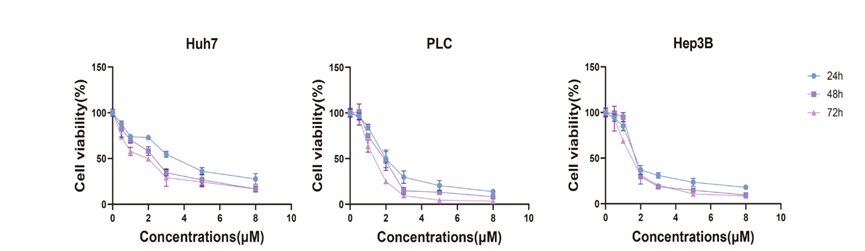
Cell viability of Huh7, PLC/PRF/5, and Hep3B hepatocellular carcinoma cells treated with different concentrations of Dihydrotanshinone I (DHT) (0, 0.5, 1, 2, 3, 5, and 8 μM) for 24, 48, and 72 h.
Dihydrotanshinone I purchased from MedChemExpress. Usage Cited in: Phytother Res. 2025 Aug;39(8):3762-3783. [Abstract]
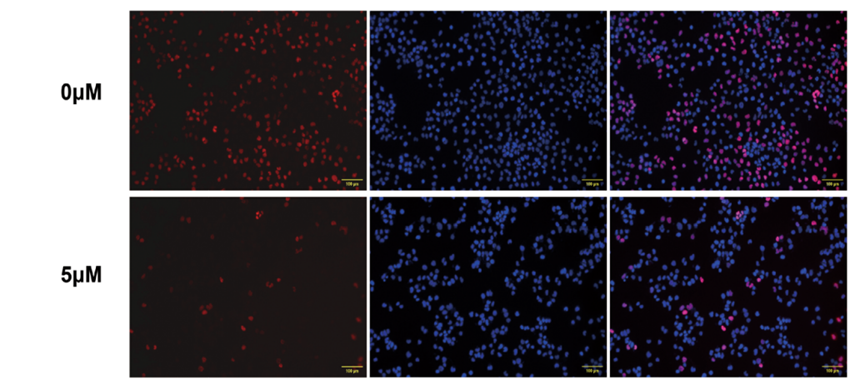
EDU staining of Huh7 cells treated with 5 μM Dihydrotanshinone I (DHT) (5 μM) for 24 h.
Dihydrotanshinone I purchased from MedChemExpress. Usage Cited in: Phytother Res. 2025 Aug;39(8):3762-3783. [Abstract]
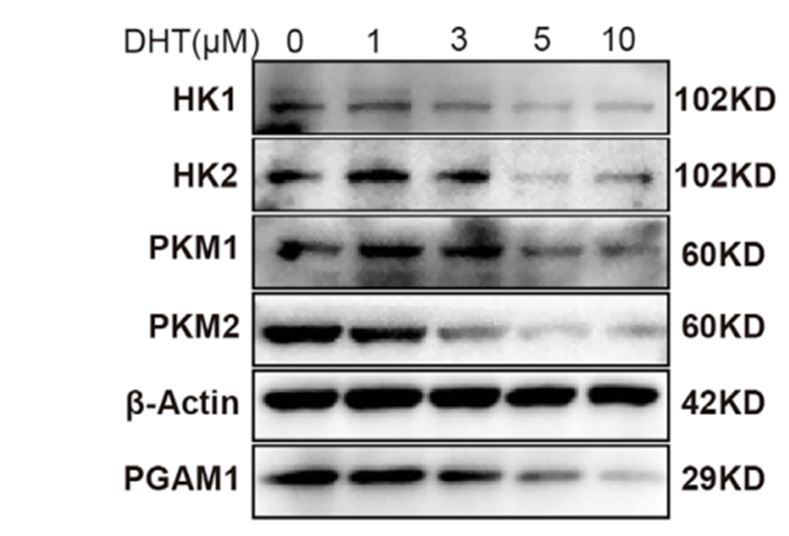
Protein expression levels of key glycolytic enzymes (HK1, HK2, PKM1, PKM2, PGAM1) in HCC cells following Dihydrotanshinone I (DHT) (1, 3, 5, 10 μM) treatment.
Dihydrotanshinone I purchased from MedChemExpress. Usage Cited in: Phytother Res. 2025 Aug;39(8):3762-3783. [Abstract]
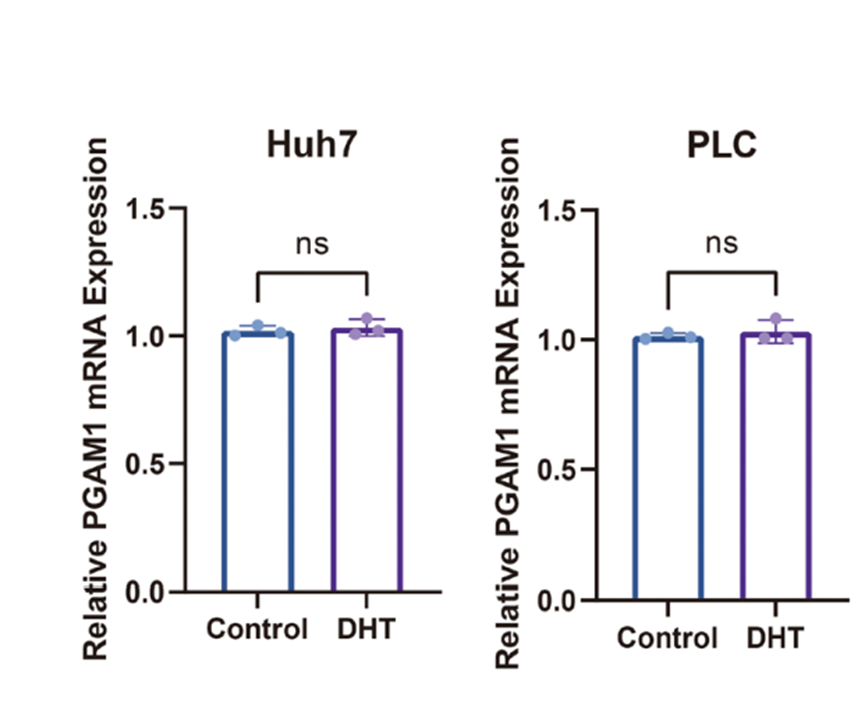
Huh7 and PLC cells were treated with Dihydrotanshinone I (DHT) (5 μM) for 24 h. Total RNA was extracted, and qPCR was performed to analyze mRNA expression levels.
Dihydrotanshinone I purchased from MedChemExpress. Usage Cited in: Phytother Res. 2025 Aug;39(8):3762-3783. [Abstract]
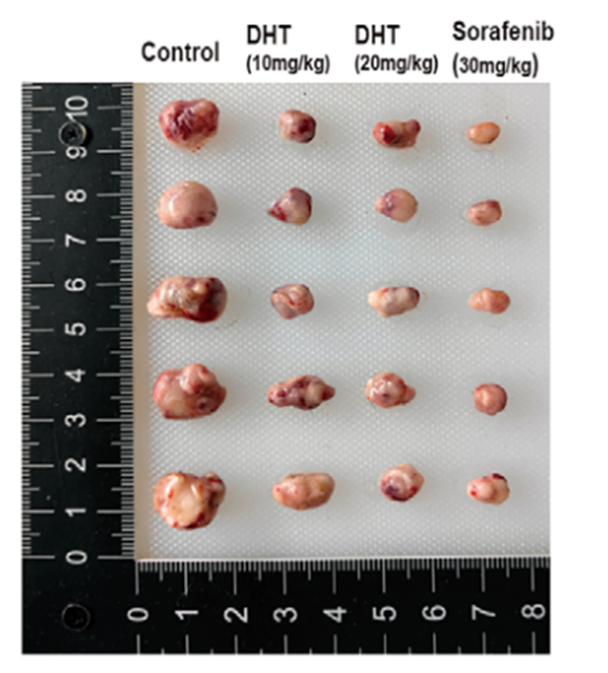
Representative photographs of excised tumors from subcutaneous xenograft model at study endpoint across four treatment groups: Vehicle control, Dihydrotanshinone I (DHT) (10 mg/kg), DHT (20 mg/kg), and sorafenib (30 mg/kg).
-
Phytother Res
Dihydrotanshinone I Attenuates Diet-Induced Nonalcoholic Fatty Liver Disease via Up-Regulation of IRG1. [Abstract]2025 Mar;39(3):1531-1548. PMID: 39853881 -
Cell Mol Life Sci
Poly(ADP-ribosyl)ation enhances HuR oligomerization and contributes to pro-inflammatory gene mRNA stabilization. [Abstract]2021 Feb;78(4):1817-1835. PMID: 32789690 -
Chin Med
Yixinshu attenuates myocardial infarction via SHP1/JAK2/STAT3-mediated regulation of mitochondrial function and apoptosis. [Abstract]2026 Mar 4;21(1):76. PMID: 41782161 -
Bioeng Transl Med
Engineered endothelial cells targeting and dihydrotanshinone I loaded bacterial extracellular vesicles for atherosclerosis therapy. [Abstract]2025 Sep 15;10(6):e70074. PMID: 41244349 -
Eur J Pharmacol
Dihydrotanshinone I potentiates the anti-tumor activity of cisplatin by activating ROS-mediated ER stress through targeting HSPD1 in lung cancer cells. [Abstract]2025 Feb 12:177378. PMID: 39952584 -
Vet Microbiol
The Chinese medicine monomer Schisandrin C inhibits PRRSV infection by regulating the OGT-PI3K/AKT/mTOR signaling pathway. [Abstract]2026 May:316:110992. PMID: 41865607 -
Toxicol In Vitro
Dihydrotanshinone I induces necroptosis and cell cycle arrest in gastric cancer through the PTPN11/p38 pathway. [Abstract]2024 Oct 18:105955. PMID: 39427814 -


溶剤 & 溶解度
DMSO : 2 mg/mL (7.19 mM; Need ultrasonic; Hygroscopic DMSO has a significant impact on the solubility of product, please use newly opened DMSO)
Please refer to the solubility information to select the appropriate solvent. Once prepared, please aliquot and store the solution to prevent product inactivation from repeated freeze-thaw cycles.
Storage method and period of stock solution: -80°C, 1 year; -20°C, 6 months. When stored at -80°C, please use it within 1 year. When stored at -20°C, please use it within 6 months.
Please refer to the solubility information to select the appropriate solvent. Once prepared, please aliquot and store the solution to prevent product inactivation from repeated freeze-thaw cycles.
Storage method and period of stock solution: -80°C, 1 year; -20°C, 6 months. When stored at -80°C, please use it within 1 year. When stored at -20°C, please use it within 6 months.
濃度 (開始) × 体積 (開始) = 濃度 (終了) × 体積 (終了)
Please enter the basic information of animal experiments:
-
-
-
-
Recommended: Prepare an additional quantity of animals to account for potential losses during experiments.
Working solution concentration: 0.22 mg/mL

プロトコル
Cells are treated with various concentrations of Dihydrotanshinone I (3.13-20 µM) for 48 h. For the activity assay, Ac-DEVD-AMC (1 µg/µL), Ac-IETD-AMC (1 µg/µL) or Ac-LEDH-AMC (1 µg/µL) and cell lysate are added into Protease Assay Buffer in 96-well plate. Reaction mixtures with lysis buffer are used as negative controls. Cells treated with DMSO (0.1%) are treated as vehicle control. The reaction mixtures are incubated for 1 h at 37°C. The AMC liberated from the substrates is measured using spectrofluorometer of Victor 2 plate reader with an excitation wavelength of 380 nm and an emission wavelength of 430 nm.
MedChemExpress (MCE) has not independently confirmed the accuracy of these methods. They are for reference only.
Male ApoE-/- mice (6-8 weeks old) on C57BL/6J background and age-matched wild-type C57BL/6J controls housed in SPF-grade animal facilities with a 12 h light/dark cycle, at 23°C (±2°C). Starting from 6 weeks, the mice are fed with a HCD (54.35% raw grain, 20% lard, 0.15% cholesterol, 15% sucrose, 0.5% Sodium Cholate, 10% yolk powder) for 12 weeks. All ApoE-/- mice are dosed daily via intragastric gavage with 10 and 25 mg/kg Dihydrotanshinone I dissolved in 0.5% CMC-Na or administered 0.5% CMC-Na alone (vehicle control) (n=8 per group).
MedChemExpress (MCE) has not independently confirmed the accuracy of these methods. They are for reference only.


純度とドキュメンテーション
-
データシート (285 KB)
-
SDS (596 KB)
- English - EN (596 KB)
- Français - FR (596 KB)
- Deutsch - DE (596 KB)
- Norwegian - NO (596 KB)
- Español - ES (596 KB)
- Swedish - SV (596 KB)
- Italian - IT (596 KB)
- Portuguese - PT (596 KB)
-
取扱説明書 (2659 KB)
参考文献
[1]. Zhao W, et al. Dihydrotanshinone I Attenuates Atherosclerosis in ApoE-Deficient Mice: Role of NOX4/NF-κB Mediated Lectin-Like Oxidized LDL Receptor-1 (LOX-1) of the Endothelium. Front Pharmacol. 2016 Nov 8;7:418. eCollection 2016. [Content Brief]
[2]. Wei Y, et al. The cardioprotection of dihydrotanshinone I against myocardial ischemia-reperfusion injury via inhibition of arachidonic acid ω-hydroxylase. Can J Physiol Pharmacol. 2016 Dec;94(12):1267-1275. Epub 2016 Jun 24. [Content Brief]
[3]. Wang L, et al. Dihydrotanshinone I induced apoptosis and autophagy through caspase dependent pathway in colon cancer. Phytomedicine. 2015 Nov 15;22(12):1079-87 [Content Brief]
[4]. Ji Yeun Kim, et al. Safe, High-Throughput Screening of Natural Compounds of MERS-CoV Entry Inhibitors Using a Pseudovirus Expressing MERS-CoV Spike Protein. Int J Antimicrob Agents. 2018 Nov;52(5):730-732. [Content Brief]


Complete Stock Solution Preparation Table
Please refer to the solubility information to select the appropriate solvent. Once prepared, please aliquot and store the solution to prevent product inactivation from repeated freeze-thaw cycles.
Storage method and period of stock solution: -80°C, 1 year; -20°C, 6 months. When stored at -80°C, please use it within 1 year. When stored at -20°C, please use it within 6 months.
| Optional Solvent | Concentration Solvent Mass | 1 mg | 5 mg | 10 mg | 25 mg |
|---|---|---|---|---|---|
| DMSO | 1 mM | 3.5932 mL | 17.9662 mL | 35.9324 mL | 89.8311 mL |
| 5 mM | 0.7186 mL | 3.5932 mL | 7.1865 mL | 17.9662 mL |


 Powered by Bioz