



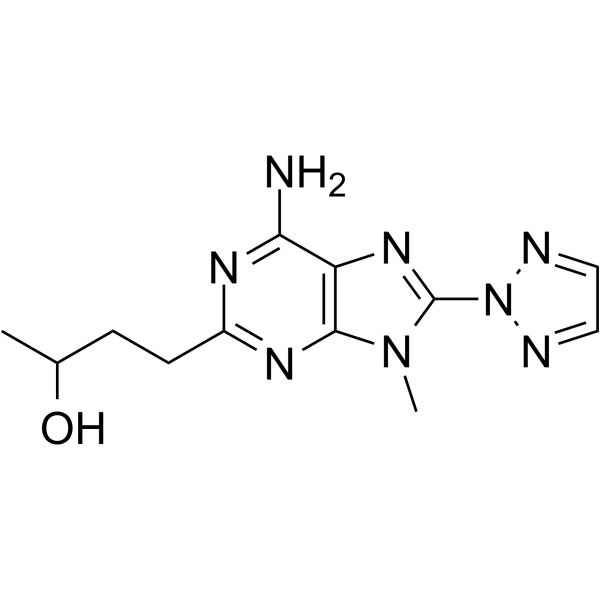
ST3932
ST3932 is a metabolite of ST1535, acts as an antagonist of adenosine A2A receptor, with Kis of 8 nM and 33 nM for A2A and A1 receptors, respectively.
商品は「研究用試薬」です。人や動物の医療用・臨床診断用・食品用の製品ではありません。
研究用途以外に使用した場合、当社は一切の責任を負いかねます。
- CAS 番号: 1246018-21-2
- 分子式: C12H16N8O
- 分子量:288.31
-
保管条件:
Please store the product under the recommended conditions in the Certificate of Analysis.

To place orders, for customer services and technical support, please contact: MedChemExpress USA
Tel: 609-228-6898 E-mail: [email protected] [email protected]


-
 生物活性
生物活性
-
化学情報
- 純度とドキュメンテーション
- 参考文献
-
 Help & FAQs


-
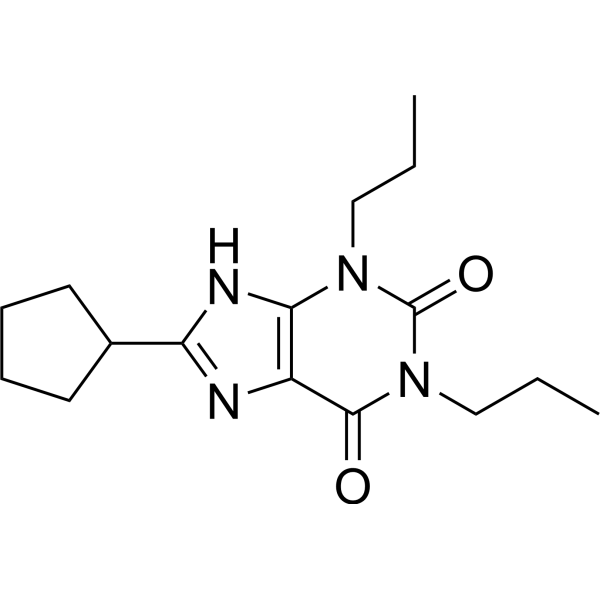
HY-100937
DPCPXA1 Receptor Antagonist -
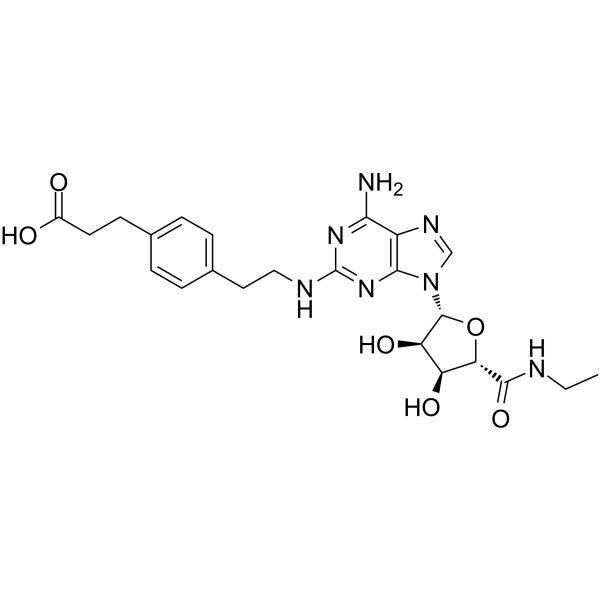
HY-13201
CGS 21680 -
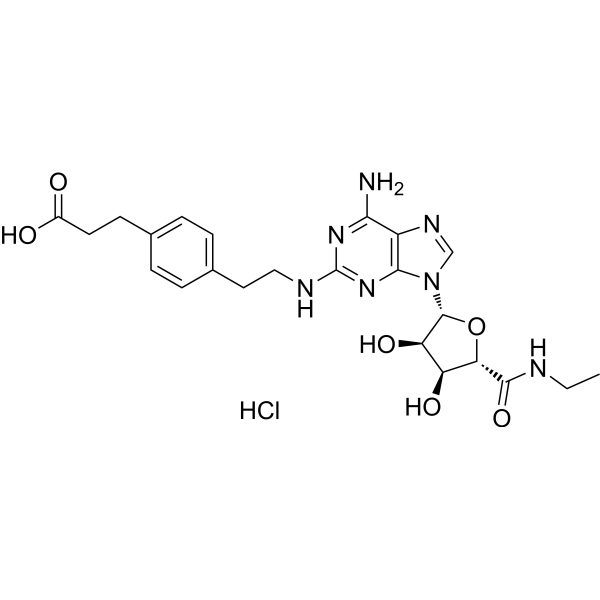
HY-13201A
CGS 21680 HydrochlorideAdenosine A2A Receptor Agonist -
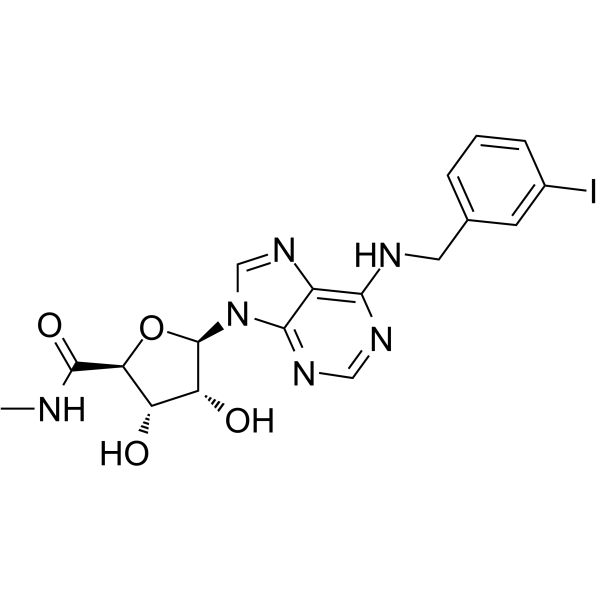
HY-13591
PiclidenosonA3AR Agonist -
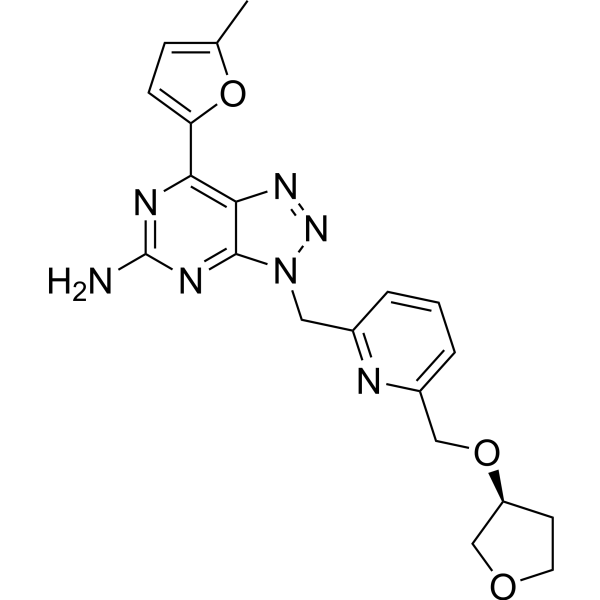
HY-101978
CiforadenantA2AR Antagonist -
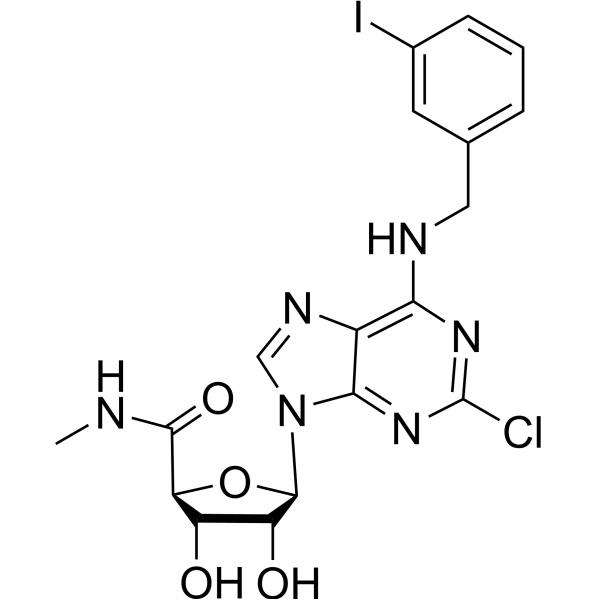
HY-12365
NamodenosonA3AR Agonist -
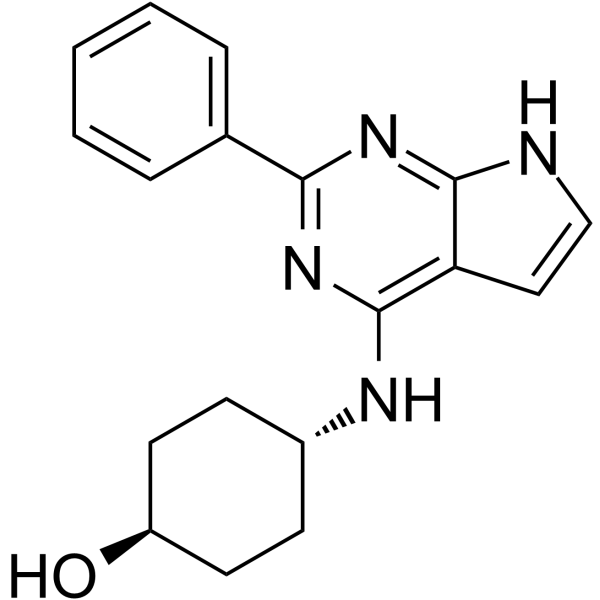
HY-14858
DerenofyllineA1 Receptor Antagonist -
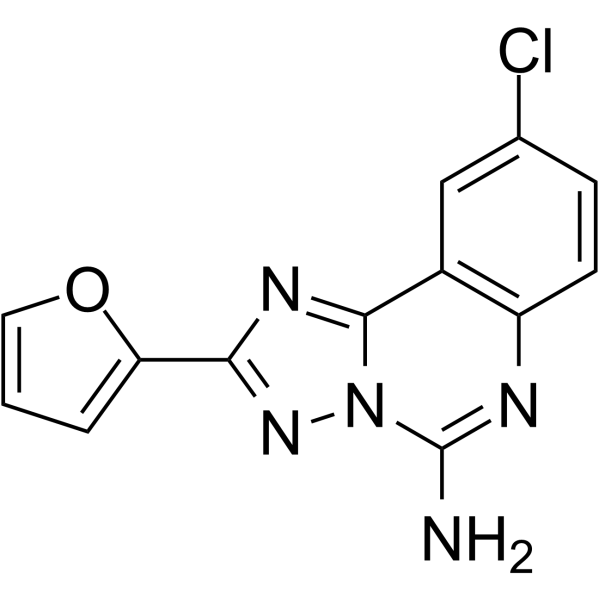
HY-100678
CGS 15943Adenosine Receptor Antagonist -
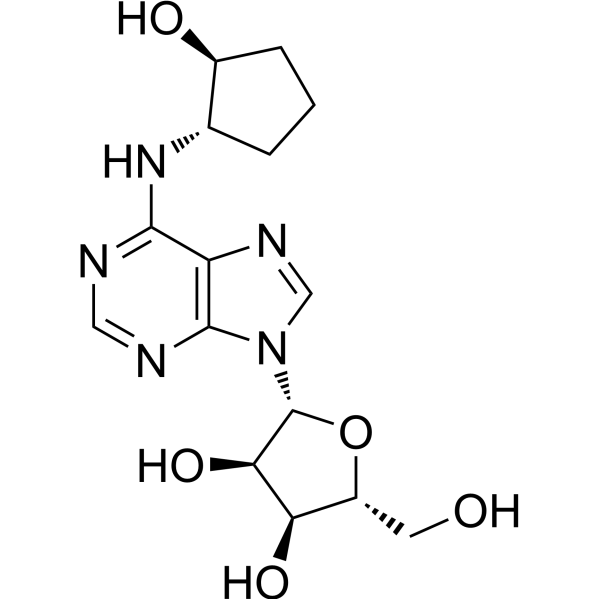
HY-18978
GR79236Adenosine A1 Receptor Agonist -
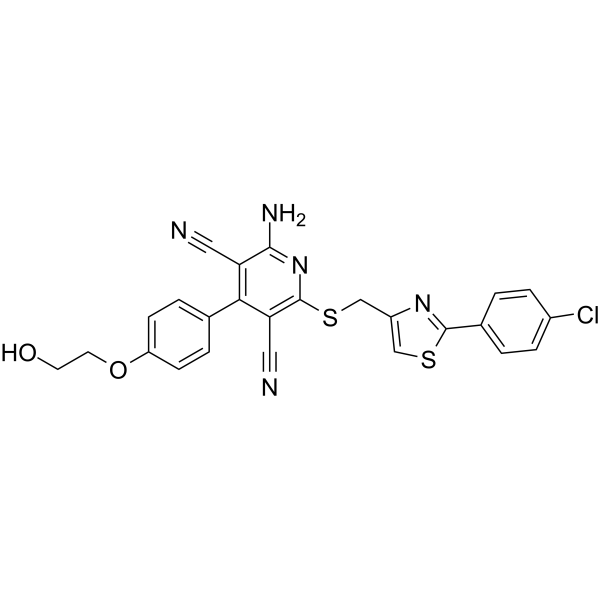
HY-14917
CapadenosonAdenosine Receptor Agonist -
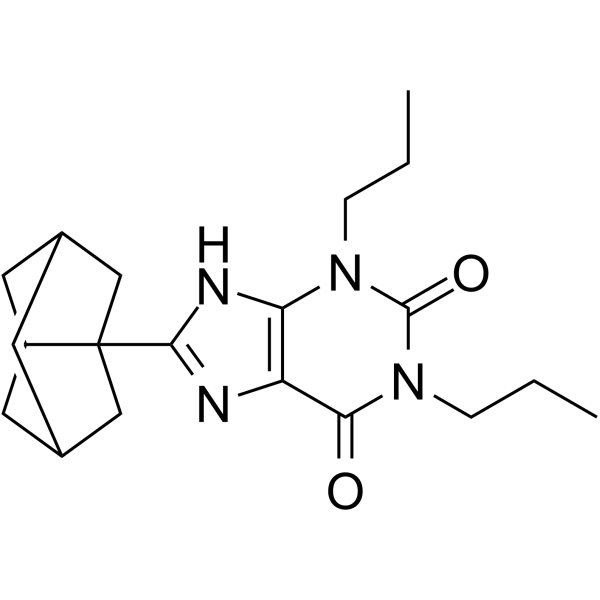
HY-10965
RolofyllineAdenosine A1 Receptor Antagonist -
HY-B1742
ProxyphyllineAdenosine Receptor Antagonist
Adenosine Receptor アイソフォーム固有の製品をすべて表示
More

生物活性
製品説明
IC50 & Target
Ki: 8 nM (A2A receptor), 33 nM (A1 receptor)[1]
Cellular Effect
|
Cell Line

|
Type | Value | Description | References |
|---|---|---|---|---|
| HEK293 | IC50 |
450 nM
Compound: 16a, (R,S)-16a
|
Antagonist activity at human adenosine A2A receptor expressed in HEK293 cells assessed as inhibition of NECA-induced cAMP accumulation incubated for 10 mins prior to NECA addition
Antagonist activity at human adenosine A2A receptor expressed in HEK293 cells assessed as inhibition of NECA-induced cAMP accumulation incubated for 10 mins prior to NECA addition
|
[PMID: 23789814] |
体外実験
ST3932 is a metabolite of ST1535, acts as an antagonist of adenosine A2A receptor, with Kis of 8 nM and 33 nM for A2A and A1 receptors, respectively. ST3932 inhibits agonist-induced cAMP accumulation with an IC50 value of 450 nM[1].
MedChemExpress (MCE) has not independently confirmed the accuracy of these methods. They are for reference only. .
体内実験
MedChemExpress (MCE) has not independently confirmed the accuracy of these methods. They are for reference only.


化学情報
-
CAS 番号 1246018-21-2
-
分子量 288.31
-
分子式 C12H16N8O
-
SMILES
OC(C)CCC1=NC(N(C)C(N2N=CC=N2)=N3)=C3C(N)=N1
-
輸送条件
Room temperature in continental US; may vary elsewhere.
-
保管条件
Please store the product under the recommended conditions in the Certificate of Analysis.


純度とドキュメンテーション
参考文献

Calculators
濃度 (開始) × 体積 (開始) = 濃度 (終了) × 体積 (終了)


ST3932 関連分類
HY-112840 関連分類
 Powered by Bioz