
7 Results for "

ATTO390

" in MedChemExpress (MCE) Product Catalog:
Products (7)

7 Results for "ATTO390" in MCE Product Catalog:

Cat. No.: HY-D1915
CAS No.: 914203-49-9
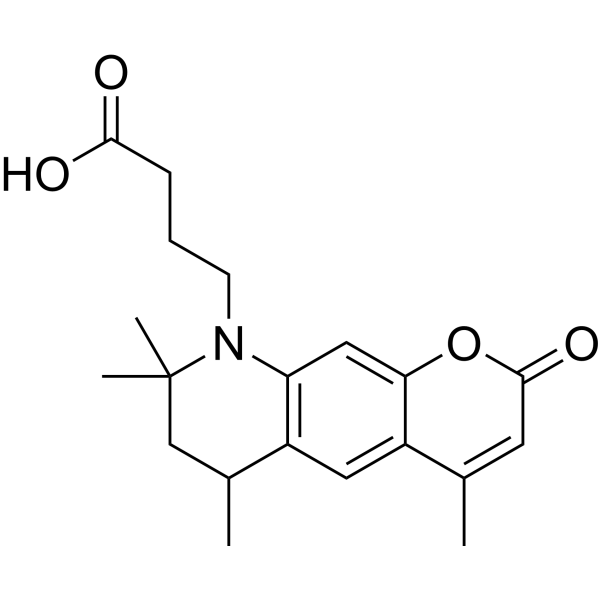
ATTO 390 is a new fluorescent marker based on the Rhodamine structure. It has strong absorption, high fluorescence quantum yield, high thermal stability and photochemical stability, and is suitable for single molecule detection and high-resolution microscopy.
loading...
    loading...
Cat. No.: HY-D1919
ATTO 390 amine is a biotin derivative of ATTO 390 with maximum excitation/emission wavelengths: 390/476 nm.
loading...
    loading...
Cat. No.: HY-D1921
ATTO 390 iodoacetamide is the iodoacetamide derivative of ATTO 390, the maximum excitation/emission wavelength: 390/476 nm.
loading...
    loading...
Cat. No.: HY-D1924
ATTO 390 alkyne is an alkyne derivative of ATTO 390 with maximum excitation/emission wavelengths: 390/476 nm. ATTO 390 alkyne is a click chemistry reagent, it contains an Alkyne group and can undergo copper-catalyzed azide-alkyne cycloaddition (CuAAc) with molecules containing Azide groups.
loading...
    loading...
Cat. No.: HY-D1918
CAS No.: 914203-50-2
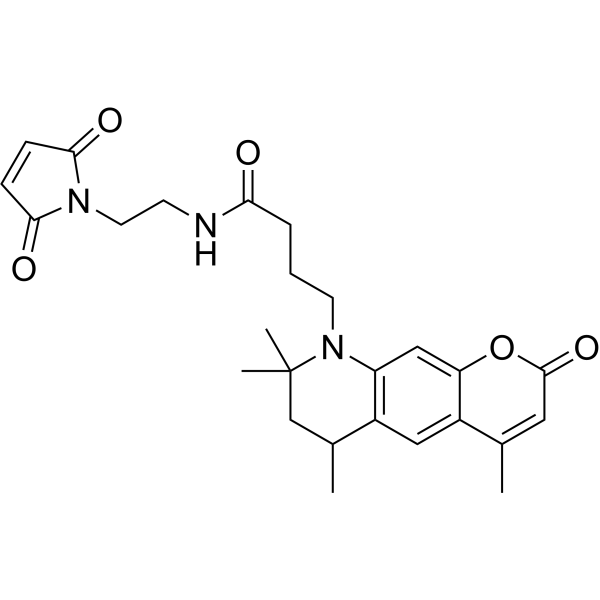
ATTO 390 maleimide is a maleimide ester derivative of ATTO 390, which can be used to label proteins or antibodies. The maximum excitation/emission wavelength: 390/476 nm.
loading...
    loading...
Cat. No.: HY-D1917
CAS No.: 914203-48-8
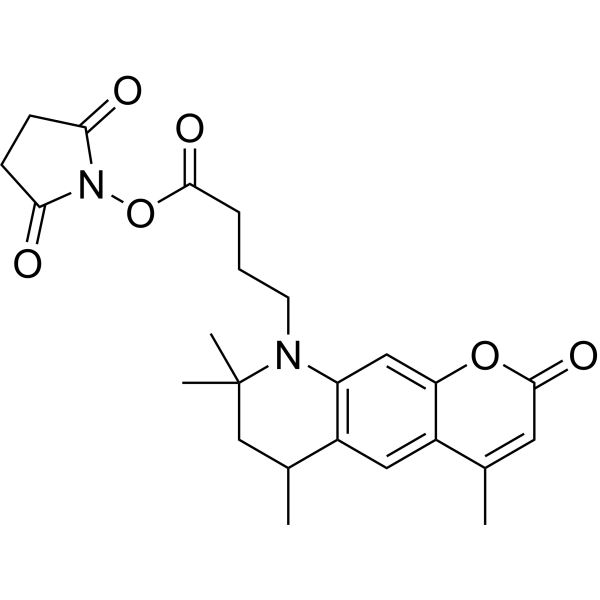
ATTO 390 NHS ester is a new fluorescent marker based on the Rhodamine structure. It has strong absorption, high fluorescence quantum yield, high thermal stability and photochemical stability, and is suitable for single molecule detection and high-resolution microscopy. ATTO 390 NHS ester is an NHS ester derivative of ATTO 390 that can be used to label proteins or antibodies.
loading...
    loading...
Cat. No.: HY-D1920
CAS No.: 1609584-74-8
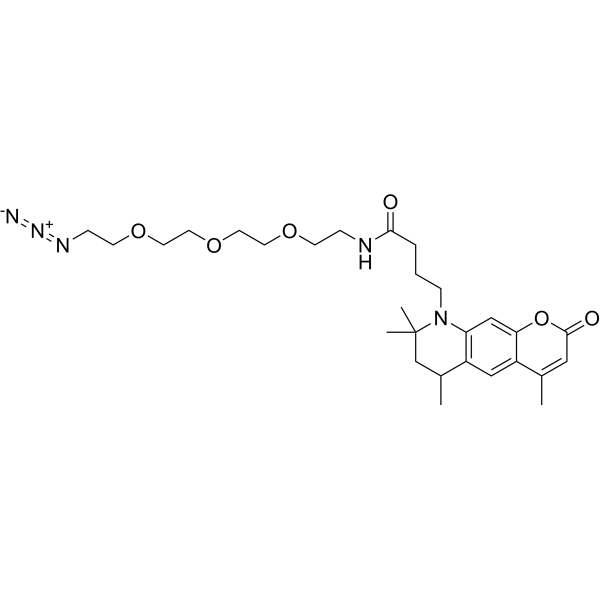
ATTO 390 azide is an azide derivative of ATTO 390 with excitation/emission maxima at 390/476 nm. ATTO 390 azide is a click chemistry reagent, it contains an Azide group and can undergo copper-catalyzed azide-alkyne cycloaddition reaction (CuAAc) with molecules containing Alkyne groups. It can also undergo strain-promoted alkyne-azide cycloaddition (SPAAC) reactions with molecules containing DBCO or BCN groups.
loading...
    loading...

